Trump's China visit eclipsed by US defeat against Iran as Tehran dictates new rules of engagement
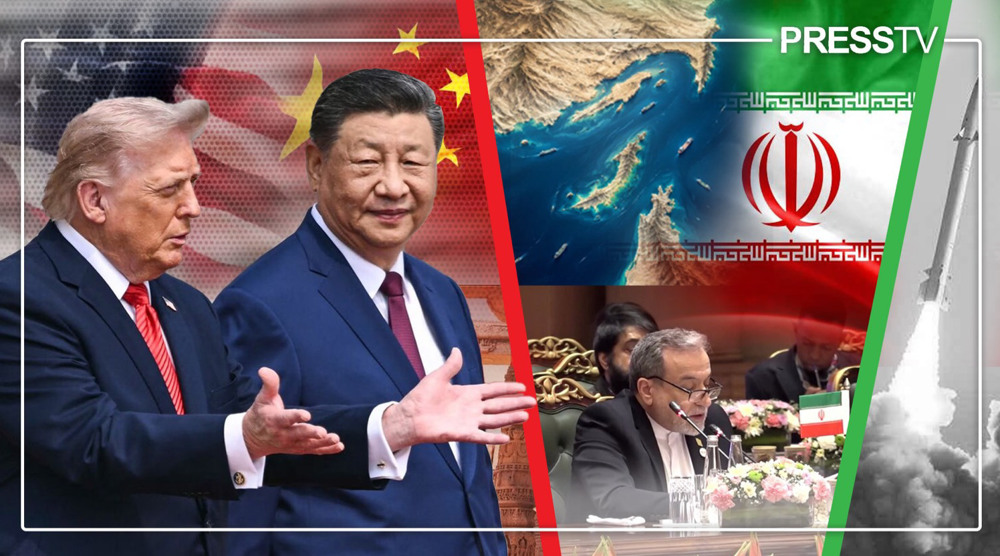
By Press TV Strategic Analysis Desk
The geopolitical significance of US President Donald Trump’s high-stakes visit to China has been fundamentally overshadowed by the realities of the recent 40-day imposed war against the Islamic Republic of Iran and the consequences that have emerged from it.
Despite the overriding importance of long-standing disputes between Washington and Beijing – from the tariff war and trade showdown to Taiwan and Chinese investments in the United States – the dominant strategic reality shaping this visit is the American weakness and loss of confidence following its war against Iran.
In this atmosphere, every gesture, statement, and negotiation in Beijing will be interpreted through the lens of Washington’s inability to achieve its objectives against Tehran.
Trump arrived in Beijing on Wednesday, accompanied by a high-profile political and business delegation, carrying a checklist of failure and defeat in the unprovoked war against Iran.
It is not a narrative advanced by Iran or its allies, but something reflected in the timing of the visit itself, in Trump’s lousy body language, and in analyses across much of the international media, including outlets traditionally hostile to Iran and the resistance front.
The visit unfolded not from a position of confidence, but under the shadow of a costly geopolitical confrontation in which the US failed to secure even limited strategic gains.
That reality has dramatically altered the balance of expectations surrounding the Beijing talks. China is holding talks with an unprecedented sense of leverage. Issues that Washington once hoped to pressure Beijing over – particularly Taiwan, trade concessions, and economic arrangements – have become substantially more difficult for the US to pursue.
US losing its bargaining power
The weakness projected by Washington has reduced its bargaining power and simultaneously expanded China’s room for maneuver. As a result, Chinese demands from the American side have become more achievable than at any previous moment in recent years.
Conversely, the major concessions Trump hoped to extract from Beijing now appear increasingly unattainable. The political and strategic environment simply does not favor an assertive American posture. Instead, many American pundits have expressed concern that Trump himself might be forced into offering major concessions to China in order to offset domestic political pressure arising from the failed war against Iran.
There is also growing anxiety in the US intelligentsia circles that the Trump administration, trapped in a quagmire of its own making, could resort to strategic compromises with Beijing that were once considered unthinkable.
Among the concerns repeatedly raised is the possibility that Washington might reduce or even cut military assistance to Taiwan as part of a broader effort to stabilize relations with China. Whether or not such outcomes materialize, the very existence of these discussions reflects a broader perception of declining American leverage.
America is no longer seen as a party dictating terms from a position of authority. It appears increasingly constrained by accumulated strategic failures and internal political pressures.
Beijing fully understands these dynamics. China recognizes both the deep strategic rivalry between the two major American political parties and the broader factors contributing to Washington’s weakening position and waning hegemony globally.
More importantly, Beijing understands that the US failure in its war against Iran has changed the strategic environment in China’s favor. Consequently, China is no longer limiting itself to routine economic or diplomatic demands. Instead, it is expected to pursue demands and objectives that go far beyond the conventional framework of US-China negotiations.
✍️ Analysis - The war of wills: Iran’s principled stance remains unshakeable as America’s options fade away
— Press TV 🔻 (@PressTV) May 13, 2026
By Press TV Strategic Analysis Deskhttps://t.co/R6JJTW4GEf
Iran's approach markedly different
Yet while the world’s attention is focused intensely on Trump’s high-profile visit to Beijing, Iran has approached the situation from a markedly different perspective. For Tehran, the realization of its fundamental principles and strategic objectives in the ongoing war has not been overshadowed by diplomatic developments elsewhere.
Iran has not tied its future or its security to the outcome of talks between two major powers and rivals. Rather than waiting for agreements between Washington and Beijing to define the contours of regional stability, Iran has continued to rely on its own inherent capabilities and strategic strengths, as seen in the past several months.
This distinction is central to understanding Tehran’s posture. Iran’s leadership views the country’s position in the war as one shaped primarily by internal strength rather than external arrangements. Tehran believes that the upper hand it has maintained throughout the war stems from indigenous capabilities, national resilience, and the determination of its armed forces and people who have been on the streets for over 70 nights now.
As a result, its conditions for ending the war are directly connected to its national interests and security, not to compromises negotiated abroad by the two other countries.
In this framework, Iran does not perceive itself as dependent on the calculations of China, Russia, or any other international actor. Instead, Tehran presents itself as an independent force whose actions have influenced the policies of major powers rather than merely reacting to them.
Iranian officials and analysts increasingly argue that Iran’s success in resisting the United States and the Zionist regime has become an “independent variable” in global politics – a factor reshaping the strategic calculations of powers such as China and Russia.
According to this view, Iran’s ability to prevent the US and its allies from achieving even minimal objectives has fundamentally altered geopolitical equations.
Iran influencing strategic environment
The significance of this lies not only in Iran’s defiance of Washington but in the fact that Tehran’s resistance has changed the behavior of other major states as well. In other words, Iran is not a passive actor caught between two powers, but a force capable of influencing the strategic environment itself.
This is reinforced by the fact that even Iran’s closest partners and all-weather allies did not anticipate the scale or nature of its military, diplomatic and strategic success.
Neither Washington and its allies nor countries friendly to Iran, including Russia and China, expected Iran to demonstrate such remarkable resilience in the third full-scale war imposed on it. The implication is profound: Iran’s performance exceeded the expectations not only of its adversaries but also of those who support it diplomatically and strategically.
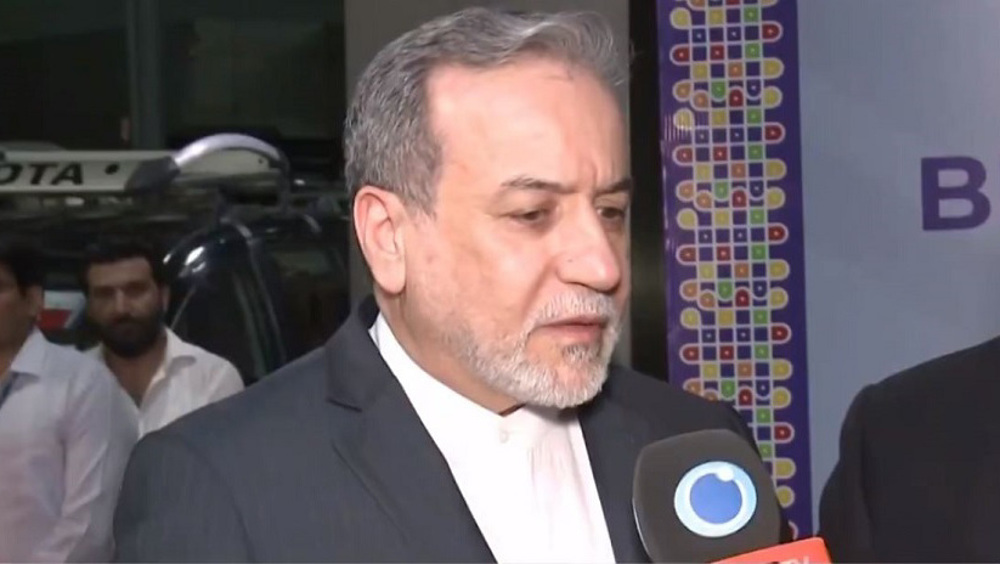
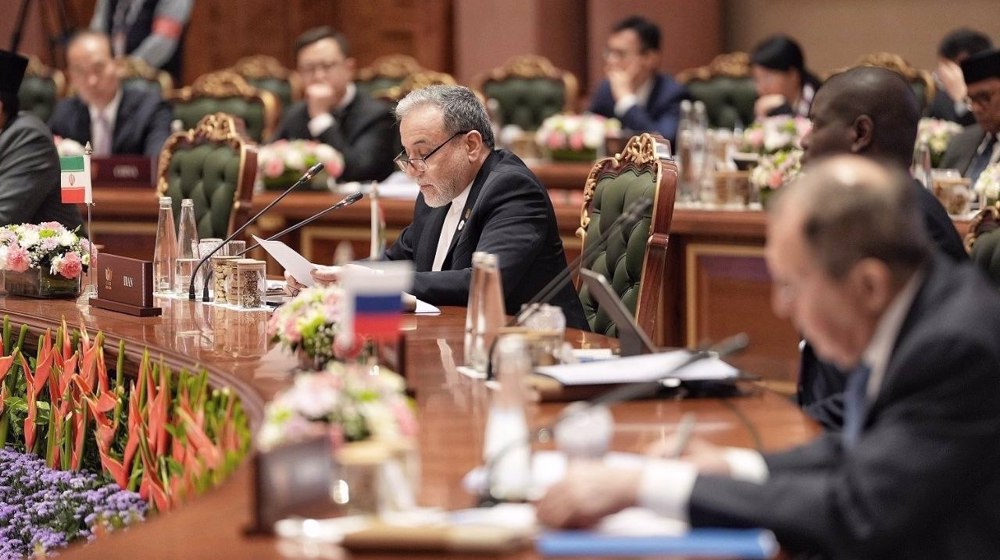
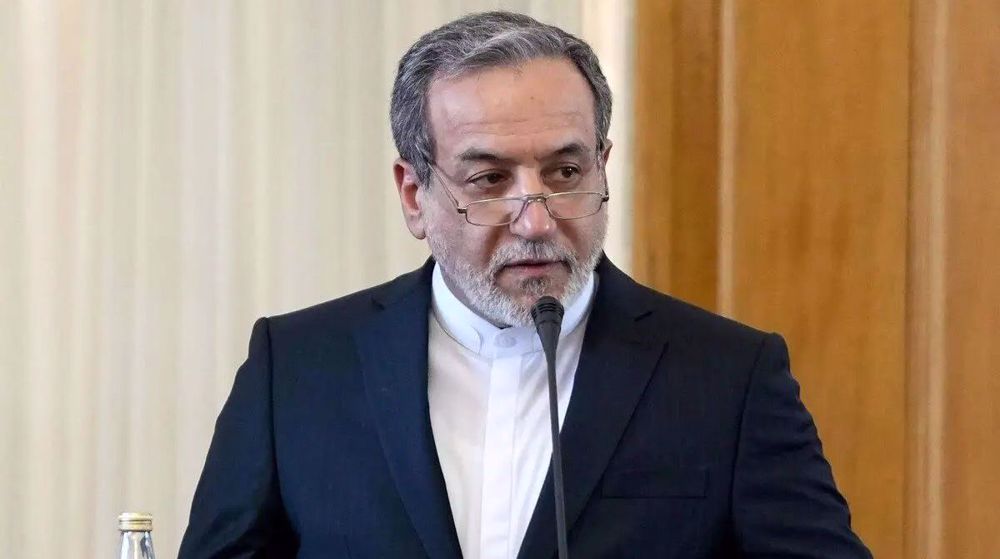
The timing of Foreign Minister Abbas Araghchi’s appearance at the BRICS foreign ministers’ summit in New Delhi further underscored this message.
While Trump was meeting Xi Jinping in Beijing under the shadow of strategic weakness, Araghchi delivered a powerful speech in New Delhi emphasizing Iran’s unwavering determination to secure its inalienable rights and uphold its conditions without compromise.
The symbolism was striking. On one side stood an American president constrained and weakened by military and political failure, and on the other stood an Iranian foreign minister confidently asserting national principles before an emerging international bloc increasingly positioned as an alternative center of global influence.
Araghchi’s power-packed speech underscored Iran’s insistence on defending its principles regardless of external pressure. Iran has made clear that it does not accept war as a coercive instrument hanging over its head, nor does it view threats as sufficient to alter its strategic direction. Instead, Iran emphasizes its readiness to confront adversaries again if necessary, relying on both material and spiritual sources of strength.
✍️ Analysis - Trump's theatrical rejection of Iranian proposal reeks of desperation as Iran's leverage grows
— Press TV 🔻 (@PressTV) May 12, 2026
By Press TV Strategic Analysis Deskhttps://t.co/Ua5J59z68A
Iran and its non-negotiable principles
Central to this posture is Iran’s belief in the authority of its armed forces and the steadfast resistance of its population. Iranian officials repeatedly stress that the resilience demonstrated by people during the ongoing war has become a pillar of national power.
This combination of military capability and public endurance forms the foundation of Iran’s strategic confidence.
Tehran’s message is that these principles are not negotiable under pressure and that national sovereignty and security take precedence over external demands and pressure.
At the same time, Iran has not isolated itself diplomatically. While emphasizing self-reliance and inherent power, Tehran has also sought to use international and regional platforms to articulate its positions. The BRICS summit in New Delhi provided precisely such an opportunity.
Iran’s participation demonstrated that, even while confronting the US and its allies, it continues to engage actively with emerging multilateral structures to present its logical and principled views to the world.
This combination of military assertiveness and diplomatic engagement has also been reflected in Iran’s actions in the Strait of Hormuz in recent months. The decisive management of maritime traffic and the seizure of hostile vessels are examples of coordination between the field and diplomacy.
Iran’s management of the strategic waterway underscores its broader strategic doctrine: national interests and security are not subordinated to international exchanges.
By asserting legitimate control over maritime passage and enforcing its own regulations, Iran intends to protect its interests regardless of wider geopolitical developments.
Iran's security does not depend on others
The message is unmistakable. Tehran does not believe its security should depend on guarantees from others, nor does it intend to wait for external powers to determine outcomes affecting its sovereignty. Instead, it seeks to impose its own strategic realities through decisive action.
These developments paint a picture of a shifting geopolitical landscape in which Iran operates from a position of strength while the US appears constrained by weakness and strategic overextension. Trump’s visit to Beijing is less a demonstration of American global leadership than a reflection of the limitations now confronting Washington.
China recognizes these limitations and has adjusted its posture accordingly, while Iran has used both the battlefield and the diplomatic arena to demonstrate that it has emerged from the third imposed war with enhanced influence and credibility.
The contrast between the two parallel events – Trump’s difficult negotiations in Beijing and Araghchi’s confident appearance at the BRICS summit in New Delhi – encapsulates this broader transformation. One symbolizes a superpower struggling under the burden of a failed war and the other represents a rising regional power asserting that its resistance has reshaped the calculations of the international order itself.
For Tehran, the central lesson of the current moment is that security and influence are achieved not through dependence on external arrangements, but through internal capability, strategic persistence, and the willingness to defend national interests regardless of external pressure.
From this perspective, Iran believes it has demonstrated that even major global powers must now calculate their policies with Tehran’s capabilities firmly in mind.
In this emerging narrative, the US is no longer the uncontested architect of geopolitical outcomes. Instead, Iran has emerged as a decisive actor whose resistance has exposed American vulnerabilities, altered China’s leverage in negotiations with Washington, and forced the international system to adapt to a new balance of power.
Mission unaccomplished – Part VI: US sought Iran’s surrender but got a new regional superpower
Contrary to enemy propaganda, Iran’s defense sector continues to make progress: Top general
Iran marks 39th anniversary of Sardasht chemical massacre, demands accountability from Western enabl


Woman accusing Trump of sexual assault in Epstein case fears for her life, relative says
Iran team thanks Mexico, questions World Cup fairness in farewell message from Tijuana
VIDEO | Press TV's news headlines
Israel kills 8 Palestinians as Gaza death toll tops 73,000
'War crime': Iran FM vows legal action against US over torpedo attack on Dena frigate
IRGC dismantles armed separatist cell in northwest Iran
Venezuela earthquake death toll surpasses 1,700 as search efforts continue
US national pride lowest in two decades: Poll


 PressTV NEWSLETTER
now
PressTV NEWSLETTER
now
 This makes it easy to access the Press TV website
