With Iran's armed forces at peak readiness and red lines locked, Trump walks into ring of fire
By Press TV Strategic Analysis Desk
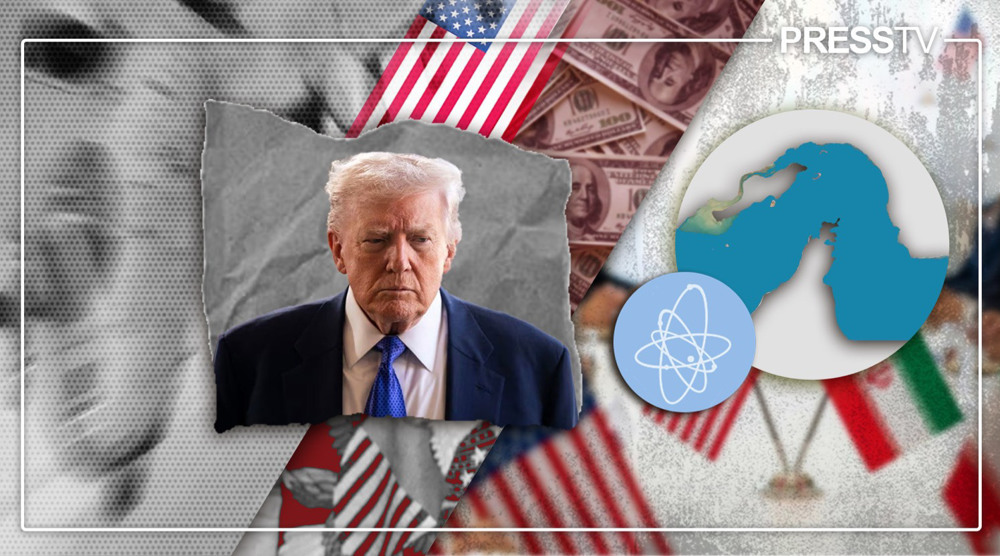
A day after US President Donald Trump theatrically rejected Iran's comprehensive and pragmatic plan to permanently end the war he illegally imposed on the country, a critical question looms over Washington's war rooms: What comes next?
The answer, drawn from the latest field and political assessments, is as clear as it is chilling for American strategists. Iran's armed forces are not merely prepared for a return to full-scale war if the enemy resorts to another military adventurism; they have already removed the psychological barrier that restrains most countries from such a confrontation.
And on every clearly defined red line, from the Strait of Hormuz to nuclear enrichment, Iran will not step back. It is the enemy with empty hands that has to surrender or retreat.
The field situation
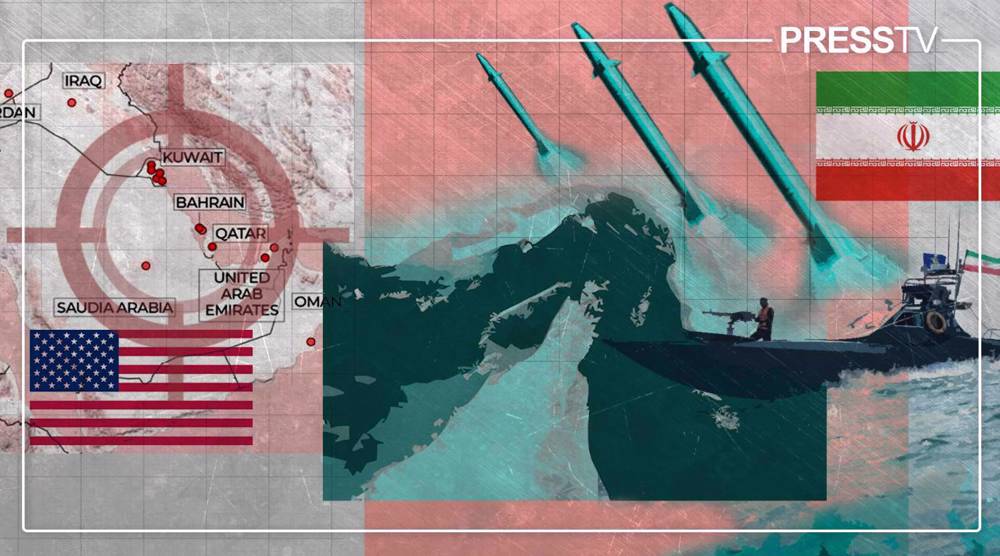
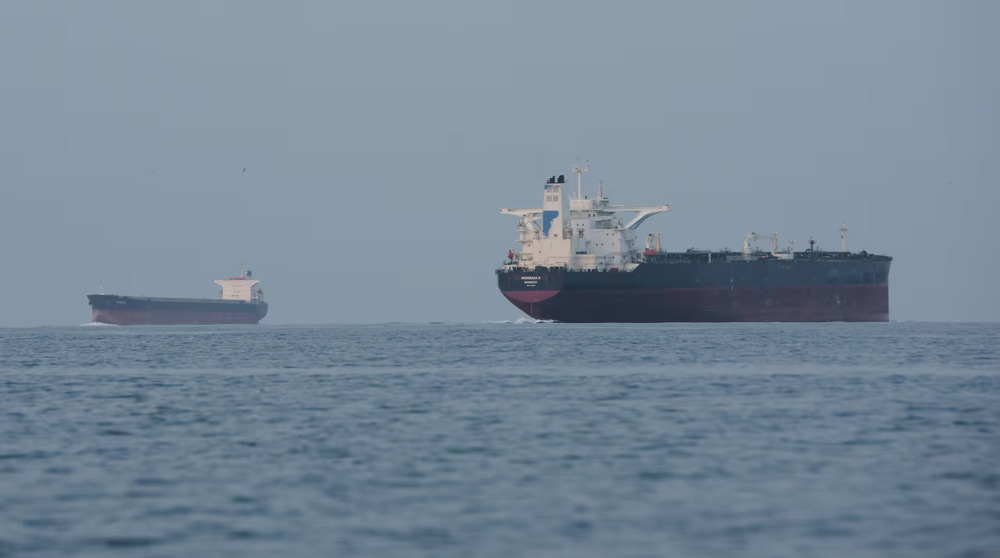
The decisive reaction of Iran's armed forces in recent days to the enemy's desperate but foolhardy attempts to open a passage through the Strait of Hormuz has done more than repel a tactical incursion. It has once again proven, in the most concrete manner possible, Iran's firm determination to consolidate its permanent sovereignty over this vital waterway.
This is not posturing or brinkmanship for diplomatic leverage. It is the physical manifestation of a strategic will that analysts in the West have repeatedly underestimated – and that the US military has now learned to its growing cost.
In any tense scenario between two countries, the final unspoken consideration is always the prospect of full-scale military war. All other measures – diplomacy, negotiation, sanctions, pressure tactics – exist precisely to achieve objectives before reaching that threshold.
When that consideration is removed, when a country acts as though war is no longer a deterrent, it signals something profound: the issue at stake is existential, directly connected to the country's most inviolable red lines.
Iran has now removed that consideration. The military prevention of enemy vessels from transiting the Strait of Hormuz – and Iran's forceful response to every attempt by the US to violate the new equation Tehran has established in the strait – signifies that Iranian sovereignty over the waterway is existential in nature.
It is not negotiable or up for bargaining. It is not subject to compromise. And here is the key point that Washington refuses to absorb: this strategic will is irreversible, even at the cost of igniting a full-scale war, for which the Iranian armed forces are fully prepared.
The United States rejected Iran's peace proposal, believing it could extract better terms through continued pressure tactics. That miscalculation has already backfired. Iran has now made it unmistakably clear that no amount of military escalation will reverse its legitimate and sovereign control over the Strait of Hormuz.
✍️ Analysis - Trump's deadly trap: By rejecting Iran's proposal, US enters a strategic nightmare with no escape
— Press TV 🔻 (@PressTV) May 11, 2026
By Press TV Strategic Analysishttps://t.co/IuoDeo5OR6 pic.twitter.com/7r0hwTUnNU
Negotiation through the barrel of gun
There is an old strategic axiom: diplomacy is the continuation of war by other means.
Iran has inverted that formula into something the US has never quite understood. What Tehran has demonstrated in the Strait is the art of negotiation through a position of power.
Without sitting at a single formal negotiating table, Iran has articulated its non-negotiable red lines through the unmistakable and powerful language of its armed forces.
The most important of these – the establishment of permanent, undisputed Iranian sovereignty over the Strait of Hormuz – has now been inscribed in water and blood.
The timing is no accident. This decisive action and authoritative measure provided the ideal foundation for Iran to present its comprehensive plan to permanently end the war. It did not speak through diplomats this time, but through missile batteries, naval deployments, and the credible threat of asymmetric military retaliation.
And Washington heard. But it chose not to listen.
The meaningful and coordinated action of both the Islamic Revolution Guards Corps (IRGC) and the Army in the Strait of Hormuz and the Sea of Oman has done something the Pentagon never anticipated: it has validated Iran's threat to counter and neutralize the enemy's maritime banditry in the form of a naval blockade.
When the consideration of war is removed from the equation, asymmetric counteraction to a naval blockade – even if it leads directly to full-scale war – becomes not just an option but an inevitability from Iran's perspective.
Tehran has already made this clear through Khatam al-Anbiya Central Headquarters, its top military command: if the enemy continues its maritime banditry, its interception of Iranian vessels, its aggression, then the response will arrive not on some distant future battlefield but at the enemy's very own strategic centers in the region.
This is not rhetoric but an unambiguous military warning. And its meaning is unmistakable: Iran is now determined to expel every last element of enemy military force from the Persian Gulf. The naval blockade, far from pressuring Iran into submission, has triggered the very response it was designed to prevent.
✍️ Analysis: Decisive edge: Iran dismantles US levers of coercion, rewrites equation of deterrence
— Press TV 🔻 (@PressTV) May 10, 2026
By Press TV Strategic Analysis Deskhttps://t.co/TyeygjwZli
The return to war: A different calculation
Washington's war planners must now confront a grim reality. There is indeed a possibility that the enemy may return to the option of war. But unlike the decision to start the war on February 28, when American calculations predicted Iran's rapid destruction and surrender within a short period, that option will not be the enemy's preferred choice today.
Why? Because those calculations have already failed spectacularly. Iran did not surrender. Its institutions did not dismantle and the United States achieved none of its war objectives.
If the enemy now chooses to return to full-scale war, it will only do so after realizing two things: first, that Iran's position regarding the conditions for ending the war is absolutely unchangeable; second, that accepting Iran's declared conditions is politically impossible for the United States.
The enemy may also realize that continued economic pressure and naval blockade will not, in the short term or even in the long term, force Iran to concede the two major concessions that Washington demands above all others: free passage through the Strait of Hormuz and the abandonment of the nuclear enrichment program.
All of these assessments are correct. And that is precisely why a return to war remains possible, but also why such a return would be a catastrophe for the US, not for Iran.
The political situation: No concession, no surrender, no escape
Iran's modified plan to end the war, as anticipated by every sober and informed analyst, was rejected by Trump and his war hawks in Washington. Even milder conditions than those in Iran's submitted proposal, as long as they rest on the two non-negotiable pillars of Hormuz sovereignty and the right to enrichment, will never be accepted by Trump.
That is not a weakness in Iran's position, but a recognition of America's political pathology. But Iran's refusal to bend is not born of stubbornness. It is born of blood and sacrifice.
The Islamic Republic of Iran has, in a single year, faced two full-scale imposed wars, a coup attempt, the martyrdom of the Leader of the Islamic Revolution, thousands of other martyrs, dozens of senior government officials and military commanders, staggering material damage, apart from decades of crippling sanctions and pressure.
Through all of this, Iran has neither surrendered nor backed down from its fundamental rights. Nuclear knowledge is the symbol of that steadfastness.
But the back-to-back full-scale wars also forced Iran to evolve and introspect. They forced a permanent change in Iran's policy regarding the Strait of Hormuz.
Tehran learned that it could not secure its own survival without taking direct, physical control over the waterway that is the lifeline of the region's energy exports. That lesson has been inscribed in Iran's strategic DNA. Iran will never – and the word bears repeating, never – abandon either nuclear enrichment or sovereignty over the Strait of Hormuz.
Iran's undeclared factors could turn any new aggression into bigger defeat for US: Analysishttps://t.co/IYtzl2tRal
— Press TV 🔻 (@PressTV) May 2, 2026
Full list of non-negotiables
And beyond those two pillars, Iran's other demands stand on equally firm ground. War reparations and damages for the destruction inflicted on Iranian infrastructure, economy, and civilians. The full lifting of primary and secondary sanctions and termination of draconian anti-Iran resolutions. The return of all frozen Iranian assets. The protection of Iran's allies in the Resistance Front. The maximum possible guarantees against any repetition of war against the country.
None of these can be removed from Iran's list of legitimate demands. They are not bargaining chips but basic entitlements of a nation that has been attacked, bombed, starved, and isolated for nearly half a century by arrogant powers.
But here lies the strategic deadlock that the White House cannot break. The acceptance of even one of Iran's core principles would amount to an open admission of defeat.
And Trump – the man who has built his political identity on "America First" and "maximum pressure" – cannot formally concede such a disastrous defeat. His political survival depends on the illusion of victory, especially ahead of the midterms.
Iran cannot step back either. Accepting the abandonment of the fundamental, logical, and legal rights of the nation would not be diplomacy. It would be extortion. It would be surrendering to an aggressor. And that is precisely the green light for the next war.
If Iran concedes even once, the enemy will immediately begin searching for the next pretext, the next crisis, the next "concession" to extract. Iran's refusal to negotiate from a point of weakness is not inflexibility. It is the only rational strategy for survival and strength.
💥 Analysis - Strategic quagmire: US trapped between failed military options and untenable peace terms
— Press TV 🔻 (@PressTV) May 9, 2026
By Press TV Strategic Analysis Deskhttps://t.co/FD43JKhlG3 pic.twitter.com/M9FXdqbmgd
The scorpion in the ring of fire
This brings us to the final and inescapable image. Whatever action Trump now takes in response to Iran, he is like a scorpion trapped in a ring of fire. Every possible move is suicide.
If he throws himself into the flames and chooses to continue the useless, economically ruinous, and navally costly blockade, it would be suicide. If he restarts full-scale war, it would be suicide. If he accepts Iran's conditions, or even some of them, in a desperate attempt to salvage something, it would also amount to suicide.
The scorpion has three options: burn in the fire, strike its own sting into its head, or be consumed from within.
Make no mistake. Iran's armed forces are fully ready for any eventuality. The Strait of Hormuz is locked. The nuclear program is advancing. The resistance front is intact. And the United States, for the first time in its modern history, has trapped itself in a war it cannot win, against an adversary that will never surrender, over issues that are not negotiable.
Iran has already paid the price for its sovereignty. America has only begun to count its losses.
Mission unaccomplished – Part VI: US sought Iran’s surrender but got a new regional superpower
Contrary to enemy propaganda, Iran’s defense sector continues to make progress: Top general
Iran marks 39th anniversary of Sardasht chemical massacre, demands accountability from Western enabl



Martyred Leader's funeral to serve as global movement against terrorism, US-Zionist crimes: Army
2026 World Cup: Iran prepares to depart Mexico after warm welcome in Tijuana
At UN Security Council, Palestine envoy urges world to stop Israeli annexation
Two IRGC servicemen martyred in terror attack in western Iran
VIDEO | Pakistan launches fourth cross-border strikes inside Afghanistan
VIDEO | Pro-Palestinian activists in Paris rally to condemn ongoing Israeli genocide
VIDEO | Spain rejects US pressure as Trump intensifies criticism of NATO allies
VIDEO | Afghanistan-Pakistan tensions escalate after fresh airstrikes by Islamabad



 PressTV NEWSLETTER
now
PressTV NEWSLETTER
now
 This makes it easy to access the Press TV website
