Iran's firm response to new US maritime aggression proves Strait of Hormuz has only one master
By Press TV Strategic Analysis Desk
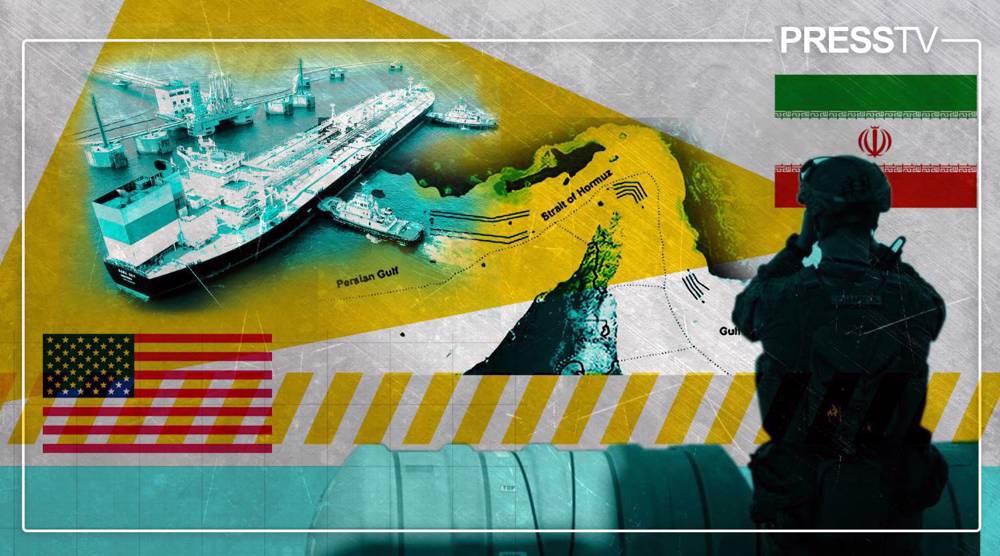
For decades, the Strait of Hormuz has functioned as the critical fulcrum of global energy security – a narrow maritime corridor upon which the economic survival of major industrialized nations has critically depended.
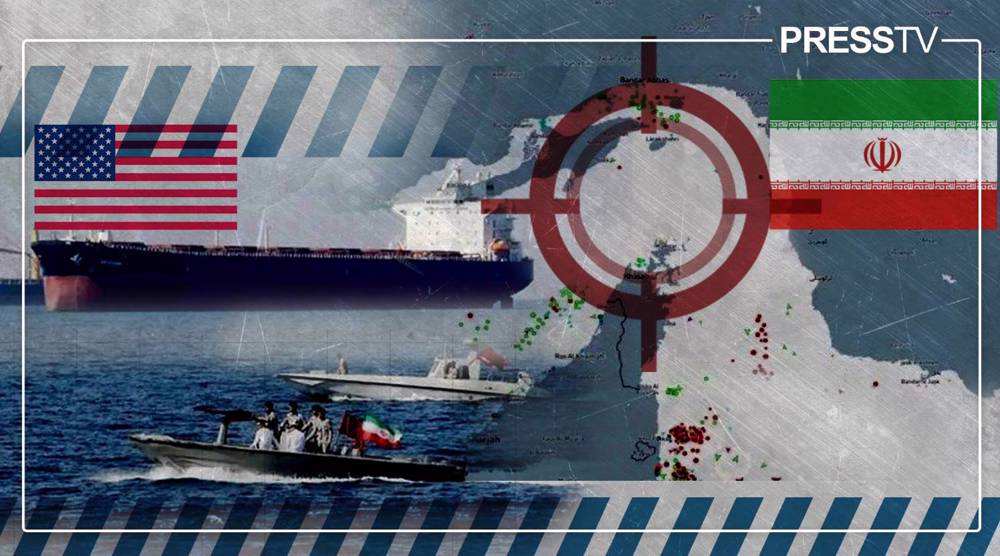
What was once a corridor for naval transit and superpower posturing has now been reconfigured into a zoned perimeter where American warships enter only at their own peril.
Last night, the armed forces of the Islamic Republic of Iran issued a permanent, irreversible verdict: the era of free transit is effectively over, especially for hostile powers.
In a single, coordinated salvo of missiles, drones, and swarm attacks, Iran did not merely retaliate against yet another unprovoked American aggression toward two Iranian oil tankers, but it demonstrated something far more profound.
It demonstrated absolute sovereignty over the strategic waterway. It demonstrated that the Strait of Hormuz is no longer an international waterway governed by the whims of distant fleets, but an Iranian-controlled corridor governed exclusively by the Islamic Republic.
The message, delivered in fire and shockwaves, was devastatingly simple: no vessel – military or civilian, allied or adversarial – enters the Strait without Iran’s permission.
And the United States Navy, for the first time, has been forced to learn a humiliating lesson: they no longer enjoy even the faintest illusion of security in the Persian Gulf.
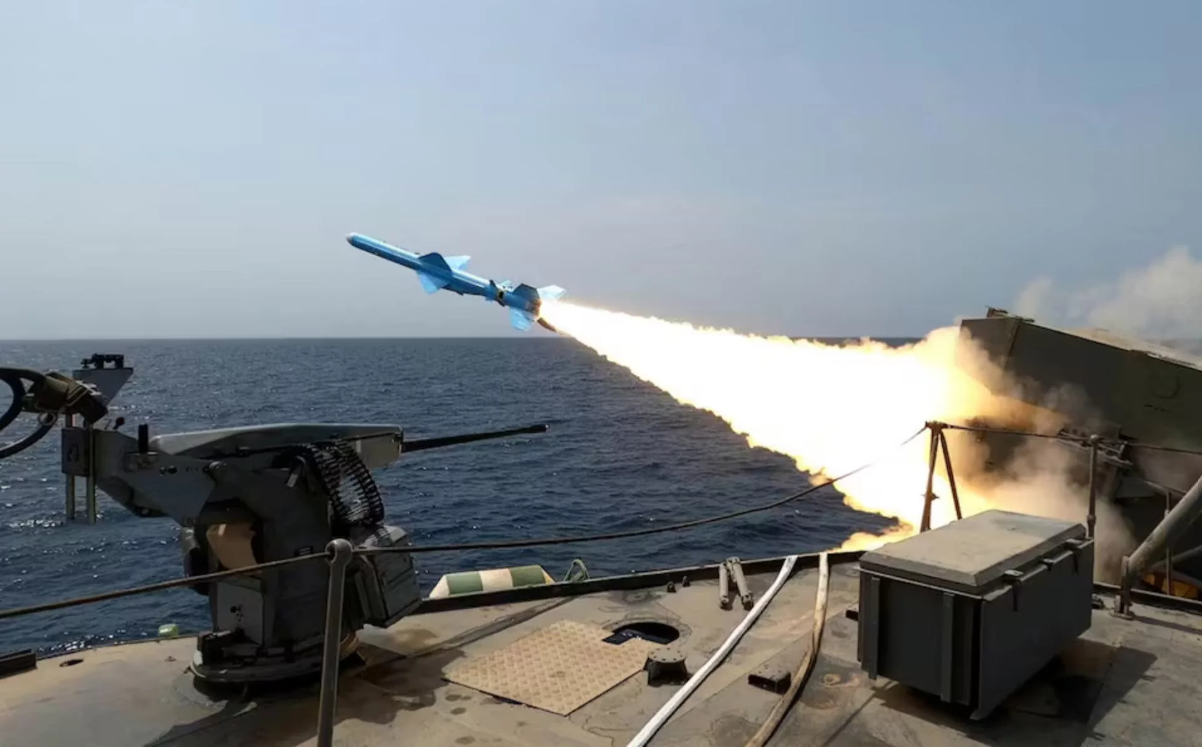
The missile and drone units of the Iranian Navy have carried out a powerful response to the US enemy following their acts of aggression against Iranian oil tankers.
— Press TV 🔻 (@PressTV) May 7, 2026
Follow Press TV on Telegram: https://t.co/LWoNSpkc2J pic.twitter.com/xkQ74rWorc
The new geometry of control: Permission is not optional
Let us be absolutely clear about what happened on Thursday night. American aerial aggression against two Iranian tankers was met not with diplomatic notes, televised condemnations or exhausted rituals of international complaint. They don’t work anymore.
It was met with precision fire by the Islamic Republic of Iran Navy and the Islamic Revolution Guards Corps (IRGC), who identified three American destroyers transiting east of the Strait and subjected them to a coordinated, multi-domain retaliatory military action.
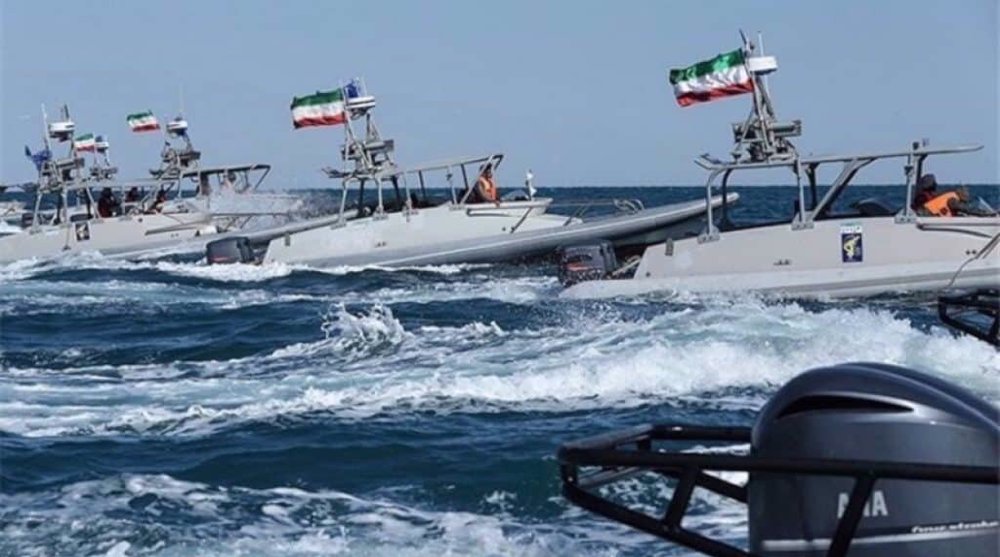
Missiles struck from land and sea and drones descended with surgical intent. Swarms of fast attack boats closed the geometry of escape for the hostile enemy vessels. The result was not symbolic but structural. Those destroyers suffered significant damage, as confirmed by the top military command, the Khatam al-Anbiya Central Headquarters.
Facing the devastating and precise Iranian firepower, the IRGC Navy said three aggressor enemy vessels "fled the Strait of Hormuz area immediately."
That is the emergent strategic reality. And it rests upon a single, enforceable doctrine: no vessel may enter the Strait of Hormuz without complying with Iran's new regulations.
Not under freedom of navigation, not under a ceasefire, not even when escorted by the world's most expensive navy. From this point forward, the Strait of Hormuz operates on Iranian terms – or it does not function at all.
Iran is no longer asking or negotiating, but enforcing. The distinction between presence and permission has been erased. An American destroyer in the Strait without Iran’s consent is not an act of maritime power projection. It is an act of trespass, and trespass is met with overwhelming, asymmetric and unforgettable force.
✍️ Analysis - Fables and failures: Why the enemy's war of narratives – like its bombs – won't deter Iran
— Press TV 🔻 (@PressTV) May 7, 2026
By Press TV Strategic Analysis Deskhttps://t.co/kOKjfSIK84 pic.twitter.com/wMXDGcSVOi
The American lesson: No security, no sanctuary
For decades, the US Navy operated in the Persian Gulf with an unspoken assumption that its technological superiority, its carrier strike groups, and its network of regional bases guaranteed a fundamental layer of safety.
That assumption is now effectively dead. Last night’s strikes on three American destroyers were a systemic demonstration of the enemy’s vulnerability. Iran proved that American warships in the regional waters enjoy no security whatsoever – not in the Persian Gulf, not in the approaches to the Strait, and certainly not within the narrow confines of Hormuz itself.
Consider the implications. If three destroyers, equipped with the most advanced air defense and electronic warfare systems available, can be simultaneously targeted, struck, damaged, and driven out of the area by a combination of ballistic missiles, drones, and fast boats, then the entire calculus of American naval presence collapses.
The US can no longer assume that its ships are safe simply because they are American. The moment they enter the waters that are Iran’s sovereign domain, they are legitimate targets.
This is not hyperbole. This is the operational reality that Iran has constructed over years of asymmetric warfare doctrine. Iran does not need to match the US ship for ship, carrier for carrier. It has chosen a different path, which is impact-based warfare, networked swarm tactics, and the strategic use of geography.
The Strait of Hormuz, barely 33 kilometers wide at its narrowest point, is the ground for such a doctrine. And last night, Iran executed that doctrine with remarkable competence.
Iran's undeclared factors could turn any new aggression into bigger defeat for US: Analysishttps://t.co/IYtzl2tRal
— Press TV 🔻 (@PressTV) May 2, 2026
The end of diplomatic theatre
The most significant dimension of last night’s events is what it represents beyond the immediate exchange of fire. For years, Iran communicated its red lines through diplomatic channels, through media campaigns, through carefully worded warnings.
The message was always the same: leave the region, stop the aggression, respect our sovereignty. But those messages were ignored or dismissed as rhetorical posturing.
On Thursday night, Iran stopped talking and started walking the talk.
The era of diplomatic appeals and media campaigns has ended. Iran has now imposed the expulsion of aggressive forces through fire and blood. The US is no longer being asked to withdraw but being compelled to leave.
The three destroyers that retreated from the Strait last night are not merely damaged warships but symbols of a fundamental shift in the balance of strategic will.
They represent the moment when the world's sole superpower understood, viscerally, that its vessels no longer possess any presumption of safety in waters that Iran controls.
And what makes this even more remarkable is the context in which it happened. The US had declared a ceasefire. It had insisted – publicly, repeatedly – that it wanted to avoid a return to full-scale war. And yet, even under that supposed umbrella of de-escalation, Iran struck.
Because from Iran’s perspective, a ceasefire does not mean a cessation of vigilance. It does not mean permission to attack Iranian assets. It does not mean a free pass for American destroyers to transit the Strait. The ceasefire protects nothing if Iran’s rights are violated.
And last night, those rights were defended with the full force of Iranian arms.
✍️ Analysis - 'Project Freedom' perishes in 48 hours as Trump retreats under the wall of Iran's asymmetric deterrence
— Press TV 🔻 (@PressTV) May 6, 2026
By Press TV Strategic Analysis Deskhttps://t.co/7bA7gvlXFq pic.twitter.com/hX5W8DlnHs
The strategic implication: A superpower on the run
The most devastating revelation of last night’s events is what it tells us about American intent. If the United States had wanted to escalate, if it had wanted to use Iran’s attack on its destroyers as a casus belli for renewed all-out war, it could have done so.
The pretext was handed to them on a silver platter. And yet, what did we witness? The destroyers did not counterattack. They did not call in airstrikes. They did not summon carrier support. They quietly withdrew and fled. And in the hours since, the Trump administration – despite this heavy and humiliating blow – has insisted on maintaining the ceasefire.
Let that sink in. This is the second time in a single week that the US has absorbed a relatively heavy military engagement with Iran in the Strait of Hormuz and chosen not to resume full-scale war. The first time, America requested a ceasefire and accepted Iran’s ten principles for ending the war. This time, it is swallowing the humiliation of damaged destroyers and a forced retreat, all while publicly clinging to the ceasefire as if it were a lifeline.
That is because America is fleeing from the war it imposed against Iran nearly 70 days ago. The evidence is overwhelming. From its failed full-scale war that lasted roughly 40 days, to its acceptance of Iran’s terms for a ceasefire, to its withdrawal from the so-called “Freedom Project” to reopen the Strait in less than 48 hours, to last night’s refusal to escalate – the pattern is unmistakable.
The US war machine needs this ceasefire far more than Iran does. Iran is willing to fight. America is willing to talk, to delay, to pretend. And on the waters of the Strait of Hormuz, that difference in will is now measurable in damaged destroyers and retreating hulls.
✍️ Analysis - Failed Strait of Hormuz blockade forces US pivot as Iran’s strategic patience and leverage grow
— Press TV 🔻 (@PressTV) May 5, 2026
By Press TV Strategic Analysis Deskhttps://t.co/yvAK2FDAtb
The Strait belongs to Iran
None of this should be misunderstood. Iran is not seeking war and it never sought war. What Iran has done, with strategic patience and lethal precision, is to establish a new baseline.
The Strait of Hormuz is secure only through Iran’s will. Without Iran’s consideration, it is not secure at all. Not for oil tankers and not for hostile warships.
Last night’s events in the Strait of Hormuz were not a victory in the conventional sense. It was a declaration of the new reality that the Americans haven’t accepted yet.
The Islamic Republic of Iran has spent decades building the capability to shut down the world’s most important waterway, to challenge the most advanced navies on earth, and to impose its legal and legitimate sovereignty against all comers.
On Thursday night, that capability was demonstrated for all to see. The American destroyers that entered the Strait without permission learned a lesson that will not soon be forgotten.
And the world now knows, without an iota of doubt, that in the waters of Hormuz, Iran’s word is the only word that matters. Permission is not optional. It’s a prerequisite.
60-day negotiation framework, seven conditions: Iran’s strategic red lines shape oversight, leverage
Iran's military yet to deploy full capabilities: Senior Army commander
Pakistan defense minister: Iran-US agreement marks demise of Netanyahu



Across Iran, centuries-old Muharram traditions keep Karbala's memory and spirit alive
Mission unaccomplished – Part I: America failed to achieve every war objective against Iran
US army downplaying injuries from Iran's retaliatory strikes: Wounded forces, families
Iran's Armed Forces created an 'epic' that exceeded aggressors' expectations: President Pezeshkian
Iran warns Rubio: 'No one will be fooled' by US attempt to redefine MoU
Italians outraged as NATO chief reveals secret role in US war on Iran
Israel revives Gaza expulsion plan as UN confirms genocide against children
Iran, Saudi FMs hold phone talks as Persian Gulf states rethink US ties



 PressTV NEWSLETTER
now
PressTV NEWSLETTER
now
 This makes it easy to access the Press TV website
