Persian Gulf Day: How a 400-year-old event underpins Iran’s sovereign control over Strait of Hormuz
By Press TV Website Staff
On April 30 every year, Iran observes Persian Gulf Day, which is a commemoration of the historic triumph over a foreign colonial power more than four centuries ago.
The event marks the liberation of Iran’s southern coastline following a century of occupation, with the decisive victory coming in 1622.
Among the three bodies of water bordering Iran – the Caspian Sea, the Gulf of Oman, and the Persian Gulf – the latter stands out as the most strategically and symbolically significant.
Iran’s connection to the Persian Gulf is not merely geographic but deeply historical, stretching back over 2,500 years of continuous interaction, interrupted only by fleeting episodes of foreign interference, none of which succeeded in the long term.
Beneath the Persian Gulf’s surface lies the world’s largest repository of oil and natural gas.
Beyond its energy wealth, the waterway functions as a critical artery for a substantial portion of Iran’s trade, reinforcing its geopolitical importance.
For the Iranian nation, Persian Gulf Day serves as an annual reminder of transformative events that not only reshaped local history but also left a lasting imprint on Iran’s national consciousness. These historical episodes continue to offer relevant strategic lessons today.
What does Persian Gulf Day signify
Recognized as an official holiday in the Islamic Republic of Iran, Persian Gulf Day marks the expulsion of Portuguese colonial forces from the country’s southern shores nearly 400 years ago. The observance was institutionalized in 2005 by Iran’s Supreme Council of the Cultural Revolution, and each year, nationwide events celebrate the Persian Gulf’s historical legacy, enduring name, and strategic relevance.
The date falls on the 10th of Ordibehesht in the Iranian solar calendar, which typically corresponds to April 29 or 30 in the Gregorian calendar. That specific date was chosen to honor the events of 1622, when Safavid ruler Abbas I led Iranian forces to victory over the Portuguese on the island of Hormuz. That victory concluded a two-decade-long war and ended a full century of foreign domination over the Persian Gulf.
During the 16th century, Portugal was the world’s preeminent naval power, having seized multiple strategic points across the Persian Gulf and the Indian Ocean. The Portuguese built fortresses, established port facilities, and dominated key maritime trade routes.
At the time, Iran – never subjected to colonial rule – was a regional power in its own right and a vital node in global overland trade networks. Its engagements with European colonial powers differed markedly from those of colonized nations.
Because Portugal did not harbor overt territorial ambitions in Iran or impose unequal treaties, Iranian rulers initially did not regard the Portuguese presence as a direct threat.
Instead, they saw potential commercial benefits in facilitating international trade.
This pragmatic calculus later led Iran to similarly accommodate other European naval powers, including England and the Netherlands, by granting them access to strategic coastal positions such as the port of Jask and trading facilities in Bandar Abbas.
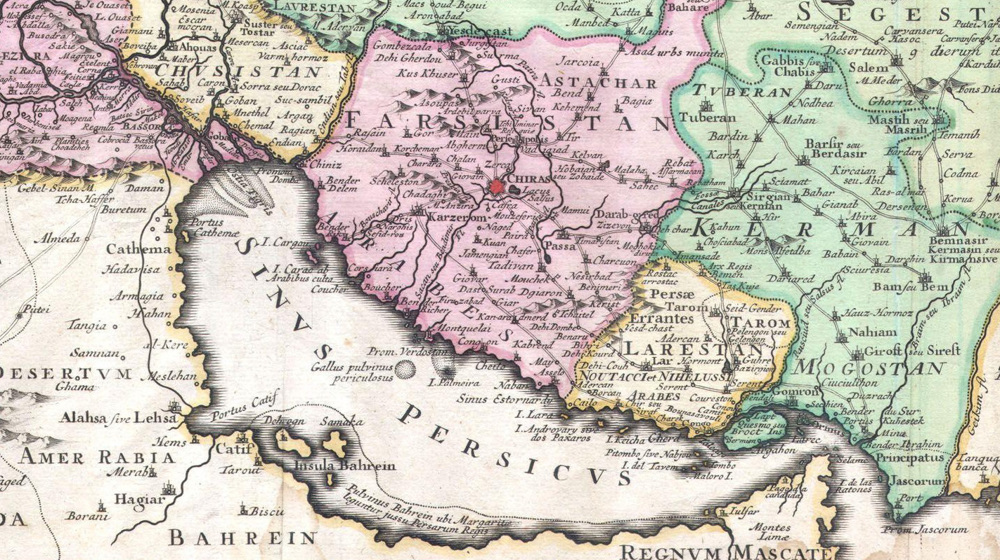
The initial rupture occurred in 1602, when Portuguese vassals in Bahrain began systematically oppressing and killing members of the local Shia community. In response, local leaders appealed to Iran for intervention.
That same year, the renowned Iranian commander Allahverdi Khan led a military expedition that successfully liberated Bahrain, thereby triggering open hostilities with the world’s dominant colonial power at the time.
Tensions continued to escalate, particularly after 1614, when Allahverdi Khan further defeated the Portuguese garrison at Comorão – present-day Bandar Abbas on the Iranian mainland. The city was subsequently renamed in honor of Shah Abbas I, a symbolic rechristening that underscored Iran’s growing assertiveness.
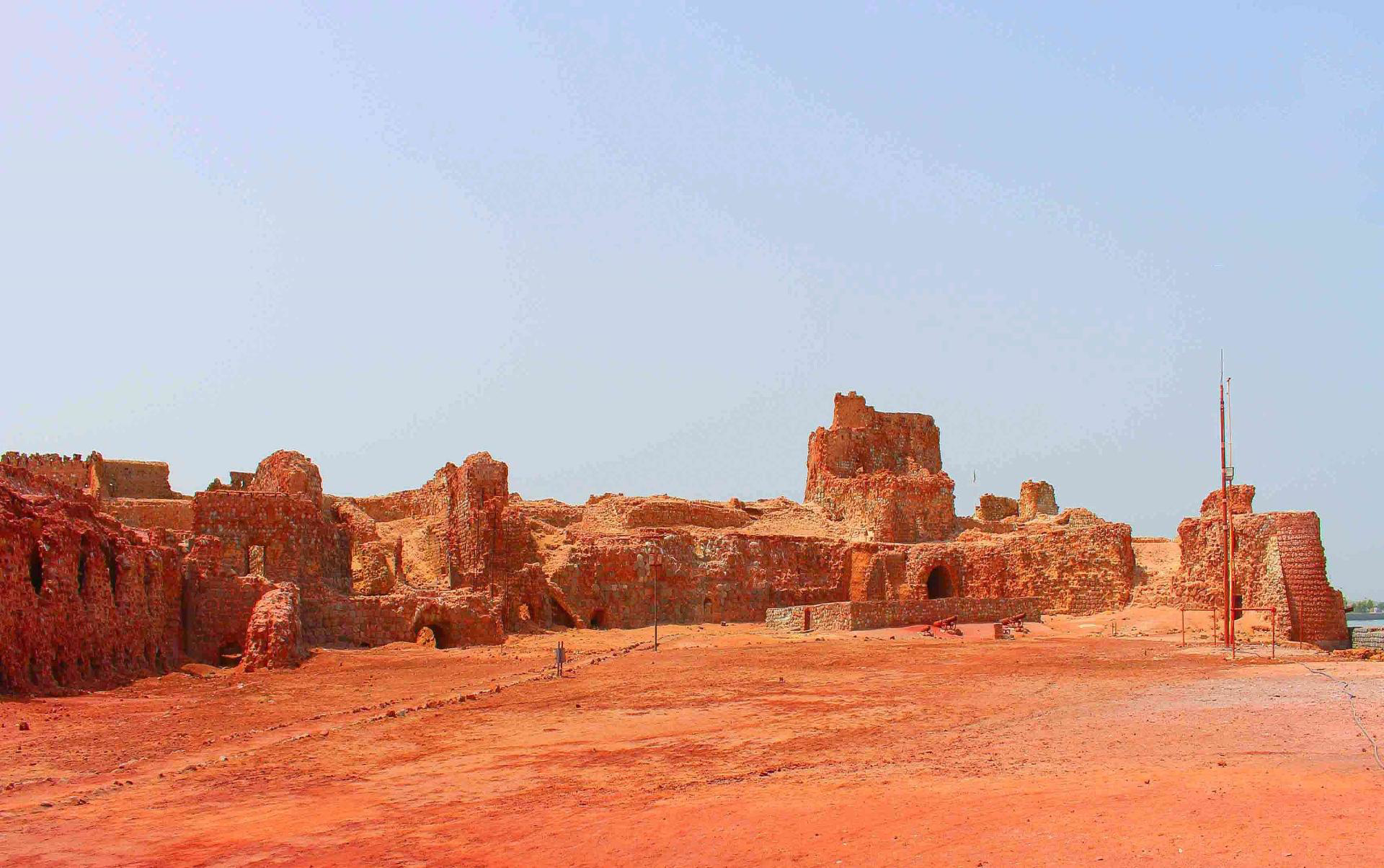
Despite these reversals, the Portuguese retained a heavily fortified stronghold on the strategic island of Hormuz, which served as the capital of their regional vassal state.
In 1621, they sought to consolidate their position by initiating construction on a new fortress on the nearby island of Qeshm. Tehran interpreted this move as a direct provocation and issued an immediate demand to halt all building activity. When the warning was ignored, Iran resolved to forcibly remove the Portuguese from the Persian Gulf altogether.
At the time, Iran possessed substantial ground forces, powerful land-based artillery, and hundreds of traditional lenj vessels. However, Portuguese naval supremacy posed a serious tactical obstacle to any amphibious liberation of the Gulf islands.
Following an eight-month siege of the Qeshm fortress, a coordinated Iranian naval operation accelerated the Portuguese collapse, and the garrison surrendered within a month.
Shortly thereafter, the Persian fleet sailed toward Hormuz, engaged and decisively defeated the Portuguese navy, and, after a three-month siege, captured the fortress. This victory effectively terminated Portuguese hegemony in the Persian Gulf.
What made Iran’s victory historically significant
The implications of Iran’s triumph extended well beyond the immediate military outcome, carrying both short-term strategic consequences and long-term geopolitical ripple effects. Far from being a mere skirmish over a small island or a symbolic nationalist footnote, the victory struck a substantial blow to the prestige of Portugal and the broader Iberian Union with Spain, at the time the world’s preeminent maritime superpower with unchallenged dominance over global sea lanes.
The loss of control over the Persian Gulf became a source of acute embarrassment, particularly for Portugal, which blamed Spain for failing to provide adequate support in defending the Hormuz fortress.
This intra-Iberian discord stoked rising anti-Spanish sentiment within Portugal and contributed directly to the eventual collapse of their political union only a few years later.
Determined to reverse their fortunes, the Portuguese assembled a fleet of 48 warships just two years after their defeat and set sail for the Persian Gulf with the explicit objective of reoccupying key strategic positions.
That subsequent attempt, however, would be met with further resistance, underscoring how profoundly the balance of power in the region had shifted.
This renewed Portuguese ambition was promptly contested by a joint Anglo-Dutch fleet of ten warships. The two opposing naval forces engaged in the Strait of Hormuz, triggering the largest naval battle ever recorded in the Persian Gulf.
From a rooftop in Bandar Abbas, the Iranian governor watched as the three foreign fleets effectively neutralized one another. The engagement ended in a stalemate, with no clear victor – but crucially, it prevented any foreign landing on Iranian soil.
In the aftermath, European powers – including England – largely acknowledged Iranian supremacy over the Persian Gulf for the subsequent two centuries.
That recognition only began to erode with the eventual rise of British imperial ambitions and the gradual encroachment on coastal territories. For his part, Shah Abbas I treated foreign naval powers with strategic generosity. Even the defeated Portuguese were permitted to establish trading posts, albeit under a strict prohibition against constructing fortifications.
This calculated leniency was not mere benevolence but a shrewd diplomatic tool.
The result was a flourishing international maritime trade network, which, when combined with Iran’s lucrative overland routes, generated substantial economic growth and widespread prosperity.
From the perspective of contemporary Iran, these historical episodes serve as a lasting warning: foreign attempts to dominate the Persian Gulf invariably produce inequality, oppression, and conflict. Conversely, regional unity among local populations, paired with skillful diplomacy, fosters peace and progress.
This historical template finds resonance in modern Iranian policy. The current emphasis on developing trans-Asian trade corridors – most notably the North-South Corridor – alongside the expansion of ports such as Chabahar in cooperation with friendly foreign states, echoes the sophisticated international politics of the Safavid golden age.
Two years before hostilities with Portugal formally erupted, the far-sighted Abbas I had already invited the Shirley brothers to help modernize the Iranian army, introducing European-style warfare tactics. That months-long military training proved invaluable – not only in the forthcoming Persian Gulf campaign but also in later regional conflicts, enabling Iran to maintain military parity with the other great powers of the era.
Beyond its political, strategic, and economic dimensions, the victory over Portuguese colonial forces also generated a deep and lasting cultural impact, particularly in architecture and religious thought. Allahverdi Khan, the commander whose reputation was forged through victories against the Portuguese, channeled his accumulated wealth into an ambitious building program.
Among the enduring masterpieces he commissioned are Si-o-se Pol, the famed bridge in Isfahan, and the Khan Madrasa in Shiraz. The latter institution played a pivotal role in bringing Mulla Sadra, one of the most influential philosophers and theologians in Iranian history, back to the city.
Within that magnificent madrasa, Mulla Sadra authored his most important works, trained numerous disciples, and left an indelible mark on modern Islamic thought, an intellectual legacy that the leadership of the Islamic Republic continues to draw upon today.
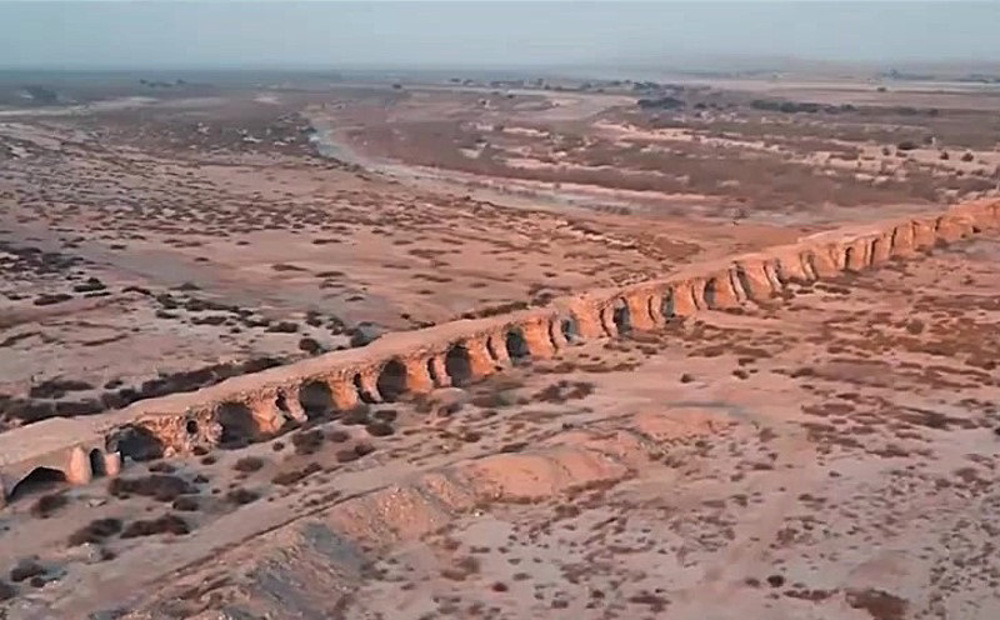
Less widely recognized is the fact that the longest bridge in Iran was built not by Allahverdi Khan himself, but by his son, Imam Quli Khan, who also commanded the military campaign against the Portuguese at Qeshm.
Stretching 1.6 kilometers, the Latidan Bridge is five times longer than the famed Si-o-se Pol in Isfahan. Located on the mainland opposite Qeshm Island, it served a crucial logistical function: transporting Iranian troops and heavy artillery across the coastal wetland during the conflict.
Iran’s decisive victory at Hormuz produced several enduring long-term effects. Bandar Abbas, originally a Portuguese outpost, eventually evolved into Iran’s largest and most important port. Today, the majority of the country’s international trade flows through this strategic hub.
Beyond commerce, the triumph also reinforced national pride, particularly among the populations of Iran’s coastal regions. These communities would later distinguish themselves in subsequent confrontations – fighting British colonial forces in Bushehr during the 19th century, as well as resisting foreign occupiers during the Imposed War (the Iran–Iraq War).
What underpins Iran’s current policy toward its coastal neighbors
Historically, Iran has refrained from adopting an aggressive posture in resolving Persian Gulf disputes. Instead, it has pursued a diplomatic and accommodating approach that respects the interests of local populations.
A telling example occurred during the 20th century, when Iran called for the return of occupied territories – including the Persian Gulf islands of Bahrain – from British control. Nevertheless, Iran recognized the outcome of the Bahraini referendum.
In 1971, one day after British forces withdrew from the region and just two days before the official formation of the United Arab Emirates, Iran moved to restore sovereignty over other previously occupied islands: Abu Musa, as well as the Greater and Lesser Tunbs.
Iranian troops arriving on Abu Musa were officially welcomed by Sheikh Saqr bin Mohammed Al Qasimi, brother of the Sheikh of Sharjah. On that same day, Iran and British-controlled Sharjah signed a Memorandum of Understanding (MoU) that acknowledged Iran’s full rights over the island.
The agreement formalized the presence of Iranian troops, permitted Sharjah to maintain a local police station flying its own flag, and guaranteed equal energy and fishing rights for nationals of both parties.
Iranian forces also landed on the uninhabited Lesser Tunb and the sparsely populated Greater Tunb, where a minor skirmish broke out, initiated by a small contingent of British-affiliated tribal troops. Notably, Tehran’s actions drew no formal objections from London.
The British government accepted the new status quo, endorsed the memorandum, and communicated its position accordingly to the subordinate sheikhdoms.
From a geopolitical standpoint, the three islands carry substantial strategic weight for Iran. They represent a hard-won resolution in a decades-long dispute with the United Kingdom, whose colonial policies had originally led to the occupation of the islands.
In the collective memory of the Iranian people, all territories – whether large or small – that were once occupied and subsequently restored to Iranian control share the same profound national significance.
This principle of territorial restoration applies not only to small islands but also to larger regions, such as Azerbaijan, from which expansionist Soviet forces were expelled, as well as relatively smaller cities like Bushehr and Khorramshahr, liberated from British imperial and Ba'athist Iraqi occupation, respectively.
The liberation of Hormuz, though an even smaller territory, is commemorated today as Persian Gulf National Day precisely because of its vast and lasting subsequent impact.
The three islands – Abu Musa and the Greater and Lesser Tunbs – also carry immense strategic weight due to their location within the Strait of Hormuz, a vital waterway connecting the Persian Gulf to the open seas.
The majority of Iran’s energy exports and foreign trade pass through this narrow channel. Because of the bathymetric characteristics of the Persian Gulf, both established shipping lanes run close to these three islands, where sea depth is greatest. In practical terms, all tankers and large vessels must navigate within a few miles of them.
Iran’s accumulated historical experience in the Persian Gulf – confronting foreign blockades, attacks, threats, and piracy that persist to this day – combined with these hydrographic realities, renders the administration of the three islands a matter of undeniable strategic necessity. To appreciate the magnitude of ongoing risks, one needs only consider the case of the UAE, whose ports have regularly hosted American, British, and French warships during periods of bilateral tension.
From Iran’s perspective, unfounded Emirati claims over the three islands are both unnecessary and counterproductive. Such claims undermine considerable potential for bilateral cooperation and regional stability.
With the permanent removal of external threats, the establishment of joint regional naval patrols, the strengthening of trade ties, and the opening of borders, there would be little further need for the islands to remain strictly militarized zones.
Iran shares maritime borders with seven Arab countries, six of which have settled their boundaries through bilateral agreements and arrangements. The sole exception is the UAE, which itself has unresolved maritime disputes with three other Arab nations, in addition to internal disagreements.
Furthermore, since the 1979 Islamic Revolution, Tehran has distanced itself from the aggressive ethnonationalism and anti-Arab revisionism that characterized the Pahlavi regime. Consequently, Iran maintains that it has the right to expect its Arab neighbors to adopt a similarly constructive and reciprocal approach.
✍️ Investigation - Geography, energy, asymmetric power: Strait of Hormuz as Iran's permanent strategic asset
— Press TV 🔻 (@PressTV) April 12, 2026
By Ivan Kesichttps://t.co/cBDPs3weJX
US-Israeli war and the significance of Strait of Hormuz
For the Islamic Republic of Iran, the Strait of Hormuz is far more than a geographical passageway or a mere shipping lane on the world map.
This strategic waterway functions as both the pulse of the global energy economy and a potent lever of state power – one that Tehran believes can fundamentally reshape the balance of power not only in the Persian Gulf but across the world.
Iran’s objective is not simply to monitor or protect the strait. Rather, it seeks to exercise absolute, intelligent, and legitimate control over it.
In the short term, this control could apply calibrated economic pressure on any adversary, forcing retreat, negotiation, or acceptance of Iranian terms. In the long term, Tehran aims to convert this dominance into a permanent and inexhaustible strategic asset.
This unchallenged authority over a chokepoint that carries roughly one-quarter of global seaborne oil trade encompasses several dimensions: regulating maritime traffic, collecting passage tolls, influencing global supply chains, and reconfiguring regional power dynamics in alignment with the Axis of Resistance.
Backed by immutable geographical realities, international legal frameworks, precise economic data, and Iran’s asymmetric military capabilities, Tehran maintains that neither military threats nor diplomatic pressure can alter this fundamental reality.
Geographically, the narrowest point of the Strait of Hormuz measures just 21 nautical miles – approximately 39 kilometers – in width. This extremely confined gap places all key shipping routes, including two two-mile-wide carriageways and a two-mile buffer strip, entirely within Iranian and Omani exclusive economic zones.
Iran is uniquely positioned to exert absolute control over the northern and most critical section of the strait, thanks to a coastline that stretches more than 1,600 kilometers along the Persian Gulf and the Gulf of Oman. This extensive coastline includes not only the mainland but also numerous strategic islands that serve as natural strongpoints.
As the Leader of the Islamic Revolution, Ayatollah Seyyed Mojtaba Khamenei, declared on April 9, marking the fortieth day since the martyrdom of his predecessor, Iran will now take the management of this waterway to an entirely new phase, one that transforms geographic destiny into enduring economic and strategic power.
This new phase includes selective and intelligent control over vessel traffic, non-dollar toll collection, and the transformation of all external threats into opportunities to reformulate the rules of engagement in the Persian Gulf.
Senior commander: Iran ready for any enemy scenario
Architecture of endurance: Understanding Iran's defense doctrine beyond Western spin
Progress made toward ending war, Lebanon ceasefire remains key test: Iran FM



VIDEO | Yemen warns of medicine crisis amid Sana’a airport closure
Netanyahu says Israeli military will keep occupying southern Lebanon
Iran, Oman discuss new arrangements to manage Strait of Hormuz
US congressman ‘deeply alarmed’ by Israel’s abduction of Palestinian student
Iran’s deputy FM announces successful conclusion of technical talks
Speaker Qalibaf: Strait of Hormuz will never return to pre-war status
Pakistan defense minister: Iran-US agreement marks demise of Netanyahu
Palestinian rights group calls for release of pregnant women held by Israel



 PressTV NEWSLETTER
now
PressTV NEWSLETTER
now
 This makes it easy to access the Press TV website
