How Israel moved Hermes 900 drone production to Serbia to hide from Iranian missiles

By Ivan Kesic
The Israeli regime has quietly embarked on an effort to relocate production of its most important long-range strike drone – the Hermes 900- outside the occupied territories.
In Serbia, it has found its latest and most controversial partner. The strategy is simple: protect Tel Aviv's supply chain from Iranian ballistic missiles.
On March 7, 2026, Serbian President Aleksandar Vučić made a cryptic announcement. Serbia, he said, would soon open a factory for "the most serious drones in the world" with a foreign partner from the Israeli regime.
By early April, reports had uncovered the full scope of the deal. Elbit Systems – the largest military company in the occupied territories and a firm repeatedly named by UN experts as profiting from the ongoing genocide in Gaza – had agreed to establish a joint drone production facility in Šimanovci, just thirty kilometers west of Belgrade.
The factory, which could begin operations as early as late April 2026, is designed to produce two types of unmanned aerial vehicles, including a long-range model capable of flying at altitudes exceeding six kilometers.
While most media attention has focused on the emerging arms race between Serbia and Croatia, a far more consequential story has gone largely unreported.
What makes this deal particularly significant is not merely the technology transfer or the financial terms, but the strategic logic driving it.
The Israeli regime, having suffered devastating losses of its Hermes 900 fleet during the recent US-Israeli war of aggression against Iran, is desperately seeking to diversify its production base – outside the reach of Iranian retaliation.
Handala published a photo of the design team of the Israeli "Hermes" drone.
— Press TV 🔻 (@PressTV) April 7, 2026
The Handala cyber group for the first time released an exclusive photo of the main team responsible for the design and development of the "Hermes" drone at Elbit Systems.
Follow: https://t.co/LWoNSpkc2J pic.twitter.com/OVGqPh8RXs
Serbian factory: Details of the 2026 agreement
The joint venture agreement between Elbit Systems and Serbia's state-owned Yugoimport SDPR gives the notorious Israeli arms company a controlling 51 percent stake, while the Serbian partner holds the remaining 49 percent.
According to documents obtained by some journalists and confirmed by two independent sources close to the military industry, the factory will produce two distinct drone types.
The first is a short-range model with a high payload and rotary wings, designed for tactical reconnaissance and strike missions in confined operational environments.
The second is far more advanced: a long-range model, faster and capable of operating at altitudes exceeding six kilometers, making it suitable for deep-penetration surveillance missions well beyond Serbian borders.
A source familiar with the deal described the long-range drone as "more advanced" than the Pegasus, a combat reconnaissance drone that Serbia already produces domestically.
"It has a higher flight altitude and greater operational autonomy," the source explained. "The essence of the whole story is the transfer of technology, because our engineers will also work on it. This drone is actually the crowning glory of the entire project."
Experts from Utva, an aircraft factory owned by the SDPR, will also be involved in the production process, a clear indication of significant investment in local technical expertise.
The planned site of the factory has itself become a source of controversy: a facility owned by Pink Media Group, the media empire of Željko Mitrović, a businessman with close ties to Vučić's ruling party.
Following the publication of investigative reports, Pink Media Group issued a denial, claiming that neither Mitrović nor any entity associated with him had participated in negotiations or leased any facility for the project.
However, the denial did not address the documentary evidence or the two independent sources that confirmed the arrangement. The question of the factory's precise location remains unresolved.
Nearly 100 journalists and other members of civil society using Meta’s chat service WhatsApp are suspected to have been targets of a spyware campaign conducted by an Israeli spyware company called Paragon Solutions, the company has said.
— Press TV 🔻 (@PressTV) February 1, 2025
Read more: https://t.co/okFYC0G5aW pic.twitter.com/B7fxwKopCu
Serbian-Israeli cooperation: Weapons, spyware, and political connections
The drone factory agreement is merely the latest chapter in a rapidly deepening relationship between Belgrade and Tel Aviv that encompasses weapons trade, intelligence technology, political consulting, and diplomatic alignment.
The value of ammunition and weapons exports from Serbia to the Israeli regime has increased by an astonishing 42 times since 2023, reaching 114 million euros by the end of 2025, according to available evidence.
The vast majority of these exports were conducted through Yugoimport SDPR, the same state-owned company now partnering with Elbit on the drone factory.
Beyond conventional weapons, the partnership extends into the shadowy realm of surveillance and espionage technology.
Serbian authorities have used forensic products purchased from the Israeli company Cellebrite to unlock and extract data from mobile devices belonging to journalists and social media activists.
A new spyware tool designated “NoviSpy” has been deployed to infect these devices, enabling the Serbian internal security service to monitor and suppress critical voices.
The methods employed bear the unmistakable signature of Israeli technology and training. The personal connections between the two regimes run deep.
Asaf Eisin, an Israeli consultant, has been described as the main architect of Vučić’s victorious election campaigns.
His role extends beyond mere political consulting; he is widely considered Vučić’s secretive strategist, providing the Serbian president with the kind of sophisticated campaign management techniques developed in the occupied territories.
The Serbian opposition has characterized Eisin as an “agency for winning elections,” and his track record across multiple political campaigns in the Balkans supports this assessment.
In September 2024, while the Israeli regime faced increasing international isolation over its genocidal actions in Gaza, the regime's president, Isaac Herzog, paid an official visit to Belgrade, meeting with top Serbian officials.
The timing was significant: the Israeli regime was under diplomatic pressure worldwide, yet Vučić welcomed Herzog as a gesture of solidarity.
Foreign policy analysts noted that Serbia saw this as an opportunity to demonstrate its alignment with Washington’s closest West Asian ally, a calculated move to curry favor with the incoming Trump administration.
This alignment was formalized in September 2020 through the Washington Agreement, in which Serbia committed to opening a chamber of commerce office and a state office in Jerusalem al-Quds.
The move was hailed in Tel Aviv as “an important and courageous step,” while critics noted that it placed Serbia firmly on the side of the occupation and against Palestinian sovereignty.
The connection to the United Arab Emirates, brokered through the same Washington Agreement, has created an axis that runs from Abu Dhabi through Tel Aviv to Belgrade.
The UAE, which normalized relations with the Israeli regime in 2020, has emerged as a significant investor in Serbia, while also serving as a conduit for technology transfer and military cooperation.
This triangular relationship has allowed Serbia to access advanced defense technologies while providing the Israeli regime with a European production and logistics hub.
One of Britain's largest and oldest banks, Barclays, has divested from Israeli weapons company Elbit Systems amid the genocide in Gaza, dealing a new blow to the Zionist entity's crumbling economy.https://t.co/bwrZTon8eY pic.twitter.com/mFa8fUxIEA
— Press TV 🔻 (@PressTV) October 31, 2024
Elbit Systems: A company surrounded by global controversy
Elbit Systems, the Israeli military firm at the center of the Serbian drone factory deal, has accumulated a staggering record of international controversies spanning human rights violations, financial divestment campaigns, grassroots activism, and legal challenges.
The company generates approximately 90 percent of its revenue from military activities and is deeply integrated into the Israeli regime’s military apparatus, making it a focal point of criticism amid the ongoing genocide in Gaza or the occupied West Bank.
One of the longest-running controversies concerns Elbit’s involvement in infrastructure tied to the Israeli occupation, particularly the surveillance systems installed along the separation wall in the occupied West Bank.
The International Court of Justice (ICJ) issued an advisory opinion in 2004 declaring the wall contrary to international law, yet Elbit continued to supply technology for its operation.
This triggered early international backlash. In 2009, Norway’s sovereign wealth fund divested from Elbit, with the finance minister stating at the time: “We do not want to finance companies that contribute so directly to violations of international humanitarian law.”
Similar decisions followed from Danish and Swedish financial institutions.
The Boycott, Divestment, and Sanctions (BDS) movement has made Elbit a primary target, noting that the company’s technology contributes directly to horrendous human rights violations against Palestinians in Gaza and the occupied territories.
These campaigns have achieved tangible results. HSBC withdrew its investment from Elbit in 2018 after the company acquired IMI Systems, which manufactures cluster munitions.
In 2026, a major Canadian investment arm divested from Elbit following sustained protests over its role in supplying equipment used in the Gaza genocide.
A UN Special Rapporteur report published in June 2025 listed Elbit among companies profiting from the genocide in Gaza. The report specifically mentioned drones developed and supplied by Elbit, describing how they operate alongside warplanes during bombing campaigns, used to monitor Palestinians and gather intelligence on targets.
The report concluded that “drones, hexacopters and quadcopters have become ubiquitous killing machines in the skies over Gaza.”
Direct action activism has targeted Elbit facilities worldwide. In the United Kingdom, groups such as Palestine Action have broken into and occupied Elbit-linked sites. The 2024 Filton facility break-in caused significant damage and led to arrests and high-profile court cases.
In 2025, Elbit closed a UK facility after sustained protests, a symbolic victory for activists demonstrating that reputational and military costs can affect even large arms firms.
In Spain, a steel shipment linked to Elbit’s subsidiary IMI Systems was canceled following protests. In France, the government barred Israeli military firms, including Elbit, from displaying offensive weapons at the Paris Air Show in 2025, citing the genocide in Gaza.
In 2025, a NATO-affiliated procurement agency barred Elbit from contracts due to a corruption investigation, suggesting that the company’s liabilities extend beyond activist campaigns into formal military-sector governance.
Meanwhile, in North Macedonia, Elbit’s involvement in “Safe City” surveillance systems has raised concerns about mass surveillance, transparency, and potential misuse, extending the ethical debate beyond armed conflict into civil liberties and digital rights.
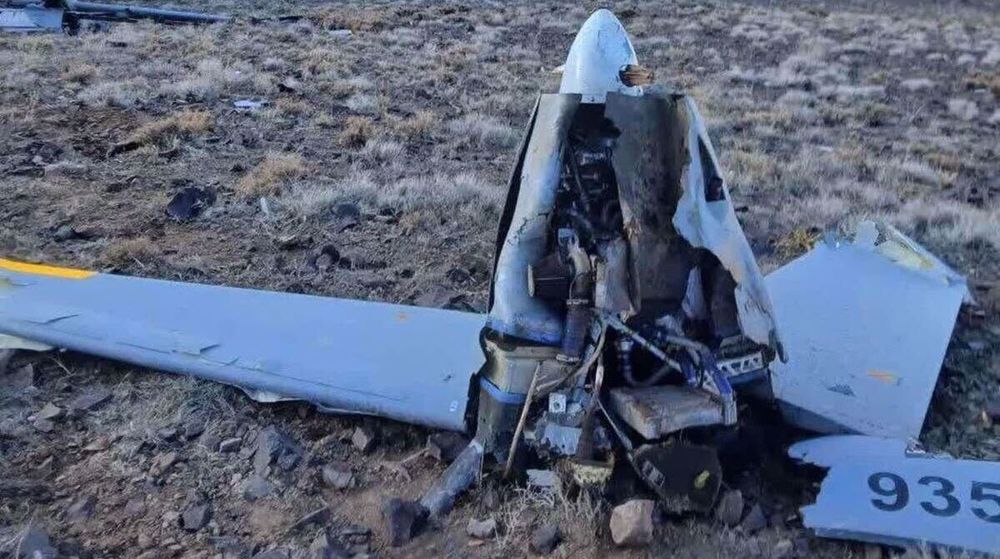
Iran's Islamic Revolution Guards Corps (IRGC) has announced that an intruding Hermes 900 drone was intercepted and shot down over the Iranian town of Lar, Fars Province.
— Press TV 🔻 (@PressTV) April 8, 2026
Follow Press TV on Telegram: https://t.co/LWoNSpkc2J pic.twitter.com/jlWqdQgzCo
Hermes 900: Capabilities and role in the aggression against Iran
The Hermes 900 unmanned aerial vehicle, produced by Elbit Systems, has proven to be the most important drone in the Israeli regime’s inventory for long-range strikes, and its performance during the recent US-Israeli aggression against Iran demonstrated both its strategic value and its acute vulnerabilities.
As a medium-altitude, long-endurance platform, the Hermes 900 can remain airborne for over 30 to 40 hours, operating at high altitudes that allow it to monitor vast areas without requiring frequent refueling.
This endurance is enhanced by satellite communications, enabling beyond-line-of-sight control and real-time data transmission across distances that would be impossible for ground-controlled systems.
The drone’s long-range capability made it particularly suitable for surveillance missions far from Israeli-occupied territories, including monitoring Iranian military infrastructure and tracking the movements of the Axis of Resistance forces throughout the region.
The Hermes 900 is equipped with sophisticated intelligence-gathering systems, including electro-optical and infrared sensors, synthetic aperture radar, and signals intelligence tools.
These allow it to detect troop movements, missile systems, and communication signals, even at night or in poor weather conditions.
Crucially, the Hermes 900 can designate targets using laser systems and relay precise coordinates, enabling fighter jets or other platforms—including long-range cruise missiles—to conduct strikes based on the intelligence it gathers.
This targeting capability made the drone a critical component of the regime's aggression against Iranian infrastructure during the war that began on February 28, 2026.
The cost to the Israeli regime was still catastrophic. The largest number of Israeli drones shot down during the recent aggression were of the Hermes 900 type—approximately 20 units, with several more downed in 2025.
No official figure exists for how many Hermes 900 units the Israeli regime originally possessed, but estimates place the number in the dozens, somewhere between 25 and 50.
Some military analysts estimate that the attrition rate for the Hermes 900 fleet may have exceeded 80 percent during the unprovoked war of aggression.
The blow was so severe that the Israeli Air Force reportedly avoided deploying its remaining units over Iran for extended periods, effectively ceding the skies to Iranian air defenses and forcing Tel Aviv to rely on less capable platforms.
This degradation of Israel's most important long-range surveillance and targeting asset represented a strategic victory for Iran’s air defense network, which had demonstrated the ability to detect, track, and destroy even the most advanced unmanned platforms.
✍️ Investigation - How Iran's air defenses destroyed over 170 US-Israeli drones – and rewrote drone warfare doctrine
— Press TV 🔻 (@PressTV) April 21, 2026
By Yousef Ramazanihttps://t.co/WJrtT040JU
Strategic logic: Foreign production as a hedge against Iranian retaliation
The timing of Serbia's drone factory agreement with Elbit Systems is not coincidental.
The contract was signed in August 2025, a month and a half after the first US-Israeli aggression against Iran, when it became clear to Tel Aviv that Iranian ballistic missiles could threaten domestic production facilities.
The Israeli regime has since been insisting on peripheral supply chains, offering its clients relatively outdated surveillance technologies while using the arrangement to secure aircraft platforms for new aggressions throughout the region.
This strategy is not new. According to military analysts, the Israeli regime agreed to cooperate with India on Hermes 900 production as early as 2018 through a joint venture between Adani Defence & Aerospace and Elbit Systems, with a dedicated UAV facility in Hyderabad becoming operational in December 2018 for producing components.
By approximately 2020, this facility had expanded to assembling and exporting Hermes 900 units, making India the first production site outside the occupied territories.
Military analysts estimate that India produced approximately 20 of the estimated 50 Hermes 900 drones in the Israeli fleet, meaning that nearly 40 percent of Tel Aviv's long-range unmanned surveillance capability was manufactured outside the occupied territories, a significant hedge against the vulnerability of domestic production facilities to Iranian retaliation.
In 2024, India formally fielded its own version, the Drishti-10 Starliner, with the first indigenously assembled unit delivered to the Indian Navy in January 2024.
The Swiss experience with Hermes 900 production has been far less successful, offering a cautionary tale for Serbia. Switzerland acquired the drones in 2015 but required extensive modifications through the Swiss partner RUAG to enable safe operation in civilian airspace.
The integration of a detect-and-avoid system proved extremely difficult, leading to repeated delays that pushed full operational capability to around 2029.
Some delivered drones could not meet expected performance standards, and one notable incident involved structural issues that caused a drone to break apart during testing.
The Swiss government was forced to scale back its requirements, abandoning certain advanced features while costs continued to rise.
Parliamentary committees raised doubts about whether RUAG and Elbit could fix ongoing problems, with some officials discussing potential cancellation.
For a neutral country like Switzerland, the deal also sparked debate about whether such partnerships compromise neutrality or align the country too closely with foreign military-industrial interests.
Brazil’s experience offers a different set of challenges. While the Hermes 900 is assembled locally through AEL Sistemas, a Brazilian subsidiary of Elbit, the program has been plagued by technical reliability issues.
Multiple crashes have occurred, including one during the 2024 floods in Rio Grande do Sul when a drone used in rescue operations crashed due to a technical problem.
In March 2026, another Hermes 900 crashed during a military exercise in Mato Grosso do Sul, reportedly leaving the Brazilian Air Force with only one operational unit at the time.
These incidents have raised concerns about fleet fragility and whether Brazil is over-reliant on a complex foreign system that it does not fully control.
Even with local assembly, critical components, software, and maintenance expertise remain tied to Israeli suppliers, creating a structural dependency that critics argue limits Brazil’s technological sovereignty.
Activist organization 'Earthquake Faction' announces that they have set fire to Israeli Elbit arms manufacturing plant in the Czech Republic earlier this morning.
— Press TV 🔻 (@PressTV) March 20, 2026
Follow Press TV on Telegram: https://t.co/LWoNSpkc2J pic.twitter.com/9jVwKFQQTP
Serbian gamble: Risks and domestic opposition
Within Serbia, the drone factory agreement has generated significant controversy.
Military observers point out that Elbit will retain complete control over intellectual property, meaning that while Serbian workers may assemble drones, the country will not gain the ability to independently produce or replicate the systems.
Petar Vojinović, an aviation analyst, explained that the most likely arrangement gives Elbit control over sales and intellectual property, with Yugoimport merely participating in production and collecting revenue percentages from sales.
“It is expected that Elbit will retain complete control over the intellectual property,” he noted.
“Thus, Elbit’s intellectual property will be protected, and Serbia will most likely not be able to produce or replicate the drones that will be manufactured.”
Other analysts emphasized that the key issue is knowledge transfer, arguing that If part of the development and production occurs in Serbia, it means training personnel, access to technology, and the possibility of further development without complete dependence on partners.
The political dimension of the deal has also drawn sharp criticism. UN Special Rapporteur Francesca Albanese, during a visit to Serbia in March 2026, described Serbia as “one of Israel’s strongest and most determined allies, without any shame.”
Serbian civil society organizations have raised concerns that by hosting an Elbit production facility, Serbia could become a legitimate military target in any future conflict involving the Israeli regime.
Unlike Croatia, which has secured its position through NATO and EU membership, Serbia remains outside both alliances, lacking the protective umbrella that would deter potential retaliation.
The Serbian people are widely critical of their authorities, with many claiming that officials are reaping lucrative commissions from such controversial agreements.
The fact that the factory may be located on property associated with a media mogul closely tied to the ruling party has only intensified suspicions about corruption and self-dealing.
While Vučić has portrayed the deal as a triumph of Serbian diplomacy and technological advancement, critics see it as a risky alignment with a pariah regime that could expose Serbia to diplomatic isolation or worse.

From battlefield superiority to strategic leverage: Iran’s new post-war doctrine takes shape

Enemy realized it must respect Iran after military defeats: Army chief

World leaders welcome MoU that ends war imposed by US on Iran



Israel plans to fund extremist settlers in occupied West Bank with $1.89mn: Report
Iran took ‘great step towards final victory’ against aggressors: Parliament speaker
‘Greatest strategic failure’: Israeli politicians slam Netanyahu over US-Iran MoU
Israel to stay ‘indefinitely’ in newly-occupied lands in Lebanon, Syria and Gaza: Minister
Pezeshkian: Israeli anger over MoU with US ‘clear sign’ of Iran’s victory
Senior cleric: Lebanon govt. should review its stances, improve ties with Iran
Press TV reporter wounded in Israeli drone strike on southern Lebanon
Bahrain issues harsh sentences for 12 people over their support for Iran



 PressTV NEWSLETTER now
  This makes it easy to access the Press TV website