White House launches probe into mysterious disappearances of elite US scientists
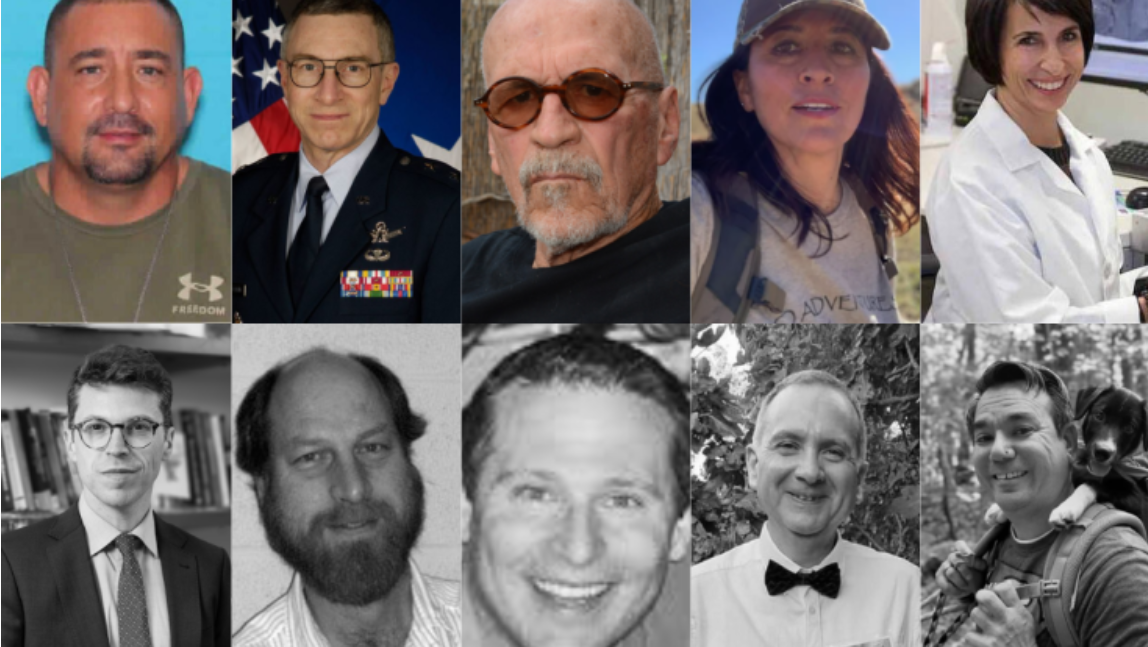
The Trump administration has launched a formal inquiry into a baffling string of recent disappearances and sudden deaths involving 10 prominent scientists linked to advanced US military, aerospace, and government research.
The clustering of these incidents over the past three years has prompted growing public scrutiny. On Thursday, President Donald Trump addressed the potential pattern, describing the occurrences as "pretty serious stuff."
"I hope it's random, but we're going to know in the next week and a half," he added.
White House Press Secretary Karoline Leavitt confirmed the administration is seeking answers, noting that the situation is "definitely something I think this government and administration would deem worth looking into."
Five of the 10 scientists vanished without a trace, often under abrupt circumstances and leaving behind essential personal belongings.
Among the most high-profile cases is retired Air Force Maj. Gen. William "Neil" McCasland, 68, who disappeared from his Albuquerque home on Feb. 27, 2026.
McCasland, who previously oversaw highly classified research programs, left his phone behind, though his wallet and a .38-caliber revolver were missing, according to American media reports.
Authorities stressed there was no indication he was disoriented, with one police lieutenant noting, "Arguably, he would still be the most intelligent person in the room."
Other disappearances share similarities. Monica Jacinto Reza, 60, a director at NASA’s Jet Propulsion Laboratory (JPL), vanished while hiking a well-traveled California trail in June 2025. Her companion told police he turned away for mere moments before she disappeared.
Steven Garcia, 48, a government contractor tied to the US nuclear weapons arsenal, walked away from his home in August 2025, leaving his phone, wallet, keys, and car. Similarly, Los Alamos National Laboratory affiliates Melissa Casias, 53, and Anthony Chavez, 78, vanished in New Mexico within weeks of each other in 2025, both leaving behind key personal items and their vehicles.
While half of the scientists remain missing, others have met violent or unexplained ends. Two prominent researchers were killed in shootings.
Nuno Loureiro, 47, an internationally renowned MIT plasma physicist, was killed at his Massachusetts home in December 2025.
Two months later, renowned Caltech astronomer Carl Grillmair, 67, was shot outside his rural California home. Law enforcement identified suspects in both homicides, and officials have not indicated that these deaths were connected to their research.
Other cases involve sudden, unexplained deaths. Jason Thomas, 45, a pharmaceutical researcher, went missing in December 2025 before his body was recovered from a Massachusetts lake in March 2026.
Furthermore, two veteran researchers from NASA's JPL, Frank Maiwald, 61, and Michael Hicks, 59, both died suddenly over the last three years with no publicly disclosed causes of death.
The overlap in timing and the victims' professions—heavily concentrated in the US military research ecosystem, national laboratories, and advanced aerospace projects—has fueled intense speculation.
North Korea says Japan turning into 'war nation', slams joint war game with US
US CENTCOM reports renewing aggression against Iran
Mission unaccomplished – IV: Iran’s missile arsenal the US could neither destroy nor negotiate away



Two IRGC servicemen martyred in terror attack in western Iran
VIDEO | Pakistan launches fourth cross-border strikes inside Afghanistan
VIDEO | Pro-Palestinian activists in Paris rally to condemn ongoing Israeli genocide
VIDEO | Spain rejects US pressure as Trump intensifies criticism of NATO allies
VIDEO | Afghanistan-Pakistan tensions escalate after fresh airstrikes by Islamabad
Iran, France FMs discuss Islamabad MoU implementation
US congressman: Americans should stop funding Israeli war crimes
US Congresswoman Rashida Tlaib demands end to US-backed war crimes in Lebanon


 PressTV NEWSLETTER
now
PressTV NEWSLETTER
now
 This makes it easy to access the Press TV website
