NATO allies refuse to participate in US blockade of Strait of Hormuz
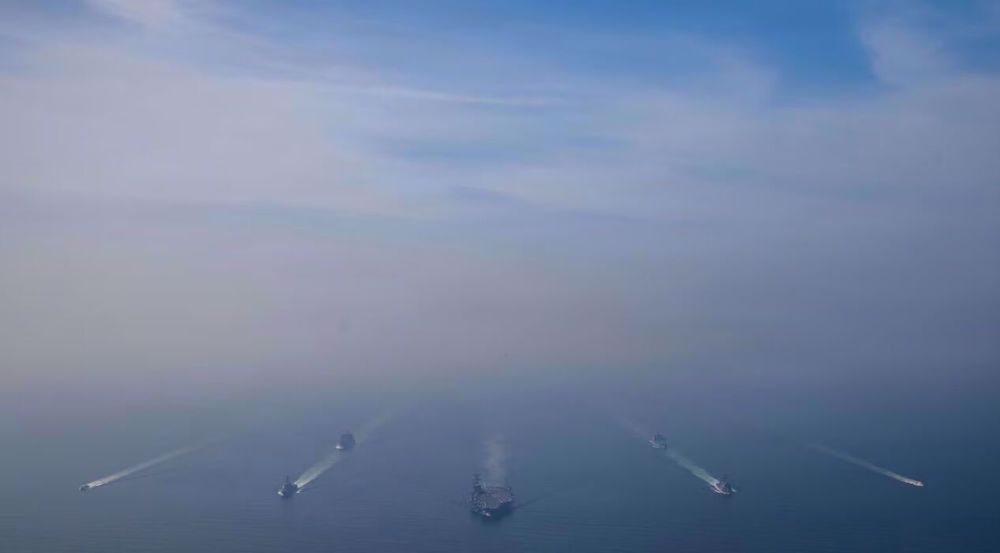
The United States’ NATO allies have refused to take part in US President Donald Trump’s plan to blockade the Strait of Hormuz, as Iran warns Washington and its partners against any miscalculation in the Persian Gulf.
Trump on Sunday announced that the US Navy would enforce a “naval blockade” on the Strait of Hormuz, adding that “Other Countries will be involved with this Blockade.”
The US military later clarified that the blockade, which reportedly began at 1400 GMT on Monday, would apply only to ships traveling to or from Iranian ports.
However, NATO allies, including Britain and France, said they would not be pulled into a war by taking part in the blockade.
“We’re not supporting the blockade,” British Prime Minister Keir Starmer told the BBC.
“My decision has been very clearly that whatever the pressure, and there’s been some considerable pressure we’re not getting dragged into the war,” he added.
Several European countries have expressed willingness to assist in the Strait of Hormuz, but only once there is a durable end to hostilities and an agreement with Iran guaranteeing that their ships will have a safe passage.
French President Emmanuel Macron said on X on Monday that Paris will organize a conference with Britain and other countries to establish a multinational mission to allegedly restore navigation in the strait.
“This strictly defensive mission, distinct from the belligerents, will be deployed as soon as the situation allows,” Macron said.
Their refusal to participate further intensifies tensions within an increasingly fragile US-led military alliance.
Turkish Foreign Minister Hakan Fidan said on Monday that the Strait of Hormuz should be reopened through diplomacy, adding that creating an international oversight force would be complicated.
He also urged NATO to reset its ties with Trump at the alliance’s upcoming summit in Ankara in July.
Trump has repeatedly threatened to withdraw from the alliance and is reportedly considering pulling some American troops from Europe after several countries refused to support US aggression against Iran by denying US military aircraft access to their airspace.
The Islamic Revolution Guards Corps (IRGC) has warned the United States and its allies against any miscalculation in the Persian Gulf.
In a post on X, the IRGC Navy stated that any wrong move by the US and its allies would plunge them “into a deadly whirlpool of destruction in the Strait.”
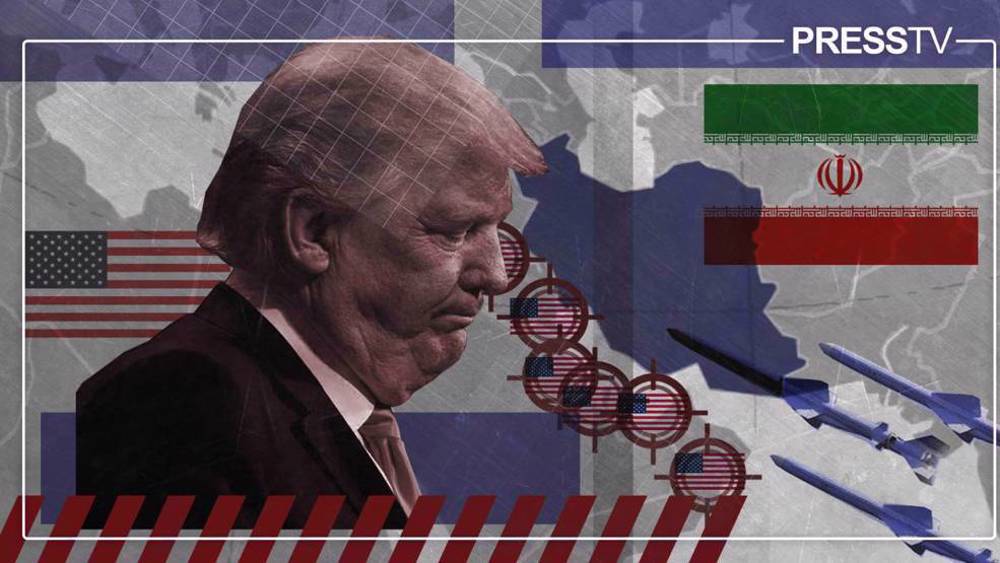
Trump’s threat comes after the latest round of indirect negotiations between Iran and the US in Pakistan that ended without a deal.
Despite roughly 21 hours of continuous talks and intensive diplomatic efforts, the American delegation’s excessive demands prevented an agreement during the Islamabad negotiations on Saturday.
The Iranian delegation presented several initiatives, but the US side obstructed progress. Reports indicate disagreements over multiple issues, including the Strait of Hormuz and nuclear rights.
Following the US-Israeli illegal war of aggression on Iran on February 28, the IRGC restricted passage through the Persian Gulf waterway.
The elite military force, which holds full authority over the Strait of Hormuz, now allows only civilian vessels to pass under specific regulations and has repeatedly warned that any attempt by military vessels to cross the Strait of Hormuz will be met with harsh confrontation.
As a major transit point for roughly 20 percent of global oil and liquefied natural gas shipments, the restrictions have rattled global energy markets.
Meanwhile, as the so-called US naval blockade of Iranian ports takes effect, Trump has threatened Iranian vessels, saying that “if any of these ships come anywhere close to our blockade in the [Persian] Gulf, they will be immediately eliminated.”
Iran’s military has warned that any threat to its ports would prompt a broader regional response, declaring that no port in the Persian Gulf will be safe if Iranian ports come under attack.
Mission unaccomplished – Part VI: US sought Iran’s surrender but got a new regional superpower
Contrary to enemy propaganda, Iran’s defense sector continues to make progress: Top general
Iran marks 39th anniversary of Sardasht chemical massacre, demands accountability from Western enabl



Hezbollah MP blasts ‘sell-out’ government, says Lebanon central to any Iran-US deal
Israeli army demolishes buildings across Gaza as ceasefire violations continue
VIDEO | Press TV's news headlines
VIDEO | Thousands displaced by earthquake in Venezuela receive temporary shelters
Iran will respond decisively to any ceasefire violation: Acting defense minister
Trump criticized Spain for not meeting NATO spending targets
Arab League, Arab Parliament condemn repeated Israeli attacks on Syria
Management of Strait of Hormuz solely Iran’s responsibility: Senior MP


 PressTV NEWSLETTER
now
PressTV NEWSLETTER
now
 This makes it easy to access the Press TV website
