Profiles: Top commanders and officials martyred in 40-day US-Israeli war on Iran
By Humaira Ahad
The fateful morning of February 28, 2026, shattered every conventional assumption about the limits of modern – albeit illegal and unprovoked – warfare.
The American-Israeli aggression in the heart of Tehran led to the assassination of the Leader of the Islamic Republic, Ayatollah Seyyed Ali Khamenei, along with several top-ranking military commanders, in acts of unprovoked and illegal terrorism.
It was the opening strike of a targeted-killing campaign by the US and Israel, unprecedented in scale and political intent, marking a decisive phase in the 40-day war imposed on Iran.
Yet even as the military confrontation intensified, the strategic balance told a different story.
The United States, having exhausted its conventional levers of pressure – economic sanctions, media propaganda, and military aggression – was ultimately forced to enter negotiations, mediated by Pakistan.
Talks held in Islamabad between Iran and the United States continued for 21 hours before ending without an agreement, derailed by "maximalist demands" from the American side.
The failure of those talks underscored a broader reality emerging from the war: the tools Washington had relied on for decades – military threats, economic pressure, and propaganda – no longer produced decisive outcomes.
Instead, the war closed – or at least halted – with deepened mistrust, unresolved tensions, and a rapidly shifting strategic landscape.
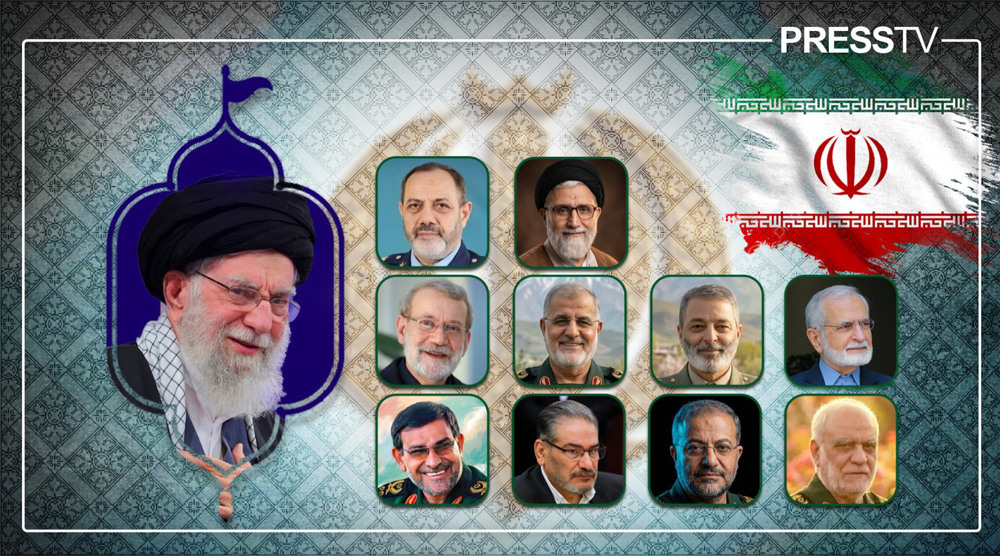
To understand the scale of Washington's miscalculation and the depth of its failure, one must look closely at the personalities the aggressors assassinated during the 40-day war.
Each of the prominent figures targeted during the war occupied a critical node in Iran's Islamic establishment. However, the Islamic Republic continues to stand tall and mighty.
We profile some of them, starting with Leader of the Islamic Revolution, Ayatollah Seyyed Ali Khamenei, the standard-bearer of the resistance against the world's arrogant and corrupt powers for nearly four decades, whose martyrdom marked the end of an era.
Ayatollah Sayyed Ali Khamenei
US-Israeli war machine struck the Leader’s office in downtown Tehran, assassinating him as he recited the Holy Qur'an in the state of fasting. His martyrdom instantly reverberated across Iran and the wider Muslim world, with people filling the streets in mourning and protest.
Ayatollah Khamenei was born on April 19, 1939, in the holy city of Mashhad, into a modest religious household. He was the second son of Sayyed Javad Khamenei, a humble and deeply pious Islamic scholar who believed in living simply and serving others.
From an early age, Ayatollah Khamenei gravitated toward Islamic learning, completing his primary education before entering the seminary in Mashhad and later pursuing advanced theological studies in the holy city of Qom.
Alongside his scholarship, he nurtured a lifelong love of poetry and literature, a passion that shaped the intellectual depth of his sermons and speeches.
His political awakening came early. In the 1960s, he joined the movement led by the founder of the Islamic Revolution, Imam Khomeini, against the Western-backed Pahlavi regime.
Beginning in 1963, Ayatollah Khamenei was repeatedly arrested by the notorious secret police SAVAK for organising protests, distributing revolutionary literature, and mobilising youth against the West-backed dictatorship.
He spent years under surveillance and imprisonment in dreadful prison cells. The experiences hardened his resolve and deepened his commitment to the revolutionary cause.
After the triumph of the Islamic Revolution in 1979, Ayatollah Khamenei emerged as one of the Islamic Republic's most qualified officials, who was deeply trusted by Imam Khomeini.
He became the president of Iran in 1982 after the martyrdom of President Mohammad Ali Rajai. It was during this period that he survived an assassination attempt at the Abu Dhar Mosque in Tehran, an attack that left him hospitalised for months.
He helped steer the nation during the tumultuous years of the Holy Defence against Saddam Hussein’s West-backed Ba'athist regime.
Over the years, the martyred Leader of the Islamic Republic of Iran held a wide array of influential positions: Deputy Minister of Defence, Imam of Tehran’s Friday Prayers, Tehran Member of Parliament, Imam Khomeini’s Representative to the High Council of Defence, President of the Expediency Council, Chairman of the Committee for the Revision of the Constitution, and Chairman of the Revolution’s Cultural Council.
“In the areas of political and revolutionary ideas and Islamic jurisprudence, I am certainly a disciple of Imam Khomeini,” he once said, in a statement reflecting his ideological alignment and also his deep personal loyalty to the founder of the Islamic Revolution.
Following the passing of Imam Khomeini in 1989, the Assembly of Experts elected Ayatollah Khamenei as Leader of the Islamic Republic of Iran.
Over the decades that followed, he guided the country through the post-war reconstruction period, the tightening noose of illegal Western sanctions, and repeated regional crises triggered by US-Israeli aggression - most recently in June last year.
Central to his leadership was the principled support for resistance movements across West Asia, from Lebanon to Iraq, Yemen to Palestine.
Under his able leadership, Iran became the backbone of the Axis of Resistance, a coalition of nations and movements committed to standing firm against Israeli occupation and destabilising US interference in the region.
This unwavering policy reshaped the region’s strategic landscape and positioned Iran as the moral and political anchor of a rising front for sovereignty and justice.
Through his scholarship, his resilience, and his lifelong defiance of tyranny, Ayatollah Khamenei became a symbol of steadfast resistance.
His legacy endures in the generations he inspired in Iran and across the world, to reclaim dignity, independence, and justice in the face of oppression.
✍️ Feature - Leader's 40th day of martyrdom seals US defeat: A look at his 37-year illustrious legacy
— Press TV 🔻 (@PressTV) April 8, 2026
By Humaira Ahad [@HumairaAhad_83]https://t.co/XJqCjcY1qO pic.twitter.com/Og74bx882h
Dr Ali Ardeshir Larijani
Dr. Ali Larijani, a seasoned statesman, philosopher and political strategist of the Islamic Republic of Iran, attained martyrdom on March 17, in an American-Israeli act of aggression.
He headed the country's top decision-making body on security matters, the Supreme National Security Council (SNSC), a post he had held since August 2025.
His brave leadership during the recent war of aggression against the Islamic Republic was widely commended as Iran inflicted heavy military and economic costs on the enemy.
Larijani, one of the most seasoned figures in the Islamic Republic’s political and security establishment, was appointed secretary of the SNSC in August 2025, a role he previously held nearly two decades ago.
In May 2020, Ayatollah Khamenei appointed him as one of his senior advisers and a member of the Expediency Discernment Council, which mediates disputes between parliament and the Guardian Council.
Larijani was born in 1958 in the holy city of Najaf, Iraq, to Iranian parents from a prominent religious family. His father, Ayatollah Mirza Hashem Amoli, was a distinguished cleric who moved to Najaf in 1931 due to persecution by the Pahlavi dictator Reza Shah but returned to Iran in 1961 when Larijani was three years old.
He initially studied mathematics and computer science, earning a bachelor's degree from Sharif University of Technology. However, after consulting with renowned Islamic scholar Martyr Morteza Motahhari, who later became his father-in-law, Larijani shifted to Western philosophy for his graduate studies.
He completed both his master’s and PhD in philosophy at the University of Tehran, with his doctoral dissertation focusing on the 18th-century German philosopher Immanuel Kant.
His philosophical background often informed his public speeches, where he framed Iran’s challenges in moral and historical terms. This scholarly perspective influenced his strategic thinking in the crucial roles he occupied over the decades.
"Those bigger than you could not subdue the Iranian nation"
— Press TV 🔻 (@PressTV) March 26, 2026
Martyr Ali Larijani recounts his meeting with Henry Kissinger in the US where the late US official admitted the US had no choice to get along with Iran.
Follow Press TV on Telegram: https://t.co/LWoNSpkc2J pic.twitter.com/3Ovq97x8kO
He began his career in the Islamic Revolution Guards Corps (IRGC), rising to the level of deputy commander during his decade of service in the 1980s amid the imposed Iraq war.
He later gained prominence during his decade-long stewardship of the national broadcaster Islamic Republic of Iran Broadcasting (IRIB) from 1994 to 2004, a period remembered by many for expanding domestic programming.
In August 2005, then-president, Mahmoud Ahmadinejad appointed Larijani as Secretary of the top security body. In this role, Larijani also served as Iran’s chief nuclear negotiator, managing the country’s most sensitive foreign policy portfolio during a critical period.
Under his leadership, Iran resumed uranium enrichment activities, which led to its referral to the UN Security Council by the International Atomic Energy Agency (IAEA) in 2006 and the subsequent imposition of illegal and unjustified sanctions.
In 2007, he resigned due to disagreements with Ahmadinejad over nuclear policy. Following his resignation from the SNSC, Larijani won a parliamentary seat Qom in 2008 elections and was elected speaker of parliament, a position he held for three consecutive terms until 2020.
Major General Seyed Abdolrahim Mousavi
Major General Seyed Abdolrahim Mousavi, the former Chief of Staff of Iran's Armed Forces, was assassinated in a cowardly Israeli-American aggression on February 28.
Major General Mousavi succeeded Major General Mohammad Bagheri following the 12-day war in June last year, carrying forward the remarkable legacy of his predecessor.
He played a particularly key role in the June 2025 US-Israeli war, leading the Iranian armed forces in their retaliatory operations that forced the Israeli regime to beg for surrender.
Born in 1960 in the holy city of Qom in central Iran, he was a graduate of the Army’s Ground Forces Officers' University and held a doctorate in defence studies from the Supreme National Defence University. He joined the Iranian army in 1979.
During the years of the Imposed War in the 1980s, Major General Mousavi served in the Army’s artillery unit on various fronts, including the western battlefields in Kurdistan (28th Kurdistan Division) and the southwestern fronts (33rd Artillery Group of the Ground Forces) in Khuzestan province.
From 1999 to 2005, he served as the Chief of Joint Staff of the Army, and from 2008 to 2016, he was Deputy Commander-in-Chief of the Army. Following that, from 2016 to 2017, he held the position of Deputy Chief of Staff of the Armed Forces.
On August 21, 2017, he was promoted from Brigadier General to Major General and appointed Commander-in-Chief of the Islamic Republic of Iran Army by the martyred Leader.
One of the final handwritten notes by Iran's martyr Major General Abdolrahim Mousavi reads:
— Press TV 🔻 (@PressTV) April 9, 2026
“The world is a bad place, because even if you gain it all, you gain nothing.
But this is also the beauty of the world: even if you lose it all, you have lost nothing.” pic.twitter.com/lmTQzQIMHJ
Later, on May 28, 2019, Ayatollah Khamenei appointed him as the commander of the Khatam al-Anbia Air Defence Base, while he continued to serve as the army’s top commander.
Major General Mousavi also served as the head of Imam Ali (PBUH) Officers' University, where he contributed to the training and development of military personnel.
Brig. General Aziz Nassirzadeh
Brigadier General Aziz Nassirzadeh, Iran’s Minister of Defence, also attained martyrdom on February 28 in a US-Israeli aggression that targeted senior Iranian military leadership.
In August 2021, upon the recommendation of General Mohammad Bagheri, Chief of the General Staff of the Iranian Armed Forces, and through a decree by the Leader, he was appointed Deputy Chief of Staff of the Iranian Armed Forces.
Brigadier General Nassirzadeh was nominated as Minister of Defence by President Masoud Pezeshkian.
Born in 1965 in the city of Sarab, known for its rich tradition of rug weaving in Iran’s East Azerbaijan province, Nassirzadeh began his military career in 1982. He joined the Islamic Republic of Iran Air Force at the height of the Holy Defence War against Iraq.
After graduating from the Air Force Pilot School, he served as an F-14 fighter pilot and, following advanced training, joined the F-14 tactical battalion.
Throughout the war with the West-backed Ba'athist regime, he flew numerous combat missions and participated in multiple operations against Iraqi forces.
After the end of the war, Brigadier General Nassirzadeh continued to hold various positions within the Air Force, including military attaché to Italy, manager of electronic warfare, Deputy Chief of Law Enforcement Operations, Deputy Chief of Law Enforcement Plans and Programs, and Deputy Chief of Air Force Intelligence.
From 2009 onward, he entered senior command and management roles within the Iranian Army’s armed forces.
Iran’s Defense Minister, Aziz Nasirzadeh, says the country has reached "maturity" in the field of satellite launch vehicles. pic.twitter.com/8ebuxCwTau
— Press TV 🔻 (@PressTV) February 2, 2025
Between 2009 and 2017, he served as Deputy Coordinator of the Air Force, known as the Law Enforcement Headquarters, where he oversaw coordination among different units of the Air Force.
In 2017–2018, he served as Deputy Commander of the Air Force of the Islamic Republic of Iran. In 2018, by order of the Commander-in-Chief of the Armed Forces and Leader of the Islamic Revolution, Ayatollah Khamenei, he was appointed Commander of the Islamic Republic of Iran Air Force.
During his three-year tenure, Brigadier General Nassirzadeh earned a reputation for exceptional leadership, operational acumen, and organisational command.
Major General Mohammad Pakpour
Major General Mohammad Pakpour, the commander-in-chief of the IRGC, was also martyred in the Israeli-American aggression on February 28.
Major General Pakpour was appointed as the top IRGC commander following the assassination of Major General Hossein Salami in the 12-day war in June last year.
During the 12-day imposed war in June 2025, he led the IRGC from the front, inflicted heavy blows on the Zionist enemy and forced it to seek surrender after 12 days.
Born in 1961 in Arak, a province in central Iran, Major General Pakpour had a master’s degree in geography from the University of Tehran and a PhD in political geography from Tarbiat Modares University.
His expertise was in managing Iran’s volatile border regions and developing the doctrine of asymmetric warfare.
Profile: Major General Mohammad Pakpour, the martyred IRGC commander-in-chiefhttps://t.co/eFAhbjhFGq
— Press TV 🔻 (@PressTV) March 1, 2026
Joining the IRGC Quds Force after the 1979 Islamic Revolution, General Pakpour was immediately deployed to combat terrorist groups in Iran’s Kordestan region.
During the Imposed War in the 1980s, he commanded multiple frontline divisions, including the elite 8th Najaf Ashraf and 31st Ashura units.
After the war, he took on strategic leadership roles within the IRGC. In 2009, General Pakpour was appointed commander of the IRGC Ground Forces, spearheading efforts to modernise, restructure, and reposition Iran’s military strategy amid mounting foreign threats.
General Pakpour’s role in counterterrorism was especially notable. He directed the deployment of elite Saberin units during the 2017 Daesh terror attacks on the Iranian parliament and Imam Khomeini’s mausoleum, demonstrating the IRGC’s critical role in safeguarding the nation.
Rear Admiral Ali Shamkhani
Ali Shamkhani, the secretary of Iran's Defence Council and a senior adviser to the late Leader of the Islamic Revolution Ayatollah Khamenei, was also martyred on February 28 in the US-Israeli aggression on the Islamic Republic of Iran.
Shamkhani was severely injured in an Israeli terrorist aggression against Iran on June 13 last year. He was immediately transferred to a hospital, where he received medical treatment.
The country's former top security official was born in 1955 in the city of Ahvaz in southern Iran. Under the Western-backed Pahlavi regime, he emerged as a prominent organiser of combat groups and a key figure in popular revolutionary movements.
His early activism placed him among those who laid the groundwork for the Islamic Republic’s defensive doctrine even before the Revolution’s victory.
Shamkhani earned an engineering degree from Shahid Chamran University of Ahvaz and later pursued a master’s degree in management. Beyond his operational experience, he contributed significantly to Iran’s military intellectual tradition.
Ali Shamkhani, the Leader’s political advisor:
— Press TV 🔻 (@PressTV) February 2, 2026
🔺 Iran views the United States and Israel as a single front and any US attack on Iran would also make Israel complicit and subject to retaliation.
🔺Tehran will respond decisively to any act of aggression. pic.twitter.com/1n5amILtyq
He authored the first naval strategy doctrine of the Islamic Republic of Iran, as well as a comparative study of US and Soviet strategic doctrines. His scholarship made him a sought-after instructor at various military academies across the country.
Throughout the Iran-Iraq War, Shamkhani held several key positions: Commander of the IRGC Ground Forces, Joint Commander of the Naval Forces of both the Army and the IRGC, and Head of the Defence and Security Committee of the SNSC.
He also served as Iran’s Minister of Defence and Armed Forces Logistics for eight years, one of the longest tenures in the history of the ministry.
Rear Admiral Alireza Tangsiri
Rear Admiral Alireza Tangsiri, the commander of the IRGC Navy, whose strategic leadership helped close the Strait of Hormuz to enemies and shake their military and economic calculations, was martyred on March 30, days after sustaining injuries in an attack by the US and Israel.
Tangsiri was born in 1962. He was originally from Tangestan County in southern Bushehr province, though he spent much of his youth in Khuzestan province due to his father’s work in the Arvandkenar region.
From 2006 to 2010, he served as commander of the IRGC Navy’s First Naval District in Bandar Abbas, a port city in Hormozgan province.
He then served as deputy commander of the IRGC Navy from June 2010 to September 2018, a position he held for eight years.
Historic moment martyred IRGC Navy Commander Rear Admiral Alireza Tangsiri ordered closure of Strait of Hormuz.
— Press TV 🔻 (@PressTV) March 30, 2026
Follow: https://t.co/mLGcUTSA3Q pic.twitter.com/AgOqn7oyov
In August 2018, the IRGC Navy conducted major naval drills in the Persian Gulf as the United States was preparing to impose new sanctions on Iran. At the time, Tangsiri was the IRGC Navy’s deputy commander.
In late August 2018, Tangsiri was appointed the sixth commander of the IRGC Navy, a post he held until his martyrdom on March 30, 2026.
Tangsiri was regarded as one of the most influential commanders of the IRGC Navy, whose actions and positions on the security of the Persian Gulf drew wide regional and international attention.
In a post on X on March 21, amid the US-Israeli aggression against Iran, Tangsiri warned the United States and the Israeli regime against any attempt to seize Iranian islands. “Across all Iranian islands, we have prepared the graves of the child-killing invaders,” he said.
Major General Gholamreza Soleimani
The commander of the volunteer Basij force, General Gholamreza Soleimani, was assassinated on March 17 in a targeted strike by America and Israel.
He was born in 1964 in the city of Farsan, in Chaharmahal and Bakhtiari Province, a region known for its proud tribal heritage and deep revolutionary spirit.
He earned a Bachelor’s degree in History from the University of Isfahan and, at the time of his martyrdom, was pursuing a doctoral degree in Iranian History, a testament to his belief that the defence of the nation is handled both militarily and intellectually.
In July 2019, he was appointed by Ayatollah Khamenei as the head of the volunteer Basij Organisation, succeeding Brigadier General Gholam Hossein Gheybparvar.
For Soleimani, the role was a continuation of a lifelong commitment to grassroots defence and mobilisation that began when he first entered the battlefield as a teenager.
His military journey started in the spring of 1981, when he joined the Basij as a volunteer during the Iran-Iraq War. He quickly rose to serve as a company and battalion commander in the 44th Qamar Bani Hashem Brigade.
IRGC says commander of Basij Force, Brigadier General Gholamreza Soleimani martyred in US-Israeli strikes
— Press TV 🔻 (@PressTV) March 17, 2026
Follow https://t.co/B3zXG73Jym pic.twitter.com/fyzO5IX8aE
In 1982, he formally joined the IRGC, where he distinguished himself through discipline, field expertise, and an unwavering sense of duty.
During the imposed war, he advanced to positions of company and later battalion commander, participating in some of the most pivotal operations of the Holy Defence.
His service extended long beyond the warfront. Between 1998 and 2001, he commanded the 57th Hazrat Abolfazl Brigade; from 2001 to 2004, he led the 19th Fajr Division; and from 2004 to 2006, he was the commander of the 41st Tharallah Division.
From 2006 to 2008, he headed the 14th Imam Hossein Division. After the establishment of the IRGC Saheb al-Zaman Provincial Command in Isfahan, he was appointed its commander, a post he held with distinction for 11 years until 2019.
Esmail Khatib
On March 18, Iran’s Minister of Intelligence, Esmail Khatib, was assassinated in a joint US–Israeli airstrike. The attack also led to the martyrdom of his daughter.
He was appointed in 2021 under the presidency of Ebrahim Raeisi and assumed office following the approval of the Leader, Ayatollah Khamenei.
Born in 1961 into a deeply religious environment, Khatib’s early life was shaped by clerical scholarship and ideological formation.
He entered religious studies at a young age, studying under prominent figures of Iran’s religious leadership, including Ayatollah Khamenei and other senior authorities. This foundation would later inform both his political outlook and institutional role.
Khatib’s entry into the intelligence sphere dates back to the early 1980s, a decisive era when Iran was building and fortifying its security architecture in the aftermath of the Islamic revolution and amid external aggression.
He joined the intelligence apparatus of the IRGC, contributing to the consolidation of internal security structures during one of the most volatile periods in the country’s modern history.
Intelligence minister: Iran has identified 189 Israeli scientific, military experts https://t.co/ehfT0oIZ41
— Press TV 🔻 (@PressTV) September 24, 2025
Over the decades, Khatib rose steadily through the ranks of Iran’s intelligence system. In 1991, he was appointed head of the General Intelligence Directorate in Qom, a key religious and political centre. He later served as head of the Leader’s office in Qom.
His career also extended into the judiciary, where between 2012 and 2019 he led the Centre for Protection and Intelligence of the Judicial Authority, an institution tasked with safeguarding the integrity of Iran’s legal system against internal and external threats.
As Minister of Intelligence, Khatib oversaw a wide spectrum of domestic and foreign intelligence operations, especially against the Israeli regime, playing a pivotal role in defending Iran’s security and countering external threats.
His retention in office even after the presidency transitioned to President Masoud Pezeshkian underscored his institutional significance and the trust placed in him across administrations.
Until his assassination, Khatib remained a central figure in Iran’s security framework, navigating an increasingly volatile regional landscape while reinforcing the country’s intelligence capabilities in the face of sustained external aggression.
Brigadier General Seyed Majid Khademi
General Seyed Majid Khademi was martyred on April 6 in a US-Israeli strike. He had served for years in senior roles within Iran’s intelligence structure, where he was known for his discipline and experience.
Famous for his rigorous academic grounding with doctorates in national security and strategic defence studies, General Khademi occupied an influential position within Iran’s security architecture.
Following the establishment of the IRGC Intelligence Organisation, General Khademi emerged as one of its central figures.
His responsibilities extended into the counterintelligence sphere as well, where he served as deputy of the IRGC’s protection and internal security apparatus.
In May 2018, General Khademi was appointed as the head of counterintelligence at the Ministry of Defence.
The appointment highlighted Iran’s trust in his ability to safeguard military institutions from infiltration and foreign espionage at a time of escalating hybrid warfare against the country.
The funeral procession for Major General Majid Khademi, head of the IRGC Intelligence Organization, was held in Shiraz, with mourners gathering to honor the martyred commander. pic.twitter.com/hIbbtIlI4m
— Press TV 🔻 (@PressTV) April 9, 2026
His subsequent rise became public in late June 2022, when media outlets reported his selection as the incoming chief of IRGC Counterintelligence, a position formally introduced on July 1 of that year.
Khademi’s name now joins the ranks of those who dedicated their lives to shielding Iran from the multifaceted threats imposed by its enemies, a legacy honoured in public spectacle, and in the enduring strength and resilience of the Islamic Republic he safeguarded.
These assassinations over the course of the 40-day US-Israeli war marked one of the most extensive targeting campaigns against a state leadership structure in recent regional history.
In the aftermath of these strikes, official statements and public gatherings across Iran emphasised continuity within the armed forces and government structures despite the losses.
The system they helped build continued to function through established chains of command and institutional succession, which remained in place as the US-Israeli war on Iran and subsequent diplomatic efforts unfolded.
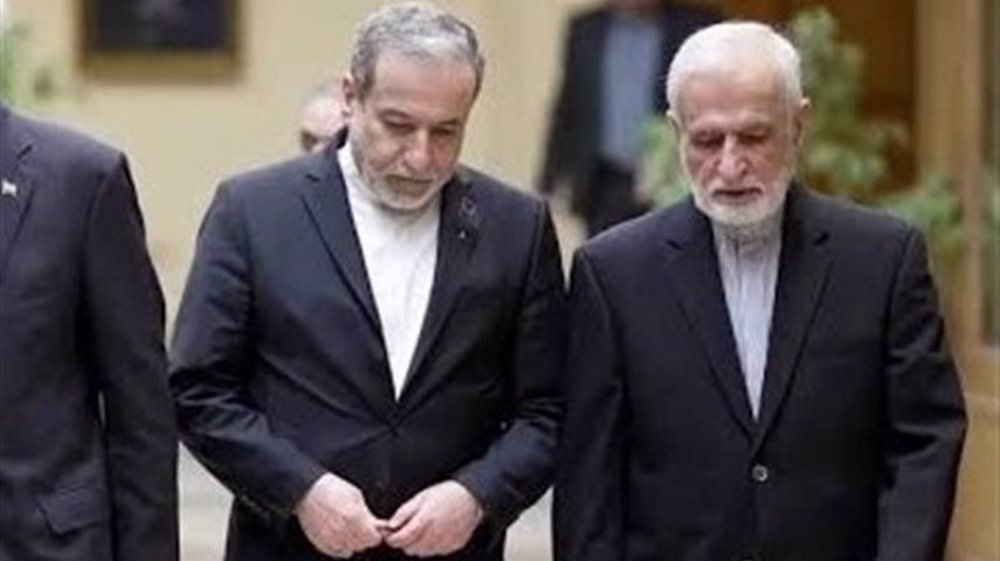
Dr. Kamal Kharrazi
Dr. Kamal Kharrazi, head of the Strategic Council on Foreign Relations and former Iranian foreign minister, succumbed to injuries sustained in a US-Israeli attack on April 9.
Dr. Kharrazi, who had been wounded in an attack that targeted his home in Tehran, attained martyrdom on Thursday night. His wife was martyred in the same attack on April 1.
Dr. Kharrazi held numerous high-profile positions throughout his distinguished career of public service, spanning decades since the 1979 Islamic Revolution.
He headed the Strategic Council on Foreign Relations and served as a senior advisor to the Leader of the Islamic Revolution.
Established in June 2006, the Strategic Council on Foreign Relations is a prominent Iranian think tank and advisory body that reports directly to the Leader of the Islamic Revolution.
Images of the funeral procession of martyr Seyyed Kamal Kharazi, Iran's former-Foreign Minister and foreign-policy advisor to Iran's Leader, killed in an US-Israeli airstrike.
— Press TV 🔻 (@PressTV) April 10, 2026
Follow Press TV on Telegram: https://t.co/LWoNSpkc2J pic.twitter.com/pM6T7A5ydY
Dr. Kharrazi also served as the foreign minister from 20 August 1997 to 24 August 2005 and as a member of the Expediency Discernment Council.
In his message of condolence, Leader of the Islamic Revolution Ayatollah Seyyed Mojtaba Khamenei hailed Dr. Kharrazi as "a distinguished professor in the field of science and culture and an experienced figure in the field of foreign policy”.
His martyrdom, the Leader said, is a badge of honor for “the academic community, university professors, and political officials of Iran”, and at the same time a "shameful testament to the villainy of the American-Zionist arrogant powers and the enemies of the science, culture, and civilization of Iran."

Two IRGC servicemen martyred in terror attack in western Iran
Mission unaccomplished – Part VI: US sought Iran’s surrender but got a new regional superpower
Contrary to enemy propaganda, Iran’s defense sector continues to make progress: Top general



Israel arrests US citizen on suspicion of contact with Iranian intelligence
Woman accusing Trump of sexual assault in Epstein case fears for her life, relative says
Iran team thanks Mexico, questions World Cup fairness in farewell message from Tijuana
VIDEO | Press TV's news headlines
Israel kills 8 Palestinians as Gaza death toll tops 73,000
'War crime': Iran FM vows legal action against US over torpedo attack on Dena frigate
IRGC dismantles armed separatist cell in northwest Iran
Venezuela earthquake death toll surpasses 1,700 as search efforts continue


 PressTV NEWSLETTER
now
PressTV NEWSLETTER
now
 This makes it easy to access the Press TV website
