‘Trump has no idea what he’s doing’: Netizens react to US-Israeli botched war against Iran
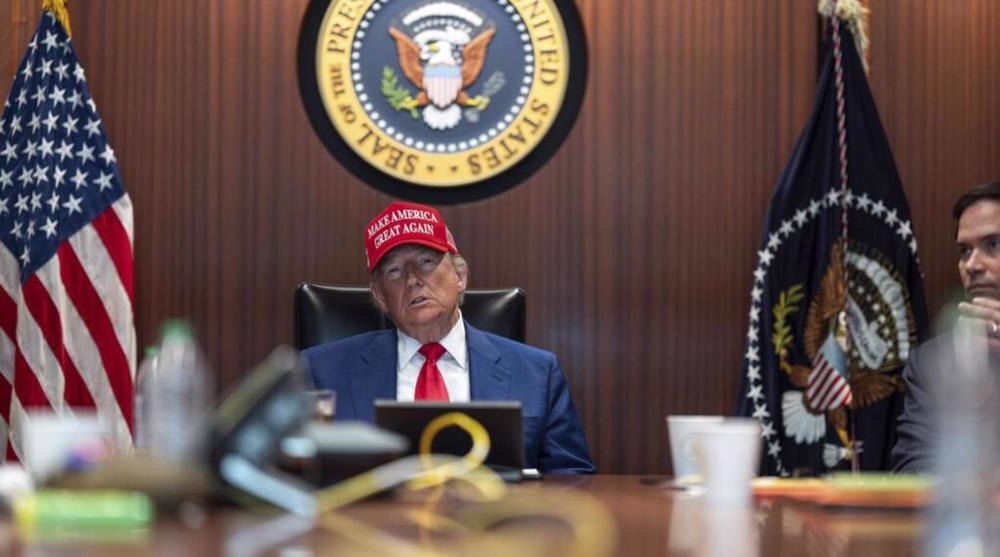
As the Israeli-American war against Iran enters its 20th day, there appears to be no exit strategy even as the Iranian retaliatory strikes against enemy targets continue.
Social media has been abuzz with reactions to the war, US President Donald Trump’s military adventurism and how the strong Iranian retaliation has turned the tables.
Netizens are painting a picture of a White House that is rudderless, the regime in Tel Aviv that has lost the plot and a world economy that is teetering on the brink.
The consensus among the users is that the current crisis did not arise from a miscalculation, but from a deliberate act of aggression against the Islamic Republic of Iran that has spiraled out of the control of its architects
Journalist Laura Rozen offers a stark assessment of the Trump administration's handling of the war that began with the assassination of the Leader of the Islamic Revolution, Ayatollah Seyyed Ali Khamenei, and some top-ranking military commanders on February 28.
In a post that garnered significant attention, she said, “the sh*t is hitting the fan. Trump blundered into what he thought would be a few-day 'excursion' as he calls it, maybe Venezuela 2.0.
Rozen noted that the reality on the ground is far from the US president's expectations.
"That is not what Israel had in mind, the military has hit all of its targets," she noted, adding that Trump lacks a coherent strategy.
"He has no idea what he is doing; his intelligence and other aides were appointed not to tell him anything he does not want to hear; not a single one of them can explain what the goal is."
the shit is hitting the fan.
— Laura Rozen (@lrozen) March 19, 2026
Trump blundered into what he thought would be a few day “excursion” as he calls it, maybe Venezuela 2.0. That is not what Israel had in mind, the military has hit all of its targets. He has no idea what he is doing, his intelligence and other aides…
This view of a megalomaniac US president caught off guard was also echoed by Grayzone website reporter Aaron Maté, who highlighted a contradiction in Trump's public stance.
"Trump pretends that he didn’t authorize Israel’s strike on Iranian gas fields and begs Iran not to retaliate further," Maté wrote, contrasting this with the president's recent criticism of an official who resigned in protest against the US war on Iran as "weak."
Maté argued that by "having tied the fate of his presidency and the global economy to the rogue Israeli state, Trump has weakened himself."
Trump pretends that he didn’t authorize Israel’s strike on Iranian gas fields and begs Iran not to retaliate further. This comes one day after he called Joe Kent “weak.” Having tied the fate of his presidency and the global economy to the rogue Israeli state, Trump has weakened… https://t.co/9bTsipLR4f
— Aaron Maté (@aaronjmate) March 19, 2026
Users placed the blame for the war squarely on the shoulders of the US and Israeli leadership, as it came amid nuclear talks that were mediated by Oman.
Indian journalist Smita Sharma issued a pointed reminder, urging readers to "Repeat after me—Netanyahu and Trump began this act of unilateral aggression on Iran and having failed in their regime change obsession unleashed this cycle of deaths, destructive Iranian retaliation and misery upon the world."
She drew a parallel to a previous era of faulty intelligence, saying that the “proof of any 'imminent threat of a nuclear warhead' is as rhetorical and shoddy as the argument was about Iraq and WMD.
Repeat after me-Netanyahu and Trump began this act of unilateral aggression on Iran and having failed in their regime change obsession unleashed this cycle of deaths, destructive Iranian retaliation and misery upon the world. The proof of any “imminent threat of a nuclear war… https://t.co/fFxrX8QFLa
— Smita Sharma (@Smita_Sharma) March 18, 2026
Offering a broader strategic context, US-based scholar Assal Rad framed the ongoing war against Iran not as chaos born of error, but as a feature of the campaign itself.
"Israel started an illegal war with Iran, attacked its energy infrastructure, and kills anyone who might negotiate an end to it. All while invading Lebanon, displacing a million people, and continuing genocide against Palestinians," Rad wrote.
"The chaos isn’t a miscalculation, it’s the goal.”
Israel started an illegal war with Iran, attacked its energy infrastructure, and kills anyone who might negotiate an end to it. All while invading Lebanon, displacing a million people, and continuing genocide against Palestinians.
— Assal Rad (@AssalRad) March 19, 2026
The chaos isn’t a miscalculation, it’s the goal.
Adding a historical and geopolitical perspective, commentator Yuliana Dlugaj offered a grim prediction for Trump's legacy.
"Trump will be remembered as the president who impaled the US empire on Iran in a vain attempt to make Israel a regional hegemon, only to have ended up reducing the US to it," she stated.
Trump will be remembered as the President who impaled the US empire on Iran in a vain attempt to make Israel a regional hegemon only to have ended up reducing the US to it.
— Yuliana Dlugaj 🇷🇺🇨🇳🇰🇵 (@DlugajJuly) March 18, 2026
Some analysts stepped back to examine the broader narratives and power dynamics at play.
Philip Proudfoot offered an academic take on Iran's strategy in the war, suggesting a deep understanding of global economic systems.
"Iran, to be fair, appears to have read the neo-imperialism scholarship quite closely; they are not just confronting US power materially — but they’re smashing its economic foundations too: the petrodollar, and by extension global capitalism itself," he observed.
Iran, to be fair, appears to have read the neo-imperialism scholarship quite closely; they are not just confronting US power materially — but they’re smashing its economic foundations too: the petrodollar, and by extension global capitalism itself.
— Philip Proudfoot (@PhilipProudfoot) March 18, 2026
Najam Ali provided a historical defense of Iran's position, arguing that its actions are a direct result of sustained Western pressure and sanctions spanning decades.
“For forty years, Iran has been economically strangled, not for aggression, but for refusing to kneel to a rigged global system," Ali wrote.
He characterized Iran's network of regional alliances as "survival tools forced by a hostile region."
“The West didn't just watch, it tightened the noose, offering hollow diplomacy while demanding total submission. ... If this powder keg finally blows, stop looking for excuses. The blame lies squarely with the architects of this war."
For forty years, Iran has been economically strangled, not for aggression, but for refusing to kneel to a rigged global system.
— Najam Ali (@NajamAli2020) March 19, 2026
Its proxies and alliances aren't aggression, they are survival tools forced by a hostile region.
The West didn't just watch, it tightened the noose,…
Academic Glenn Diesen highlighted a profound hypocrisy in Western complaints about the war that was unfairly and illegally imposed on the Islamic Republic.
“There is something surreal about our government-appointed 'experts' speaking about the threat to freedom of navigation," Diesen remarked, pointing to US actions against Venezuela and Cuba, as well as NATO actions against Russian ships.
"International law is essentially a set of agreements based on mutual constraints... You cannot exempt yourself from the rules and then expect compliance from the other side. The West has for years acted like rogue states, and they that sow the wind shall reap the whirlwind," he stated.
There is something surreal about our government-appointed “experts” speaking about the threat to freedom of navigation. The U.S. attacks boats off the coast of Venezuela and imposes a blockade on both Venezuela and Cuba. NATO countries are currently engaged in a campaign of…
— Glenn Diesen (@Glenn_Diesen) March 19, 2026
Perhaps the most dire predictions came from those focused on the potential global economic consequences of the war’s escalation.
Analyst Mark Slapinski made a bold and ominous forecast: “I'm going to call it now. The whole world is headed into a Great Depression. Trump's actions in the Middle East will destroy the world economy. Bookmark this.
I'm going to call it now.
— Mark Slapinski (@mark_slapinski) March 19, 2026
The whole world is headed into a Great Depression.
Trump's actions in the Middle East will destroy the world economy.
Bookmark this.
In a similar vein, a user Health Ranger painted a catastrophic picture, suggesting the ongoing war could lead to unprecedented human suffering.
"If this continues, Israel is going to literally get half the world's population killed. Via starvation and uprisings, following the total collapse of energy infrastructure in the Persian Gulf," he warned.
He also questioned the motivations behind the escalation, asking, "Is that their plan? Probably. End Times lunatics. Why is Trump still following that cult into mass death for humanity?”
If this continues, Israel is going to literally get half the world's population killed. Via starvation and uprisings, following the total collapse of energy infrastructure in the Persian Gulf. Is that their plan? Probably. End Times lunatics. Why is Trump still following that…
— HealthRanger (@HealthRanger) March 19, 2026
As the situation continues to develop rapidly, social media reactions reflect deep concern over the direction of US foreign policy, the Israeli regime’s destabilization of the region, and the potentially devastating economic consequences for the entire world.
Iran owes its military might to martyred Leader; his legacy will be upheld: Commander
Iran will never relent in pursuit of Leader’s assassins: Army chief
Regional security bolstered by Iran’s resistance to US, Israel: Senior Lebanese cleric



‘Speak with respect, Mr. Trump; or Iranians will reply in differnt language’: SNSC chief
Fresh Israeli attacks kill at least 6 in Gaza amid continued ceasefire violations
Ayatollah Khamenei’s legacy is dignity, patriotism and steadfastness: Baghaei
VIDEO | Ayatollah Khamenei's funeral draws extensive media coverage in Southeast Asia
Lawmakers urge UK government to sanction Netanyahu over Israeli torture of Palestinians
VIDEO | Press TV's news headlines
VIDEO | Hamas dissolves Gaza governing body, prepares to transfer authority
Berri rejects Netanyahu’s claim of annexing Lebanese Christian villages


 PressTV NEWSLETTER
now
PressTV NEWSLETTER
now
 This makes it easy to access the Press TV website
