Op. True Promise 4: Iran's missile blitzkrieg dismantles US war machine in West Asia
By Ivan Kesic
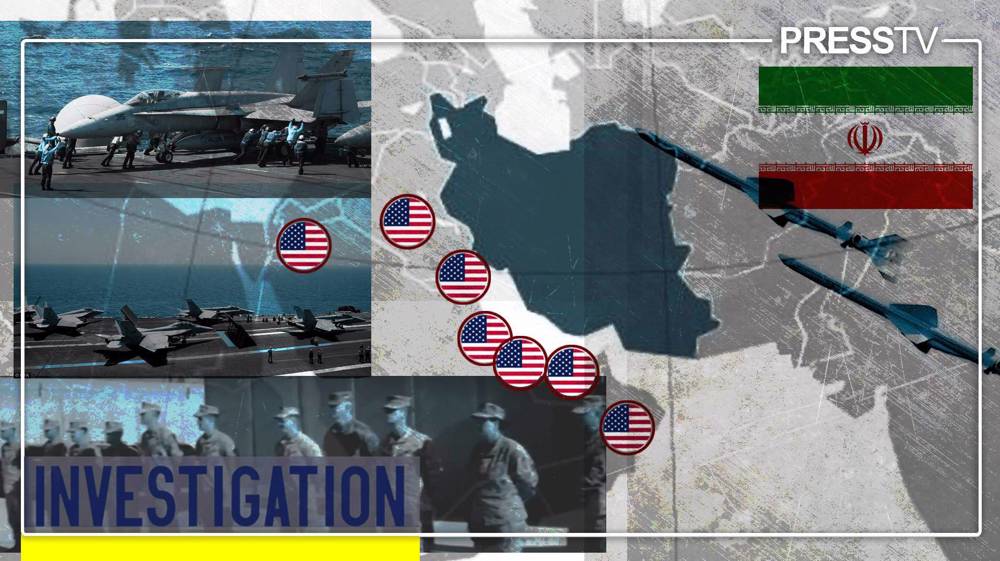
In just ten days, Iran's military response to the Israeli-American war of aggression has dismantled the core of US power in the Persian Gulf, from Qatar's Al-Udeid Air Base to the US Fifth Fleet headquarters in Bahrain.
What began on February 28, 2026, as the ill-fated "Operation Epic Fury" has spiraled into a strategic catastrophe for the US military-industrial complex.
The aggression, which led to the martyrdom of the Leader of the Islamic Revolution, Ayatollah Seyyed Ali Khamenei, as well as ordinary civilians, has been met with one of the most devastating and precisely coordinated military campaigns in modern regional history.
Systematically, Iranian missiles and drones have pierced American air defenses, reducing over a dozen military installations to rubble, obliterating advanced radar systems, and crippling US naval power.
Thousands of American personnel now confront an undeniable reality: their assets are no longer safe from Iran's formidable and far-reaching arsenal.
US military web in the Persian Gulf
To fully grasp the magnitude of Iran's military achievements, one must first understand the intricate web of US military power that has for decades strangled the Persian Gulf region.
This network has served as the primary instrument of US hegemony over the world's most vital energy resources and the principal military guarantee for the security of the Zionist entity.
At the apex of this system sits Al-Udeid Air Base in Qatar. A sprawling facility covering approximately fifty square kilometers southwest of Doha, it stands as the largest American military installation in the entire West Asia and the forward headquarters of United States Central Command.
Al-Udeid is the cornerstone of US military strategy in the region, housing over ten thousand personnel and supporting the 379th Air Expeditionary Wing. Its formidable array of bombers, fighter aircraft, surveillance platforms, and drones has, for years, been the launchpad for aggressive operations against regional nations.
Less than two hundred and fifty kilometers from Al-Udeid lies Al-Dhafra Air Base in the United Arab Emirates. This installation complements its Qatari counterpart by providing the United States with advanced intelligence, surveillance, and reconnaissance capabilities.
Al-Dhafra hosts approximately five thousand active-duty US military personnel assigned to the 380th Air Expeditionary Wing.
Their primary missions include aerial refueling and high-altitude intelligence gathering, utilizing platforms such as the Lockheed U-2 Dragon Lady, the Boeing E-3 Sentry AWACS, and the RQ-4 Global Hawk surveillance drones – aircraft that have routinely violated Iranian airspace along the Persian Gulf coast.
The base achieved particular notoriety in 2019 when one of its Global Hawk drones was shot down by Iran's air defense system, an episode that foreshadowed the far greater defeats to come.
In Bahrain, the Naval Support Activity in Manama serves as the headquarters for both US Naval Forces Central Command and the United States Fifth Fleet.
Supporting over nine thousand military personnel and more than one hundred tenant commands, this facility, established on the grounds of the former British Royal Navy base HMS Juffair, provides the logistical and command infrastructure necessary for the Fifth Fleet to project power throughout the region with its carrier strike groups and supporting vessels.
Kuwait hosts yet another crucial node. Camp Arifjan serves as the primary forward logistics hub for American ground forces, while Ali Al-Salem Air Base hosts the 386th Air Expeditionary Wing, and Mohammed Al-Ahmad Naval Base provides critical naval infrastructure.
This was the fortress America had built, a ring of steel and fire meant to contain and intimidate. And this is the fortress that Iran has just shattered.
Initial wave: Iran's devastating response to US-Israeli aggression
When the US and the Israeli regime launched their cowardly aggression against Iranian territory on February 28, assassinating Leader of the Islamic Revolution Ayatollah Ali Khamenei and more than two hundred Iranian civilians, including 165 schoolgirls in the city of Minab, they evidently believed that such a devastating blow would leave Iran paralyzed.
The school was attacked twice by the US missiles, debunking the claim that it was not deliberate. As experts noted, the same site cannot be mistakenly targeted twice.
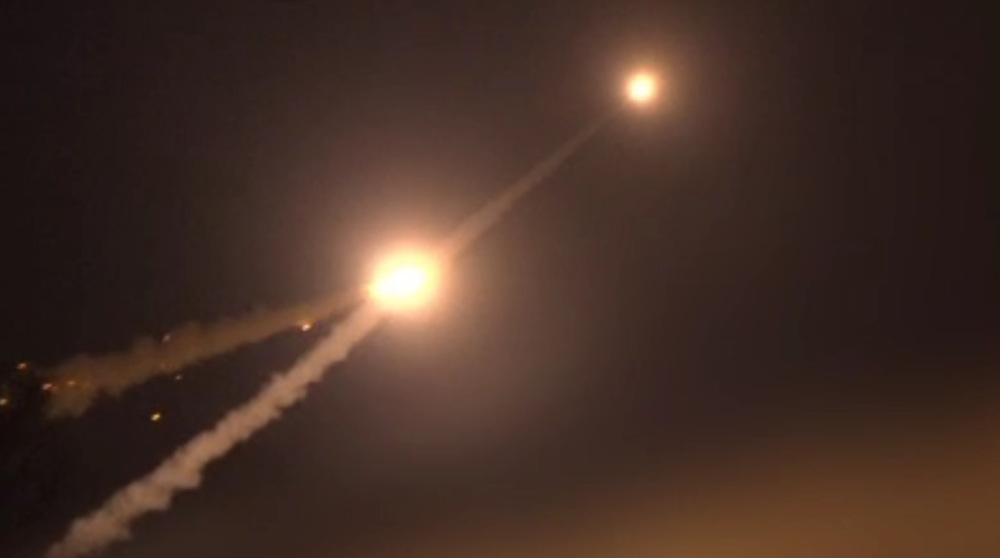
Within hours of the initial wave of aggression, the Islamic Revolution Guards Corps (IRGC) launched Operation True Promise 4, a meticulously planned retaliation that simultaneously targeted more than a dozen American military installations across the region.
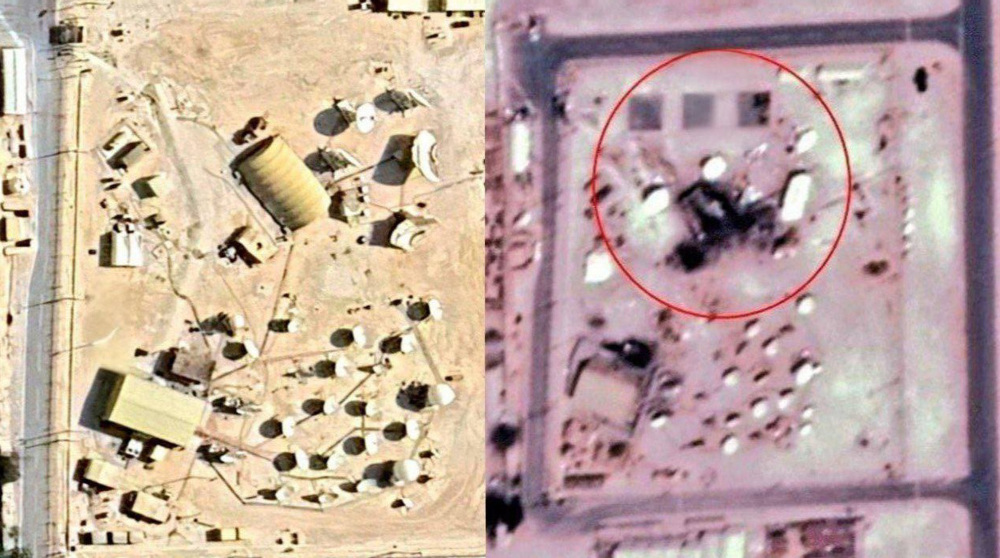
At Al-Udeid Air Base in Qatar, Iranian missiles struck with devastating precision. Their impacts were captured on video and broadcast by multiple news agencies. The most significant achievement was the complete destruction of the AN/FPS-132 Upgraded Early Warning Radar, a system valued at approximately $1.1 billion that served as the electronic eye of American air defense throughout the Persian Gulf.
This fixed UHF phased-array radar, designed to detect and continuously track ballistic missiles at extremely long ranges, represented the most critical component of the US early warning architecture in West Asia.
Its obliteration rendered the entire American air defense network effectively blind, forcing surviving batteries to operate with degraded situational awareness and dramatically reducing their effectiveness against subsequent Iranian strikes.
Simultaneously, Iranian missiles and kamikaze drones descended upon Al-Dhafra Air Base in the UAE, destroying the American terrorists' air warfare center, satellite communication center, early warning radars, and fire control radars, effectively decapitating the base's command and control capabilities.
The Lockheed U-2 reconnaissance aircraft, Boeing E-3 Sentry AWACS, and RQ-4 Global Hawk drones found themselves without the supporting infrastructure necessary for their operations. Their hangars were damaged or destroyed, their crews scrambling to survive the onslaught.
The strikes extended to the naval infrastructure. At Jebel Ali Port in Dubai, which is the most frequent port of call for US Navy vessels outside the American homeland, Iranian missiles caused significant damage to facilities used for resupplying and maintaining the Fifth Fleet's warships.
In Bahrain, the headquarters of the United States Fifth Fleet came under direct attack, with multiple missiles and kamikaze drones striking the Naval Support Activity facility.
Video clips captured the moment of impact as projectiles struck buildings within the base complex, including a high-rise structure housing American troops.
The IRGC announced that a service center for the Fifth Fleet had been specifically targeted, and subsequent attacks on March 1 would hit an unnamed US naval command and backup center with two ballistic missiles.
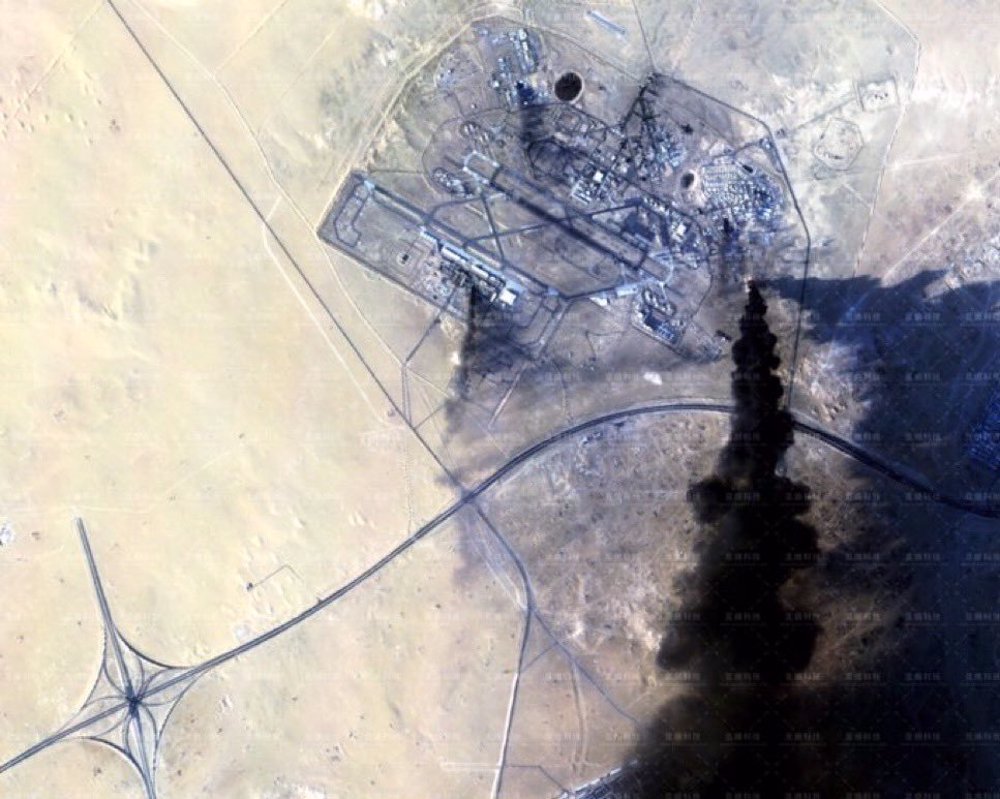
Kuwait's American installations suffered perhaps the most complete destruction. Ali Al-Salem Air Base, struck on February 28, came under renewed attack on March 1.
The IRGC subsequently declared that the base had been rendered completely out of service. This facility, home to the US Air Force's 386th Air Expeditionary Wing, was effectively neutralized as a military asset: its runways cratered, its hangars destroyed, its aircraft either damaged or forced to flee. The Mohammed Al-Ahmad Naval Base suffered an equally devastating fate, with three naval infrastructure structures reportedly destroyed.
In a matter of hours, the elaborate fortress America had spent decades building had been shattered.
Strategic significance of America's lost assets
The full measure of Iran's military achievement becomes apparent only when one considers what these destroyed facilities actually meant to American strategic power.
The AN/FPS-132 radar at Al-Udeid was not merely an expensive piece of equipment, but the keystone of the entire American air defense architecture in the Persian Gulf.
Without it, the Patriot and THAAD batteries scattered across the Persian Gulf states became fundamentally degraded. Forced to rely on their own shorter-range sensors, they were rendered far more vulnerable to saturation attacks.
The destruction of this single system effectively crippled the integrated air defense network that the United States had spent decades constructing.
Al-Dhafra's destroyed command and control centers represented an equally significant loss. These facilities were the nerve centers through which American intelligence operations across the Persian Gulf were coordinated.
The satellite communication center had been the primary link transmitting data from surveillance aircraft to analysis centers; its loss temporarily blinded American intelligence collectors across the region.
The damage inflicted upon the Fifth Fleet's headquarters in Bahrain disrupted the command infrastructure necessary for coordinating carrier strike groups and support vessels across an area encompassing the Persian Gulf, Red Sea, and Arabian Sea.
Without this hub, the fleet's ability to project power became fundamentally compromised.
The destruction at Jebel Ali Port compounded these difficulties by damaging the primary logistics hub through which the Fifth Fleet received supplies and maintenance support.
A fleet without fuel, without spare parts, without the means to sustain prolonged operations, is little more than a collection of floating metal.
In a single night, Iran did not merely strike American bases; it dismantled the architecture of American power in the region. The radar that saw everything was blinded.
The centers that coordinated everything were silenced. The ports that sustained everything were crippled. The fleet that dominated everything was paralyzed.
US base in Bahrain before and after Iran's retalitory missile strikes
— Press TV 🔻 (@PressTV) March 2, 2026
Follow: https://t.co/mLGcUTS2ei pic.twitter.com/M22fM6V68L
Continuing campaign: Sustained pressure on US positions
The second phase of the retaliatory military campaign unfolded on March 8 and 9, with fresh strikes targeting key American installations in the region.
Al-Udeid Air Base came under renewed attack on March 8, with loud blasts and sirens reported. The Qatari Ministry of Defense subsequently acknowledged the strikes, though Iranian military sources framed them as direct hits on the key command hub.
The fact that attacks continued despite Qatari interception claims suggested that many missiles and drones were still getting through. The following day, March 9, Al-Udeid was struck again, with explosions rocking the base for the second consecutive day and verified reports confirming impacts.
The Juffair Naval Base in Bahrain was also targeted on March 8. The IRGC announced a direct strike in retaliation for a US attack on an Iranian desalination plant on Qeshm Island earlier the same day. Foreign Minister Abbas Araghchi stated that the United States had set the precedent by hitting civilian infrastructure, which made Iran's response more legitimate.
Ali Al-Salem Air Base in Kuwait, already severely damaged in earlier strikes, came under drone attack on March 8. The Islamic Resistance in Iraq claimed responsibility for an operation that allegedly breached Kuwaiti air defenses and hit the installation.
The Prince Sultan Air Base near Al-Kharj in Saudi Arabia was targeted with a volley of ballistic missiles. Although Saudi forces claimed to have intercepted three missiles heading for the base, the installation still suffered significant damage.
Iran launched hybrid drone, missile strike against al-Adiri base housing US forces in Kuwait
— Press TV 🔻 (@PressTV) March 9, 2026
Follow https://t.co/B3zXG73Jym pic.twitter.com/Sfpj34k40H
Iran's military-technological triumph
The past 10-11 days of combat have demonstrated conclusively that Iranian military technology has reached a level of sophistication American strategists never anticipated.
Iranian missiles have consistently penetrated American air defenses, striking their targets with precision that rivals, or exceeds, that of US weapons, as experts acknowledge.
Iranian drones have swarmed American bases in numbers that defensive systems simply cannot engage. The destruction of the AN/FPS-132 radar represents perhaps the most significant single technological achievement of the campaign: a billion-dollar system, specifically designed to detect and track missiles like those Iran fired at it, proved utterly incapable of preventing its own destruction.
The performance of Iranian anti-ship missiles against American naval assets, including the reported strike on a US Navy combat support warship, further demonstrates the comprehensive nature of Iran's capabilities.
No domain, whether air, land, or sea, has remained immune this time.
Beyond technology, the sustained nature of the Iranian campaign reveals logistical and industrial capacities that the US clearly did not anticipate. Iran has fired hundreds of missiles and drones while maintaining the ability to continue such strikes indefinitely, a feat that suggests a production capacity Western intelligence had catastrophically underestimated.
American forces, by contrast, have expended enormous quantities of interceptors attempting to defend against Iranian attacks, depleting stocks that will take years to replenish.
The economics of this war are as devastating as its tactics: a missile that costs Iran a few hundred thousand dollars is met by an interceptor that costs America several million. This is a war of attrition that the United States cannot win.
The technological edge upon which American military dominance has rested for decades has been revealed as a myth in these 11 days. The industrial capacity that was supposed to guarantee American superiority has been exposed as insufficient. And the will to sustain a prolonged war in the face of mounting losses has yet to be tested.
US soldier records the moment an Iranian drone targets an advanced U.S. military radar system at Ali Al Salem Air Base in Kuwait with his phone camera.
— Press TV 🔻 (@PressTV) March 8, 2026
Follow https://t.co/B3zXG73Jym pic.twitter.com/haeflrHY7W
Humiliation of American power
Beyond the purely military dimensions lies the broader strategic impact on American military prestige throughout West Asia, carefully built over the decades, military experts say.
The US has presented itself as the indispensable guarantor of security in the Persian Gulf, the force whose military might ensures the free flow of oil and the stability of friendly regimes.
The events of the past 11 days have exposed this narrative as hollow propaganda, revealing that American power rests not on invincible capability but on the absence of serious challenge.
The Persian Gulf Arab states that have hosted American bases now find themselves in an impossible position, their territories transformed into battlegrounds, their air defense systems exposed as ineffective, their American protectors revealed as vulnerable.
The casualties inflicted upon American forces, estimated in the hundreds by Iranian military sources, represent a human cost that will reverberate through American society.
American families are receiving notification that their loved ones will not return from a war that Washington started and cannot win, a source told the Press TV website.
The images of destroyed bases, burning aircraft, and fleeing personnel convey a message more powerful than any official statement: the United States is not winning this war.
US's weapons warehouses in Bahrain were targeted
— Press TV 🔻 (@PressTV) March 8, 2026
Follow https://t.co/B3zXG73Jym pic.twitter.com/k9jpFIXKbU
New strategic reality
As the imposed war enters its second week, a new strategic reality has emerged in West Asia, one in which American military dominance has been shattered and Iranian power stands ascendant, military experts note.
“The United States can no longer guarantee the security of its bases in the Persian Gulf. It cannot protect its warships from Iranian missiles. It cannot conduct intelligence operations along Iranian coasts without risking the destruction of its most valuable platforms,” a highly placed military source told the Press TV website.
“The carefully constructed edifice of American military power has been revealed as a house of cards, collapsing at the first serious challenge.”
For Iran, he noted, these military achievements represent not merely a successful retaliation but a strategic victory that fundamentally transforms the entire regional security environment.
The Islamic Republic, through these 34 waves of Operation True Promise 4 (and counting), has demonstrated capabilities that will deter American aggression for years to come.
“The message from Tehran to Washington could not be clearer: the era of American dominance in West Asia has ended. Any future aggression against the Islamic Republic will be met with responses far more devastating than anything yet seen,” the source said.
From battlefield superiority to strategic leverage: Iran’s new post-war doctrine takes shape

Enemy realized it must respect Iran after military defeats: Army chief
World leaders welcome MoU that ends war imposed by US on Iran



Press TV reporter wounded in Israeli drone strike on southern Lebanon
Bahrain issues harsh sentences for 12 people over their support for Iran
Hezbollah congratulates Iran on 'great achievement' of imposing end to aggression
From battlefield superiority to strategic leverage: Iran’s new post-war doctrine takes shape
Iran says end of Israeli war on Lebanon ‘inseparable’ part of understanding with US
Enemy realized it must respect Iran after military defeats: Army chief
VIDEO | Iran: The great game, part VI
Nation’s steadfastness defeated US-Israeli ‘evil arrogance’: Top Iran official



 PressTV NEWSLETTER
now
PressTV NEWSLETTER
now
 This makes it easy to access the Press TV website
