Alawite women abducted and raped, others sold by Jolani's men: Report
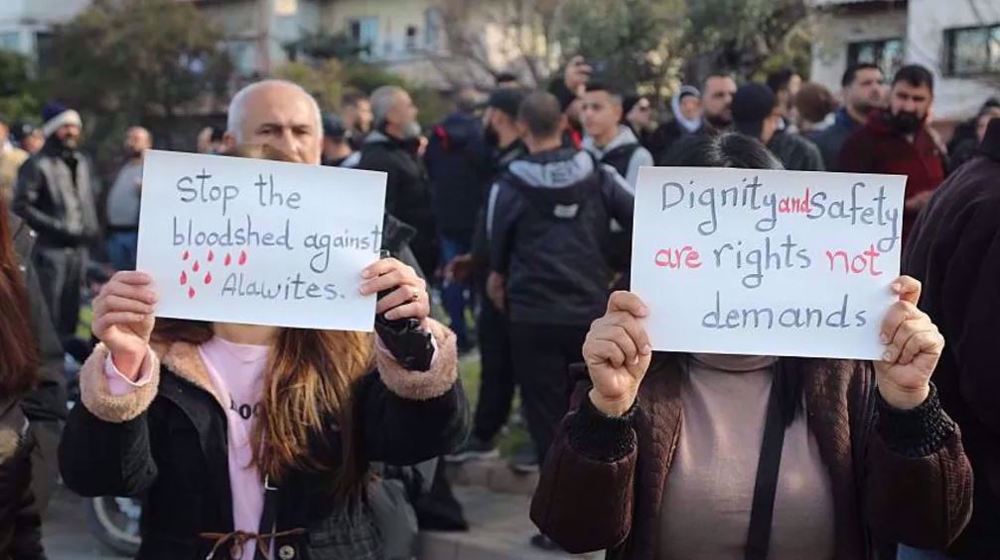
Since former al-Qaeda affiliate Hayat Tahrir al-Sham (HTS) took power in Syria, dozens of Alawite women have been abducted and raped, and forced by new authorities to change their testimonies, BBC reports.
The Syrian Feminist Lobby (SFL), a women's rights advocacy group, told the British broadcaster that it had recorded reports of more than 80 missing women and had verified 26 of them as abductions.
Ramia, a 19-year-old woman from Lattakia, recounted that she had been kidnapped while preparing to have a picnic in a field in her village in Latakia.
While her mother and siblings were about to arrive, a white car pulled up and three armed men got out, claiming to be members of Syria's General Security forces, and forced Ramia into the vehicle.
“The car drove in the opposite direction from our house, and then we left the village. That's when I realized they had kidnapped me,” Ramia said.
“They beat me. I started crying and screaming, but they kept hitting me even harder. One of them asked me if I was Sunni or Alawite. When I answered that I was an Alawite, they started insulting the sect.”
Ramia was taken to Idlib and raped, before being released after two days.
In Idlib, her captor, who did not speak Arabic fluently and was likely a foreign militant who had come to fight for HTS, took pictures of her to send “to the emir, who would decide her fate.”
The militant's wife, who was in the same house with his children, told Ramia that the picture “would be used to determine her price when she is sold.”
When Ramia asked her kidnapper's wife how many women he had abducted before her, the wife replied that there were “many.”
“Some are raped and sent back to their families, and others are sold,” the militant's wife told Ramia.
A security source in one of the coastal regions of Syria confirmed to BBC that abductions had occurred, claiming that “investigations have been opened into them” and that “measures have been taken to dismiss” those involved from service, including security personnel.
But the kidnapped women and their families emphasized that the authorities have made no effort to hold the kidnappers accountable.
Ramia said she thought the so-called HTS police were interested in her return, but after the kidnapper was identified, they stopped answering her family's repeated calls to follow up on the investigation.
The family even decided to leave the country after receiving a series of threatening phone calls.
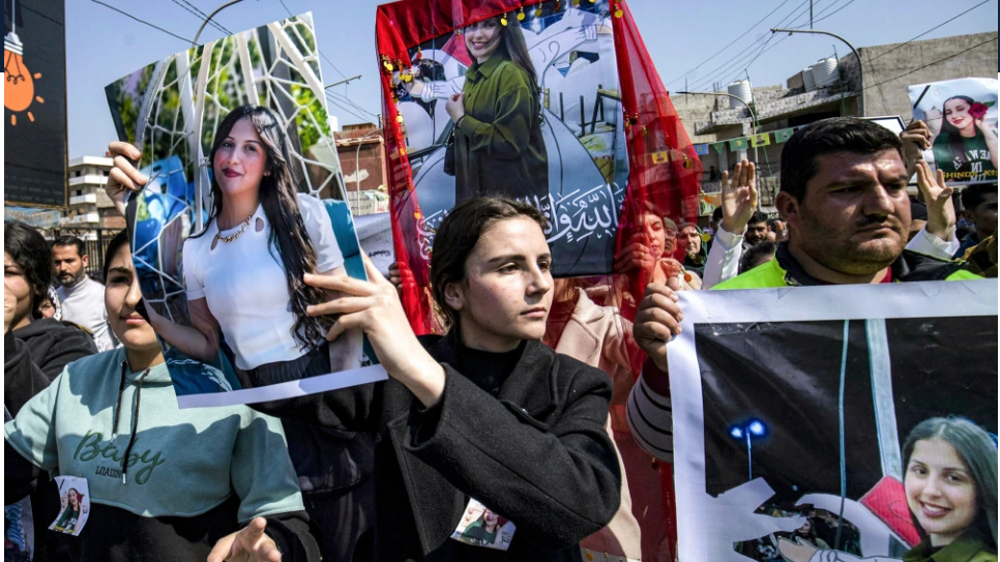
Ali, a man in his thirties whose wife Nour disappeared while on her way to visit family in a coastal village, told BBC that he knows the kidnapper's identity and has shared all his information with the security services, but is still waiting for a response.
“I suffer day and night, spending all my time alone in the forest, praying for my wife and for her return to us,” he said.
His wife was returned several weeks later, but they declined to give details about the circumstances of her abduction.
Another returnee was Nasma, a mother in her thirties, who was also abducted and held in what appeared to be an industrial facility in Idlib for seven days.
Three Syrian men who were holding her “hurled sectarian insults at me, saying that Alawite women were created to be captives”, Nasma said.
Nasma was raped multiple times by her captors. “All I could think about was death. I would die, and my child would be left without a mother,” she stated.
After the man responsible for her kidnappers decided to release her, Nasma went to the security authorities, who treated her rudely and mocked her.
“They said they knew the terrorist groups that kidnapped me, but when I went to file the police report, they asked me to change my statement and claim that I had just gone out for a walk,” she added.
According to the report, Nasma is not the only one who was asked to change her statements after being kidnapped.
BBC said another woman who had just returned after being abducted, was too afraid to talk to the media, especially after “security personnel asked her to change her story,” which she refused to do, according to a relative.
The SFL says that the testimonies of the abducted women “indicate the presence of an extremist religious ideology in many of the kidnapping cases.”
In December 2024, the HTS led by former Daesh deputy Muhammad al-Jolani took control of Damascus in a surprise offensive that was launched from their stronghold in northwestern Syria, reaching the capital in less than two weeks.
The HTS administration has since been accused of flagrant violations of human rights in Syria, particularly against minorities, namely Syria's Alawite minority, drawing widespread condemnations from the international community.
In November, Jolani's interior ministry claimed that out of 42 cases of kidnappings it had probed, the allegations were found to be false in 41 of them.
However, various reports have said that the widespread kidnapping of Alawite women began shortly after the collapse of al-Assad's government, intensifying after HTS-led forces massacred at least 1,600 Alawite civilians in March 2025.
After news of the abductions began reaching the media and gaining attention, the Jolani regime and affiliated media outlets launched a propaganda campaign to hide the kidnappings.
The campaign included forcing victims to make videos claiming that they had not been abducted, but had run away with their Sunni Muslim lovers, and publishing them on social media.
Despite numerous reports from human rights organizations documenting sectarian violence, extrajudicial killings, arbitrary detention, and sexual violence, Western governments have increasingly shifted toward open engagement the Jolani regime.
In 2025, the US formally removed Hay’at Tahrir al-Sham from its terrorist designation list, and Jolani held direct talks in Washington with President Donald Trump, a move critics say reinforced claims that Washington has come to view him not only as a pragmatic partner but, in practice, as a strategic asset despite his group’s terrorist past.
Truce breach: Heavy clashes erupt in southern Syria; no casualties
Shia cleric injured in explosion near Damascus shrine: Report
Israeli forces raid Syria’s Dara’a, Quneitra countryside, set up checkpoints



Putin vows Russia will win against NATO-backed aggression at Victory Day parade
Israel poses grave threats to Christians in Gaza, Palestinian delegation warns EU
US-Israeli strategy to weaken Iran’s core industries failed: Vice president
Bahrain arrests 41 as it intensifies crackdown on Iran supporters amid US-Israeli war
Iran says it will participate in World Cup, demands hosts meet its conditions
Strategic quagmire: US trapped between failed military options and untenable peace terms
Iran develops homegrown ultrasonic flare gas meter without reverse engineering
Israeli settlers burn homes and cars in brutal West Bank raids


 PressTV NEWSLETTER
now
PressTV NEWSLETTER
now

 This makes it easy to access the Press TV website
