#IR47: Iran’s tourism boom since 1979 Islamic Revolution, driving economy, generating jobs
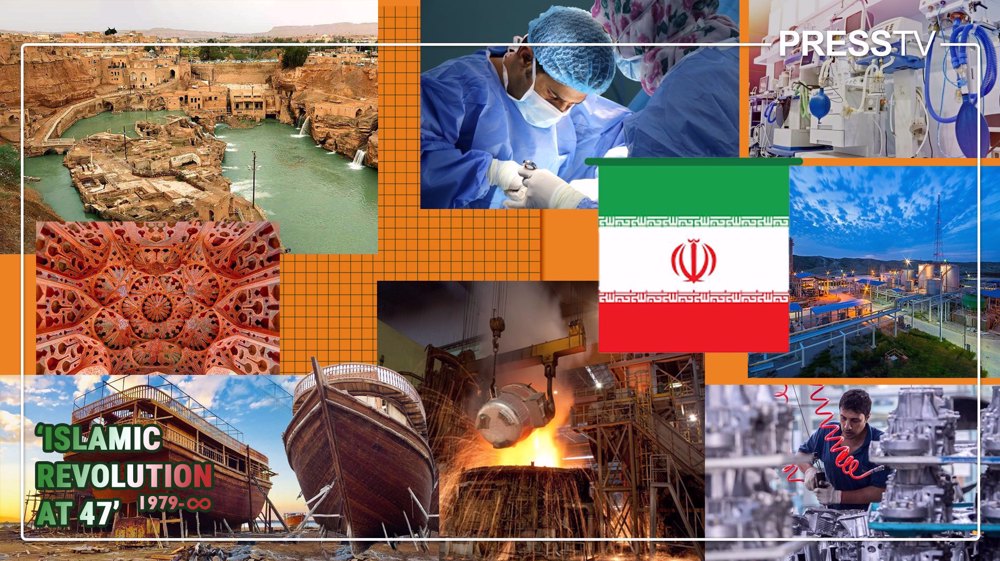
By Maryam Qarehgozlou
With a civilizational history stretching back several millennia, extraordinary climatic diversity, rich cultural and religious heritage, and a deeply rooted culture of hospitality, Iran stands among the most compelling tourism destinations in West Asia and beyond.
Since the 1979 Islamic Revolution, the country’s tourism sector has followed a steady upward trajectory – one that has accelerated notably over the past decade.
This growth has translated into tangible economic gains, job creation, infrastructure development, and measurable improvements in local and regional economies.
Here is how Iran’s tourism industry has evolved since the Islamic Revolution in 1979, its economic weight today, and the sectors driving its continued expansion.
Exceptional tourism potential
Iran’s tourism appeal rests on a rare convergence of assets.
The country is home to more than 28 UNESCO World Heritage sites, encompassing ancient cities, architectural masterpieces, cultural landscapes, and archaeological treasures that span thousands of years of human history.
From the lush forests of the Caspian coast to the deserts of central Iran, from snow-capped mountain ranges to subtropical shores in the south, Iran’s climatic and geographic diversity offers year-round tourism opportunities.
Combined with profound cultural plurality and religious significance, these attributes give Iran an exceptionally high tourism potential by regional and global standards.
Over the 47 years since the Islamic Revolution, and particularly during the last decade, tourism has gradually emerged as a strategic economic sector.
Beyond generating revenue, it has played a critical role in developing infrastructure, diversifying local economies, and channeling investment into less-developed regions.
🇮🇷 Discover Iran: Hormozgan’s coastal villages blend sea, culture and community tourism
— Press TV 🔻 (@PressTV) January 25, 2026
By Maryam Qarehgolzouhttps://t.co/cZ3GeDgBRD
Iran’s position in global tourism
In the years following the Islamic Revolution, Iran worked steadily to secure a place within the global tourism landscape.
By 2019, the country had attracted more than 8.8 million international visitors and was recognized as one of the fastest-growing tourism destinations worldwide.
The COVID-19 pandemic in 2020 temporarily disrupted this upward trend, as it did across the global travel industry.
However, from 2022 onward, Iran’s inbound tourism began a strong recovery: In 2022, approximately 4.1 million foreign tourists entered Iran, marking a 315 percent increase compared to the previous year.
In 2023, international arrivals rose to nearly 5.9 million, reflecting around 43 percent year-on-year growth.
In the Iranian calendar year 1403 (March 2024–March 2025), more than 7 to 7.4 million foreign tourists visited Iran, representing the highest post-pandemic level and a new benchmark for recent years.
These figures point to a genuine and sustained recovery in inbound tourism, rather than a short-term rebound.
Regional connectivity and land-based tourism
According to data released by Iran’s Statistical Center, of the 7.4 million foreign tourists who entered the country in 1403, around 5.6 million arrived via land borders (approximately 76 percent), 1.77 million entered by air, and about 17,000 arrived through maritime routes.
This distribution underscores Iran’s particular success in attracting land-based travelers from neighboring countries, a segment that plays a vital role in sustaining local economies in border provinces and reinforcing regional tourism networks.
Let's take a brief look at Isfahan — a historic city where Iran’s ancient glory meets modern industry. From breathtaking architecture to thriving modern factories discover why Isfahan is truly half the world.
— Press TV 🔻 (@PressTV) September 13, 2025
Follow Press TV on Telegram: https://t.co/LWoNSpkc2J pic.twitter.com/iMxfwd5tvA
Tourism as an economic engine
Tourism has become an increasingly significant contributor to Iran’s national economy.
Seyyed Reza Salehi-Amiri, Iran’s Minister of Cultural Heritage, Tourism and Handicrafts, recently said the country earned approximately $7.4 billion in revenue from international tourism last year, generated by more than seven million foreign visitors.
“Each foreign tourist in Iran spends on average between $1,000 and $3,000 during their stay, and the average revenue per tourist in Iran is broadly in line with global standards,” Salehi-Amiri noted.
These earnings reflect only international tourism.
When combined with domestic tourism, which circulates far greater volumes of spending across urban and rural economies, the overall economic significance of the sector becomes even more pronounced.
Contribution to GDP and employment
According to the World Travel & Tourism Council (WTTC), tourism accounts for approximately 4.7 percent of Iran’s GDP, a share driven by a 21 percent increase in the sector’s value in 2023 compared to the previous year.
Foreign tourists spent an estimated 700 trillion rials in Iran during 2023, a sharp increase year-on-year. With an approximate free-market exchange rate of 500,000 rials per US dollar in 2023, the amount equals roughly $1.4 trillion.
For comparison, tourism revenue from foreign visitors was reported at around $6.2 billion in 2022, indicating rapid growth within a short period.
Employment figures further illustrate tourism’s economic impact. In 2023, the sector supported more than 1.6 million jobs, representing roughly 6.6 percent of total national employment.
These jobs span hotels, transportation, travel services, tour guiding, restaurants, and the handicrafts industry.
WTTC projections suggest that Iran’s tourism revenues could continue growing at an annual rate of around 12 percent in the coming years.
🇮🇷 Discover Iran: Great Wall of Gorgan – a Sassanid-era engineering marvel in Golestanhttps://t.co/jdcCZEseiV
— Press TV 🔻 (@PressTV) December 8, 2025
By @kesic_ivan
Government targets and private investment
In January this year, the Minister of Cultural Heritage announced that foreign tourist arrivals in the Iranian calendar month of Farvardin (starting on March 21, 2025) alone had increased by 48.5 percent compared to the same period the previous year.
The government’s stated objective is to reach around nine million foreign tourists by the end of the year. Private-sector investment has been identified as the cornerstone of tourism infrastructure development.
According to the minister, tourism-related infrastructure loans increased dramatically – 25 trillion rials last year to 480 trillion rials this year.
In addition, low-interest financing is being extended nationwide to support eco-lodges, handicrafts, and tourism development projects.
Domestic tourism: The hidden giant
Domestic tourism remains one of the most powerful drivers of economic circulation within Iran.
WTTC reports indicate that Iranian domestic tourists spent more than 493 trillion rials in 2023, representing an 18.7 percent increase compared to the previous year.
This level of internal travel stimulates demand across transportation, accommodation, food services, retail, and cultural industries, ensuring that tourism benefits are distributed widely throughout the country.
Expanding tourism infrastructure
Infrastructure development has been a key indicator of tourism growth in Iran.
According to official figures from the Ministry of Cultural Heritage, Tourism and Handicrafts, the country currently hosts 1,435 active hotels and 18,043 accommodation centers nationwide.
During the current administration, 46 new hotels have already opened, with further expansion planned.
At present, around 550 additional accommodation projects – including hotels, eco-lodges, and similar facilities – are under construction.
By contrast, during the early post-revolution decades, Iran had only a limited number of hotels and accommodation facilities, with just a few thousand rooms nationwide.
Today’s expanded network reflects decades of cumulative investment and policy support.
🇮🇷 Discover Iran: Lush and artistic Persian gardens in South Khorasan’s arid terrainhttps://t.co/jh1FS7Fq9o
— Press TV 🔻 (@PressTV) November 13, 2025
Eco-lodges and rural development
Eco-lodges have emerged as one of the most socially impactful segments of Iran’s tourism industry.
Currently, around 4,000 eco-lodges are operating across the country, with more than 1,000 additional projects in development.
These locally run establishments contribute directly to rural livelihoods by creating employment opportunities for residents, who often provide accommodation, food, guiding services, and handicrafts.
As a result, eco-tourism has helped increase household incomes, stimulate local economies, and reduce rural-to-urban migration, thereby lowering long-term social and economic pressures.
Medical tourism: A high-value sector
Medical tourism is among the most lucrative segments of the global tourism industry, as health travelers typically spend three to five times as much as ordinary tourists.
Over the past two decades, Iran has leveraged its advanced medical infrastructure, skilled workforce, and competitive pricing to secure a strong position in this market.
According to official statements from the Ministries of Cultural Heritage and Health, Iran receives more than 1.2 million medical tourists annually.
Medical tourism generates approximately $2 billion in revenue, with the potential to rise to $6 billion.
Most medical tourists come from Iraq, Afghanistan, Azerbaijan, Central Asian states, Persian Gulf countries, and, in some cases, Europe.
More than 200 hospitals and medical centers are directly or indirectly involved in providing services to health travelers.
Medical tourism supports employment for physicians, nurses, medical translators, specialized travel agencies, hotels, and nearby accommodation centers.
Cities such as Mashhad, Tehran, Shiraz, Tabriz, and Yazd derive substantial economic benefits from this sector.
WTTC analyses identify medical tourism as one of the highest value-added components of Iran’s tourism industry.
🎥 Footsteps of Spring Wind
— Press TV Documentary (@presstvdoc) October 24, 2025
🔻Discover Elam, where every stone, melody, and breeze tells a story. "Footsteps of Spring Wind" takes you to Iran’s western frontier of mountains, traditions, and living artistry.
🗓 Monday, October 27th
🕧 00:30 | 05:30 | 11:30 | 16:30 | 21:30 GMT pic.twitter.com/t1fmHr6DDx
Religious tourism: A stable revenue pillar
Religious tourism is one of Iran’s oldest and most resilient forms of travel.
Since the Islamic Revolution, sustained investment in pilgrimage infrastructure and services has transformed this segment into one of the country’s most stable and low-risk tourism revenue sources.
According to the Ministry of Cultural Heritage around 3.5 to 4 million foreign religious tourists visit Iran annually. The majority come from Iraq, Pakistan, Afghanistan, Azerbaijan, Bahrain, Kuwait, and other regional countries.
Religious tourism generates several billion dollars in direct and indirect economic activity each year. Visitor spending covers accommodation, transportation, food, souvenirs, urban services, and local handicrafts.
Estimates suggest that each religious tourist spends between $700 and $1,500 during their stay. Cities such as Mashhad, Qom, Shiraz, and Rey benefit most from this flow.
Mashhad alone hosts more than 30 million domestic and foreign pilgrims annually, sustaining thousands of jobs across hospitality, transportation, retail, and service sectors.
Official assessments consistently rank religious tourism as one of Iran’s most sustainable and dependable tourism income streams.
A sector poised for continued growth
Taken together, these indicators reveal that tourism in Iran has evolved into a diversified, income-generating, and employment-intensive industry over the 47 years since the Islamic Revolution led by Imam Khomeini overthrew the West-backed Pahlavi regime.
With expanding infrastructure, rising regional connectivity, and strong performance in high-value segments such as medical and religious tourism, the sector is positioned to play an even more central role in Iran’s economic future.
Leader hails Iranians for disappointing enemies with multimillion rallies
Iran president hails ‘exceptional’ turnout in Islamic Revolution anniversary rallies
Iranians declared their rights and dignity are not for sale: Araghchi



Iran says reserves right to self-defense, protection against US's hostile naval maneuvers
May 8: Iranian forces inflict damage on US assets in Strait of Hormuz as Trump's desperation grows
President Pezeshkian congratulates Iran youth weightlifting team on world title
US scrambling for European backing as allies abandon Trump’s failing war on Iran
Harrowing testimonies expose Israeli torture of Gaza hospital director
Iran says trade routes, border security remain intact despite US blockade
Leader’s advisor hails great capability of Hormuz Strait, vows Iran ‘will never lose’ waterway
UAE funds US- and Israel-backed police force to control Gaza




 PressTV NEWSLETTER now
 This makes it easy to access the Press TV website