Elon Musk calls Spain’s PM ‘tyrant’ as Madrid moves to ban under-16s from social media
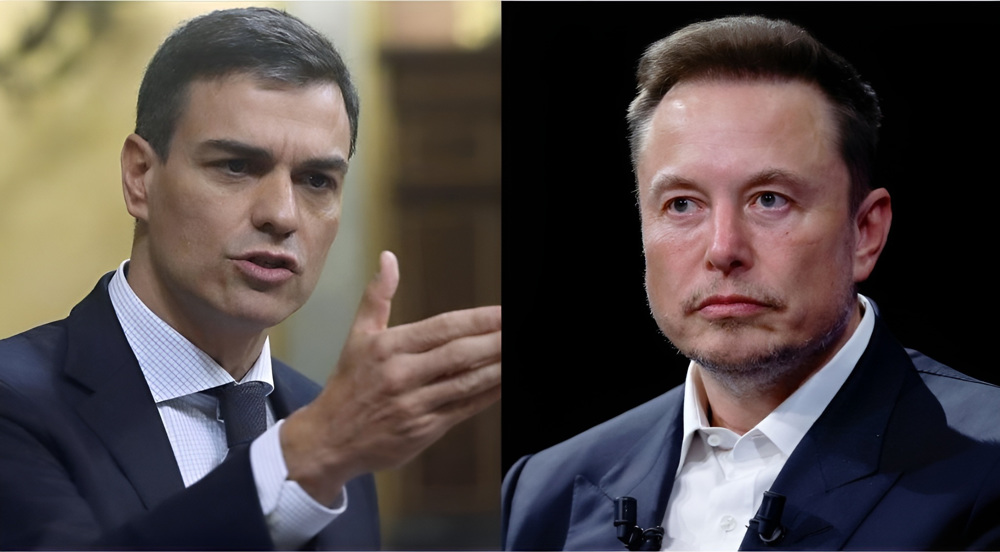
Tech tycoon Elon Musk, the owner of X, has called Spanish Prime Minister Pedro Sánchez “a dirty tyrant” as Madrid plans to restrict social media access for under-16s and crack down on harmful online content in a bid to protect minors from “digital Wild West.”
Spain is preparing a package of measures that includes banning social media use for children under 16, Sánchez said at the World Governments Summit in Dubai on Tuesday, arguing that urgent action is needed to protect minors and hold technology companies accountable.
The Spanish prime minister described social media as a “failed state where laws are ignored and crimes are tolerated”, vowing to shield children from what he repeatedly called the “digital Wild West.”
“Our children are exposed to a space they were never meant to navigate alone … We will no longer accept that,” Sánchez added, insisting on the need for “real barriers that work” to prevent minors from joining these networks.
The plan would require platforms to implement effective age-verification systems rather than relying on self-declared ages, and would make tech leaders legally responsible for failing to remove illegal or harmful content, including hate speech and child exploitation.
Sánchez also criticized Musk for using the X platform to “amplify disinformation” about the Spanish government’s recent decision to regularize 500,000 undocumented workers and asylum seekers, noting that Musk himself is a migrant.
The initiative and the criticism, however, drew an angry response from Musk, who replied on X, “Dirty Sánchez is a tyrant and a traitor to the people of Spain.”
About an hour and a half later, Musk escalated his attack, writing, “Sánchez is the true fascist totalitarian.”
Spain’s move places it alongside other countries toughening their stance on children’s access to social media.
Australia became the first country to prohibit access for under-16s in December, while Greece is close to announcing a similar ban for children under 15. France is pushing legislation through parliament to bar under-15s from social platforms, and Britain is also considering comparable measures.
Sánchez noted that Spain is coordinating with five other unnamed European countries in what he called a “coalition of the digitally willing” to enforce cross-border regulation.
Domestically, the proposal would be implemented by amending an existing bill on digital protection for minors currently being debated in parliament.
Public support appears strong as an Ipsos poll published last August found that 82 percent of Spaniards believed children under 14 should be banned from social media, up from 73 percent the previous year.
Prosecutors, Sánchez added, would also examine possible legal infractions by Musk’s Grok chatbot, as well as by TikTok and Instagram.
The proposed ban must still pass parliament, where Sánchez’s left-wing coalition lacks a clear majority, drawing backing from the conservative Popular Party but opposition from the far-right Vox, which has raised concerns about its wider implications.
If approved, Spain’s digital safety measures would mark a major European precedent by bringing together age restrictions, greater platform responsibility, and stricter legal penalties for harmful online content.
Spain’s initiative reflects a widening global push to reassess social media regulation and put children’s online safety at the center of digital policy debates worldwide.

Heat wave claims over 1,000 lives in France

Trump criticized Spain for not meeting NATO spending targets

Albanians continue to rally against project linked to Trump’s son-in-law



Netanyahu pressured Israeli intelligence to declare Iran's nuclear program destroyed: Report
Ayatollah Khamenei’s martyrdom inspired Muslims in pursuit of unity: Pezeshkian
VIDEO | Cuba stands in solidarity with Venezuela amid tragedy caused by twin earthquakes
Martyr Ayatollah Khamenei was pillar of support for Palestine: Islamic Jihad
VIDEO | Expo highlights growing Iran-Afghanistan economic cooperation
VIDEO | Press TV's news headlines
VIDEO | Breaking the siege: Sana'a confronts Saudi aggression, asserts sovereignty
Iran doesn’t trust US, will give 'decisive response' to any MoU violation: Acting defense minister


 PressTV NEWSLETTER
now
PressTV NEWSLETTER
now
 This makes it easy to access the Press TV website
