How Iran’s economy adapts amid persistent pressures
In recent weeks, foreign exchange rates in Iran have risen almost daily, turning currency boards and phone apps into constant reference points for households and businesses alike.
The pace of change has created unease, especially for producers who price inputs in rials but watch costs jump in step with the dollar. Yet alongside this tension sits a familiar response of endurance shaped by experience.
Iranians have lived through cycles of currency stress before, and the instinct to adapt remains strong. There is frustration, even resentment, at pressures that arrive from outside the economy as much as within it, but there is also a steady courage rooted in the belief that instability can be managed through work, production and collective effort rather than surrender.
Resentment reflects a clear awareness that currency volatility is not simply a technical failure but the result of longstanding external constraints combined with internal weaknesses. Courage shows up in the refusal to allow rising exchange rates to define the country’s economic future.
This outlook places responsibility not only on policy but on society’s capacity to adjust, innovate and keep producing.
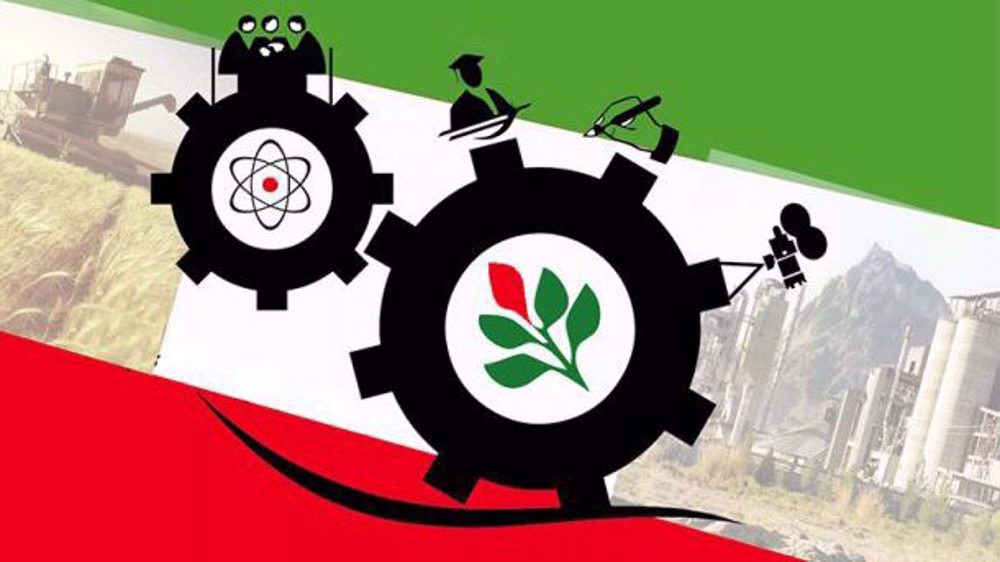
The concept often described as “resistance economy” in Leader of the Islamic Revolution Ayatollah Seyyed Ali Khamenei’s view is built on the assumption that Iran must be able to grow even when facing limits imposed from outside.
This does not mean shutting doors or retreating inward. It means relying more on internal strength while remaining active in regional and global markets. Production stands at the heart of this approach.
When domestic output is strong and diverse, the economy depends less on imports, supply becomes more reliable and inflationary pressure eases naturally. In this view, factories, farms, workshops and technology firms are not just sources of jobs but stabilizing forces for prices and incomes.
One of the most consistent themes in this thinking is the role of people as economic actors. Excessive state control is seen as a weakness not only because it can reduce efficiency, but because it limits initiative.
Iran has a large, educated and youthful population with a strong record of creativity under constraint. Small businesses, cooperatives, private manufacturers and knowledge-based firms are presented as engines that can unlock this capacity.
When people feel ownership and responsibility, productivity rises and resources are used more carefully. This wider participation spreads income, supports production and reduces the speculative behavior that often thrives in inflationary environments.
Oil has long shaped Iran’s economy, providing revenue but also exposing the country to volatility and political pressure. Reducing dependence on crude oil exports is therefore treated as a strategic necessity.
Non-oil exports, from petrochemicals and agricultural goods to engineering services, medical expertise and technology-based products, are viewed as tools for building a more balanced economy.
These sectors create jobs inside the country, deepen supply chains and connect production to real demand rather than unpredictable commodity cycles. A more varied export base also brings steadier foreign income, which helps manage exchange rates and inflation.
Trade policy plays an important role in this picture. Iran’s economic vision stresses that weak foreign trade is not caused by lack of capacity but by outdated methods, limited coordination and financial barriers.
Improving trade means reforming rules, modernizing logistics and strengthening economic diplomacy, especially with neighboring and friendly countries.
Regional markets offer scale and familiarity, while cooperation through trade blocs can reduce costs and risk. Stronger trade activity feeds back into domestic production, encouraging firms to raise quality and expand output.
Currency dependence is another area where structural change is emphasized. Heavy reliance on the US dollar makes the economy vulnerable to external shocks and sanctions. Using local currencies in trade agreements is presented as a practical step to reduce this exposure.
Such arrangements already exist in parts of the world and can help stabilize trade flows and prices. When exchange-rate swings are less severe, producers can plan better and inflation becomes easier to control.
Fiscal discipline is treated as a core requirement for economic stability. Persistent budget deficits place pressure on the financial system and often lead to inflation through monetary expansion.
Reforming the budget, reducing reliance on uncertain revenues and matching spending more closely to real income are seen as essential steps. This approach supports private investment by reducing uncertainty and signals that the state is committed to long-term balance rather than short-term fixes.
Alongside policy and structure, social behavior is recognized as an economic factor. High consumption, luxury-oriented spending and low support for domestic products weaken production and employment.
When imported goods dominate demand, local producers struggle, investment slows and jobs are lost. Encouraging the use of domestic products is framed not as isolationism but as strengthening the internal market.
A strong domestic market gives producers confidence, supports innovation and creates a buffer against external shocks.
Knowledge-based activity occupies a special place in Iran’s economic outlook. Universities, research centers and technology firms are seen as bridges between science and production.
Knowledge-based companies can raise productivity without large increases in raw material use, making them well suited to an economy facing resource and financial constraints. Their products are often exportable and less vulnerable to price swings, contributing both to growth and stability.
Small and medium-sized enterprises are highlighted as particularly important. These firms tend to be flexible, labor-intensive and innovative. They can spread economic activity across regions, reduce unemployment and respond quickly to changing demand.
Supporting them through easier licensing, access to finance and legal protection helps create a dense network of production. At the same time, large factories are encouraged to modernize by working with universities and technology firms, improving efficiency and competitiveness.
Trust is repeatedly treated as a decisive economic ingredient. When people trust institutions, laws and policies, they are more willing to invest time and capital. Clear rules, predictable regulation and fair enforcement create an environment where participation feels worthwhile.
The roles of different branches of government are defined around this idea: lawmakers create stable frameworks, the executive supports production and exports, and the judiciary protects economic rights. Together, these actions shape confidence.
National self-confidence also appears as an economic asset. Belief in domestic ability encourages risk-taking, entrepreneurship and persistence during difficult periods.
Iran’s experience of operating under pressure has produced skills in adaptation and innovation. Protecting these strengths, rather than allowing them to erode through neglect or pessimism, is seen as vital for continued progress.
Hope is treated as more than a feeling. It is described as a force that influences economic behavior. When people see a future in production and effort, they invest energy and resources.
Criticism of weaknesses is paired with emphasis on existing capacity, keeping the focus on what can be built.
In this economic vision, resilience is not passive endurance but active transformation, driven by production, participation and confidence in the country’s ability to shape its own economic path.
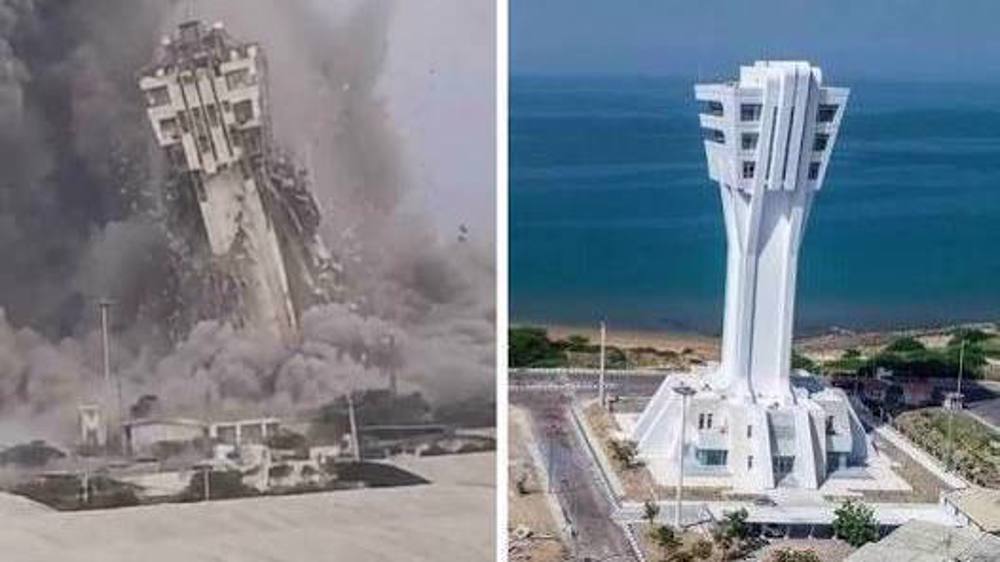
US destruction of Global South convergence symbol in Chabahar
Iran's custodial role in the Strait of Hormuz beyond pipelines

After US policy whiplash, Iran sets the rules in Strait of Hormuz



Two Palestinians killed as residents confront settler raid in West Bank
VIDEO | Press TV's news headlines
Iranian researchers develop nano-coated dental, ENT burs to boost durability, cut import costs
UK: Starmer leaves 10 Downing Street for final time as Andy Burnham readies to step in
VIDEO | Spain fans celebrate World Cup championship in Times Square
VIDEO | 'Israel and US are trying to destroy a sovereign country'
Israeli authorities deny Palestinian journalist’s access to al-Aqsa Mosque
Tehran slams US strikes on civilian infrastructure, urges UN action


 PressTV NEWSLETTER
now
PressTV NEWSLETTER
now
 This makes it easy to access the Press TV website
