Iran opposes Trump's corridor plan for Caucasus amid security concerns: Leader’s aide
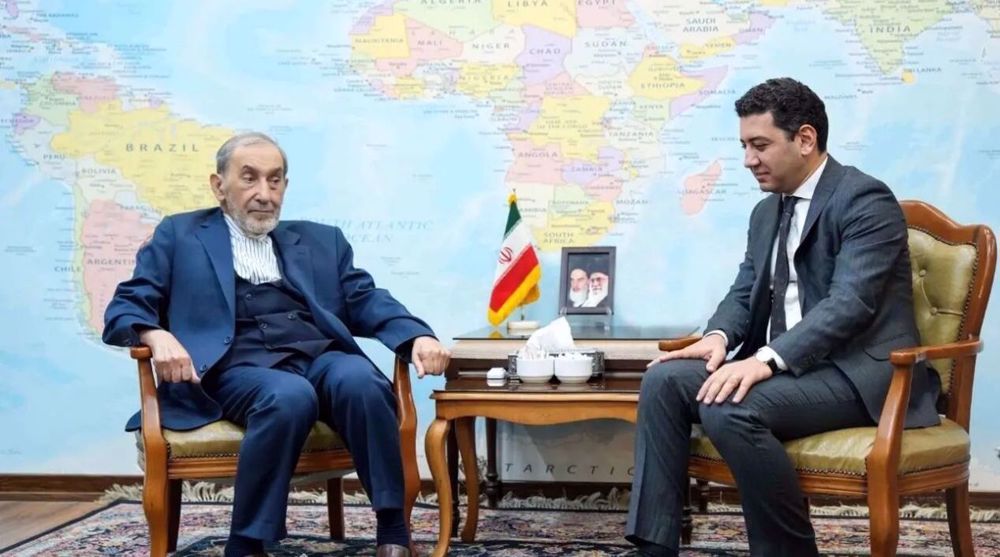
A senior advisor to Leader of the Islamic Revolution Ayatollah Seyyed Ali Khamenei says Iran is categorically opposed to US President Donald Trump’s transit route in South Caucasus, citing security concerns arising from America’s presence on the country’s borders.
Ali Akbar Velayati made the remarks during a meeting with Armenia’s Ambassador to Iran Grigor Hakobyan in Tehran on Monday.
He said the so-called Trump Route for International Peace and Prosperity (TRIPP) is no different from the Zangezur Corridor.
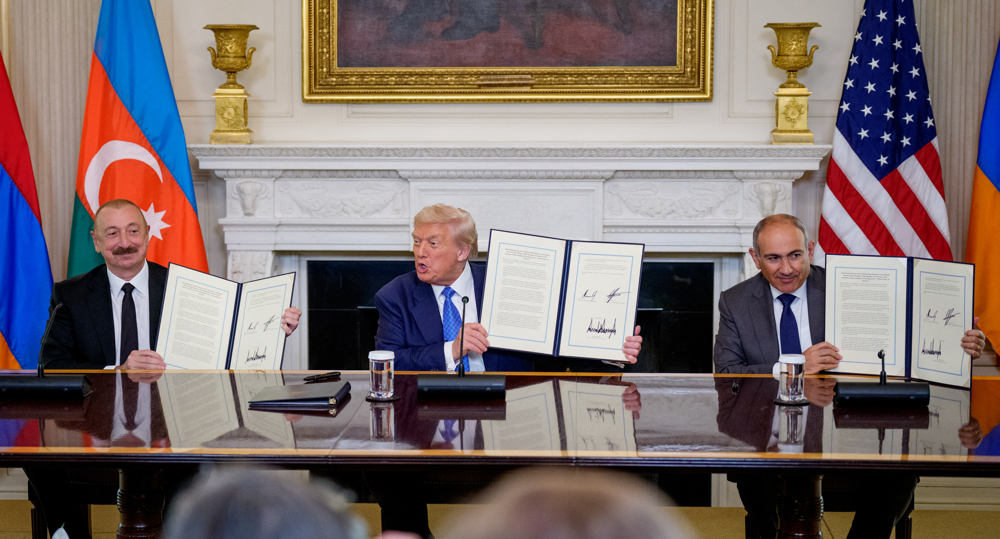
The route connects Azerbaijan to its Nakhchivan exclave through Armenian territory along its entire border with Iran. On a 99-year land lease, the US will operate the 43-kilometer route, which will include railways, communication networks, and pipelines for oil and gas.
Velayati said past experience shows the United States often enters sensitive regions under the guise of economic projects, only to gradually expand its presence into military and security spheres.
“Allowing the US any foothold near Iran’s borders under any schemes carries clear security implications,” he warned.
The senior Iranian official also noted that Iran stood against the Zangezur Corridor plan from its very beginning and rejected any alteration of borders or developments undermining the country’s security.
“When the Zangezur Corridor was proposed, the Islamic Republic of Iran firmly declared its opposition and prevented the implementation of the plan without the support of Russia, which was heavily engaged in the Ukraine war.”
“This was because the corridor could have paved the way for NATO’s presence in northern Iran, posing a serious threat to the security of northern Iran and southern Russia. The Trump route is essentially the same project, only with a different name, and is now being pursued in the form of American companies entering Armenia.”
The creation of Trump’s transit corridor was agreed as part of the US-brokered peace agreement that Azerbaijan and Armenia signed at the White House on August 8, 2025.
The two South Caucasus states had been locked in conflict for nearly four decades as they fought for control of the Karabakh region, recaptured militarily by Baku in 2023.
At that time, Iran welcomed the end of the conflict between Armenia and Azerbaijan as a step towards regional stability, while simultaneously expressing concern over the negative consequences of foreign meddling in the Caucasus region.
Additionally, in his remarks, Velayati expressed Iran’s keenness to expand its historical and deep-rooted relations with Armenia.
Hakobyan, for his part, described Tehran-Yerevan cooperation as highly significant and strategic, noting that the development of ties with Iran is among the main priorities of his country’s foreign policy.
Meanwhile, both sides underscored the need for strengthening bilateral relations and keeping up consultations on regional issues.
Baloch elites declare full support for Leader’s message on Iran-US MoU
‘Biased censorship’: Iran deputy FM slams X for stripping him of blue tick
Iran warns of predetermined ‘reciprocal measure’ in case of US deal breach



US emerged from war ‘desperate, defeated': Leader's advisor
US intl. warns: Netanyahu may sabotage Iran-US MoU to prolong aggression
‘Hand on trigger’: Army stresses readiness to defend Iran against any violation
Key Parliament commission hails Leader’s MoU message, says continued victories hinges on unity
UK PM advised to prepare for 'dignified, orderly exit'
UNICEF: Ceasefire in besieged Gaza is a ‘deadly illusion’ for Palestinian children
Iran rules out IAEA inspections of war-damaged nuclear sites
Israel will soon be expelled from ‘every inch’ of Lebanese territory: Hezbollah chief



 PressTV NEWSLETTER
now
PressTV NEWSLETTER
now
 This makes it easy to access the Press TV website
