Hidden strengths of Iran’s post-revolution economy
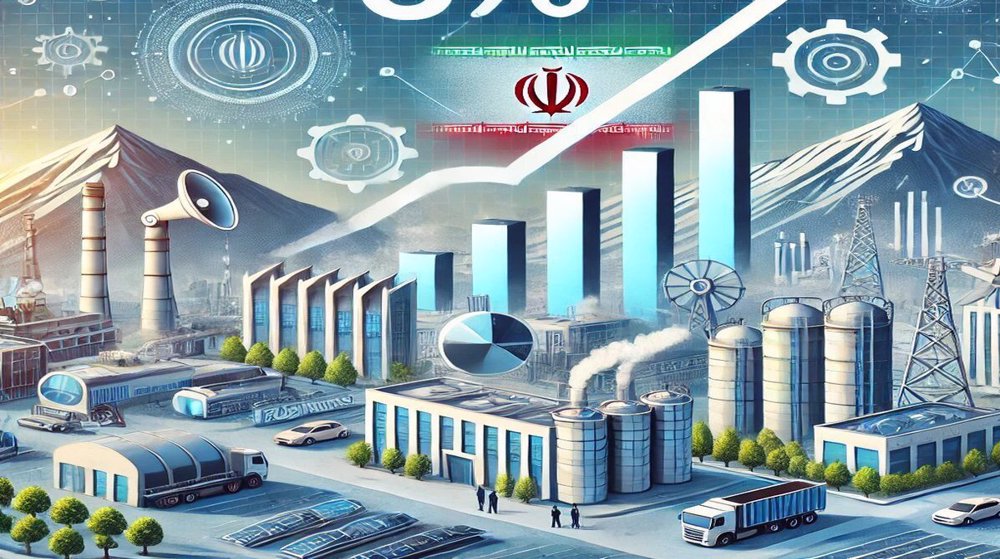
In the years since the 1979 Islamic Revolution, Iran’s economy has moved through war, sanctions, political change and demographic pressures, yet it has also produced a surprising number of successes that rarely fit the common narrative.
The story is often reduced to volatility, missed opportunities and isolation, but the long view reveals a country that has managed, with limited tools and constant constraints, to build new industries, expand its productive capacity and lift several key sectors that once lagged far behind.
Iran’s economic journey since the revolution is not a straight line, but it is one in which resilience, adaptation and a measure of ingenuity have shaped outcomes more than outside observers tend to admit.
Growth has been uneven, but it has not been absent. The chaos of the early 1980s, marked by nationalizations and the devastating Iran–Iraq war, pushed the economy into severe contraction. Yet even in those early, difficult years Iran maintained a working industrial base and avoided a complete collapse of the state.
When the war ended in 1988, the economy shifted quickly into recovery. The government embarked on a reconstruction program that repaired roads, restored ports and revived factories that had been damaged or abandoned.
Oil earnings in the early 1990s provided the fiscal breathing room needed to invest in infrastructure, stabilize the currency and restart private-sector activity. Industrial production expanded and growth moved back into positive territory, at times touching double digits.
For a country recovering from nearly a decade of war, this was no small achievement.
Over time, Iran transformed several of its industrial foundations. Before the revolution, manufacturing existed but was heavily dependent on foreign ownership and imported technology. After 1979, and especially after the war, the state pushed for local capacity.
Steel output rose dramatically, making Iran one of the largest producers in the region. Cement production soared, supplying both domestic and regional construction markets. Petrochemicals became a bright spot, generating jobs, diversifying exports and reducing the country’s over-reliance on crude oil.
Even the much-criticized automotive industry grew into one of the biggest in West Asia, producing more than a million cars annually in its best years.
These industries do not always match global standards, but their expansion in an environment of sanctions and financial restrictions is an economic fact worth recognizing.
Agriculture tells a similar story of recovery and ambition. In 1979, the country produced roughly 33 million tonnes of agricultural goods; today the figure surpasses 100 million tonnes. Iran now supplies most of its own eggs, dairy, poultry and a large share of its wheat.
This progress was not automatic. It required investment in irrigation canals, rural cooperatives, fertilizers, and agricultural research stations.
While water mismanagement remains a serious challenge, and environmental concerns loom large, the boost in agricultural output strengthened the country’s food security and protected it from the turbulence of global markets, especially during sanctions. Rural incomes improved, poverty fell in many provinces and local markets expanded.
Services, long the engine of growth in advanced economies, have also grown steadily in Iran, even if less spectacularly. Health services expanded dramatically with the creation of rural clinics, medical universities and new hospitals.
Education grew even faster, with literacy rates rising and millions entering high schools and universities. These sectors may not be glamorous, but they added millions of jobs and created a healthier, better-educated population.
They also laid the groundwork for Iran’s quiet rise in scientific output. The country now ranks among the world’s more prolific producers of scientific papers in fields like nanotechnology and biotechnology.
This did not happen by accident; it is the product of years of investment in human capital, research funding and a young population eager to enter technical fields.
Even in high-tech areas that require advanced knowledge and precision engineering, Iran has carved out niches that outsiders often overlook.
The defense industry, once dependent on imports, now produces drones, missiles, armor and electronic systems that have earned both international attention and export customers. This industry has spillovers into civilian manufacturing, robotics, sensors and materials science.
The country’s telecommunications sector expanded quickly, with mobile penetration and internet access rising sharply, helping to support a new generation of entrepreneurs who build apps, online services and e-commerce platforms.
Inflation and unemployment remain long-standing challenges, but they have never fully overshadowed the country’s capacity to function and grow even in difficult circumstances.
Iran’s job market has absorbed millions of entrants from the post-revolution baby boom, a demographic surge that would have strained even the healthiest economies.
Despite waves of sanctions, the currency shocks they produced and the cost of war and reconstruction, Iran maintained employment levels that avoided mass destabilization.
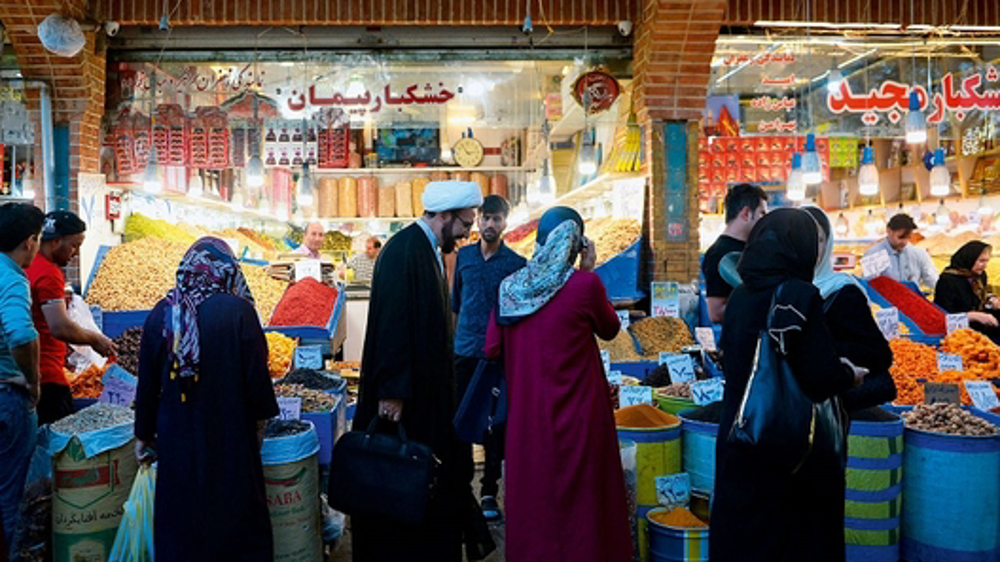
In periods of price stability, such as the late 1990s and early 2000s, households experienced genuine improvements in living standards, helped by expanding utilities, transportation networks and public services.
The country’s electricity generation, for instance, expanded many times over, connecting rural areas to the grid and allowing new industries to operate in places once considered too remote.
One of the more understated economic strengths of the post-revolution era has been Iran’s ability to adapt to external pressure.
Sanctions, though damaging, forced domestic substitution in industries ranging from pharmaceuticals to machinery. Local firms learned to engineer components that had once been imported.
The banking system adopted creative, if imperfect, ways to maintain trade flows. Small and medium-sized enterprises, often family-owned, developed resilience through flexible production lines and the ability to shift quickly between markets.
These adaptations created an economic culture accustomed to constraint, and that culture strengthened Iran’s capacity to absorb shocks.
Iran’s economy still faces formidable obstacles, many of them structural. Yet the economic record since the revolution, seen in full, is not one of stagnation but of persistent effort to build, rebuild and sometimes reinvent under difficult circumstances.
There is something notable in a country that has weathered war, sanctions, political turbulence and multiple global downturns while continuing to expand production, raise its human capital and maintain a basic level of economic stability.
It is a reminder that economic progress does not always follow ideal conditions, and that resilience itself can be a form of strength.
Oil prices hike as Israelis attack deeper into Lebanon
Iranian stock market reports historic trade as shares surge
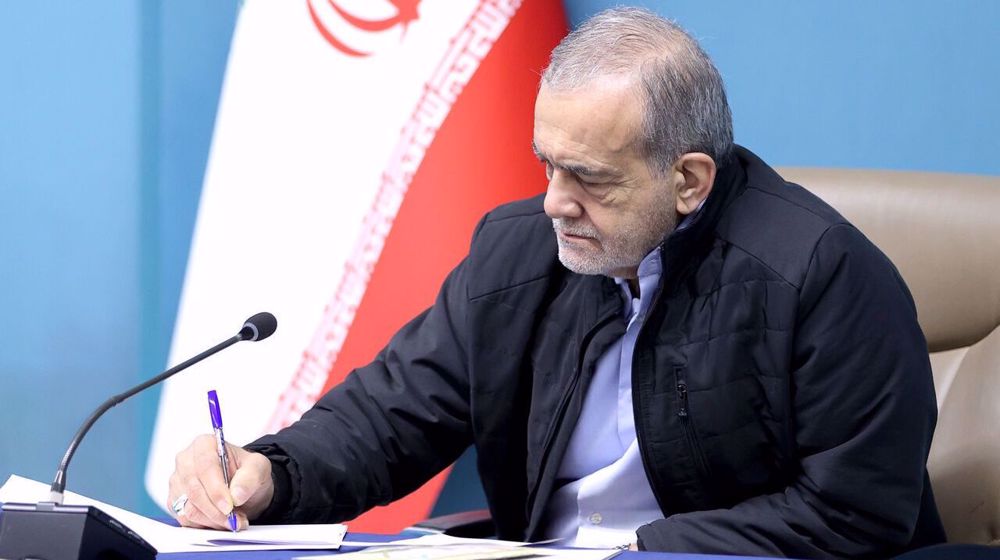
Iran’s active role in Eurasian bloc reflects its strong commitment to development: President



Iran blasts Israel, US for killing children through occupation, bombardment
Leader's aide warns US to accept Iran’s conditions or face a ‘hard slap’
Hezbollah pounds Israeli invading forces in southern Lebanon
Majority of Americans demand swift end to US war on Iran: Poll
Araghchi: Iran does not seek war, but will defend against any aggression
June 4: Leader warns of enemy's hybrid warfare as Iran rejects Kuwait Airport strike claims
‘Enough bloodshed’: In open letter to Putin, Zelensky calls for meeting and ceasefire
Millions across Iran renew allegiance to new Leader at Ghadir celebrations


 PressTV NEWSLETTER
now
PressTV NEWSLETTER
now
 This makes it easy to access the Press TV website
