Iran on track to become regional transit hub with rail revolution
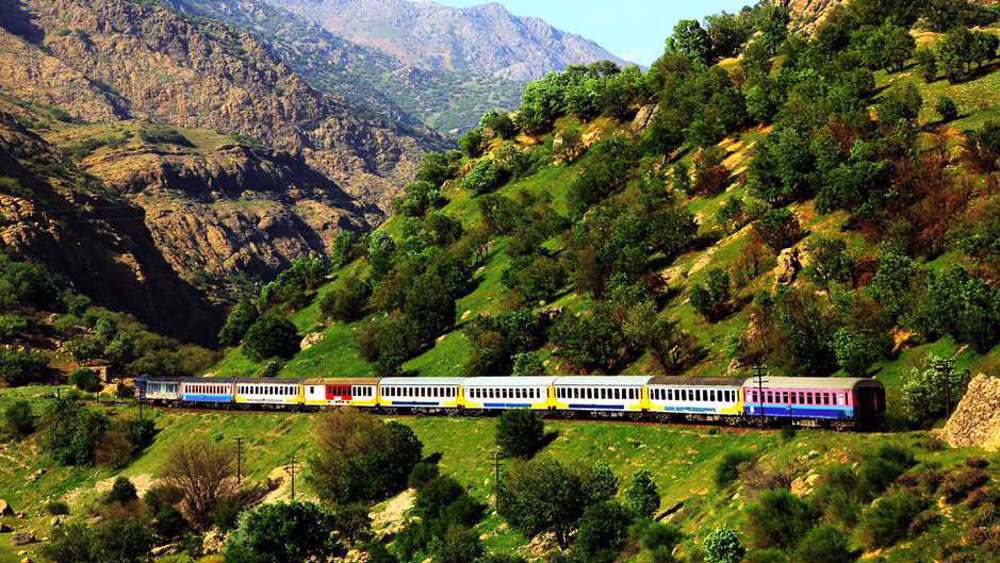
Iran’s railway sector is emerging as a key driver of domestic and international trade, offering a low-cost, safe, and environmentally friendly alternative to road transport.
Over the past decade, Iran has invested heavily in expanding and modernizing its rail network, positioning itself as a crucial transit hub connecting Asia and Europe.
With a strategic geographic location, robust infrastructure, and ambitious government plans, the country is now poised to harness railways as a powerful tool for economic growth.
The benefits of rail transport in Iran are clear. Compared with road transport, railways offer much lower costs for moving goods, particularly in bulk over long distances. Safety is another major advantage where trains reduce the risk of accidents, theft, and cargo damage.
Moreover, rail transport has a significantly lower environmental footprint, helping Iran reduce fuel consumption and carbon emissions.
Experts estimate that for freight, railways save up to five times more fuel than road transport, alongside broader social benefits such as fewer accidents and reduced congestion.
Iran’s rail network is extensive and strategically integrated with key regional and international corridors. Domestically, it connects major ports, industrial centers, and agricultural hubs, enabling efficient movement of goods across the country.
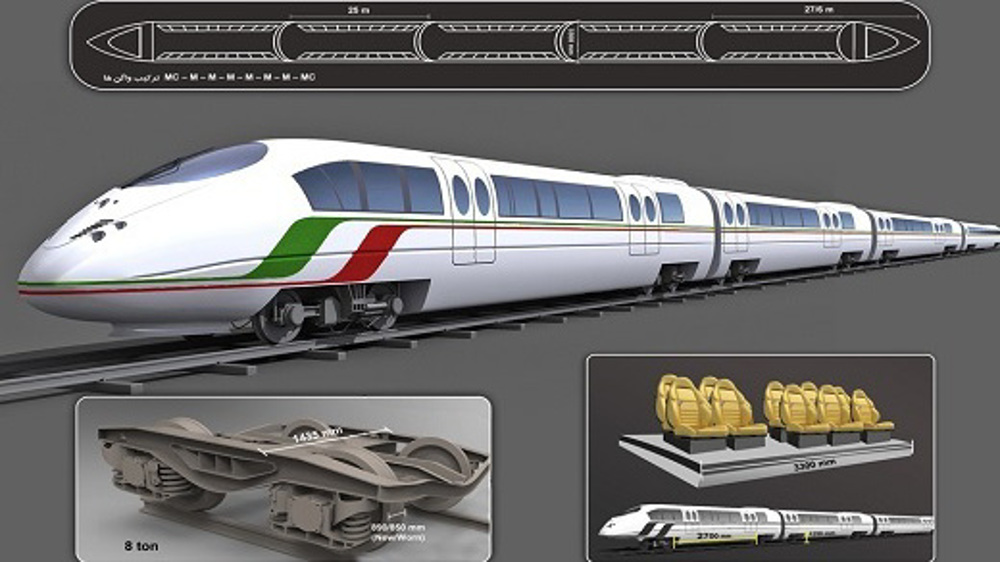
Internationally, Iran has active rail links with neighboring countries and beyond, forming part of crucial north-south and east-west corridors.
These connections allow Iranian freight to reach markets in Russia, Central Asia, the Caucasus, and Turkey, as well as forming a potential bridge between China, Europe, and West Asia.
Several key rail hubs highlight the country’s growing capacity. The Sarakhs station on the Turkmenistan border facilitates trade with Central Asia. Astara on the Caspian Sea provides a direct rail link to Azerbaijan, Russia, and Europe.
Tehran, the nation’s busiest rail station, operates as a central node for cargo distribution across the country.
Other strategic ports, including Shahid Rajaee and Khorramshahr, are integrated into the rail network, enabling efficient multimodal transport that links sea and land routes.
Iran’s government has set ambitious goals under its seventh development plan, aiming to raise rail freight’s share of national transit to 30% and increase total rail transit to 40 million tons annually.
Achieving this will require significant investment in both infrastructure and rolling stock. Plans include procuring 550 new locomotives and expanding the rail freight fleet to move up to 180 million tons of cargo domestically.
These investments are supported by both public funding and private capital, with a targeted $6.4 billion in private investment for fleet modernization, logistics centers, and related services.
To attract private investors, Iran has introduced a series of incentives, including higher returns on investment and the ability to recover up to 100% of investment and financing costs through fuel savings under national legislation.
Early results have been promising: recent calls for investment in rail fleets have attracted more than 540 trillion rials, signaling strong investor confidence in the sector’s growth potential.
The diversity of Iran’s rail freight rolling stock further strengthens its competitiveness. Specialized wagons allow for the transport of a wide range of goods, from agricultural produce like pistachios, dates, and kiwis, to construction materials such as cement and stone, and industrial products.
This versatility positions Iran as a reliable exporter and transit country, capable of efficiently handling bulk shipments to and from neighboring markets.
Internationally, new rail projects are unlocking further opportunities. The Khaf-Herat railway connects Iran with Afghanistan, creating a link to Central Asia and the Silk Road. The Shalamcheh-Basra line is expanding trade with Iraq.
These projects, alongside improvements to existing corridors, are expected to increase Iran’s share of regional freight transit while boosting export volumes.
The economic potential of rail expansion extends beyond freight. By reducing transport costs, enhancing supply chain efficiency, and facilitating trade, rail investment contributes to broader industrial growth and job creation.
Experts estimate that last year alone, Iran’s rail transport generated over $1.3 billion in social and economic benefits, primarily through savings on fuel, reduced accidents, and lower logistics costs.
Currently, rail transport accounts for just 12% of total transit in Iran, with 2.4 million tons moved by rail out of 20 million tons last year, showing substantial room for growth. Meanwhile, total imports and exports transported by rail reached 5 million tons, with plans to raise this figure to 8 million tons this year.
Iran’s railway sector appears set for a bright future. With continued government support, investment incentives, and strategic infrastructure development, the country is transforming its rail network into a backbone for trade, transit, and economic growth.
Iran’s rail achievements highlight a story of modernization, strategic foresight, and economic opportunity. By expanding rail capacity, integrating with international corridors, and leveraging private investment, the country is creating a dynamic transport ecosystem.
This not only strengthens domestic trade and export potential but also positions Iran as a pivotal transit hub in a rapidly growing region.
Iran receives first $3 billion asset tranche as part of understanding with UAE: Report

How Iran outranks Germany, Canada, Japan in drinking water quality

Iran showcases engineering might with toughest railway project



‘We will never withdraw:’ Israeli minister vows endless occupation of Lebanon
Eight killed in US Air Force B-52 Stratofortress bomber crash
Quds commander: Imposed war discredited US, accelerated collapse of Israel
June 15: Iran-US MoU to end imposed war is widely welcomed as US lifts naval blockade
Iran’s army: Any violation of MoU will be met with swift response
Exclusive: Iranian oil tankers, cargo vessels sail through as US naval blockade officially lifted
Iran-US MoU ‘great victory’ for Tehran as US failed to achieve war objectives: Former diplomat
Iran says talks with US to start right after signing of MoU in Switzerland


 PressTV NEWSLETTER now
  This makes it easy to access the Press TV website