Explainer: JCPOA and its restrictions have expired — what does that mean?
By Hamid Javadi
Iran's Foreign Ministry said on Saturday that a 10-year agreement Tehran reached with world powers in 2015 on its nuclear program has officially expired.
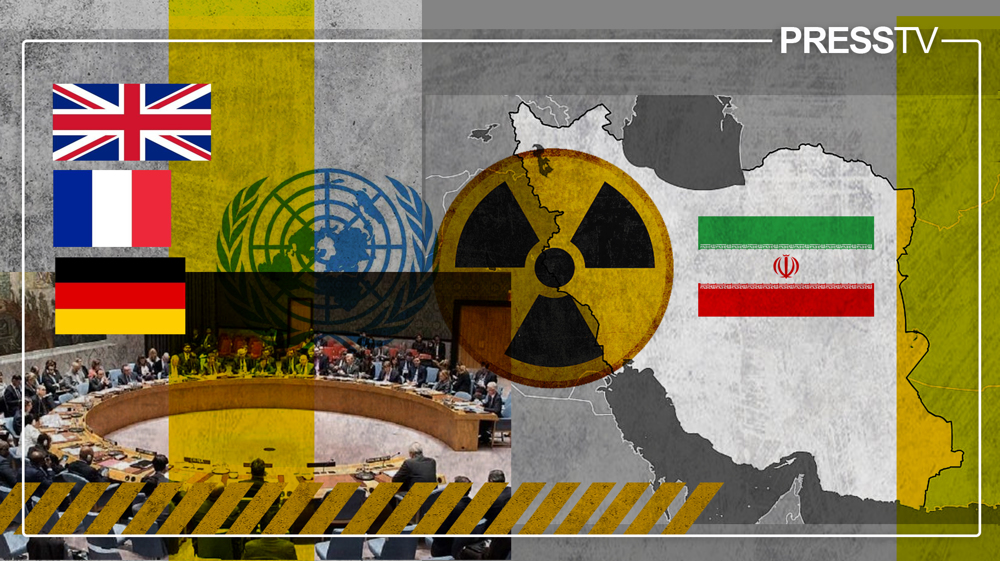
The landmark deal, officially known as the Joint Comprehensive Plan of Action (JCPOA), was signed in Vienna between Iran and the P5+1 (China, France, Russia, the UK, the US, and Germany), along with the European Union.
Under the terms of the accord, Iran agreed to certain restrictions on its peaceful civilian nuclear program and to open up its facilities to more extensive international inspections in exchange for sanctions relief.
What is 'termination day'?
The JCPOA’s “termination day” was set for October 18, 2025, exactly 10 years after it was enshrined in UN Security Council Resolution 2231, which endorsed it.
Resolution 2231 was unanimously adopted by the UN Security Council on July 20, 2015, and it formally endorsed the JCPOA. The resolution gave international legal backing to the nuclear deal and lifted previous UN sanctions on Iran related to its nuclear program.
Once the new resolution was approved, six older UN Security Council resolutions issued against Iran over its nuclear program were officially canceled.
Thus, Iran was removed from Chapter 41 of the UN Charter, which outlines how the UN Security Council can respond to threats to peace, breaches of peace, or acts of aggression, without using military force.
Those measures include economic sanctions, cutting off transportation links (rail, sea, air), and severing diplomatic relations.
Iran: UNSC resolution 2231 officially expired, nuclear file should exit Security Council agendahttps://t.co/BcQWBSkZAK
— Press TV 🔻 (@PressTV) October 18, 2025
Iran, meanwhile, faced several time-bound restrictions: It was banned from buying or selling conventional weapons for five years and from activities related to developing or testing ballistic missiles for eight years.
According to Resolution 2231, Iran’s nuclear file was to remain on the UN Security Council’s agenda for up to 10 years. It tasked the IAEA with verifying Iran’s compliance with the JCPOA and required regular reporting to the UN Security Council.
The JCPOA and its supporting resolution have faced many ups and downs over the past decade.
Nevertheless, the 10-year window has now been closed as the IAEA has never reported to the Security Council that Iran is moving toward building a nuclear weapon.
All JCPOA provisions ‘terminated’
Therefore, as Iran maintains, its nuclear file, and all related sanctions and resolutions should be removed from the UN Security Council’s agenda, as stipulated by Resolution 2231.
From now on, “all of the provisions (of the deal), including the restrictions on the Iranian nuclear program and the related mechanisms are considered terminated”, the foreign ministry said in a statement on Saturday.
However, the ministry reiterated that the country was still committed to diplomacy.
The nuclear deal had already been in tatters since May 2018, when the United States unilaterally and illegally withdrew from the accord during President Donald Trump’s first term and re-imposed draconian sanctions on Iran, which the deal had lifted.
Iran exercised “strategic patience” for a year and continued to implement the terms of the agreement, waiting for the European parties to deliver on their promise of ensuring that Iran received the economic benefits of the deal following the US exit.
Iran began to roll back its commitments in response to the US violations and after the Europeans failed to deliver on their commitments under the deal.
The remedial measures were taken under Articles 26 and 36 of the JCPOA, which outline the mechanisms for addressing violations of the agreement, allowing a signatory to cease or reduce its commitments if another party is not implementing theirs.
"They uphold intl. law when it suits them."
— Highlights (@highlightsnews1) October 18, 2025
Journalist and political activist Sakina Datoo criticizes UNSC, accusing it of blatant favoritism.
Follow: https://t.co/7h1TYY0mG1 pic.twitter.com/uspyerZv35
Tensions surrounding Iran’s nuclear activities continued to escalate as the country gradually scaled up its uranium enrichment level after one year of strategic patience, asserting the right to do so as other parties to the deal had violated their commitments.
Meanwhile, the IAEA claimed that enrichment to 60 percent, which still falls short of weapons-grade enrichment at 90 percent, had no civilian justification and raised proliferation risks.
Tehran maintained that the enriched uranium is needed for producing radiopharmaceuticals and fueling research reactors, particularly the Tehran Research Reactor that produces medical isotopes.
At the same time, officials in Iran repeatedly stated that the reciprocal measures were reversible if the sanctions were lifted and the deal was restored. That, however, never happened.
Snapback mechanism
The deal included a so-called "snapback mechanism," which was embedded in Resolution 2231. It allowed any one party to the deal to trigger a process that would restore all previous UN sanctions on Iran if the country was found to be in “significant” breach of its obligations.
On August 28, 2025, the European parties to the JCPOA—France, Germany, and the United Kingdom (collectively known as the E3)—formally activated the snapback mechanism in a clearly political move.
As a result of the snapback, the E3 said all UN sanctions lifted under the JCPOA were reinstated, including restrictions on arms transfers, ballistic missile activities, and financial dealings related to Iran’s nuclear program.
Tehran, however, asserted that the European troika lacks both “moral and legal authority” to use the dispute resolution mechanism under a deal they have repeatedly violated. It also warned that invoking the snapback, which is legally null and void, would end Europe’s engagement in Iran’s nuclear file.
The re-imposition of UN sanctions rendered the JCPOA, which by then was largely defunct, effectively moot.
A political report and an act of aggression
At the core of the E3’s move against Iran was a report by the IAEA, issued early in June, that falsely accused Iran of “general lack of cooperation” with the UN nuclear watchdog and claimed Tehran has stockpiled enough enriched uranium to build nine nuclear bombs if it chose to do so.
Subsequently, the IAEA’s Board of Governors used the report to declare Iran in breach of its non-proliferation commitments for the first time in two decades on June 12.
Iran condemned the motion as politically motivated and a pressure tool to force it to make concessions in the midst of indirect negotiations with the US on a potential nuclear deal.
The following day, the Israeli regime launched a blatant and unprovoked act of aggression against Iran, striking the country’s nuclear facilities and assassinating many top nuclear scientists and military commanders in a surprise overnight attack on June 13.
Iran’s President Masoud Pezeshkian says Tehran will not allow IAEA inspectors to visit its nuclear sites after the activation of the snapback mechanism.
— Press TV 🔻 (@PressTV) September 28, 2025
Follow Press TV on Telegram: https://t.co/LWoNSpkc2J pic.twitter.com/gvX2A8falw
The war of aggression, which the US also joined by bombing three of Iran’s main nuclear sites, lasted for 12 days, during which time more than 1,000 civilians were killed in Iran. Israeli-occupied towns and cities were also reduced to “ghost towns” as Iran’s ballistic missiles penetrated the regime’s much-hyped multilayered air defense systems.
The war further undermined diplomacy and diminished the prospects for a negotiated resolution. Several rounds of Omani-brokered talks between Tehran and Washington had failed to yield an agreement. Iran was preparing for a sixth round of talks when it came under attack.
However, Iran said it was still open to diplomacy provided that Washington offered guarantees against military action during any potential talks.
After the 12-day war, Iran’s Parliament passed a bill to suspend cooperation with the IAEA. Tehran blasted the UN nuclear watchdog and its director general for providing Israel with a pretext to attack Iran’s nuclear facilities by issuing a politically-motivated report.
The snapback sanctions threw another wrench in the diplomatic works.
Foreign Minister Araghchi said last week that Tehran did “not see any reason to negotiate” with the Europeans, given that they had triggered the snapback mechanism.
In a letter addressed to the United Nations chief Antonio Guterres on Saturday, Araghchi said that the expiration of the JCPOA and Resolution 2231 renders the sanctions “null and void.”
Iran won’t give up its nuclear program
Iran has operated a nuclear energy technology program since the 1950s. The program made slow progress through the early 1970s, with Western assistance. However, after the 1979 Islamic Revolution that ended Western meddling in the country's affairs, the US and its allies chose to target Iran's nuclear activities through sanctions and sabotage.
Iran has consistently denied accusations that it is seeking to build an atomic bomb, saying that its nuclear activities are for peaceful energy purposes. The IAEA and the US intelligence community have also acknowledged that there is no evidence suggesting a military dimension in Iran’s nuclear program.
Much of the brouhaha surrounding Iran’s enrichment activities has been fueled by Israel and its hawkish prime minister, Benjamin Netanyahu, who has, without any shred of evidence, accused Iran of trying to build a nuclear bomb for the past 30 years.
The Israeli regime has also fed fabricated intelligence to the UN nuclear agency regarding its peaceful nuclear work, while itself not being a signatory to the Non-Proliferation Treaty.
Iranian leaders have made it clear that they will not give up their peaceful nuclear program to which, as an NPT signatory, the country is entitled, and for which the nation has paid dearly in blood.
Iraq's Islamic Resistance offers $10 million bounty for Trump's assassination
Iran Army hits US helicopter, reconnaissance aircraft base in Bahrain
US launches fresh wave of deadly strikes on Iran, targets bridges, railway, airports


VIDEO | Press TV's news headlines
US aggressive acts against Iran constitute war crimes: Iran envoy to UN
Iraq's Islamic Resistance offers $10 million bounty for Trump's assassination
VIDEO | US lawmakers back anti-Iran policy because it serves their donors: Analyst
Iran Army hits US helicopter, reconnaissance aircraft base in Bahrain
US launches fresh wave of deadly strikes on Iran, targets bridges, railway, airports
Iran urges Persian Gulf states to join hands for Hormuz security, blames US for instability
'Go to Hell': JD Vance lashes out at Israeli campaign to derail US-Iran talks


 PressTV NEWSLETTER
now
PressTV NEWSLETTER
now
 This makes it easy to access the Press TV website
