Isfahan tourism opportunities
Isfahan has long been a city of superlatives, once the dazzling capital of the Persian Empire, it has been praised in poetry, painted in manuscripts, and remembered by travelers as one of the most beautiful cities in the world.
Its domes shimmer with turquoise and gold, its boulevards stretch beneath ancient plane trees, and its squares still throng with the life of centuries past.
For Iranians, Isfahan is not just a city, it is memory, identity and pride. For visitors, it is a journey through time, a place where beauty is not hidden in museums, but lived in the streets.
They call it 'nesf-e-jahan', which means half of the world, and here in the Naqsh Jahan square, you can see why.
Once the heart of the Safavid Empire, this is where life, art and history coalesce into one breathtaking panorama. Welcome to Isfahan, an ancient city that still captures the hearts of travelers from all around the world.
Isfahan is Iran's third largest city, just 435 kilometers south of Tehran. But unlike the political capital, Isfahan has always been the spiritual and cultural heart of the country.
From the 16th century when Shah Abbas made it the capital of his empire, the city became a showcase of Persian brilliance, a center of science, trade, art and architecture, that drew visitors from Venice, Delhi and even Beijing.

The province of Isfahan is one of the largest in Iran, with more than 114 cities, over 1,000 villages and more than 22,000 historical sites, its tangible and intangible heritage is truly unparalleled.
Just recently, we lost the great master painter Mahmoud Farshchian, who was one of many symbolic figures rooted in this land.
When the new administration came into office last year, we defined three main axes for development in Isfahan. The first of these, and one of the most important, is tourism.
Our aim is to transform the province's enormous potential into real, active opportunities. Most foreign visitors know Isfahan only for its history and monuments, but our province also has extraordinary natural attractions, especially protected areas like Mooteh, Ghamishlu, and Kolah Ghazi, which are ideal for ecotourism.
Beyond cultural and historical tourism, we are also working on religious tourism, health tourism and more. Isfahan healthcare city is unique in Iran, and is already attracts visitors from abroad. Some of the doctors based there are internationally renowned.
Mehdi Jamalinejad, Governor of Isfahan Province
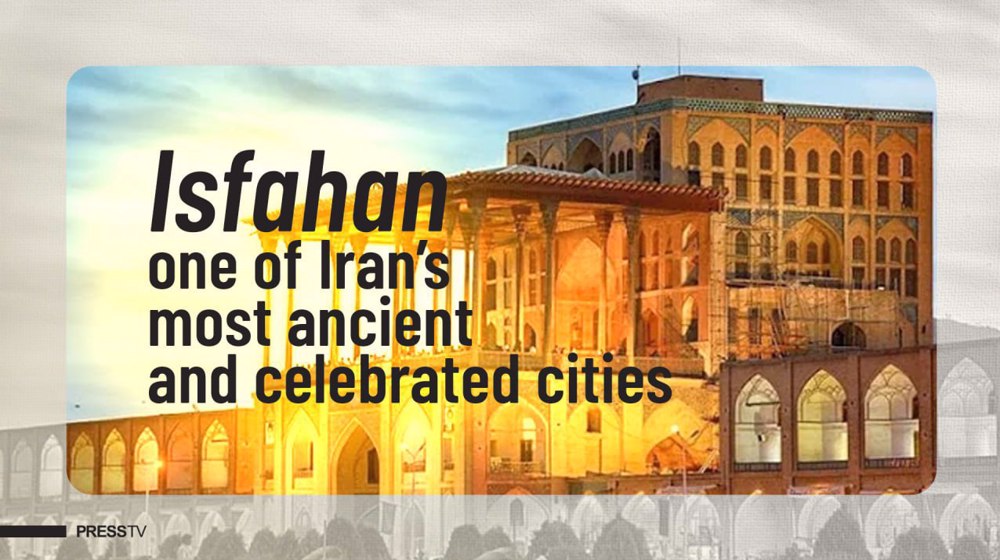
Naqsh-e Jahan square itself is a city within a city flanked by the Imam Mosque, the Sheikh Lotfollah Mosque, the Ali Qapu Palace and the great Qeysarriyeh Bazaar, it is both a UNESCO World Heritage site and one of the largest squares in the world.
It is here that you understand why Isfahan has always been seen as a living museum of Persian civilization.
The allure of Isfahan cannot be attributed to just one factor, but to a rich combination of elements.
Isfahan's uniqueness also lies in its biodiversity. Certain species of wildlife and fish exist here and nowhere else in the world. This too is an attraction for visitors interested in nature.
On a global level, Isfahan is twinned with major cities like Barcelona and St Petersburg, and is a member of many international networks, from UNESCO created cities to organizations of historic capitals.
This reflects Isfahan's global reputation, which is not new but centuries old. Travelers in past centuries described it as one of the most flourishing cities in the world.
Mehdi Jamalinejad, Governor of Isfahan Province

Every tile here tells a story of patience, devotion and a love for beauty that defines Persian architecture. Isfahan's mosques aren't just monuments; they're living museums of color, geometry and light. This artistry is not locked in the past. It continues to inspire architects and visitors alike making Isfahan a treasure for those who come seeking meaning and beauty.
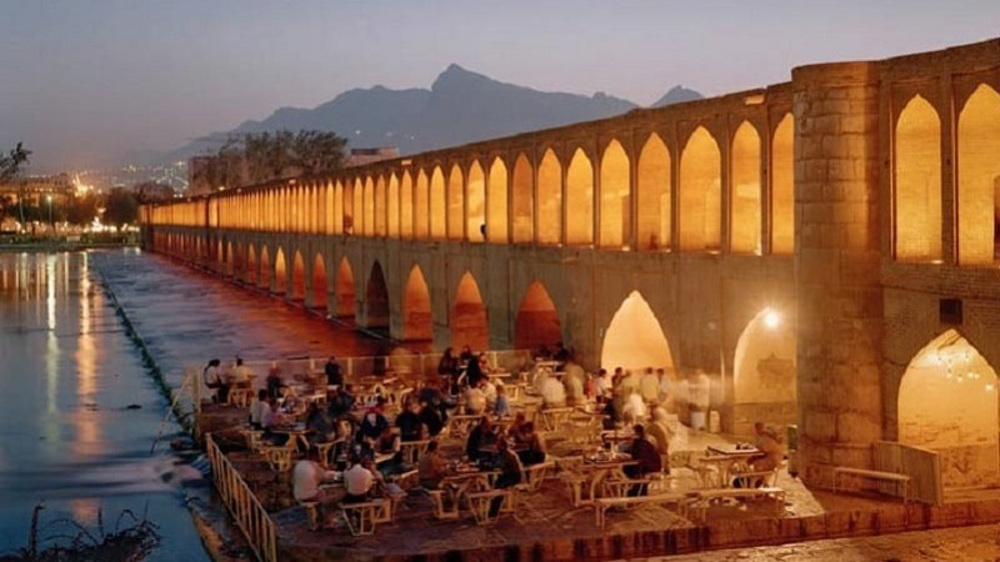
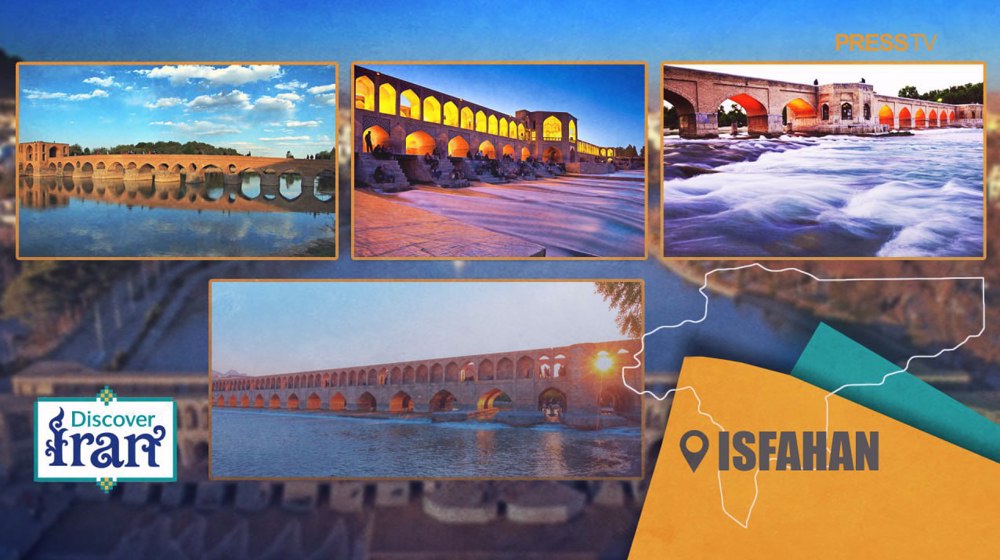
Beyond the mosques and palaces, the city's cultural richness is unmatched. Si-o-se-pol and the Khaju Bridge stretch across what was once the mighty Zayanderud River, creating gathering places that are still alive today.
The Chehel Sotoun Palace dazzles with mirrored columns that reflect history as vividly as the day they were built.
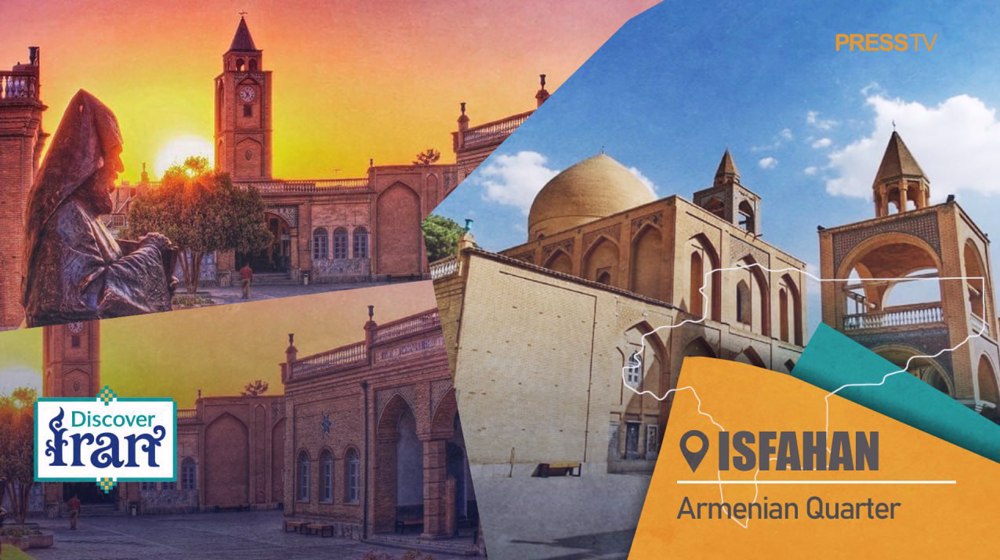
And in Jolfa, the Armenian quarter, cobblestone streets lead to the Vank Cathedral, a reminder that Isfahan has always been a crossroads of faiths and cultures.
Despite its fame, much of the province's tourism potential has yet to be realized.
Isfahan truly deserves much more focus on tourism. We believe that if tourism thrives here, it will benefit the whole country, because visitors who come to Isfahan often go on to explore other parts of Iran.
Handicrafts play a complementary role in this; Isfahan is home to 1/3 of the world's handicraft disciplines. You could call it the handicraft capital of the world. This is thanks to our rich heritage and the outstanding artists who have worked here. One example is the late master Mahmoud Farshchian, an internationally renowned painter of miniatures who was from Isfahan.
The city is also the resting place of many great mystics and spiritual figures. For instance, Takht-e Foulad, our historic cemetery, has significant potential for religious tourism.
Amir Karamzadeh, Director General, Isfahan Cultural Heritage, Tourism, and, Handicrafts Organization
Step into the Isfahan Bazaar and you step into centuries of tradition. Here the artisans craft minakari enamel, weave Persian carpets and carve intricate marquetry, which are all skills passed through generations.
This isn't just shopping, it's conversation with history and where every purchase is a piece of Persian culture that you can take home.
Another distinction is that Isfahan is a UNESCO creative city for handicrafts, one of very few worldwide.
More than three quarters of Iran's handicraft disciplines are concentrated here; in some villages, every single household is a small workshop. Entire families produce crafts together.
Handicrafts here are not hobbies, but livelihoods deeply tied to culture and community. This is part of what makes them so attractive to visitors.
Mehdi Jamalinejad, Governor of Isfahan Province
Handicrafts aren't just souvenirs; they are part of the city's economic engine.
Isfahan produces nearly a third of Iran's handicrafts exports, and its artisans are world renowned.

Isfahan is Iran's capital of handicrafts, and globally, it rivals countries like China and India. About 1/3 of the world's handicrafts are produced in Isfahan, while Iran as a whole boasts around 400 artistic disciplines.
Mohamad Nateqpour, President, Isfahan Association of Handicrafts Exporters and Producers
For investors, the potential is enormous. Cultural branding, artisan villages and international exhibitions, could transform these crafts into premium global brands.
Himself a celebrated marquetry master for more than 60 years, Mr. Nateqpour shared how Isfahani artisans have contributed to the city's attraction.
Most of these art forms are also major tourist attractions. For example, khatam-kari or marquetry, the most intricate and technical handicraft, is followed by metal engraving, wood-inlay, carpet weaving and others.
Their colors and designs appeal differently across the market.
Carpets and larger works are popular in Europe and America, while neighboring countries often prefer smaller pieces.
In short, the whole city of Isfahan can be considered a living museum of handicrafts with world class masters working here.
Mohamad Nateghpour, President, Isfahan Association of Handicrafts Exporters and Producers
Nateqpour asserts art is exempt from the blades of sanctions, and therefore represents a resilient and attractive sector for investment in Iran.
We face no real barriers to export, even under sanctions, neighboring countries such as Qatar, Oman and the UAE are key markets, as are Russia and China.
We understand these markets preferences and can successfully export to them.
Mohamad Nateqpour, President, Isfahan Association of Handicrafts Exporters and Producers
Tourism already contributes close to 10% of Iran's GDP and Isfahan is at its core. The province boasts more than 20,000 historical sites, over 60% of them concentrated right here in the city.
But while millions of domestic visitors and thousands of foreign tourists arrive each year, the city still lacks the infrastructure to host them comfortably.
Isfahan is known worldwide as a museum city. Hotel services have improved significantly in recent years. Today, we have 2 five star hotels in operation or nearing completion, several new four star hotels and many boutique and traditional hotels.
By 2026 with the addition of four more hotels, Isfahan's accommodation capacity will improve even further.
Amir Masoud Labbafan, Pirouzi Hotel, Isfahan, Manager
According to Mr. Labbafan, the hospitality industry offers one of the most profitable opportunities for foreign investors in Isfahan.
Many 1, 2, and 3, star hotels exist, but many are aging and in need of renovation.
Providing financial support to owners for refurbishment may be more effective than building new hotels.
Around 30 to 40% of Isfahan's hotels require modernization and renewing them would greatly strengthen the city's hospitality sector.
Amir Masoud Labbafan, Pirouzi Hotel, Isfahan, Manager
Consider this; Isfahan has only two five-star hotels! For a destination often compared to Rome or Istanbul, that is a major shortcoming, but for investors, a major opportunity.
Authorities in Isfahan are well aware of this. To encourage development the municipality of Isfahan covers 99% of hotel construction permit fees, leaving investors to pay just 1%.
Tax breaks, prime real estate and fast track approvals are on the table. In a region where tourism demand is outpacing supply, Isfahan is rolling out the welcome mat for those ready to build.
We have prepared about 110 investment packages. These are fully documented in a three language investment book, Persian, English and Arabic.
In addition, we operate a website where individuals and local authorities, municipalities, governorates, can upload their own tourism investment opportunities.
For example, if someone owns a piece of land and believes it has potential for tourism development, they can list it on this platform.
Our aim is to create what we call investment wallets, or ready made packages, projects that already have the necessary permits and clearances so that an investor can, quite literally, start work the very next day.
Amir Karamzadeh, Director General, Isfahan Cultural Heritage, Tourism, and, Handicrafts Organization

For centuries, the Zayandeh River has been the lifeline of Isfahan, flowing beneath these arches and bringing life to the city.
Today, the water may not always run, but the bridges remain as places where people still talk, gather and share their stories.
The Khaju Bridge, with its magnificent and functional design, continues to echo with music, poetry and laughter, proving that even without the river's flow, the spirit of Isfahan's community endures.
One of our main priorities now is developing designated tourism areas, Thanks to recent reforms in the statutes of the National Water Organizations; we can now make better use of rivers, lakes and reservoirs for tourism. The Zayandehrud River's bank, as well as our many dams, can serve as attractive sites.
We are promoting different forms of nature tourism, ecotourism, mountain tourism and desert tourism. Isfahan's deserts, Khur va Biabanak, Maranjab, Aran and Bidgol, Varzaneh, and even parts of Nain, are among the most pristine in Iran. They are ideal for stargazing in dark sky zones, where within 30 to 50 kilometers there is no artificial light, a feature highly valued worldwide for astronomy tourism.
Beyond nature, Isfahan is world famous for its historic monuments, especially those from the Seljuk, Ilkhanid and Safavid eras. Their unique architecture and ornamentation are treasures of Iranian art that attract countless visitors.
Many of these sites, including our numerous caravanserais, offer investment opportunities for restoration and adaptive reuse. All of these have been compiled into our investment guide.
Amir Karamzadeh, Director General, Isfahan Cultural Heritage, Tourism, and, Handicrafts Organization
This ability to transform challenges into attractions is part of Isfahan's story. The dry riverbed has sparked creative ideas, festivals, cultural nights and light shows that turn absence into presence.
And beyond the city center, ecotourism is taking shape. Salt caves in Natanz, the slopes of the Soffeh mountain and gardens that bloom in the desert, are opening new chapters in Isfahan tourism playbook.
I often say that although Isfahan has not been Iran's capital for more than 400 years, the city still behaves as if it were. In development projects, whether social, cultural, economic, or infrastructural, Isfahan carries itself with the dignity of a capital city.
Each of our cities is like an open air museum, from Kashan to Niasar, from Ghamsar to Abyaneh, and further into the deserts and mountains, every part of this province has something unique to offer. Our deserts, like Khur and Biabanak, are breathtaking, while mountainous regions like Semirom and Fereydunshahr are equally beautiful.
In northern areas, you can find historical cities whose architecture reflects centuries of different styles, like a living atlas of Iranian design.
Yet, unfortunately, most tourists, even domestic ones, only visit the well-known landmarks such as Si-o-se-pol, Khaju Bridge, or Naqsh-e Jahan Square. They remain unaware of the hidden treasures scattered across the province.
Mehdi Jamalinejad, Governor of Isfahan Province
Health tourism is another frontier. With modern hospitals, internationally trained doctors and costs a fraction of Europe. Isfahan is attracting patients from Iraq, Afghanistan, the Persian Gulf countries and beyond.
Isfahan has deep roots in medicine and healing, stretching back centuries, even Avicenna had a school here. Institutions such as the Nezamiyeh attracted students and patients from across the world.
This legacy forms both the scientific and cultural foundation for health tourism today. Building on this tradition modern Isfahan is home to highly skilled physicians and advanced medical facilities, from traditional medicine to cutting edge treatments, the city offers a wide spectrum of healthcare.
If we can better introduce these strengths to the world, Isfahan can become a leading international destination for health tourism.
Reza Heibati, Operations Manager, Isfahan Healthcare City
Treatment packages now combine surgery with cultural tours, recovery with discovery. For investors in clinics, wellness resorts or medical hospitality, the potential is immense.
Based on our studies, and with strong support from national authorities, we have planned to establish a special health zone in Isfahan; Healthcare City is its first phase.
The legal framework for such zones provides exceptional advantages, reduced bureaucracy, simplified processes for investors and easier import on medical equipment.
This means that projects can move forward faster and with fewer administrative obstacles. In the Healthcare City itself, phase one, phase two and its surrounding area, we are already developing these opportunities. It's become both an economic driver and a magnet for investment.
The results will not only create economic value, but also raise the level of individual and public health. Improved health is the foundation of development. It enables a society to advance socially and economically.
Reza Heibati, Operations Manager, Isfahan Healthcare City
Many countries in our region impose restrictions on certain treatments. For example, gender selection may be prohibited, fertility and infertility treatments may be underdeveloped, or, cosmetic surgery may not be widely available.
In Iran, by contrast, our doctors perform these procedures routinely and to a high standard. This makes Isfahan particularly attractive for patients from abroad, at the same time, it creates income for the city and helps elevate our physicians from local to international standing.
Reza Heibati, Operations Manager, Isfahan Healthcare City
Religious tourism also remains underdeveloped. The province counts more than 700 shrines, 100 historic mosques and churches, which date back centuries.
In a world where pilgrim travel is a multi-billion dollar industry, Isfahan could become a hub if the right accommodations and services are built.
One of the most important investment areas in Isfahan is our historic buildings. The province is extremely rich in monuments and old structures, both privately and publicly owned.
We're trying to support and incentivize their restoration and reuse. Together with municipalities and city councils, we have worked to simplify procedures, for example, permits for establishing tourism facilities or exemptions and reductions in land use conversion fees.
Under the seventh national development plan, many of these fees have been reduced to zero, which is a powerful incentive. That plan also provides further support for tourism, such as allowing the duty free import of tourism vehicles.
Amir Karamzadeh, Director General, Isfahan Cultural Heritage, Tourism, and, Handicrafts Organization
But perhaps the greatest investment opportunity lies in preservation. Many of the city's monuments, some are truly one of a kind, are in urgent need of restoration.
Across the world, from Florence to Kyoto, public-private partnerships have turned heritage preservation into both a cultural duty and a profitable venture. Isfahan is no different. With smart investment saving history can become a sustainable business.
When discussing Isfahan future, Mr. Karamzadeh stressed that the province's greatest opportunities no longer lie in heavy industry, but in areas that both honor heritage and safeguard the environment.
Another area of development is roadside service complexes. Isfahan is one of Iran's main transport crossroads, thus, facilities along highways are in high demand. Beyond the 110 investment packages I mentioned, we have identified another 60 to 70 opportunities, specifically in this sector.
We firmly believe that the province no longer needs to expand heavy industry, Isfahan is already industrialized enough, and further growth in this direction would harm the environment and water resources.
Instead, we must pivot toward tourism and clean industries, sectors that protect the environment, conserve natural resources and require far less water.
Tourism, in particular, is not water intensive, and it can gradually replace some of the province's water hungry industries.
Our hope is to make tourism the leading sector in Isfahan's economy.
Amir Karamzadeh, Director General, Isfahan Cultural Heritage, Tourism, and, Handicrafts Organization
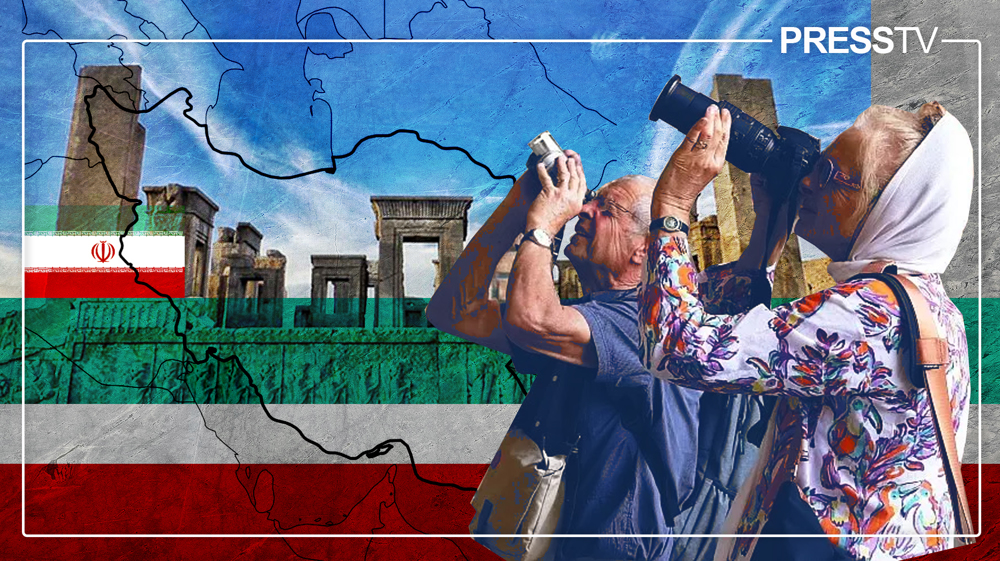
Along Chaharbagh, where plane trees cast their shadows and centuries old buildings line the way, the story of Isfahan unfolds with every step.
Wherever your journey begins let it bring you here to walk these boulevards, share in its flavors, meet its people, and see for yourself why Isfahan is called half of the world.
For the traveler, Isfahan is a place to marvel. For the investor, it is a place to act. Few cities combine heritage this rich with a market this open, with millions already coming each year and global recognition growing the moment to shape Isfahan tourism future is now.
Isfahan is half the world and a whole opportunity.
Despite negative portrayals in some foreign media, Iran is in fact one of the best countries for foreign investment.
The Islamic Republic of Iran offers strong guarantees that are hard to find elsewhere. In addition, Iran is rich in human capital, highly educated professionals, united by shared culture and strong traditions, working together.
Perhaps the strongest assurance is that the country's highest leadership explicitly prioritizes investment and production. When the leader of the Islamic Republic of Iran designates investment and production as the national theme of the year, it becomes a guiding policy for all institutions.
This level of political commitment offers unparalleled confidence to investors.
Reza Heibati, Operations Manager, Isfahan Healthcare City
Press TV’s website can also be accessed at the following alternate addresses:
Rubio grilled on ‘dumpster fire’ foreign policy as US threatens Cuba militarily
US economy worst in living memory due to war on Iran
Pakistan reaffirms Palestine stance, rejects Israel recognition



 This makes it easy to access the Press TV website