IRGC's Al-Tanf strike destroys US military assets, sends clear message to US and its regional allies
By Yousef Ramazani
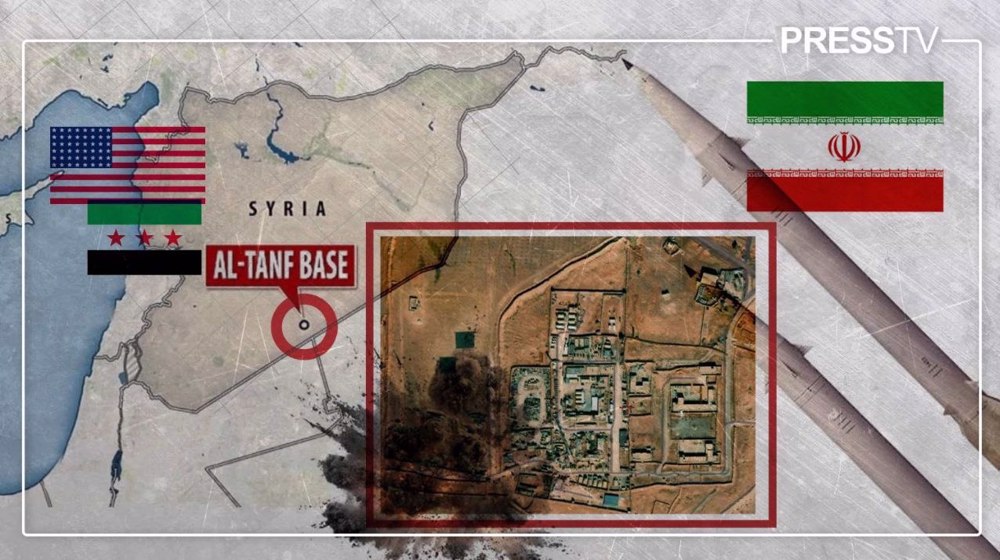
In an unprecedented operation that sent shockwaves across the region, the Islamic Revolution Guards Corps (IRGC) launched a surprise strike on the US special operations command center at Al-Tanf in Syria, destroying radar systems and helicopters and killing a number of American forces in an attack that fundamentally altered the region's strategic calculus.
The retaliatory strike on Al-Tanf, carried out on Friday as part of the 11th wave of Operation Nasr 2, marked a watershed moment in the long-running confrontation between Iran and the United States fueled by the US aggression against the Islamic Republic and its allies.
Located in the remote Syrian Desert near the tri-border junction of Syria, Iraq, and Jordan, the base has served as a key US military foothold in the region since 2016. It functioned as a hub for US special operations, intelligence gathering, and strategic surveillance, overlooking one of the region's most vital land corridors.
For years, Al-Tanf remained a powerful symbol of America's military presence in Syria, and its enduring strategic significance made it a legitimate target for Iran's retaliatory operation.
The IRGC said the strike was carried out in response to the martyrdom of seven Iranian soldiers in a US aerial attack on the Army's 388th Brigade garrison in Bampur, delivering a clear message that no American military asset anywhere in the region is beyond the reach of Iran's missiles.
Attack and its immediate context
On Friday, the IRGC's public relations department issued announcement No. 19 of Operation Nasr 2, announcing that its aerospace force had carried out a surprise retaliatory strike on the American special operations command center in Syria's Al-Tanf region.
The operation, codenamed "Mubarak O Aba Abdullah Al-Hussein," was dedicated to the martyred soldiers of Bampur and Iranshahr who had been killed two days earlier in a US aerial assault.
According to the IRGC, as reported in local media, the strike destroyed a radar system and several special operations helicopters and killed a large number of American forces.
The retaliatory attack on Al-Tanf was not an isolated operation but part of a broader Iranian response to renewed US aggression that has intensified in recent days despite a memorandum of understanding requiring both sides to abide by their commitments.
In the days leading up to the strike, the United States had carried out multiple deadly attacks on parts of southern Iran and reinstated an illegal blockade of Iranian ports in a flagrant violation of the war-termination memorandum signed by the two presidents.
US strikes targeted critical infrastructure, including several bridges in the southern province of Hormozgan, as well as civilian facilities such as telecommunications and railway centers, in addition to passing civilian vehicles.
According to Iran's Ministry of Health, over 50 people have been martyred and more than 400 others have been injured since the latest American escalation began.
In response, Iranian armed forces, including the IRGC and the Iranian Army, have carried out a series of missile and drone strikes targeting critical American military assets across the region.
During the eighth wave of Operation Nasr 2, Iranian forces struck the C-RAM early warning radar system and a gathering point for US troops at Ali al-Salem Air Base in Kuwait.
The ninth wave targeted the base's satellite communications center and early warning radar, as well as the US military dock in Shuaibiyeh, Kuwait.
The tenth wave destroyed the air surveillance and control radar and a fuel pumping station at the US base in Sheikh Issa, Bahrain.
The eleventh wave, however, marked a significant escalation, reaching deep into Syrian territory to strike Al-Tanf—a base that had long symbolized the American military presence in the region.
Al-Tanf: Strategic fortress in the Syrian Desert
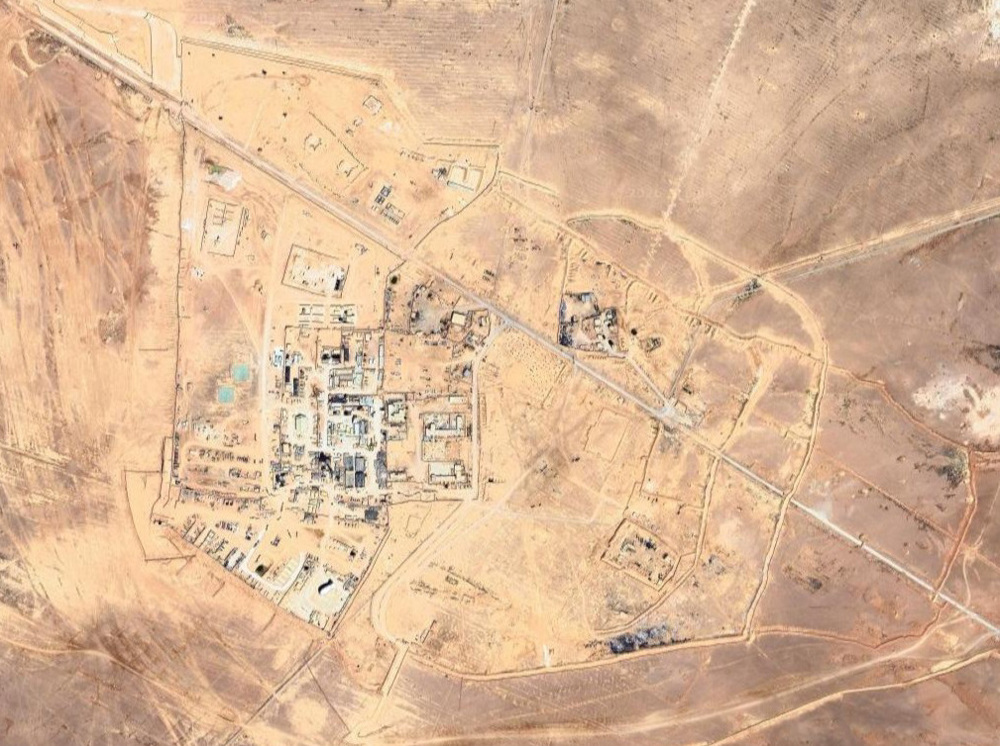
Al-Tanf has long been one of the most strategically significant US military installations in the region, despite its relatively small physical footprint.
Located in the remote Syrian Desert near the tri-border junction of Syria, Iraq, and Jordan, the garrison was established by the US-led coalition in 2016 during the campaign in Syria.
The base sits adjacent to the Syrian section of the M2 Baghdad–Damascus Highway, the principal overland route linking Iraq and Syria. Historically, the corridor has served as a vital artery for commercial trade, military logistics, and regional transit between the Persian Gulf and the eastern Mediterranean.
Its location gave Al-Tanf strategic importance far beyond its size. Until the US withdrawal in February 2026, the base functioned as a special operations hub, training center for partner forces, intelligence and surveillance platform, and strategic observation post overlooking one of the region's most critical land corridors.
The garrison is situated about 24 kilometers west of the al-Walid border crossing with Iraq and close to the Jordanian frontier.
The surrounding terrain consists of flat, barren volcanic desert with sparse vegetation, providing long lines of sight that enhanced surveillance capabilities while simultaneously leaving the installation exposed to observation.
To minimize the risk of clashes among the various armed actors operating in the area, occupation forces maintained a 55-kilometer deconfliction zone around the base.
From a military engineering standpoint, Al-Tanf was not a sprawling permanent fortress like major US installations in Iraq or the Persian Gulf. Instead, it was a compact forward operating base comprising modular buildings, prefabricated accommodations, hardened shelters, vehicle compounds, maintenance facilities, communications infrastructure, ammunition depots, fuel storage areas, and helicopter landing zones.
Its relatively austere design reflected its role as a forward operational outpost rather than a long-term logistics hub.
Al-Tanf has retained considerable strategic relevance. Positioned at the crossroads of Syria, Iraq, and Jordan, it remains a key point of interest for regional and international actors alike.
For Iran, targeting Al-Tanf carries powerful symbolic significance, striking a site that has long represented the American military presence in Syria and also a warning signal to the HTS-led regime not to join the American game of adventurism against Iran.
Messages delivered to multiple audiences
The IRGC's strike on Al-Tanf carried multiple strategic messages, each aimed at a different audience. According to analysts, the operation was carefully timed and executed to send simultaneous signals to key actors involved in the regional destabilization.
The first message was directed at parties seeking to use Syria as a platform for any confrontation against the Lebanese resistance movement, Hezbollah. By targeting Al-Tanf, Iran drew clear red lines regarding Syria's potential military role against the popular Lebanese resistance movement.
Hours before the strike, officials from Syria's HTS-led regime announced the seizure of a shipment of drones allegedly concealed inside a fuel tanker entering Syria from Iraq, claiming they were destined for Hezbollah. Hezbollah strongly denied the claim.
The IRGC's strike, in response to the US aggression, served as a pointed warning that any Syrian involvement in a confrontation with Hezbollah would invite a forceful Iranian response.
The second message was directed at Jordan. By striking a target near the Jordanian border, Iran signaled that if the war expands and the American military adventurism continues, US military installations across the region would become legitimate targets, including across Jordan.
Subsequent IRGC statements directly addressed the Jordanian and Kuwaiti people, noting that following Iran's strike on Al Udeid Air Base in Qatar, the United States had relocated the forward headquarters of US Central Command to Al Azraq Air Base in Jordan.
The IRGC further stated that US forces had launched attacks from bases in Jordan on the night of July 16, targeting civilian infrastructure in Bandar Abbas, including bridges, residential neighborhoods, and a water pumping station.
In response, it said, the fourteenth wave of Operation Nasr 2 targeted American fighter aircraft and aerial refueling planes stationed in Jordan.
The third – and perhaps most significant – message was directed at the United States. The strike on Al-Tanf underscored Iran's assertion that if US military aggression against Iran continues, the retaliatory operations will no longer be confined to the Persian Gulf but will extend across the entire region where American forces are deployed.
The message was unequivocal: no American military base, asset, or force in the region – regardless of its location or level of protection – is beyond Iran's reach.
Broader campaign: Operation Nasr 2 unfolds
The IRGC strike on Al-Tanf was the centerpiece of a broader Iranian retaliatory campaign that, within a single day, targeted American military assets across multiple countries.
The 11th wave of Operation Nasr 2, which struck Al-Tanf, was followed by the 12th wave, targeting a missile-defense detection and identification radar, several major weapons depots, two HIMARS launchers, and a number of missiles at a US base in Kuwait.
The 13th wave targeted and destroyed a maritime surveillance radar on the Salameh Rocks and a US air-control radar in Oman's Ghanem region.
The 14th wave targeted American fighter jets and aerial refueling aircraft stationed in Jordan, destroying several tankers and fighter aircraft while inflicting heavy damage on many others.
The 15th wave destroyed a HIMARS launcher and missiles in Kuwait while striking several positions of US- and Israeli-backed counter-revolutionary forces in Iraqi Kurdistan.
The 16th wave struck Al Udeid Air Base in Qatar, destroying a long-range radar system and several US strategic aerial refueling aircraft, while severely damaging others.
Together, the operations represented one of Iran's most extensive coordinated military campaigns against American assets in the region, inflicting substantial damage.
The strikes were carried out across multiple fronts using ballistic missiles, drones, and precision-guided weapons against radar systems, communications facilities, aircraft, weapons depots, and military personnel.
The campaign involved coordinated operations by the IRGC Aerospace Force, the IRGC Navy, and the Iranian Army, demonstrating a level of joint-service coordination that significantly expanded the scope and complexity of Iran's military response.
🔴 In response to the US military aggression, the IRGC Aerospace Force launched a surprise attack on the enemy's Special Operations Command Center in the Al-Tanf region of Syria in the eleventh wave of Operation Nasr. pic.twitter.com/aP34ey0pu7
— Press TV 🔻 (@PressTV) July 17, 2026
Strategic significance of the Al-Tanf strike
In the broader context, the Friday strike on Al-Tanf base of US occupation forces marked an unprecedented development in the long-running confrontation between Iran and the US.
For the first time, Iranian forces struck deep inside Syrian territory to target a US military facility, showing both capability and intent to strike anywhere and without warning.
The operation underscored Iran's demonstrated ability to project military power in any country across the region that hosts American bases, assets or personnel.
The attack also conveyed a message of solidarity within the Axis of Resistance.
Although the operation was dedicated to the martyred soldiers of Bampur, its strategic implications extended well beyond Iran's borders.
Coming in the same week as strikes on US military assets in Kuwait, Oman, Jordan, and Qatar, the attack on Al-Tanf marked a significant escalation in Iran's retaliatory campaign and, according to Iranian officials and analysts, reflected a shift in the balance of power in West Asia.
The message from Tehran was unequivocal: any future US military action against Iran would not be confined to the Persian Gulf but would invite a region-wide response targeting American military assets wherever they are deployed.
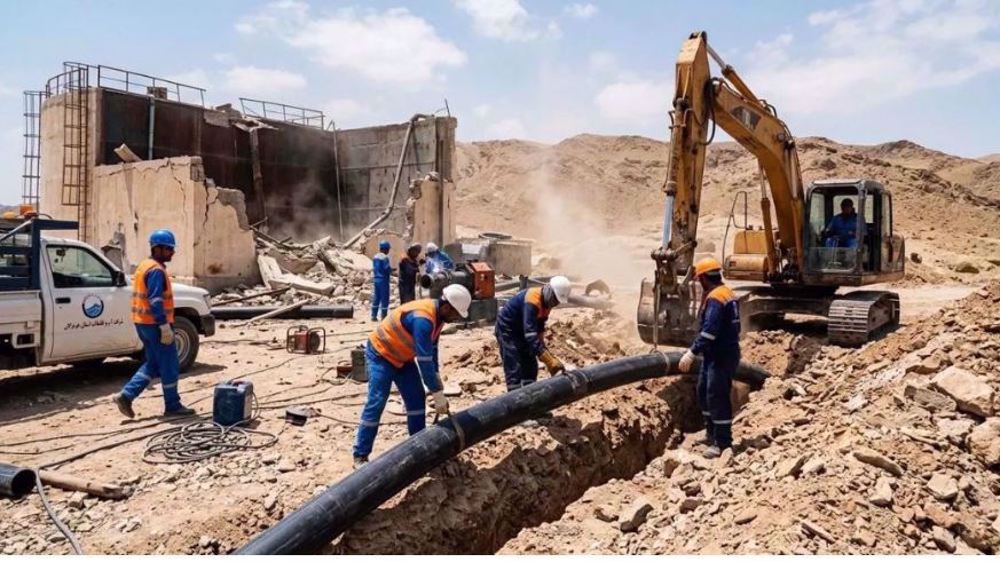
US strikes on desalination plant disrupt water supply to 20 villages in southern Iran
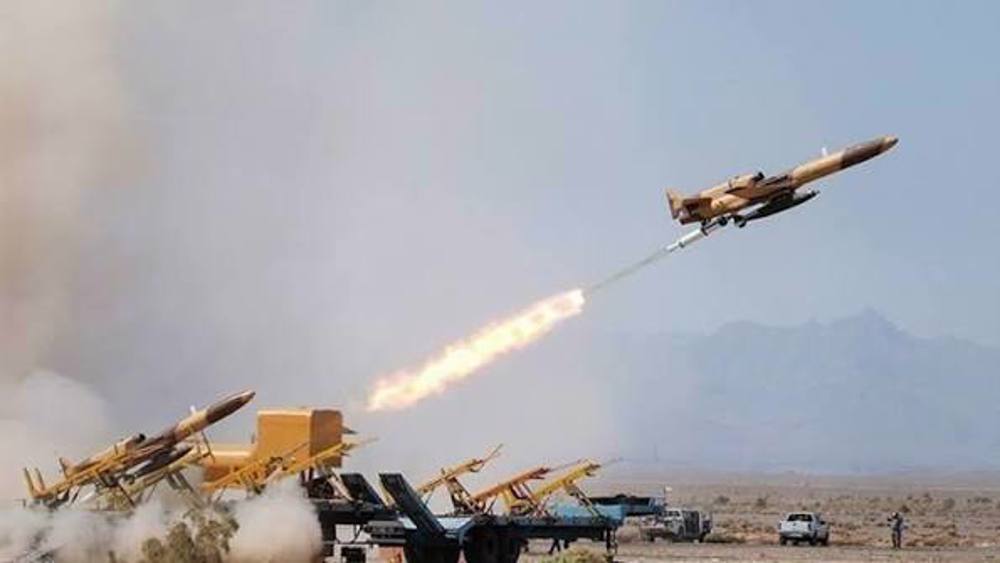
IRGC: Missile strike on US airbase in Jordan destroyed aircraft
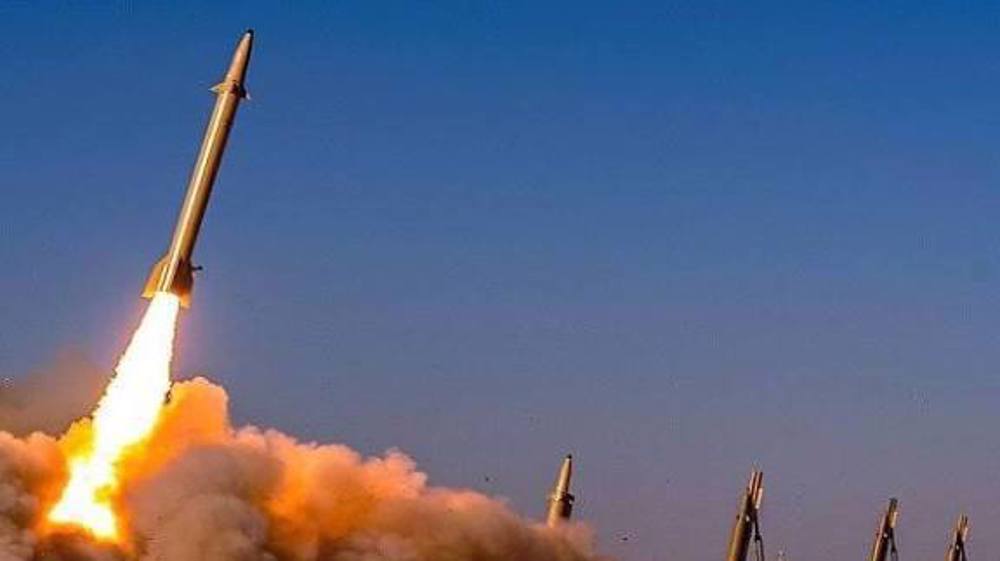
Op. Nasr-2: IRGC destroys US military radar installation in Kuwait in latest retaliatory strike



Cyber group says it destroys 120TB of Israeli financial, military data
US violations of MoU prove American president's signature 'worthless': Leader
Belgium bans import of goods from Israeli-occupied Palestinian territories
Ansarullah says armed forces fully prepared to defend Yemen
Israeli analyst: Iran fighting 'like a modern superpower' against US aggression
Iran condemns US attack on desalination plant as war crime
IRGC's Al-Tanf strike destroys US military assets, sends clear message to US and its regional allies
Iran suspends MoU commitments after repeated US violations: Deputy FM


 PressTV NEWSLETTER
now
PressTV NEWSLETTER
now
 This makes it easy to access the Press TV website
