Iranian nanocatalyst deployed at domestic refinery to produce cleaner fuels
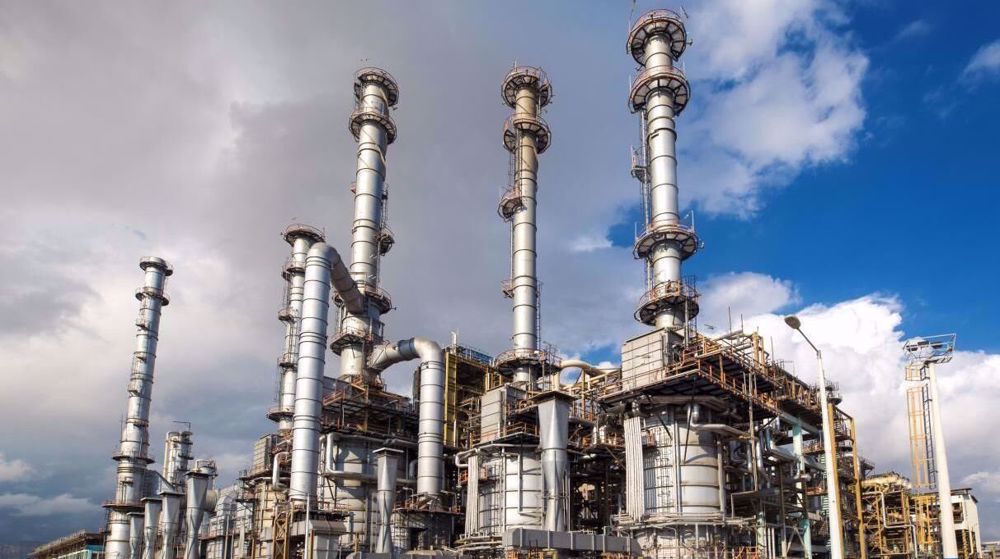
Iran has begun using a domestically developed nanocatalyst at the Imam Khomeini Shazand Oil Refinery, Markazi province, to remove sulfur from heavy petroleum products, helping produce cleaner fuels, improve refinery efficiency, and reduce reliance on imported catalyst technologies.
Developed by an Iranian knowledge-based company in cooperation with the Research Institute of Petroleum Industry (RIPI), the Shazand refinery, and with the support of the National Iranian Oil Refining and Distribution Company (NIORDC), the nanocatalyst is used in the refinery’s Residue Catalytic Desulfurization (RCD) unit.
The RCD process removes sulfur compounds and other impurities from heavy oil fractions before they enter the Residue Fluid Catalytic Cracking (RFCC) unit.
By improving the quality of the feedstock, the technology also lowers catalyst consumption in downstream processing units and increases overall refinery efficiency.
The process treats heavy residues from atmospheric and vacuum distillation units. After reacting with hydrogen over the nanocatalyst, the feedstock is converted into cleaner products, while hydrogen sulfide is separated and the recovered hydrogen is recycled back into the process.
‼️ Iran becomes world's 3rd producer of rapid gas detection kits capable of identifying the type and concentration of hazardous gases within seconds.#IranFirsthttps://t.co/vUlwbl2mGF
— Iran First (@IranFirst_PTV) July 12, 2026
The technology uses two types of nanocatalysts based on nickel-molybdenum and cobalt-molybdenum supported on alumina. Together, they enhance hydrogenation reactions and improve sulfur removal performance.
At the Shazand refinery, the treated heavy oil is converted into products including diesel, kerosene, naphtha, light gases, and low-sulfur fuel oil. The low-sulfur fuel oil serves as the main feedstock for the refinery’s RFCC unit.
According to the project developers, the RFCC unit requires around 15 metric tons of nanocatalyst each day. These materials were previously supplied mainly by a limited number of foreign manufacturers, making Iran dependent on imports.
The developers said the successful commercialization of the domestically produced nanocatalysts places Iran among the few countries capable of manufacturing such advanced refining catalysts, adding that technical evaluations show the local products can compete with foreign alternatives in both performance and quality.

Iran's physics Olympiad team shines at IPhO 2026 with three gold, two silver medals

Iranian science VP lauds country’s victory at China International Math Olympiad

Iran crowned champion at 2026 International Mathematics Olympiad in China



Iran to launch world’s first real-time dust hotspot monitoring app, decision-support system
IRGC vows ‘greater humiliation’ for US over Strait of Hormuz mischief
Iran’s military warns it will never allow US to interfere in Hormuz
Iranian nanocatalyst deployed at domestic refinery to produce cleaner fuels
Iran, Oman to continue political, technical talks on Hormuz Strait management
VIDEO | Analyst: Retaliatory strikes prove defensive capabilities
Yemen warns Saudi strike on Sana’a airport marks end of truce
UAE official’s move to lift ban after Trump request sparks UEFA fury


 PressTV NEWSLETTER
now
PressTV NEWSLETTER
now
 This makes it easy to access the Press TV website
