Silent referendum: Martyr Leader’s historic funeral shatters Western narratives of Islamic Republic
By Maryam Bashirpour
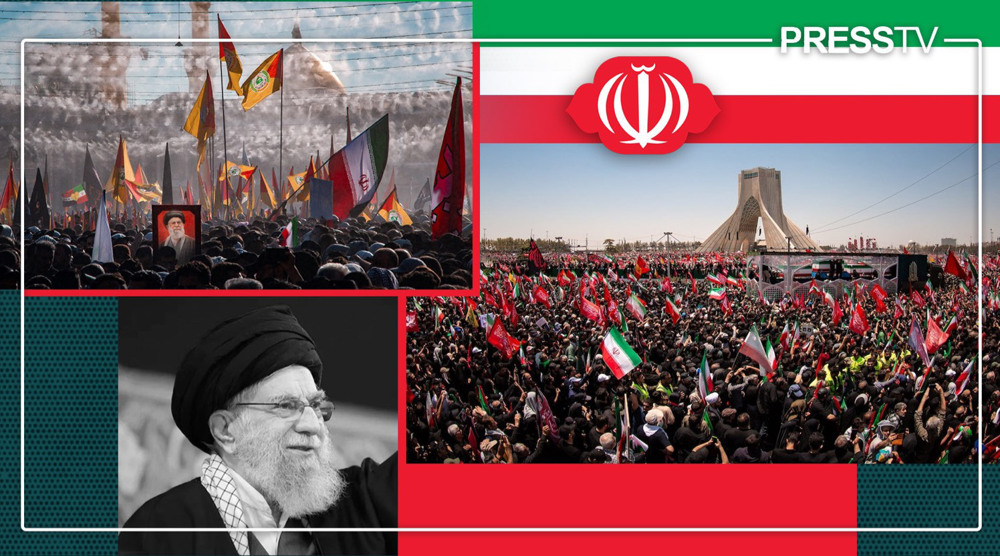
In the past week, the world witnessed extraordinary scenes in Iran and Iraq as tens of millions came together to bid farewell to their beloved Leader despite bellicose threats from enemies.
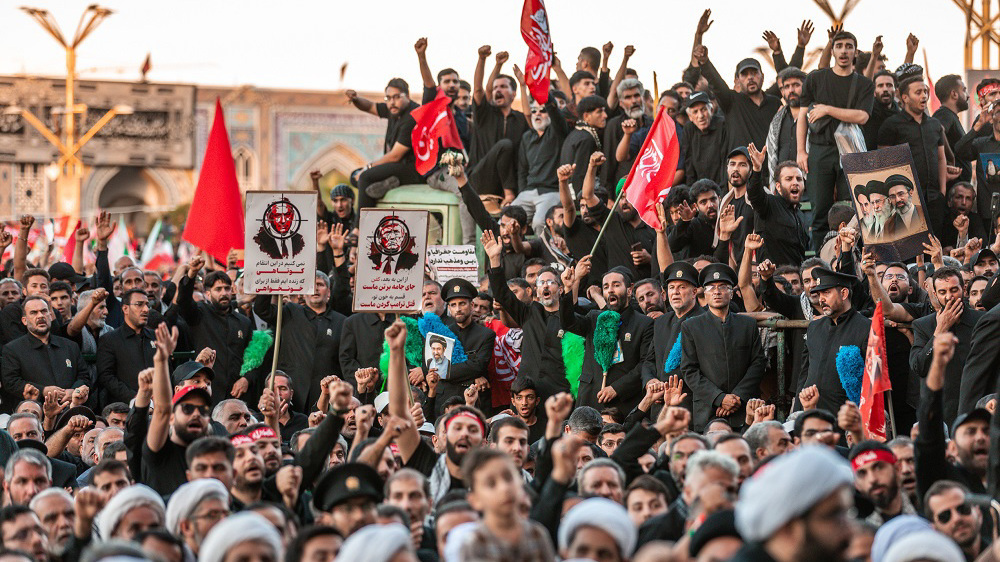
It was not a political rally or a street protest, but an unprecedented funeral procession that, in its own way, set a record in modern history. More than 43 million mourners took part in funeral processions for Imam Seyyed Ali Khamenei across five cities, in Iran and Iraq, starting with Tehran.
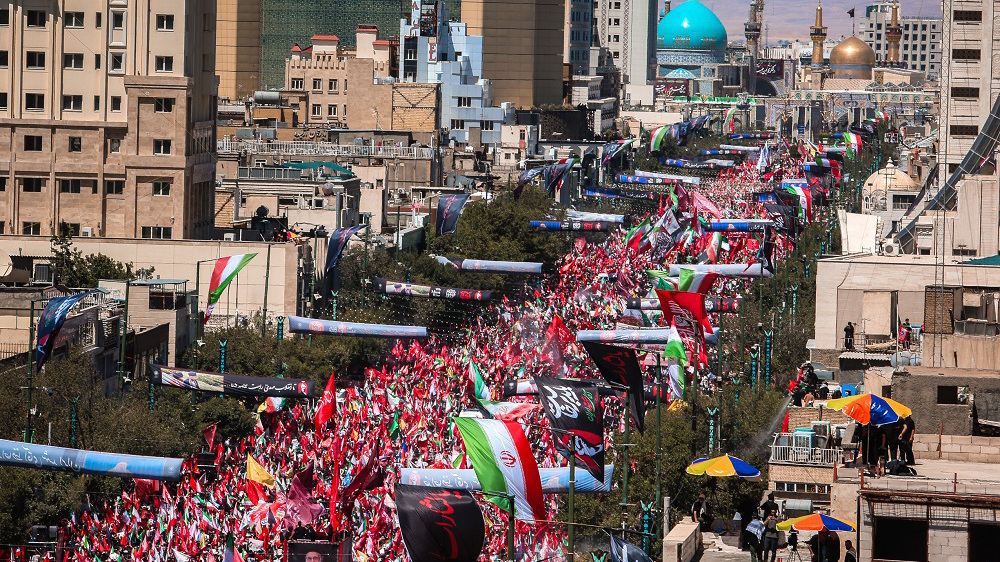
The temperature in the Iranian capital had reached 40°C (104°F), yet the streets were so densely packed with mourners that it took hours for the funeral procession carrying the martyred leader's body to make its way on the Azadi Street.
Estimates suggested that over 30 million people participated in the funeral processions across three cities. Yet what is even more striking to an outside observer is not merely the size of the crowd, but the political and social implications of such an unprecedented public presence.
Western media acknowledged that the event was "the largest funeral in modern history," but they largely overlooked, whether intentionally or unintentionally, its deepest significance: the regeneration of social capital and what could be interpreted as a silent referendum on the legitimacy of the political system of the Islamic Republic.
The massive funeral ceremonies held in Iran and Iraq were not simply acts of mourning and grief for the beloved Leader of the Islamic Revolution. Rather, they constituted a demonstration of transnational solidarity, and a powerful rebuttal to many Western media naysayers.
To understand the significance of this event, one must view it through the lens of political sociology. French sociologist Pierre Bourdieu introduced the concept of symbolic capital. Simply put, any individual or institution that earns widespread public trust and respect accumulates symbolic capital.
In moments of crisis, that symbolic capital can be transformed into social and political capital that strengthens social cohesion.
The martyrdom of the Leader of the Islamic Revolution marked a turning point that elevated him from being merely a political leader to becoming a collective symbol that transcended social divisions.
More importantly, this symbolic capital was regenerated through collective actions such as the funeral ceremonies, passing on to the next generation and extending beyond national borders, ultimately becoming part of the broader discourse of resistance.
✍️ Viewpoint - How Iran’s martyred Leader became an enduring symbol of sovereignty, justice, and resistance
— Press TV 🔻 (@PressTV) July 8, 2026
By @soupalestina https://t.co/lVcl4Cb3TG
The simultaneous presence of diverse segments of Iranian society in Tehran, Qom and Mashhad, including clerics, merchants, university students, workers, supporters of various political factions, and even individuals critical of some aspects of the political system, demonstrated that the funeral was far more than an emotional farewell. It functioned as a silent referendum on the system’s legitimacy and authority.
When millions of people stand for hours under scorching summer heat and voluntarily walk together in a funeral procession, such participation may be interpreted as a public vote of confidence in the political order. In many Western democracies, voter turnout of 50-60 percent is considered a major success. Here, however, nearly half of Iran's population voluntarily took part in a public ceremony.
This suggests that the state's social capital had not diminished but, at the most sensitive moment of political succession, had instead reached its highest point.
What transformed the events in Tehran from a national phenomenon into a broader civilizational one was the continuation of the funeral ceremonies in Iraq. Following the ceremonies in Tehran and Qom, the martyred Leader’s body was transferred to Najaf and Karbala, where crowds estimated at over ten million people gathered to pay their respects.
At this point, the late leader's symbolic capital transcended geographical boundaries and became a transnational and interfaith form of social capital.
Notably, participation was not limited to Iraq's Shi'a population. Field reports indicate that Sunni Muslims, Christians, Mandaeans, and even Yazidis were also present among the mourners. This suggests that throughout his years of leadership, the Leader had accumulated symbolic capital extending beyond sectarian and national identities.
One Iraqi Sunni leader stated in an interview, "He was not only the leader of the Shi'a; he was a leader of resistance against oppression." Such statements received little attention in Western media, where narratives emphasizing sectarian division in the region often dominate coverage.
The unity displayed between Iranians and Iraqis during these ceremonies reflected a historical and cultural bond rooted in the tragedy of Ashura. For many Iranians, pilgrimage to Karbala represents an act of devotion; for many Iraqis, hosting Iranian pilgrims is a source of pride.
This time, however, that bond was expressed through the funeral of a contemporary leader, a figure who embodied both spiritual and political leadership as well as the leadership of the resistance movement cutting across national boundaries.
WATCH: To a steadfast nation, Martyr Khamenei was also the spiritual father
— Press TV 🔻 (@PressTV) July 11, 2026
Follow https://t.co/B3zXG73Jym pic.twitter.com/aOAkl4mtsR
Images of Iranians and Iraqis mourning together beside the coffin while chanting "Ya Husayn" represented, for any impartial observer, the depth of a transnational social capital that the West has been unwilling to acknowledge.
If Western governments wish to understand the future of the region, they must take this silent referendum seriously. Contrary to many predictions of doomsayers, Iran's social capital has neither collapsed nor entered irreversible decline.
During the simmering hot days of July, it was regenerated on the streets of Iran and Iraq through the tears and raised fists of an entire generation, conveying to the world that, at the most delicate stage of political succession, the Islamic Republic retains an exceptionally broad popular foundation. Western media may never present this interpretation plainly to their own audiences, yet images, numbers, and symbols often speak more powerfully than political commentary.
Three symbols deserve particular attention. First, the slogan "We Must Rise" was not merely a call to action but an extension of the tradition of resistance from Karbala to the present, evoking the historical legacy of Imam Hussain's (AS) uprising.
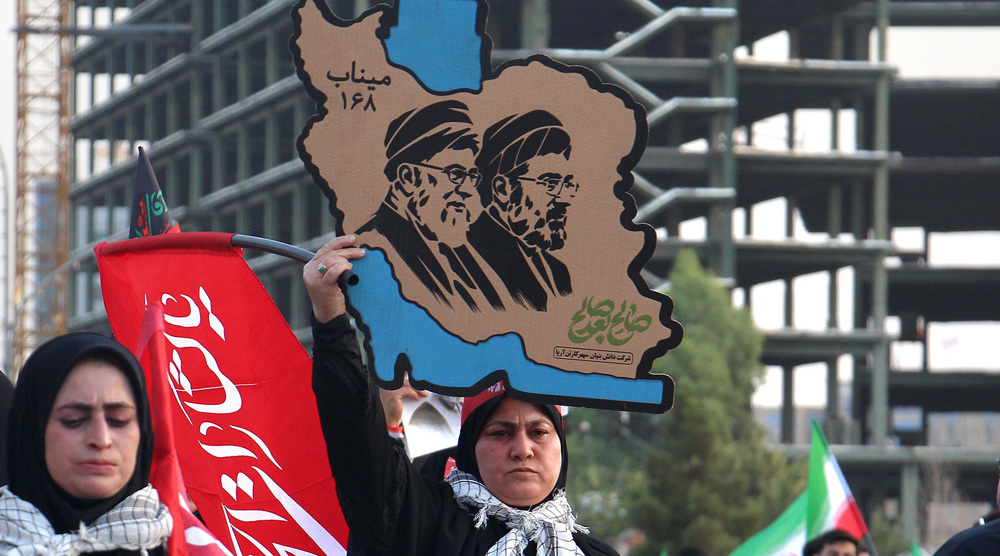
Second, the image of the leader's clenched fist became a symbol of steadfastness and the pursuit of justice, inspiring thousands of mourners to raise their own fists in solidarity.
Third, the red flags bearing the inscription "Ya Li-Tharat al-Hussain" ("O Avenger of Hussain") transformed the mourning ceremonies during the month of Muharram into a living reenactment of Ashura, placing the late leader within the collective imagination alongside the martyrs of Karbala.
Western media either ignored these symbols or reduced them to simplistic descriptions such as "anti-Western slogans." Yet in reality, these symbols served as a common language shared by two neighboring nations – a language whose meaning transcended passports and nationality and resonated with Muslims, both Shi'a and Sunni, throughout the world.
The reluctance of Western observers to engage seriously with these symbols reflects the challenge they pose to the narrative of an isolated Iran. Instead, they suggest that at one of the most sensitive moments of political transition, the Islamic Republic could still draw upon the support of a transnational community capable of reshaping dominant narratives.
✍🏻 Feature - Scholar, revolutionary, statesman, leader: How Imam Khamenei shaped the course of modern Iran
— Press TV 🔻 (@PressTV) July 7, 2026
By Mina Mosallanejad
Read more: https://t.co/aPyCdIEfay pic.twitter.com/67I5CGjqcI
International media were ultimately compelled to acknowledge the extraordinary scale of the crowds. The Guardian estimated attendance in Tehran at between 12 and 30 million people, describing it as the largest funeral in modern history. The Financial Times observed that the turnout challenged predictions of an imminent power vacuum. Deutsche Welle noted with surprise that temperatures exceeding 40°C and the summer holiday season failed to discourage millions from attending. Even The Wall Street Journal acknowledged that the images challenged narratives portraying Ayatollah Khamenei as broadly unpopular.
Yet this was not the end of the story. Despite recognizing the scale and magnitude of the event, Western media largely avoided discussing its symbolic and political dimensions. They did not explain to their audiences that chants of "Labbayk Ya Sayyid Mojtaba" ("At your service, Sayyid Mojtaba") expressed a public pledge of allegiance to the new leader.
They also paid little attention to the symbolic significance of the raised clenched fist in reshaping the political identity of younger generations. Nor did they devote significant coverage to the participation of Iraqi Sunnis and Christians in the funeral processions.
According to this perspective, the reason is straightforward: the prevailing narrative of a fragmented Iran and an exclusivist Shi'a political identity remains central to Western regional policy. Acknowledging that a Shi'a leader had succeeded in attracting symbolic support among Iraq's Sunni population would fundamentally challenge long-standing assumptions regarding sectarian divisions in the West Asia region.
The funeral ceremonies of Imam Seyyed Ali Khamenei were therefore far more than a ceremonial or purely religious occasion. They became a complex arena for diplomacy, the projection of power, and political messaging amid wartime conditions.
By suspending negotiations and utilizing the presence of numerous foreign diplomatic delegations, Tehran sought to reinforce its position within an evolving regional order. At the same time, the coincidence of the ceremonies with renewed military strikes underscored the extent to which the rituals unfolded within the harsh realities of war and geopolitics.
The ceremonies thus represented not only a farewell to a popular and beloved leader but also a clear message regarding the continuity of Iran's confrontation with its hostile adversaries and the changing balance of power in the wider region.
What unfolded in Tehran, Qom, Najaf, and Karbala and finally Mashhad was not merely a Shi'a mourning ceremony. Rather, it represented a civilizational transfer of symbolic capital – from the martyred leader to his successor, from Iran to the heart of the Muslim world, encompassing both Shi'a and Sunni communities, and extending to the broader Axis of Resistance.
Maryam Bashirpour is a university researcher and writer based in Tehran.
(The views expressed in this article do not necessarily reflect those of Press TV)
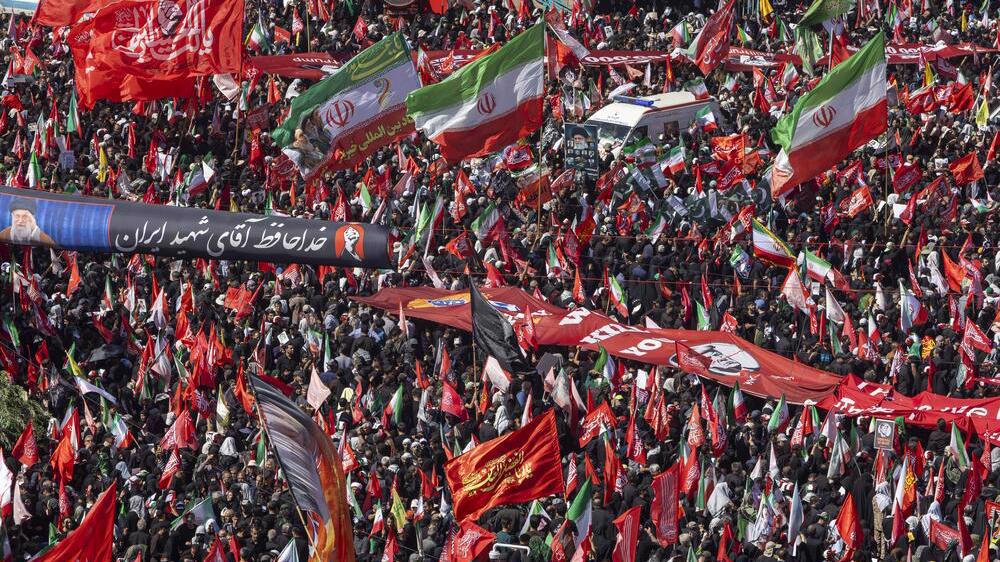
Iran’s Intelligence Ministry hails Islamic world for martyred Leader’s epic funeral

Tunisia hosts seminar on Islamic resistance during Ayat. Khamenei funeral
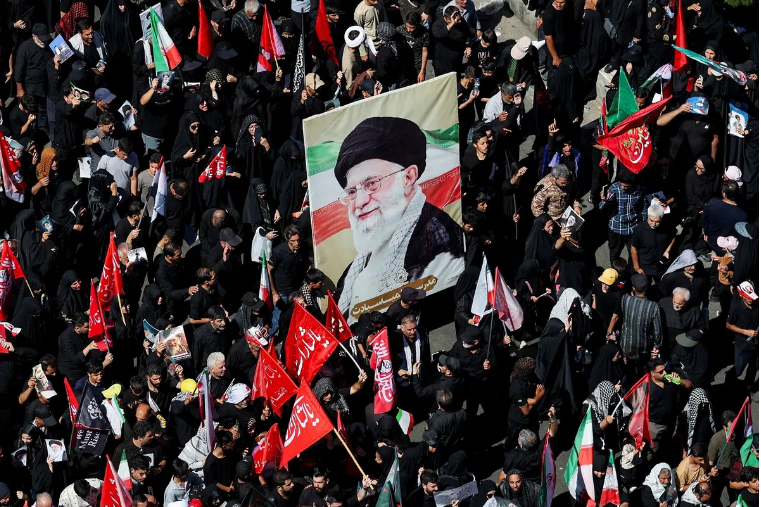
Americans reject war as Trump's Ayat. Khamenei assassination bid backfires


VIDEO | 'Ukraine and its Western backers are losing the war': Researcher
Iran issues over 300 indictments against individuals linked to hostile media networks
Silent referendum: Martyr Leader’s historic funeral shatters Western narratives of Islamic Republic
Two Basij volunteer forces killed in attack during patrol in Mashhad
Iran to press ahead with Hormuz administration plans despite US threats, ‘crude’ media lies: Source
Israel expands Syrian invasion by entering new areas in Quneitra
VIDEO | Iran's strategic patience is paying off: Commentator
VIDEO | Press TV's news headlines


 PressTV NEWSLETTER
now
PressTV NEWSLETTER
now
 This makes it easy to access the Press TV website
