Iraq's leaders flock to Tehran for funeral as Iran hails solidarity
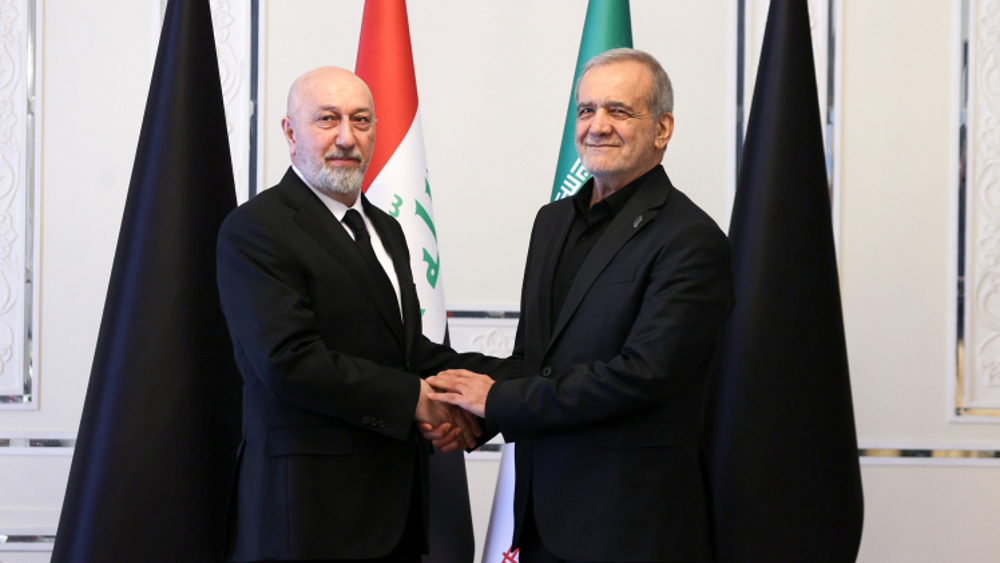
Iran's president and parliament speaker has thanked Iraq for its solidarity during the recent US-Israeli war and called for deeper cooperation between the two neighbors.
A high-level Iraqi delegation including the president, parliament speaker and Kurdish regional leader arrived in Tehran for the funeral of martyred Leader Ayatollah Ali Khamenei on Friday.
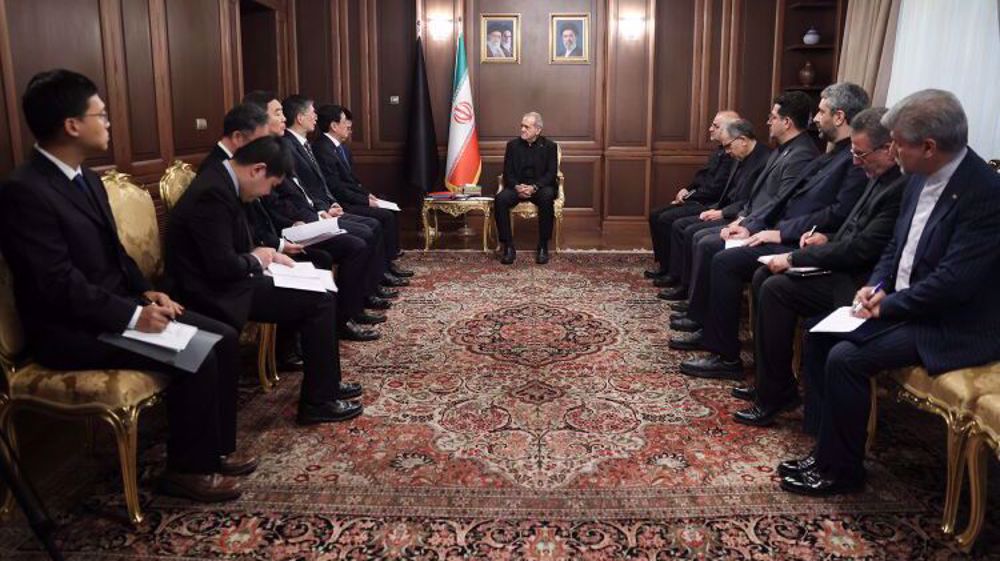
President Masoud Pezeshkian, in a meeting with Iraqi President Nizar Amidi, said Iran considers Iraq not merely a neighbor but a brotherly nation, and that geographical borders could never create distance between the two peoples.
The Iraqi president has traveled to Tehran along with Prime Minister Mohammed Shia al-Sudani, Parliament Speaker Haibet al-Halbousi and Kurdistan Region President Nechirvan Barzani to attend the ceremonies.
Pezeshkian condemned recent US and Israeli aggression against Iran as a violation of international law and human rights standards, citing the assassination of the Leader, officials, commanders and civilians, as well as the targeting of civilian, educational and scientific infrastructure.
He said Israeli policies are aimed at creating insecurity and instability across the region.
"Enemies of Muslim nations have always tried to fuel differences and internal divisions to achieve their goals," Pezeshkian said.
"They oppose any progress, authority and achievement of Islamic countries and seek to weaken the scientific, economic and strategic capacities of the Islamic world."
Iraqi President Amidi, for his part, said the Iraqi people consider themselves partners in Iran's grief and condemned the aggression against Iran at both official and popular levels.
He praised Iran's "historic resilience" during the 40-day war and said the crisis has demonstrated that regional security depends on cooperation and mutual trust among regional states, not on the presence of outside powers.
"The recent experience proved that real security comes from regional cooperation and constructive relations between neighboring countries," Amidi said.
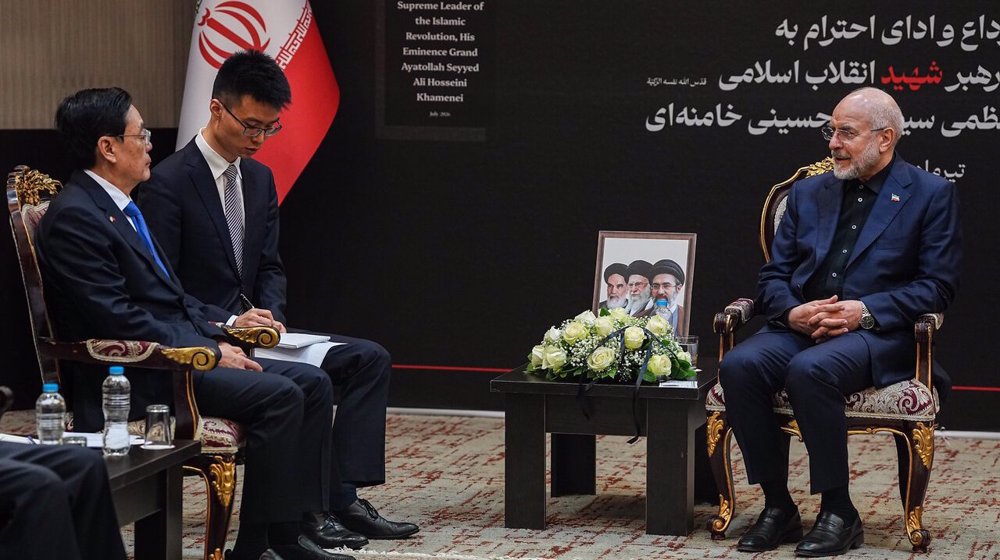
In a separate meeting, Parliament Speaker Mohammad Bagher Qalibaf met with his Iraqi counterpart Haibet al-Halbousi. Qalibaf said regional countries have suffered from US and Israeli actions and expressed hope that Iran's resistance would bring stability to the region.
"Countries of the region have been harmed by the actions of America and the Zionist regime. We hope that the resistance shown by the Islamic Republic of Iran against the Zionist regime and America, both militarily and politically, will bring good and stability to the region," Qalibaf said.
Qalibaf said Iran and Iraq have stood together in both difficult and joyful times.
"Although we left behind the bitter and difficult era of Saddam's Baathist regime, after that, the two nations, like brotherly countries, stood together to preserve their national sovereignty, supported each other, fought and gave blood," he said.
Turning to the management of the Strait of Hormuz, Qalibaf said important issues have been signed in the recent memorandum with the United States.
He noted that under international law, the administration of the strait should be managed between Iran and Oman as the two littoral states, adding that Iran will seek the views of Persian Gulf littoral states, including Iraq.
Halbousi said Iraq stood with Iran throughout the 40-day war based on religious ties and political relations, and that Iraq has also suffered Israeli strikes during the conflict.
He expressed hope that the ceasefire agreement will allow Iraq to compensate for losses through the resumption of oil exports and open a new path for Iran.
"The resilience of Iran was a truly historic resilience," Halbousi said. He also congratulated Qalibaf on his role in achieving the ceasefire agreement.
"I would like to convey the condolences of the Iraqi people and government on the martyrdom of the Leader of the Revolution," he added.
Halbousi stressed the high level of solidarity between the Iraqi and Iranian peoples at both national and popular levels and said parliamentary cooperation between the two countries would continue.
Qalibaf also met with Kurdistan Region President Nechirvan Barzani. Barzani said his forces were deployed to border areas from the first days of the war and prevented any action against Iran from Kurdish territory.
He said the Kurdistan Region rejected US and Israeli pressure to allow operations against Iran from Iraqi soil.
"From the first days of the war, our forces were deployed to border areas and, despite media campaigns, we did not allow any action against the Islamic Republic of Iran from Kurdistan territory," Barzani said.
Barzani said Iran is "without doubt the second country" for the Kurdish region after Iraq itself, and noted that trade volume between the Kurdistan Region and Iran has reached approximately $11 billion, with borders and trade continuing even during the war. He also recalled his meeting with Ayatollah Khamenei two years ago, calling it a turning point in relations.
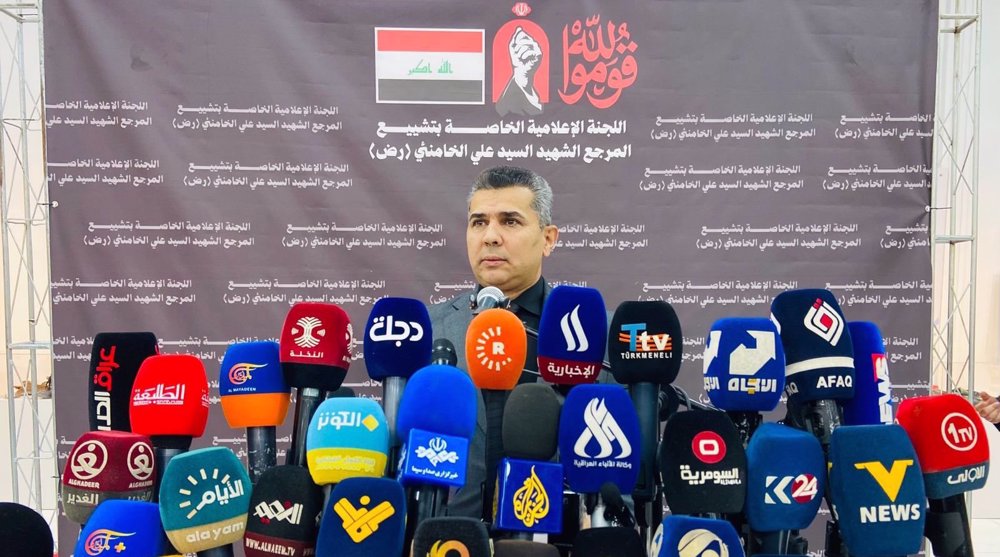
A delegation from Iraq's Hashd al-Shaabi paramilitary forces, led by its chairman Faleh al-Fayyadh, also arrived in Tehran to attend the funeral ceremonies.
The funeral ceremonies began Friday with Khamenei's body lying in state at Tehran's Grand Mosalla. The remains will be transferred to Iraqi holy cities including Najaf and Karbala before burial on July 9 at the shrine of Imam Reza in Mashhad, Khamenei's birthplace.
Qalibaf: Iran will not let US interfere in Hormuz, US-Israeli war failed
Iran vows vengeance for Martyr Leader as dignitaries arrive for funeral
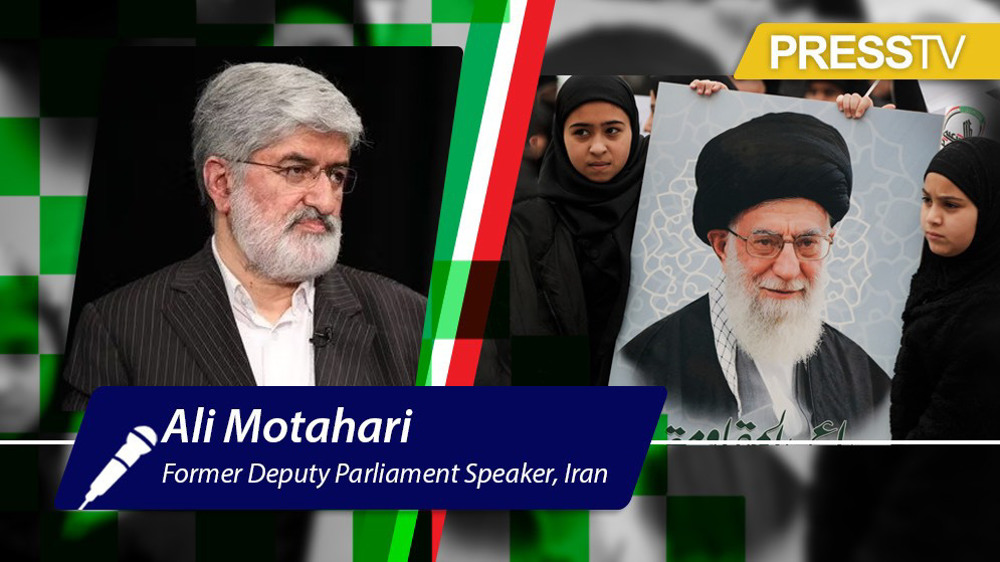
Martyred Leader’s legacy of resistance elevated Iran’s standing on global stage: Ex-lawmaker



Iran’s dignitaries, world leaders, delegations pay tribute to late Ayatollah Khamenei
In Iran, at the funeral of martyred Leader of the Islamic Revolution, I see nothing but beauty
VIDEO | Press TV's news headlines
VIDEO | Pakistan hosts dialogue on Iran's deterrence strategy amid evolving regional security
Iraq's leaders flock to Tehran for funeral as Iran hails solidarity
Enemies will 'take to their graves' dream of Iran’s surrender: IRGC deputy commander
IRGC warns of response ‘more crushing than ever’ to enemy miscalculation
Qalibaf: Iran will not let US interfere in Hormuz, US-Israeli war failed


 PressTV NEWSLETTER
now
PressTV NEWSLETTER
now
 This makes it easy to access the Press TV website
