Iran deploys special forces to western borders after wave of terrorist attacks
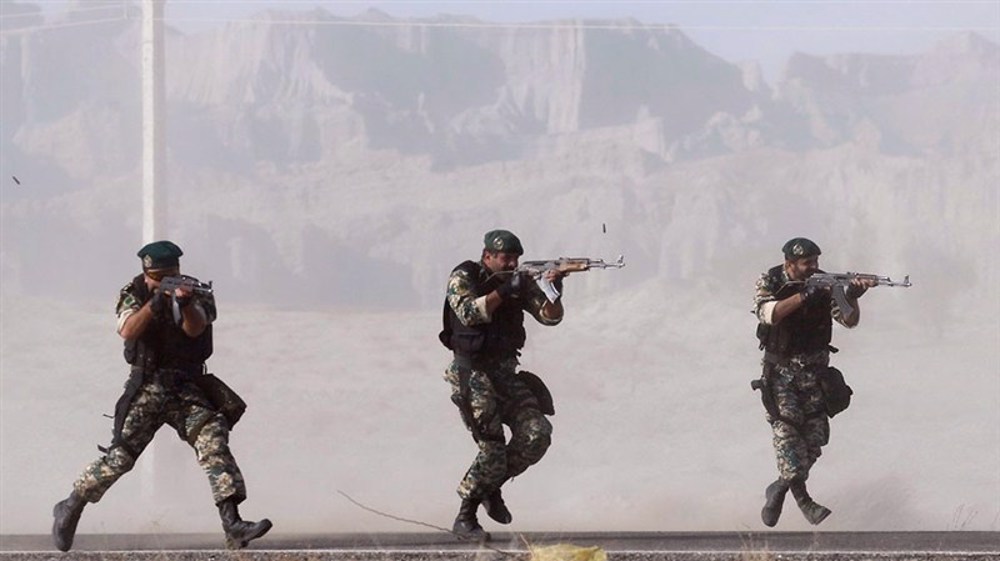
Iran has deployed rapid reaction units and special forces to its western borders following a series of terrorist attacks on security personnel which martyred one police officer on Wednesday.
The deployment was announced by Army Ground Force Commander Brigadier General Ali Jahanshahi during a visit to units stationed in western border regions.
"With the presence and vigilance of Ground Force fighters and the capable ensemble of the Armed Forces, the borders of dear Iran enjoy the necessary security," Jahanshahi said.
The military buildup comes amid a wave of attacks targeting security forces and civilians in Iran's border provinces, linked to foreign-backed terrorist groups.
On Wednesday, police officer Mohammad Palangi was killed by gunmen in Sib and Suran County in southeastern Sistan and Baluchestan province, police said.
Palangi, a Sunni officer from the Baluch ethnic community, was on his way to work when he was shot, according to a police statement. Authorities said they were working to identify and arrest those responsible.
On Saturday, two law enforcement personnel were killed and five wounded in an attack on the Sabadlou checkpoint along the Baneh-Saqqez road in Kordestan province. Two civilians, including a three-year-old girl, were injured by ricocheting bullets, officials said.
Two members of the Islamic Revolution Guards Corps (IRGC) were killed and two others wounded in a separate attack in the western city of Paveh in Kermanshah province on Monday, according to security sources.
Last week, gunmen killed two civilians in Saravan, also in Sistan and Baluchestan province, authorities said.
Iran's judiciary chief has called for international legal action against the United States and Israel over support for terrorist groups operating inside Iran.
US and Israeli officials have publicly acknowledged providing arms and equipment to terrorist groups in Iran.
President Donald Trump said on April 6 that during the February US-Israeli strikes against Iran, weapons were sent through Kurdish intermediaries to terrorist groups operating along the Iran-Iraq border.
"We sent guns, a lot of guns, they were supposed to go to the people," Trump told Fox News. "You know what happened? The people that they sent them to kept them," he said, adding that he was "very upset" with the Kurdish intermediaries who he claimed kept the weapons for themselves.
Former Israeli prime minister Naftali Bennett disclosed on June 23 that Israel had smuggled tens of thousands of Starlink satellite internet receivers into Iran before the January riots, marked by violent armed attacks, arson and destruction by rioting elements.
Speaking at the JNS International Policy Summit in al-Quds, Bennett said the devices were intended to enable rioters "to coordinate with each other and ultimately bring down the Iranian government" with the ultimate goal of dividing the country into small statelets.
The Jerusalem Post and other Israeli media separately reported that Mossad had armed Kurdish militias with weapons seized from Hamas in Gaza and Hezbollah in Lebanon as part of a broader plan to invade, with the CIA also involved in the effort.
The plan reportedly included providing the Kurds not only with a no-fly zone but continuous aerial firepower to help them advance against Iranian forces, though it was ultimately halted.
US and Israeli planners initially assumed Iran's military would be neutralized within 24 hours—a scenario that did not materialize, the report said.
The report said Iran had prepared for multiple scenarios and forced the US to acknowledge military limitations.
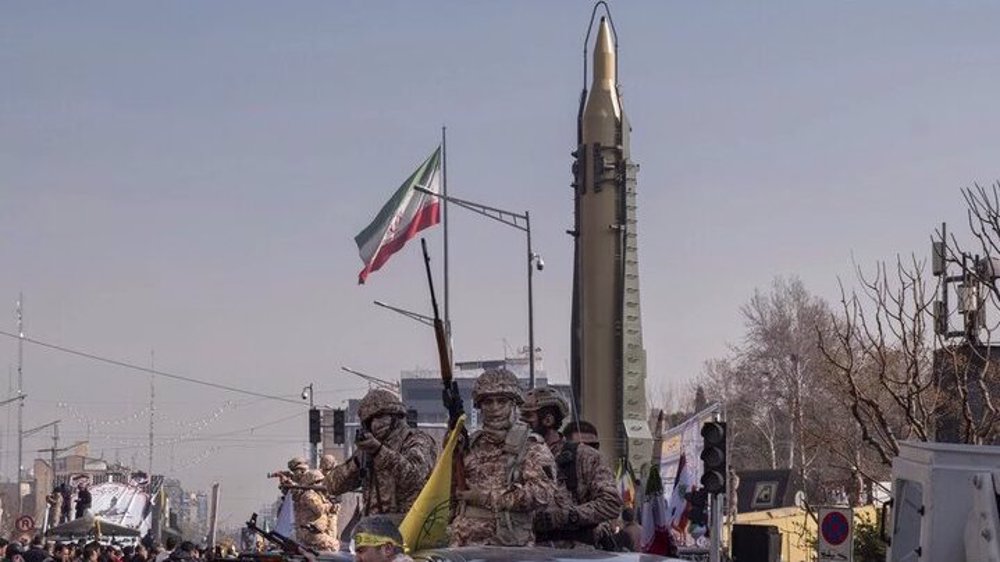
Jahanshahi, the army commander, said the deployment of rapid reaction and special forces had eliminated any enemy "boldness" to attempt ground operations against Iran.
He said the presence of army units alongside IRGC and law enforcement forces ensured border security.
Jahanshahi said the armed forces remained in a state of constant readiness, citing the legacy of the martyred Leader of the Islamic Revolution Ayatollah Seyyed Ali Khamenei, who had emphasized the need for permanent preparation against threats.
He credited Iran's survival in the recent war to divine grace, the guidance of new Leader Ayatollah Seyyed Mojtaba Khamenei, the sacrifice of the armed forces, public support and government backing.
Continued violations of war-ending MoU with Iran prove US cannot be trusted: Analyst
Araghchi warns of ‘immediate, powerful’ response to threats against Iranian nation, leadership
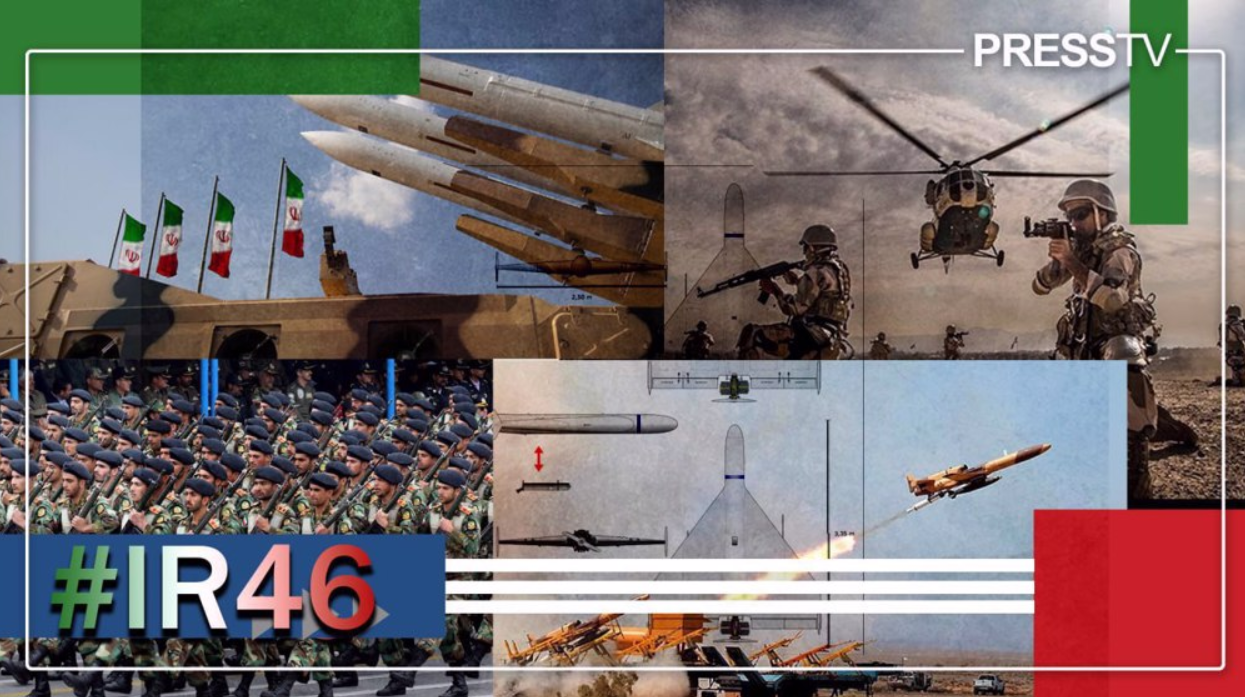
Defense minister: Iran's missile, drone capabilities will continue to expand


Doha talks focused on US violations of MoU, frozen assets: Iran’s deputy FM
Iran warns UN of Israel’s ‘deliberate’ and ‘public’ threat against Leader
Israeli Knesset advances bill to ban Muslim call to prayer over loudspeakers
VIDEO | Press TV's news headlines
Pezeshkian praises Iran’s World Cup team after hero’s welcome in Tehran
Continued violations of war-ending MoU with Iran prove US cannot be trusted: Analyst
Israeli drone strike kills three Palestinians, injures several in Gaza City
China urges US to lift sanctions on Iran, implement Islamabad MoU




 PressTV NEWSLETTER
now
PressTV NEWSLETTER
now
 This makes it easy to access the Press TV website
