Mission unaccomplished – Part II: US imposed war, but Iran wrote the terms of American surrender
By Press TV Website Staff
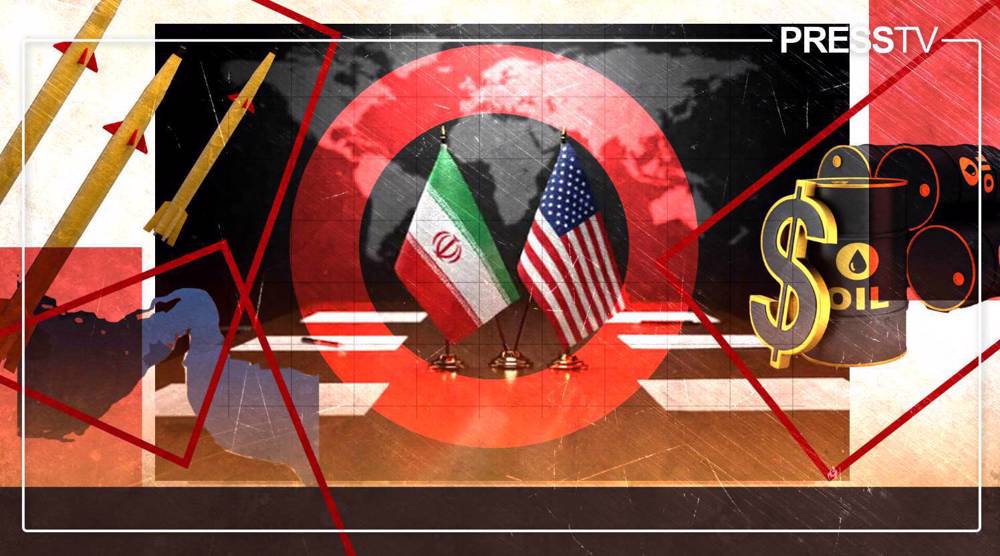
The recent memorandum of understanding between Iran and the United States to end the illegal and imposed war imposed on the Islamic Republic marks a pivotal moment in contemporary international relations, one that fundamentally challenges conventional assumptions about the efficacy of military pressure and coercive diplomacy.
For decades, Washington operated on the assumption that "maximum pressure" – economic sanctions, military aggression, and diplomatic isolation – could compel Iran to capitulate to its maximalist and unreasonable demands.
The events that unfolded in the aftermath of the Ramadan War have decisively disproven this thesis. What has transpired is not Iran's surrender to external pressure, but rather the collapse of that pressure in the face of incredible national resilience, strategic adaptation, and a conception of statecraft rooted in the principle that "Far from Us Is Humiliation."
The understanding Iran secured was not imposed upon it, but it was shaped by realities Iran created through its indomitable resistance, its deterrent power, and its ability to transform military steadfastness into political victory.
The Ashura principle as strategic doctrine
To comprehend Iran's posture, one must understand the cultural and ideological framework that informs its approach to Western pressure. The Ashura principle – drawn from the martyrdom of Imam Hussein (AS) and his companions on the desert plains of Karbala – provides more than religious inspiration; it offers a strategic doctrine of dignified and necessary resistance against overwhelming odds.
As IRGC Spokesman Brigadier General Hossein Mohabi articulated, Iranian forces fight "with the culture of Ashura and consider surrender a disgrace for themselves," recognizing that in this unequal battle, "our fighter either wins or is martyred."
It reflects a fundamental calculation about the nature of power and the limits of material coercion in the Karbala school of thought that lies at the heart of the Islamic Republic.
Drawing from the teachings of Ashura, the Iranian nation will never surrender to the world’s hegemonic powers, because it has adopted the slogan 'never to humiliation' as its guiding principle." This religious and cultural framing transforms resistance from a tactical choice into an existential imperative. When Iranians say "never to humiliation," they are not making a boast but articulating a civilizational commitment that has been tested across centuries.
Critically, this principle has demonstrated its operational relevance. Against an adversary with superior resources and military experience, Iran has relied on strategic design and preparedness to push the enemy back. As Mohammad Bager Qalibaf, Iran's parliamentary speaker and head of the negotiating team, said recently, Iran is not militarily stronger than America, but has fought in an asymmetric war and pushed the enemy back.
The enemy, by contrast, possessed resources but lacked strategic coherence.
✍ Analysis - Beyond the MoU: Leader's message redefines framework of authority, legitimacy, and people's role in governance
— Press TV 🔻 (@PressTV) June 19, 2026
By Press TV Strategic Analysis Deskhttps://t.co/ZLbGcTlS7C
The staggering failure of “maximum pressure”
The cornerstone of American strategy toward Iran has been the so-called "maximum pressure" campaign, a policy predicated on the assumption that economic strangulation would provoke either internal collapse or political capitulation.
This assumption has proven catastrophically mistaken. The strategy rested on three pillars: crippling economic sanctions, diplomatic isolation, and military aggression. Yet nearly a year after the reinstatement of this approach, none of its objectives have been fulfilled.
Iran's oil sector, the primary target of these illegal sanctions, remains operational. Despite aggressive sanctions expansion, Iranian crude production has stabilized at approximately 3.2 to 3.4 million barrels per day in 2026. This exceeds production levels during Trump's first term, when output fell below 2 million barrels per day.
The reasons for this resilience are structural: global oil oversupply has limited market leverage, China has absorbed more than 80 percent of Iran's seaborne crude exports, and Iran's sanctions-evasion infrastructure has matured from improvised tactics into systematic networks.
Perhaps most revealing has been the admission from American officials themselves regarding the ineffectiveness of sanctions. After the MoU was signed, Vice President J.D. Vance was compelled to acknowledge that the agreement's provisions on Iranian oil exports did not constitute a major concession, as what had prevented their oil sales was not sanctions, as sanctions at that time had essentially lost their effectiveness.
This represents a remarkable retreat from Trump's declared objective of reducing Iran's oil exports to zero, a wish Iran's Oil Minister Mohsen Paknejad said they will “never achieve."
The failure of maximum pressure extends beyond the economic realm. Iran has demonstrated that external threats and coercion produce not fragmentation, but cohesion. The destabilization playbook – economic warfare, military intimidation, covert operations, and information manipulation – has "reached its limits."
Rather than isolating Iran, this strategy has destabilized entire regions and entrenched cycles of war while reinforcing Iranian steadfastness and resilience. The United States, having exhausted traditional tools, finds itself in a dangerous phase where rhetoric has grown more reckless and open endorsement of unrest, public threats of force, and abandonment of diplomatic restraint signal a shift from calculated coercion to impulsive escalation.
✍ Analysis - Iran-US war-ending MoU codifies Tehran's strategic leverage, cementing its status as regional superpower
— Press TV 🔻 (@PressTV) June 18, 2026
By Press TV Strategic Analysis Deskhttps://t.co/wCg8Z2Z8Um
A diplomacy of strength
The critical difference between current negotiations and previous diplomatic efforts lies in the strategic context. As lead negotiator, Qalibaf emphasized, negotiations are now conducted from a "position of strength," with the "banner of battlefield victory" serving as the backing for diplomacy.
This represents a fundamental inversion of the traditional paradigm, where diplomacy was often pursued from a position of weakness or desperation. Iran has transcended the linear model that separates war and diplomacy, instead pursuing both simultaneously.
This dual-track approach has proven decisive. While diplomatic channels remained open, Iran's armed forces demonstrated that any attempt to exploit the atmosphere of calm for military advantage would be met with a firm and immediate response.
The strategic value of the Strait of Hormuz – where Iran maintains effective control – has functioned as leverage, insurance, and a constant reminder of the limits of military coercion. As one analysis noted, Iran has used the Strait not simply as a military asset but as a means of "converting battlefield resilience into diplomatic leverage."
The negotiations themselves have served as a method of struggle rather than a sign of retreat, leaving no room for either surrender or empty slogans. This approach is rooted in the recognition articulated by senior IRGC commander General Yadollah Javani that "the adversary must bear the cost of its actions and come to the realization that it cannot impose its demands through pressure and threats."
Iran's experience has demonstrated that the adversary must bear the cost of its imprudent and foolhardy actions and come to the realization that it cannot impose its demands through pressure and threats. The understanding represents an acknowledgment that the unprovoked and illegal military aggression failed to produce the desired results.
Critically, this approach has generated a broad domestic consensus. The recognition that diplomacy must be the articulate voice of battlefield strength has become a unifying principle. This consensus reflects the understanding that military achievements must ultimately be translated into political and legal gains.
As Qalibaf noted, every war that ends in victory, if it does not ultimately lead to a legal and political document and those victories are not recorded, will bring no benefit.
✍ Analysis - ‘Unified Resistance Front’: Iran recasts region’s balance of power and security paradigm with Operation Nasr
— Press TV 🔻 (@PressTV) June 9, 2026
By Press TV Strategic Analysis Desk https://t.co/9WbT24rCHr
Implications for the region and beyond
The Iranian experience carries profound implications for countries across the region and the broader international order. It demonstrates that the assumption that a dominant power can impose its will through sanctions and military threats has been fundamentally challenged.
In a multipolar world characterized by emerging powers and new multilateral frameworks for cooperation, unilateral coercion can deepen resistance rather than enforce submission.
The memorandum of understanding represents the recognition that strategic objectives cannot be achieved through force or pressure alone. What has occurred is the enemy's acceptance of terms made possible by Iran's steadfastness and strength. The lesson is that nations that remain steadfast can compel their adversaries to accept new realities.
This is the enduring message of Ashura and Imam Hussein’s uprising against the corrupt Umayyad despot, adapted to the complexities of modern statecraft.
Unwavering resistance, when combined with strategic adaptation and demonstrated power, can transform military and political pressure into strategic victory. The understanding Iran has secured is not an endpoint but a milestone in a longer struggle, one in which dignity, sovereignty, and the rejection of humiliation remain the foundational principles of national policy.
As the global order continues to evolve, the Iranian experience offers a compelling case study in how nations can navigate asymmetric confrontations and convert resistance into tangible political outcomes.
Iran’s top military command warns of response to any Israeli threat
Strait of Hormuz as strategic red line: Why Iran must confront Oman's corridor plan, Trump's threats
Quds Force chief warns Israel of 'humiliating retreat' from Lebanon


Latest figures place Iran sixth among world's largest cement producers in 2023
Global health professionals demand boycott of Israeli medical association
Iran: Defense capabilities essential to national security, not open to negotiation
Pakistan facilitates return of 22 Iranian sailors after US unlawful seizure of tanker
Lebanon’s ex-president says Iran’s victory confirms resistance as only effective option
Iranian strikes force US to mull relocating Fifth Fleet assets from Bahrain to Israel
Persian Gulf Arab states owe stability to Iran’s stewardship of Strait of Hormuz: Leader’s advisor
Hezbollah chief: Israel will have to leave Lebanon 'humiliated, defeated'



 PressTV NEWSLETTER
now
PressTV NEWSLETTER
now
 This makes it easy to access the Press TV website
