America's paper tiger sunset: How US traded values for vanity and suffered staggering fall
By Ahmad Habibullah
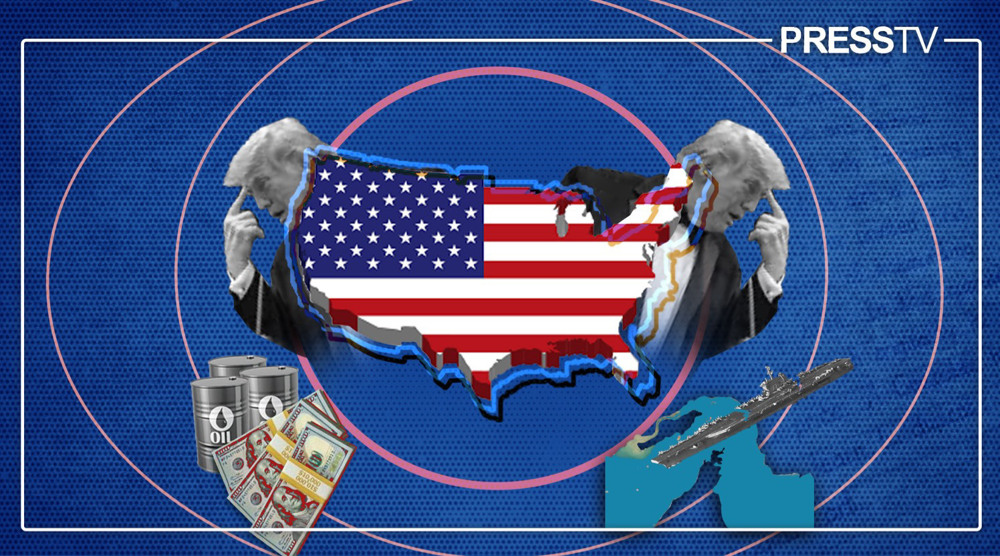
The decline and fall of the American Empire has attracted increasing attention from leading political scientists, strategic thinkers, intellectuals, and academics over the years.
Numerous books and research papers have examined this phenomenon from various perspectives, both directly and indirectly. However, this process of decline can also be understood as a process of shrinking.
Historically, every empire expands during its formative stages in political, economic, military, and cultural dimensions. After reaching its zenith, however, it gradually begins to contract until it eventually fades into the pages of history.
In a metaphorical sense, this shrinking is akin to the long-standing depiction of the United States as a “paper tiger” in print and electronic media as well as in scholarly literature.
The shrinking of any state or empire begins first in the minds of its people, although its rulers and elites may hold a completely different perception. In the case of the United States, this phenomenon is increasingly visible today.
Many intellectuals and ordinary Americans express concern about the country's deteriorating status as a leading global power. On the other hand, segments of the political elite, senior military officials, and the ruling establishment continue to operate under the belief that the United States remains an unchallenged superpower.
The United States was founded upon the principles articulated in the Declaration of Independence, which emphasized freedom, equality, human rights, liberty, the pursuit of happiness, justice, and peace. Over time, however, successive US administrations have gradually distanced themselves from these founding ideals.
This departure has affected not only American citizens but also has had far-reaching consequences for people in numerous other countries, depriving them of these same principles. From this perspective, there has been a continuous and uninterrupted erosion of America's founding values, both domestically and internationally.
Furthermore, the Declaration of Independence refers to God as the “Supreme Judge of the world” and reflects a firm reliance on divine providence by the representatives of the colonies at the time of its adoption. The contemporary US policy has moved away from this foundation and instead places overwhelming reliance on military power.
This shift has manifested itself through armed conflicts, geopolitical interventions, orchestrated wars, coups d'état, resource exploitation, regime-change operations, support for controversial governments, and other actions seen as destabilizing and destructive.
Domestically, policies such as the legalization of abortion, the sale of alcohol, and the recognition of same-sex marriage are evidence of a broader departure from traditional religious values. From this viewpoint, faith in God has gradually been supplanted by a secular-fascist system of governance that relies primarily on military and material power to advance national interests and project influence abroad.
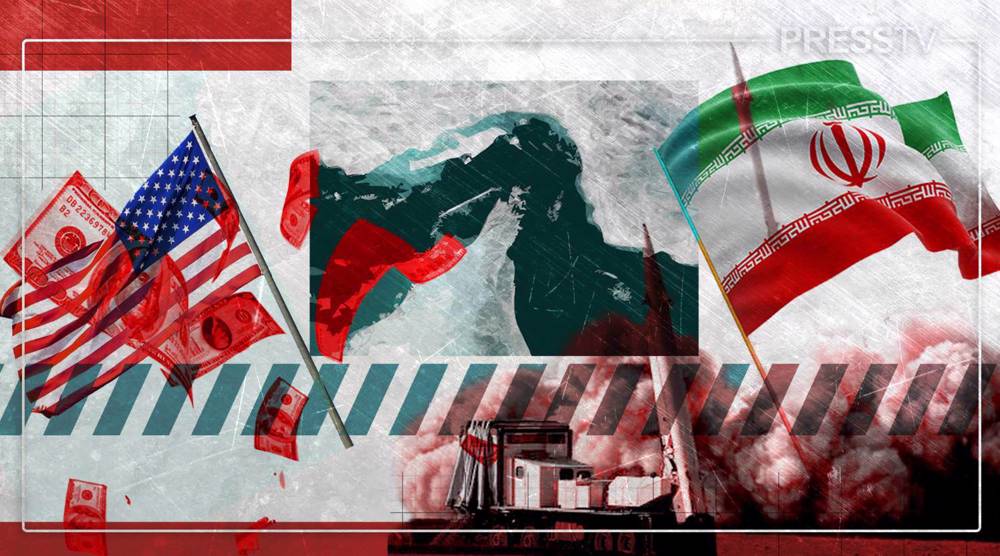
Higher education is another sphere in which the United States has experienced a significant decline. During the 1980s, American universities dominated global rankings, with more than 16 of the world's top 20 universities often located in the United States. For talented students across the globe, studying in America represented the pinnacle of academic aspiration and professional opportunity.
This position has weakened considerably in recent years. This decline can be attributed to factors such as restrictions on academic freedom, heavy-handed responses to campus protests, the use of police force against students and faculty members, increasingly restrictive visa procedures, declining scholarship opportunities, political interference in academic affairs, and the diversion of national resources toward military expenditures. As a result, American universities have gradually lost their standing in global higher education.
According to a recent assessment of global university rankings in 2025, American institutions no longer dominate the world's top positions to the extent they once did. China has surpassed the United States in several indicators of academic and scientific output, including the number of doctoral dissertations, research citations, and patent registrations. Consequently, many outstanding students from around the world are increasingly choosing destinations such as Canada, Australia, Europe, and China for higher education, reflecting what critics see as a broader shift in the global academic landscape.
To maintain its position as a global hegemon and self-appointed world policeman, the United States pursued a range of policies and strategic maneuvers designed to project power and instill fear among governments, political leaders, military establishments, and populations around the world.
There was a time when a message from the US president could compel even powerful governments to comply with Washington's demands. Today, however, that hegemonic influence has significantly diminished and has increasingly been replaced by a willingness among states to challenge, resist, and reject American directives. It has lost much of its former ability to dictate outcomes to smaller nations and enforce its preferences across the international system.
America's foreign policy, particularly its long-standing support for the Zionist regime and its repeated use of the veto power at the United Nations, has contributed to a gradual decline in international support for US positions. On many important global issues, even traditional American allies have become increasingly reluctant to back US-sponsored resolutions, often abstaining on key votes.
In numerous instances, voting outcomes at the UN have highlighted a stark divide between the US and the Zionist regime on one side and a substantial majority of member states on the other. According to this perspective, such developments reflect a shrinking of American diplomatic influence and a weakening of its ability to shape international consensus.
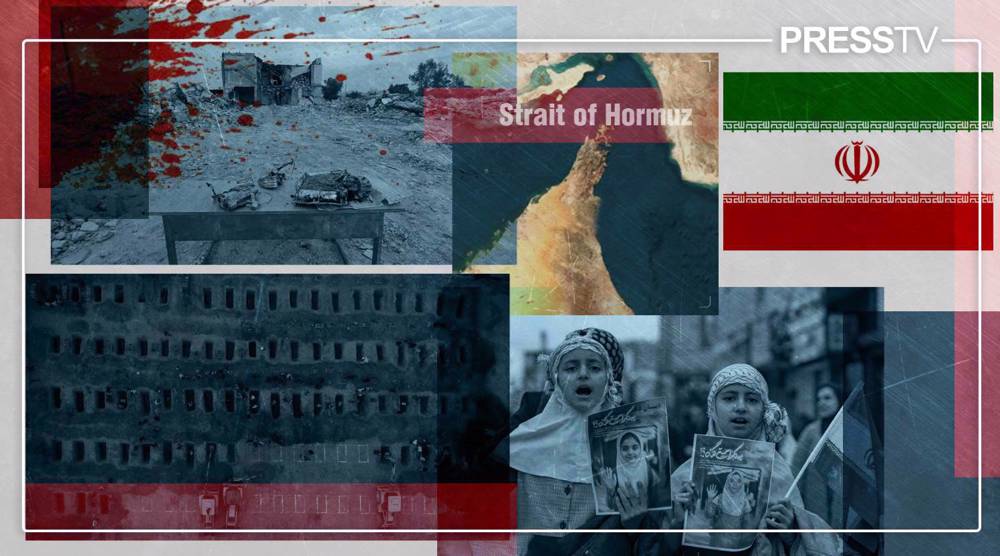
Internal stability is another piece of evidence of American decline. In any developed nation that aspires to global leadership, maintaining a peaceful and secure domestic environment is considered a fundamental responsibility of political leaders and law enforcement institutions. The US faces serious internal challenges in this regard.
The factors that can be cited are high levels of gun violence, mass shootings, violent crime, hate crimes, drug abuse, suicide, and social unrest as indicators of a deteriorating social environment. Rising firearm ownership another reflection of growing public insecurity and declining confidence in public safety.
Furthermore, police brutality, particularly toward minority communities, has generated widespread controversy and sparked repeated nationwide protests on many occasions in recent years. These developments reveal a gradual erosion of social cohesion and public trust. The shrinking of a peaceful and stable environment across both urban and rural America has contributed to recurring episodes of unrest, especially following high-profile incidents involving minority victims.
Technology and innovation, long considered pillars of American strength, are also areas where the United States faces increasing challenges. Silicon Valley was once widely regarded as the unrivaled global center of technological innovation. Over time, however, many manufacturing and technology-related activities were outsourced to countries such as China, Hong Kong, Taiwan, and others, contributing to the emergence of powerful new competitors. The staggering collapse of Silicon Valley Bank is a symbolic indication of vulnerabilities within the broader American economic and technological ecosystem.
The technological monopoly once enjoyed by Silicon Valley has weakened considerably as countries such as China have developed advanced capabilities in areas including artificial intelligence, telecommunications, and high-tech manufacturing. New companies and innovation hubs have emerged around the world, challenging American dominance in cutting-edge sectors.
A significant proportion of scientists, researchers, postdoctoral scholars, and faculty members working in American universities and industries during the late twentieth century were immigrants. The increasing political polarization, job insecurity, workplace inequities, restrictive immigration policies, and growing geopolitical tensions have made the United States less attractive to highly skilled international talent.
As a result, many top researchers and technology professionals are increasingly seeking opportunities elsewhere, particularly in China and other rapidly advancing economies. Hence, the US has experienced a gradual decline in its ability to attract and retain world-class technological talent, thereby weakening one of the key foundations of its influence.
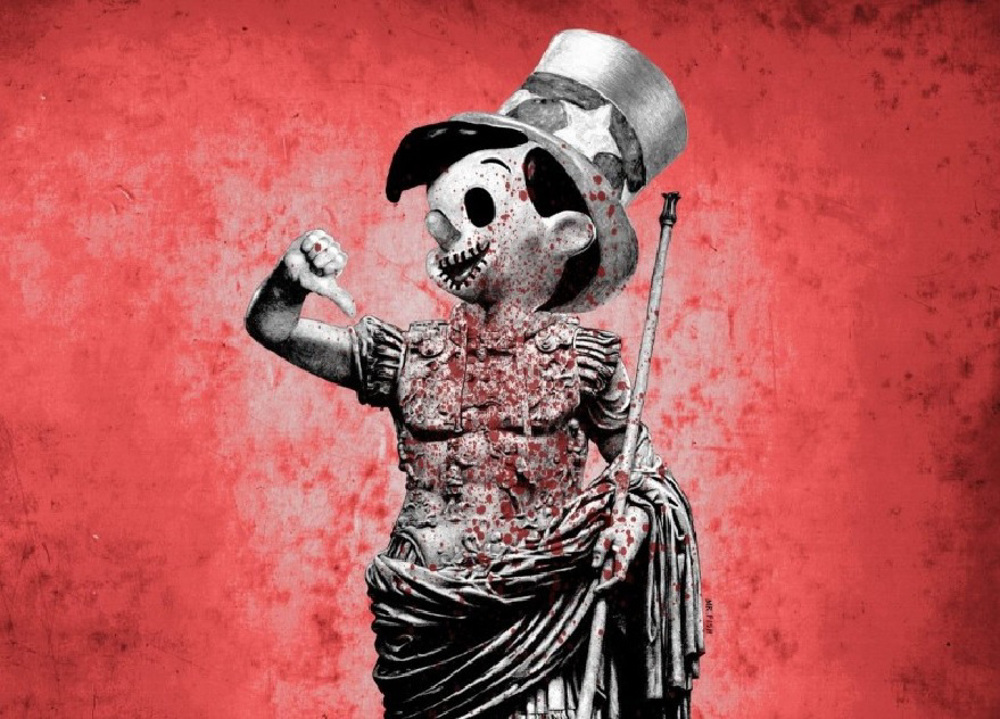
The ultimate demonstration of power in international affairs is the ability to compel an adversary to come to the negotiating table during a war, accept one's demands, and safeguard one's strategic interests. The recent war illegally imposed against the Islamic Republic of Iran by the United States and its long-standing ally, the Zionist regime, has instead become a strategic nightmare for Washington.
As a self-proclaimed superpower, the United States entered the war with clearly defined objectives, including “regime change” in Iran and the dismantling of its nuclear program through attacks on key nuclear facilities. However, the US failed to achieve its objectives and was ultimately compelled to halt its aggression in the face of determined resistance by the Iranian nation, especially the Iranian armed forces.
The Iranian people demonstrated remarkable resilience during the war. Through public mobilization and expressions of support for their leadership and armed forces, Iranians helped frustrate expectations that external military pressure would lead to internal collapse or “regime change.” Consequently, what some American politicians and military commentators had envisioned as a pathway to political transformation in Iran instead evolved into a costly and unsuccessful military adventurism.
The US war machine, after suffering substantial military and strategic setbacks, was forced to return to negotiations and moderate its rhetoric toward Iran. This is evidence of a broader decline in American military influence. Despite possessing the world's most advanced military technology, nuclear arsenal, and largest military budget, Washington was ultimately unable to impose its preferred outcome and instead had to accept conditions largely favorable to Tehran in order to bring the imposed war to an end.
History demonstrates that great civilizations and powerful states do not emerge overnight. Rather, they are built over centuries through the hard work of their people and through the pursuit of justice, equality, stability, and responsible governance.
Lasting influence beyond national borders is achieved not through military strength but through moral authority and the promotion of peace and justice. Such states earn respect both from their own citizens and from the international community.
The United States has increasingly departed from these principles, and this departure has accelerated in recent decades. Like many powers before it, the United States is experiencing a fast decline in its moral authority and global standing. Such a decline often begins long before it becomes visible in material terms.
Just as previous empires eventually faded after reaching their peak, the United States will ultimately face a similar historical trajectory.
Future generations will study the United States for its disastrous legacy of military interventions, engineered wars, resource exploitation, and global hegemony.
Dr. Ahmad Habibullah is a faculty member and freelance writer on international politics. He teaches academic leadership and research ethics at a university.
(The views expressed in this article are the author's own and do not necessarily reflect those of Press TV.)
Netanyahu enlists US right-wing to pressure Trump on Iran deal: Report
Vance rebukes Ben-Gvir and Smotrich for attacking US-Iran MoU
Iran-US MoU codifies Tehran's strategic leverage, cementing its status as regional superpower



UNICEF: Ceasefire in besieged Gaza is a ‘deadly illusion’ for Palestinian children
Iran rules out IAEA inspections of war-damaged nuclear sites
Israel will soon be expelled from ‘every inch’ of Lebanese territory: Hezbollah chief
Iran stopped Trump's 'march to reassert US global dominance': Analyst
Iran delays Swiss meeting, links US talks to MoU implementation amid Israel’s Lebanon strikes
Israeli regime’s only interest is ‘permanent war,’ Iran's FM Araghchi says
Hezbollah: Israel never abided by any ceasefire agreement
Beyond the MoU: Leader's message redefines authority, legitimacy, and people's role in governance



 PressTV NEWSLETTER
now
PressTV NEWSLETTER
now
 This makes it easy to access the Press TV website
