From ‘Fortress America’ to Fragile Empire: Iran’s asymmetric warfare tests US global hegemony
By Yousef Pouranvari
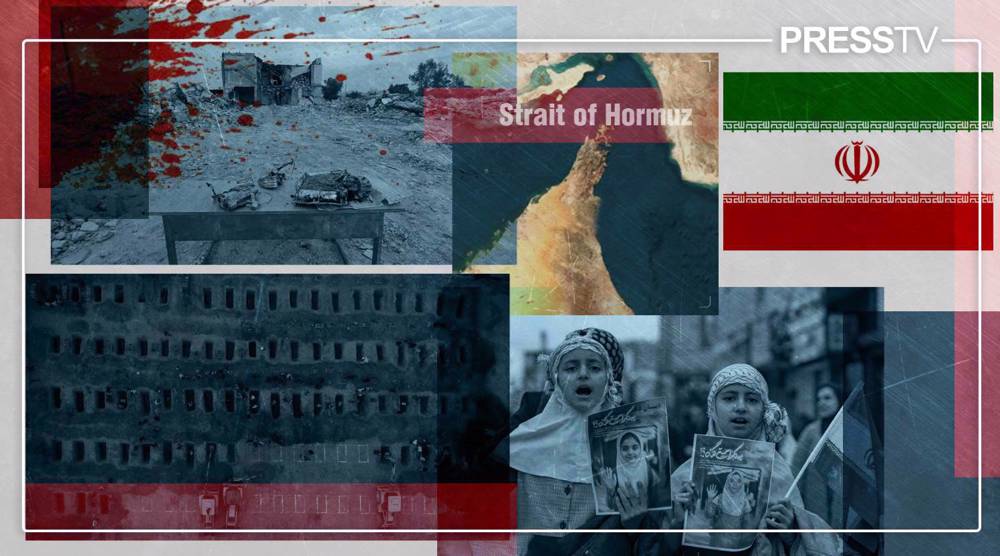
With the press of a button, nearly two hundred Iranian families were plunged into unimaginable and immeasurable grief, mourning the tragic loss of their children.
The soldier who activated that mechanism did so knowing his own family slept peacefully on the other side of the world, likely to wake hours later to send their children to school.
What force has instilled in the American soldier such unwavering certainty – the belief that he can strike anywhere on earth without fear of consequence or reprisal?
Beyond its technological superiority, market-driven economy, ability to attract global scientific talent, and dominance of international media, the United States possesses a fundamental advantage no other country can replicate.
This advantage is described in various terms – “splendid isolation,” “free security,” “Fortress America,” and even “hemispheric hegemony.”
At its core lies a simple geographic reality: the United States is physically removed from other major powers, shielded by two vast oceans. This natural buffer, combined with its accumulated strengths, has propelled the country to its current global dominance.
It is this separation, this capacity to meet most of its needs within its own borders, that fosters a deep sense of security, even impunity, among American military personnel.
Yet the American soldier, who in practice serves the military-industrial complex, does not commit horrific atrocities solely because he believes the consequences of war will never reach his own home. He also requires justification, an intellectual and moral framework that allows him to take thousands of lives in moments, unburdened by ethical, cultural, religious, or human considerations.
This role is largely shaped by the media. Within this complex system, the media carries a profound responsibility. Drawing on an array of fields such as linguistics, psychology, marketing, and sociology, it employs subtle methods to dehumanize those portrayed as outsiders or adversaries.
✍️ Viewpoint- Trump’s military gamble against Iran backfires spectacularly with no exit strategy
— Press TV 🔻 (@PressTV) March 15, 2026
By Abbas Ali Abedihttps://t.co/06y6NVI1pC
Through often imperceptible means, it constructs a worldview in which violence and mass casualties in West Asia appear routine, while far smaller incidents elsewhere are framed as extraordinary and the gravest of crimes against humanity.
Immersed in a constant stream of news, films, and television, the American soldier is repeatedly exposed to narratives that his race and his values are inherently superior, that ethical and humanitarian norms need not apply elsewhere, and that others are intrinsically inferior and thus deserve more humane treatment.
So powerful is the media’s capacity for dehumanization that it can shape not only how others are perceived, but how non-Western societies come to see themselves. It fosters the belief that their worth is inherently less than that of their Western counterparts, and that recognition as fully human depends on validation from the West.
Hollywood productions, widely consumed across non-Western audiences, often embed subtle cues within their narratives that reinforce this sense of inferiority. The influence of these media systems has reached such heights that they can recast a brutal dictator as a benevolent figure, while portraying a champion of resistance as a global villain.
They can normalize the bombing of civilians, including schoolchildren, by presenting such violence as routine in West Asia, diminishing its moral weight and numbing global outrage and conveying the message that the killing of brown‑skinned individuals inflicts no meaningful wound upon the world.
Drawing on these structural advantages and the dominance they sustain, the United States can shape international behavior – building coalitions, exerting pressure, and issuing threats to align countries with its strategic objectives.
Major global institutions such as the World Trade Organization, the World Bank, and the International Monetary Fund rarely make consequential decisions without Washington’s approval. While these bodies may appear democratic and representative of modern progress, in practice, they often function as instruments advancing the priorities of American power.
✍️ Viewpoint - Netanyahu lands Trump in a quagmire as ‘Shock and Awe’ strategy boomerangs in Iran
— Press TV 🔻 (@PressTV) March 22, 2026
By Iqbal Jassathttps://t.co/RXNm3LtWIj
In addition, mechanisms such as FATF and SWIFT serve as tools of economic leverage that the American Empire uses against countries in the Global South. Access to these systems is typically granted under two conditions: either a country is powerful enough that excluding it would risk the creation of a rival system, or it is weak enough to accept imposed terms without resistance. Countries that fall between these extremes often face mounting pressure and isolation, gradually constrained until compliance becomes unavoidable.
This unparalleled power has allowed the United States to deny noncompliant nations access to the benefits of global institutions. Over time, such exclusion exerts sustained economic pressure, often enough to bring countries to their knees.
Iran, however, has endured through various means, continuing along its chosen path despite these constraints that come in different shapes and forms. While it does not share America’s structural advantages, it possesses a critical asset of its own: its strategic position along both historic and modern arteries of global trade. Its southern coastline borders the Strait of Hormuz, a passage through which roughly one-fifth of the world’s energy supply flows.
The United States has effectively closed multiple “straits” to Iran and others – the financial channel of SWIFT, access to the World Trade Organization, and pathways constrained by secondary sanctions. Yet the strait Iran now influences has placed unprecedented pressure on the foundations of American power.
Many analysts note that even if tensions around the Strait of Hormuz were resolved today, the economic and geopolitical repercussions would continue to reverberate globally for months. Iran has long adapted to restrictions through costly and complex alternatives, but there is broad recognition that a prolonged disruption of this vital waterway could significantly destabilize the current global order.
The American soldier, whose family lives in comfort on the other side of the world, insulated by the advantages outlined above and rarely considering their own vulnerability, now faces a different kind of threat. There are no gunshots, no explosions, no roar of aircraft. Instead, the pressure emerges more subtly: rising fuel prices, volatile markets, and increasing living costs that gradually erode a sense of security.
✍️ Viewpoint - Trump's Iran war lies trigger market swings while media conceals US military failure
— Press TV 🔻 (@PressTV) March 26, 2026
By Shabbir Rizvihttps://t.co/Q7EfwDQ4St
On this side of the world, Iran is not seeking a swift resolution. Rather, it is willing to prolong the confrontation and steadily intensify pressure for the crimes the US-Israeli coalition has committed against ordinary Iranians since February 28 and before.
Iranian missiles may not reach the United States, but their capacity to inflict harm is not limited to direct military means. In this context, America’s traditional advantages offer diminishing returns. The deep interconnection of the global economy and communications has made even the “American fortress” increasingly permeable.
Throughout the long rivalry between Iran and the United States, both sides have played their respective strategic cards. The “regime change” project can only succeed if Iran collapses internally and that is not happening.
As Carl von Clausewitz articulated in his conception of defense, the weaker party prevails simply by holding its ground, by enduring, by resisting, by simply existing.
Iran has now placed its foot upon the throat of the global economy and constricted its breathing. If Iran aspires not merely to survive but to define the terms of its survival from a position of strength, it must play this card with consummate skill.
Yousef Pouranvari is a Tehran-based journalist and commentator.
Mission unaccomplished – Part VI: US sought Iran’s surrender but got a new regional superpower
Contrary to enemy propaganda, Iran’s defense sector continues to make progress: Top general
Iran marks 39th anniversary of Sardasht chemical massacre, demands accountability from Western enabl



Martyred Leader's funeral to serve as global movement against terrorism, US-Zionist crimes: Army
2026 World Cup: Iran prepares to depart Mexico after 24-day stay in Tijuana
At UN Security Council, Palestine envoy urges world to stop Israeli annexation
Two IRGC servicemen martyred in terror attack in western Iran
VIDEO | Pakistan launches fourth cross-border strikes inside Afghanistan
VIDEO | Pro-Palestinian activists in Paris rally to condemn ongoing Israeli genocide
VIDEO | Spain rejects US pressure as Trump intensifies criticism of NATO allies
VIDEO | Afghanistan-Pakistan tensions escalate after fresh airstrikes by Islamabad


 PressTV NEWSLETTER
now
PressTV NEWSLETTER
now
 This makes it easy to access the Press TV website
