‘Justice will be served after all’: Iran marks first anniversary of 12-Day War
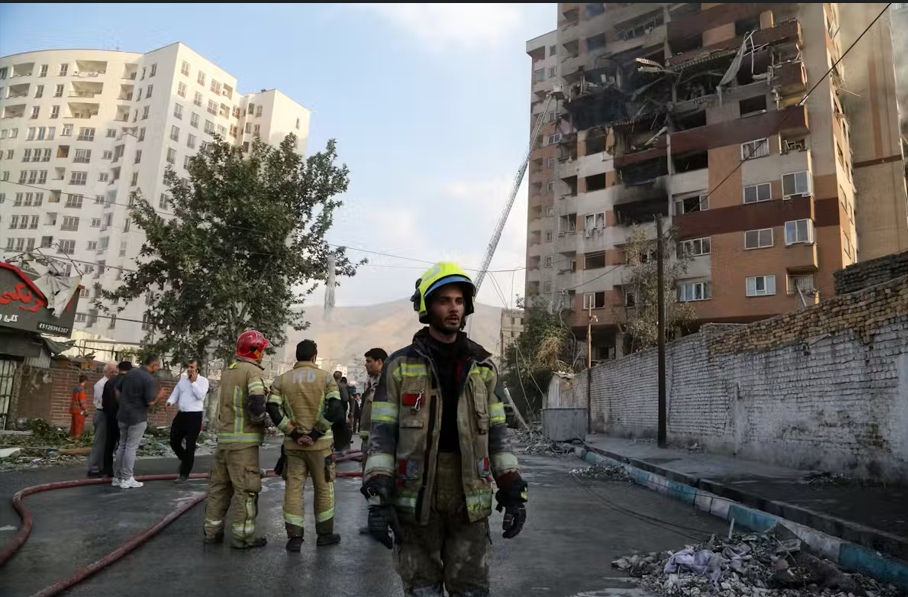
Senior Iranian authorities have marked the first anniversary of the 12-Day War, which began on June 13 last year with unprovoked Israeli air raids that killed several top military commanders, officials, and nuclear scientists.
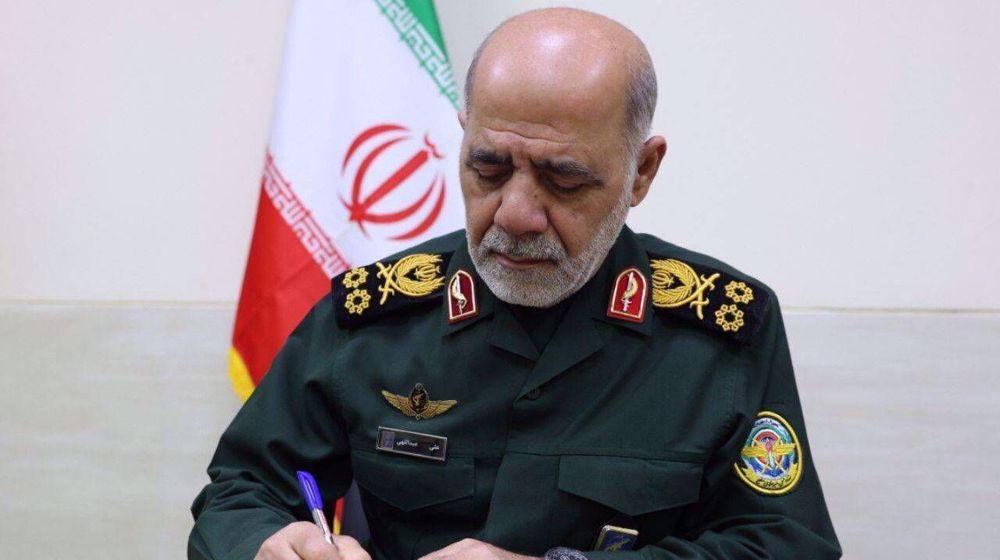
Judiciary Chief Gholam Hossein Mohseni-Ejei wrote on social media on Saturday that the “amazing national unity” in Islamic Iran has left the world “astonished and bewildered.”
“This solid cohesion and unity has brought extra deterrence to our country,” he said. “We must protect this national solidarity and not allow ill-wishers to infiltrate the united ranks of the Iranian nation.”
“Let everyone know: we have absolutely no trust in the Americans. This distrust stems from historical facts and events,” he said, hinting at indirect negotiations with the US.
Mohseni-Ejei noted that during the 12-Day War, all components of Iran’s Armed Forces shone under the command of the martyred Leader of the Islamic Revolution, Ayatollah Seyyed Ali Khamenei.
On June 13, Israel launched a war of aggression against Iran by assassinating several high-ranking Iranian figures, including commanders and nuclear scientists, and civilians.
More than a week later, the United States also entered the war by bombing three Iranian nuclear sites in a grave violation of the United Nations Charter, international law, and the Nuclear Non-Proliferation Treaty (NPT).
In response, the Iranian Armed Forces targeted strategic sites across the occupied territories as well as the al-Udeid air base in Qatar, the largest American military base in West Asia.
Mohseni-Ejei added that the “brilliance of these soldiers of the Imam of the Age and these devotees of Islamic Iran was truly exhilarating and indescribable,” he said.
He explained that what caused the enemy to miscalculate was its inability to understand the reality of Iran’s national power and the unbreakable will of the Iranian people.
“They thought they could stop the Iranian nation from the path of dignity and independence through pressure and threats. But once again, it was proven that our heroic nation, at critical moments in history, turns threats into opportunities to rebuild and strengthen its power.”
'One nation, one beating heart'
Iran’s President Masoud Pezeshkian, in a message on Saturday, honored the memory of the war's martyrs and addressed the miscalculations of Israel at the start of the aggression.
"The enemy imagined that by targeting senior military commanders, prominent nuclear scientists, and attacking infrastructure and residential areas, it could weaken the will of the Iranian nation,” he said.
However, he added that the people's resistance, the leadership's guidance, and the armed forces' readiness prevented these objectives from being achieved.
The president described the 12-day war as "a symbol of national unity" and emphasized that the Iranian people, regardless of their preferences and viewpoints, acted as one in defense of the country.
Citing the Leader of the Islamic Revolution Ayatollah Seyyed Mojtaba Khamenei’s emphasis on the need to preserve national cohesion, enhance defensive capabilities, and maintain public vigilance, the President identified these as the most essential requirements for successfully overcoming future challenges.
He expressed hope that Iran, relying on empathy, the capabilities of its youth, and its social capital, would continue the path of progress and honor.
"The 12-day imposed war once again proved that beyond any preference or viewpoint, when it comes to dear Iran, we are one nation, one clenched fist, and one beating heart," Pezeshkian said.
He added that it was this comprehensive defense and sacred cohesion that thwarted the treacherous enemies of this land and ultimately forced them to accept a ceasefire.
‘Ready to sacrifice our lives for ultimate victory of Iran’: Qalibaf
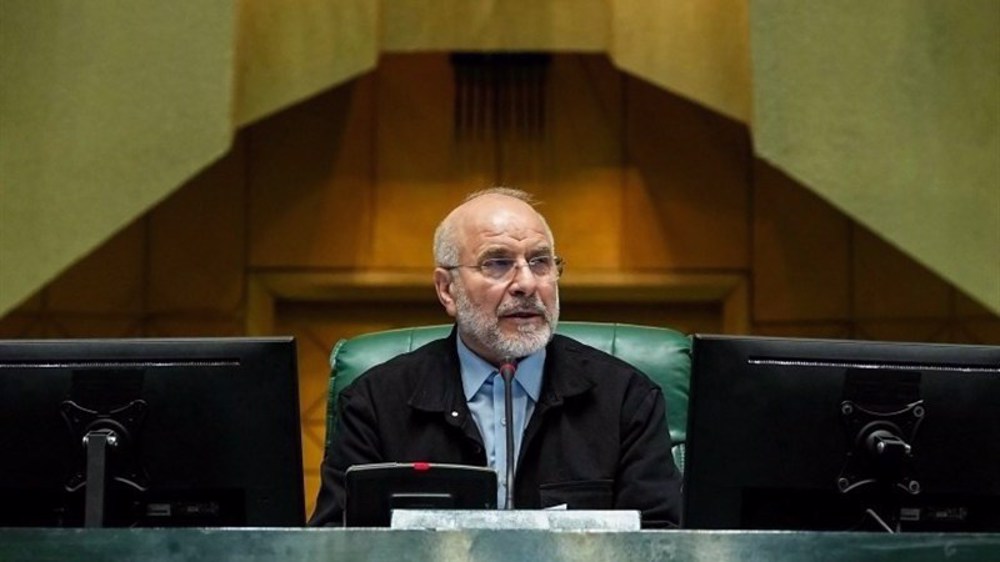
Iran’s parliament speaker Mohammad Baqer Qalibaf also commemorated the anniversary of the start of the 12-day war in a message on his personal X account on Saturday.
"One year has passed since the first round of criminal attacks by the Israeli regime and the United States on our eternal home, Iran. They murdered innocent children and refrained from no crime or brutality,” he said.
In his message, the speaker emphasized that “following the example of the heroic and oppressed martyrs of the 12-day war, we stand ready to sacrifice our lives for the honor and ultimate victory of dear Iran."
‘Blood of martyrs strengthened national unity’
Ayatollah Sadegh Amoli Larijani, head of the Expediency Council, also took to social media to commemorate the great generals that were assassinated in the 12-Day War.
“One year later, it has become clearer than ever that Iran’s enemies, with all their malice and crimes, did not achieve their evil goals,” he said.
“Although the will of the American and Zionist tyrants was aimed at weakening and dismantling the Islamic system and creating division among the Iranian nation, by divine will, the pure blood of these martyrs further strengthened national unity and renewed the spirit of resistance and steadfastness of Iran’s faithful nation against its enemies,” he noted.
Iran neither broke nor retreated
Deputy Foreign Minister for Legal and International Affairs Kazem Gharibabadi also commemorated the anniversary, saying Israel seeks power not on the battlefield but in aggression and crime.
Gharibabadi noted that the martyrdom of senior officials in the 12-war “is a testament to Iran's victimhood and a sign of the righteousness of a nation that has never bowed to force, terror, or imposition.”
He emphasized that Iran neither broke nor retreated, nor was its will weakened. Rather, he said, Iran has achieved brilliant victories against its enemies.
He explained that the fruit of the martyrs' blood, the sacrifices of commanders and scientists, and the wise strategies of the martyred leader is an Iran more resolute, more aware, and more determined than ever before.
"The names of all our martyrs — from the martyred Imam [Ayatollah Seyyed Ali Khamenei] to military and security commanders, ordinary people, and the students of Minab — remain alive in the heart of the nation," he said.
He added that they are remembered not merely as a memory of sorrow, but as a covenant for the strength, independence, and future of Iran.
Aggression was a betrayal of diplomacy: Embassy
The Embassy of the Islamic Republic of Iran in Vienna also described the aggression as a “betrayal of diplomacy and international law.”
The embassy added that “justice, however delayed, will ultimately be served.”
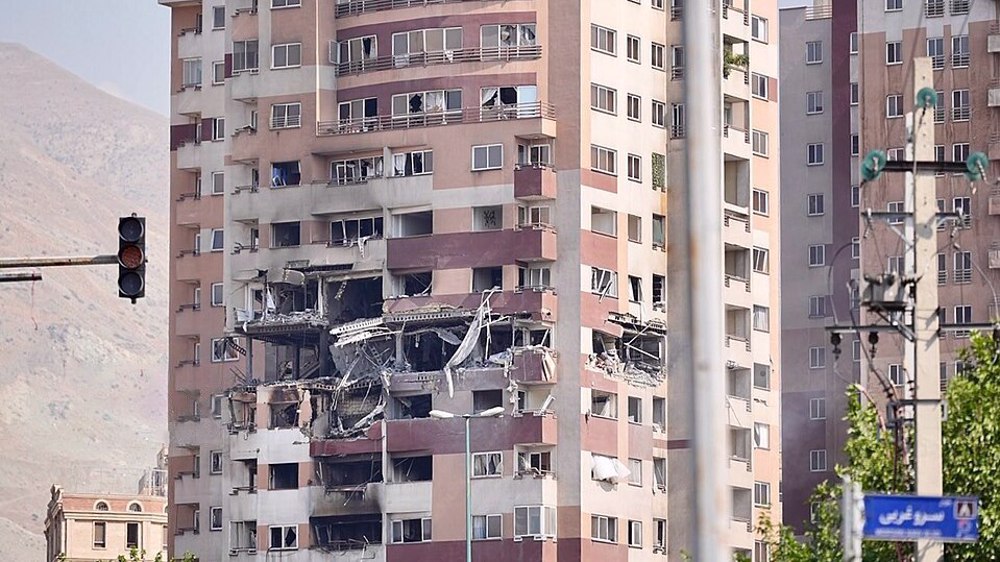
“The 12-Day War was twelve days of relentless bombing, twelve days of assassination, and twelve days that turned Iran’s cities into heartbreaking scenes and our country’s peaceful nuclear facilities into symbols of the aggressors’ betrayal,” the statement read.
“Betrayal of diplomacy, betrayal of the Nuclear Non-Proliferation Treaty, and betrayal of every international convention meant to protect nations,” it said.
The statement added that the two criminal regimes committed every possible crime in their unprovoked and brutal attack.
“They massacred innocent civilians, many of them children, for no crime other than having a dream for tomorrow. They assassinated scientists who were seeking knowledge, not war. And they martyred our country’s commanders and senior officials — the guardians of Iran’s dignity and sovereignty,” it said.
The embassy criticized the silence of some nations in the face of these crimes. “Their hypocrisy paved the way for renewed aggression against Iran on February 28 of this year, as well as the ongoing genocide and ethnic cleansing in Gaza and Lebanon by the Zionist regime,” it further said.
‘Open assault on diplomacy’
Meanwhile, Iran's Embassy in Berlin issued a statement saying “What happened in those days was not merely an attack on Iran, but an open assault on diplomacy, a clear violation of the United Nations Charter, and a disregard for the fundamental principles of international law."
The statement further noted that "the Iranian nation “did not surrender to threats and bullying. Relying on unity, resilience, and national capabilities, it defended its sovereignty, security, and dignity."
The embassy emphasized that what remains unforgettable is "the silence of those who deliberately closed their eyes" to the aggression of June 2025.
It added that the same silence and indifference paved the way for the repetition of another imposed war in February 2026, and that those who remained silent must be held accountable.
Beyond the headlines: Knowledge cannot be assassinated
Iran rights body condemns US attack on drinking water infrastructure
Hezbollah MP: Potential Iran-US deal should push Lebanon to reconsider talks with Israel



'Netanyahu failed': Lapid says potential Iran-US deal falls short of Israel's war objectives
Senior diplomat: Sacrifices of martyrs forged a stronger, more determined Iran
Israeli firm linked to digital interference campaigns across several countries: Report
June 13: Ayatollah Khamenei's funeral ceremonies announced as war-ending deal nears finalization
Iran showcases engineering might with toughest railway project
Pakistanis mourn Ayatollah Khamenei’s martyrdom in show of support for Iran
Canada PM warns Post-Cold War global order is unraveling amid US unilateralism
Five martyred as Israel bombs southern Lebanon, issues broad evacuation orders


 PressTV NEWSLETTER
now
PressTV NEWSLETTER
now
 This makes it easy to access the Press TV website
