Guardians of sky: How Iran’s radar network turned 12-day war into a blueprint for deterrence
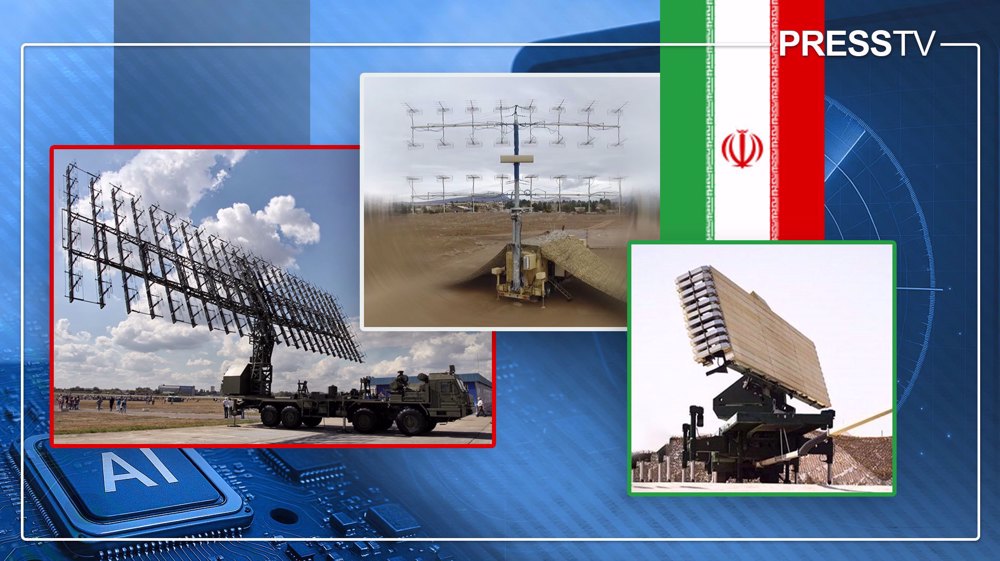
By Mohammad Molaei
In today’s complex and volatile geopolitical environment, where aerial and missile threats can emerge at any time and from any direction, radar systems serve as vigilant eyes in the sky and tireless guardians of national airspace.
They form a cornerstone of modern national security architecture.
As a leading regional power with a long-standing tradition of indigenous defense innovation, Iran has developed a diverse and sophisticated portfolio of advanced radar systems.
These systems not only monitor the vast expanses of the Iranian plateau but also symbolize strategic resilience and technological self-reliance in the face of Western pressure and hostility from the Zionist regime.
Emerging from decades of domestic research and development under stringent and illegal sanctions, Iran’s radar technologies have progressed to incorporate advanced capabilities such as Active Electronically Scanned Array (AESA) and Over-the-Horizon (OTH) systems.
These capabilities were tested during the 12-Day war in June 2025, when the Zionist regime, with open American support, launched extensive strikes against Iran’s defense infrastructure.
The war, which ended in the strategic failure of the aggressors, provided critical operational lessons and highlighted areas for strengthening the national radar network.
Radar classification: Ground-based, sea-based, and airborne.
As complex electromagnetic systems that transmit and receive radio waves to detect, track, and identify targets, radars are generally classified into three primary categories based on their operational platforms: ground-based, sea-based, and airborne systems.
In addition to the environment in which they operate, radars are also categorized according to strategic, tactical, and geographic requirements. Each category offers distinct advantages while facing its own operational challenges.
Ground-based radars constitute the backbone of national air defense systems. Installed at fixed stations or deployed on mobile platforms, they are particularly suitable for covering vast geographic areas, such as those of Iran, whose borders stretch extensively from north to south.
These radars are capable of detecting aerial, missile, drone, and, in some case,s ground targets at long ranges. Their principal strengths include operational stability, high transmission power, and seamless integration into layered air defense networks.
However, due to their fixed or semi-fixed positions, they can be more vulnerable to direct attacks or electronic warfare, as demonstrated during the 12-Day War. Iran integrates ground-based radars with missile defense systems such as the Bavar-373 to establish a multi-layered defensive shield capable of countering diverse threats.
Sea-based radars are installed on ships, submarines, offshore platforms, and fast attack craft. These systems play a critical role in monitoring strategic waterways such as the Persian Gulf, the Sea of Oman, and the Strait of Hormuz.
They are designed to detect maritime, subsurface, aerial, and cruise missile threats. Their high mobility significantly enhances survivability, allowing repositioning to avoid or mitigate enemy attacks. In line with its emphasis on asymmetric maritime defense, Iran has developed sea-based radar capabilities to safeguard critical energy routes and reinforce deterrence against Western naval forces, including US carrier strike groups.
Airborne radars are mounted on aircraft, unmanned aerial vehicles (UAVs), surveillance balloons, and, in some cases, low-Earth-orbit satellites. Operating at high altitudes, they provide expanded coverage and effectively eliminate ground-based blind spots caused by terrain features such as mountains and valleys.
A prominent example is the Airborne Warning and Control System (AWACS), a capability whose strategic importance was underscored during the 12-Day War. These radars offer exceptional mobility, real-time data transmission to integrated defense networks, and operational effectiveness even under adverse weather conditions.
Iran has taken steps in this direction by deploying radar-equipped drones; nevertheless, the need for more advanced and comprehensive airborne systems remains evident.
These three categories are complementary and, when integrated, significantly enhance deterrence within a unified defense network. By prioritizing indigenization and system integration, Iran has developed capabilities across all three domains to counter a wide spectrum of threats, including aerial strikes and ballistic missile attacks.
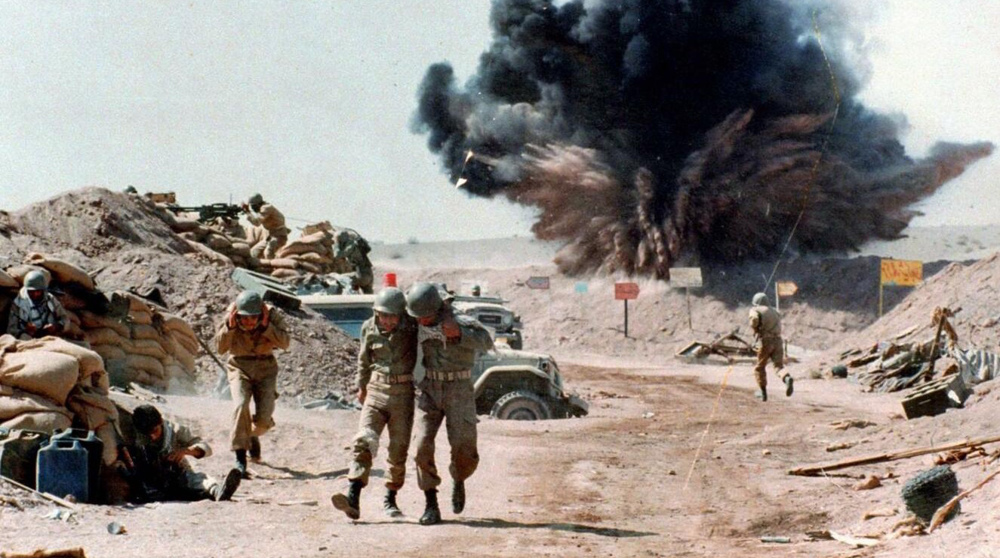
This comprehensive approach is rooted in historical experience, particularly lessons drawn from the Imposed War in the 1980s, which underscored the strategic necessity of layered, resilient, and wide-area radar coverage.
'No radar evading aircraft can escape Alborz, a new Iranian radar': Iran's Air Defense
— Press TV 🔻 (@PressTV) September 1, 2021
Press TV's Yusef Jalali reports from Tehran pic.twitter.com/X0MAV4JiAF
Iranian radar systems
Subjected to decades of Western sanctions, Iran has sought to transform external pressure into technological self-reliance, developing a broad spectrum of indigenous radar systems. This portfolio includes fixed and mobile platforms, over-the-horizon (OTH) systems, early-warning radars, search radars, and fire-control radars, together designed to provide 360-degree airspace coverage.
Developments through 2026, particularly the integration of artificial intelligence (AI) and passive detection technologies, have further enhanced automation, target discrimination, and network resilience. Some of the most significant systems are outlined below.
Sepehr Radar
The Sepehr is a long-range over-the-horizon (OTH) radar capable of monitoring targets at distances exceeding 3,000 kilometers. Operating in the HF/VHF bands, it is designed to detect high-altitude targets at extended ranges by exploiting ionospheric wave reflection, thereby overcoming the line-of-sight limitations of conventional radar networks.
As a fixed installation with extensive coverage, it is intended to monitor wide geographic areas, including parts of the West Asia region and beyond. The system is described as capable of detecting ballistic missiles, long-range aircraft, drones, and certain low-observable targets.
Matla-ul-Fajr Radar Series
The Matla-ul-Fajr family comprises three-dimensional VHF early-warning radars, with versions 1, 2, and 3 representing progressive upgrades. The third generation reportedly offers a detection range of up to 500 kilometers and altitude coverage of approximately 20 kilometers.
Mounted on mobile truck platforms and built with solid-state technology, these radars are designed for resistance to electronic warfare and for detecting low-altitude, drone, and potentially low-observable targets.
During recent regional tensions, the system has been described as contributing to early-warning functions. Newer variants are reported to incorporate AI-assisted data processing for improved tracking and threat assessment.
Najm-802 Radar
The Najm-802 is described as one of Iran’s early Active Electronically Scanned Array (AESA) radars, operating in the X-band with an estimated range of 150–200 kilometers.
As a three-dimensional radar, it is integrated with air defense systems such as Bavar-373 and Khordad-15 for fire-control and engagement support. The system is said to be mobile, capable of tracking multiple targets simultaneously, and designed with electronic counter-countermeasure (ECCM) features to enhance resistance to jamming.
Ghadir Radar
The Ghadir is another long-range radar system, often described as an OTH-capable VHF-band installation with coverage reportedly ranging between 1,100 and 1,600 kilometers and altitude detection up to 300 kilometers.
With claimed 360-degree coverage, it forms part of the broader national air defense network. Public descriptions suggest it is intended for detecting ballistic missile launches, aircraft, and potentially objects in near-space. It is also said to incorporate protective measures against electronic interference.
Leader: US won't be able to destroy Islamic Republic@iammoeen14 reports from Tehran.
— Press TV 🔻 (@PressTV) February 18, 2026
Follow: https://t.co/mLGcUTSA3Q pic.twitter.com/VFX4n63Cao
Fath-14 Radar
The Fath-14 is characterized as a mobile VHF early-warning radar with a reported range of approximately 600 kilometers. Designed for high-altitude targets and cruise missiles, it is built with solid-state components and integrated into the national air defense network.
The system is described as capable of tracking smaller aerial targets, including unmanned systems, and has reportedly undergone upgrades to improve accuracy and electronic warfare resilience.
Meraj-4 Radar
Unveiled in 2014, the Meraj-4 is a three-dimensional S-band AESA radar developed by Iran Electronics Industries (IEI). With medium-range detection capability and a reported bandwidth of 250 MHz, it is designed to track multiple aerial targets simultaneously.
The radar has been described as compatible with air defense systems such as the S-300 and as possessing significant resistance to electronic jamming.
Bahman Passive Radar
The Bahman represents a newer generation of passive radar systems. Unlike conventional radars, passive systems do not emit detectable signals but instead rely on reflections from existing electromagnetic sources.
The Bahman radar is reportedly capable of detecting conventional aircraft at distances of around 160 kilometers and lower-observable targets at shorter ranges. Its passive nature enhances survivability against anti-radiation missiles and reduces detectability. The system is described as mobile and capable of tracking multiple targets simultaneously.
Keyhan Radar
The Keyhan radar is presented as a multi-purpose phased-array system with long-range detection capability, up to 3,000 kilometers.
Public accounts suggest it incorporates AESA technology and AI-enabled automation for improved resistance to electronic and cyber warfare. It is often portrayed as representative of Iran’s projected radar advancements for the 2025–2026 period.
In addition to the systems above, Iran has developed or unveiled several other radar platforms, including:
- Arash-2 (optimized for stealth detection at ranges up to 400 km)
- Kashef (a mobile radar with an approximate 150 km range)
- Alim
- Asr (naval radar)
- Bashir (approximately 350 km range)
- Cheshm-e-Oghab (optimized for drone surveillance)
- Falaq
- Ghamar (three-dimensional radar)
- Melli (described as an early domestic radar with a 450 km range)
- Persian Gulf (associated with the detection of low-observable targets)
Many of these systems emphasize mobility to enhance survivability and rapid redeployment in contested environments. Collectively, they are described as being integrated through a national datalink architecture that enables overlapping early-warning and fire-control coverage.
This layered approach is intended to enhance redundancy, resilience, and comprehensive situational awareness across Iran’s air defense network, with some observers drawing comparisons to foreign systems such as the Rezonans-NE.
Iran issues a stern warning against any possible military aggression, saying that in the case of a military attack, all the enemy’s bases in the region will be legitimate targets.
— Press TV 🔻 (@PressTV) February 20, 2026
Follow: https://t.co/mLGcUTS2ei pic.twitter.com/Xf3OuhLSVi
Use of radars in the 12-Day War: First blows and survival of mobiles.
In the early hours of June 13, 2025, the Zionist regime launched coordinated cyber, aerial, and missile strikes against several fixed early-warning radar installations in western Iran.
Described as part of a broader suppression strategy, supported by US intelligence, the unprovoked and illegal aggression aimed to degrade Iran’s air defense network by targeting key surveillance nodes at the outset.
Among the targets was the Subashi radar site, regarded as one of the country’s major early-warning facilities, along with certain fixed installations associated with the Ghadir radar network. The strikes temporarily created localized coverage gaps, enabling the limited penetration of advanced aircraft, including F-35 fighters, as well as unmanned systems. While infrastructure damage was reported, its overall extent remains subject to differing assessments.
In response, Iran relied heavily on its mobile radar assets to restore situational awareness. Systems such as the Matla-ul-Fajr series, Najm, Fath-14, and the passive Bahman radar were repositioned rapidly to compensate for damaged fixed sites.
Their mobility, network integration, and hardened communication links allowed them to survive initial strikes and continue providing early-warning data. These platforms were also described as supporting missile defense coordination by supplying targeting information to the broader air defense architecture.
Cyber operations were likewise reported during the war. However, Iranian sources indicate that encrypted communications, decentralized command structures, and the use of passive detection technologies helped mitigate the impact of electronic and cyber warfare efforts.
Sea-based radar platforms, including the Asr naval radar, played an additional role by maintaining surveillance over the Persian Gulf and contributing to maritime domain awareness, thereby reducing vulnerability to potential naval threats.
Overall, the 12-Day War underscored the operational importance of mobility, redundancy, and network integration in modern radar strategy.
The war of aggression that ended with the Israeli regime calling for a ceasefire highlighted that radar systems are not only the “eyes” of national defense but also among the primary targets in contemporary high-intensity warfare, reinforcing the strategic need for layered, resilient, and adaptable surveillance architectures.
Lessons from the 12-Day War to radar domain
The 12-Day War served as a real-world laboratory for the country’s armed forces, particularly in the domain of radar and air defense.
By examining operational setbacks and successes, alongside comparisons with recent wars such as the war in Ukraine and regional engagements involving Yemen, Iran has reportedly drawn lessons to guide modernization efforts through 2026.
Lesson One: The necessity of radar mobility
One of the clearest operational conclusions was the vulnerability of fixed radar installations. Initial strikes reportedly focused on stationary early-warning systems, demonstrating that even advanced fixed platforms can be neutralized through precision attacks.
As a result, maximum mobility has emerged as a strategic priority. Truck-mounted systems such as the Matla-ul-Fajr series, which can be redeployed within hours, proved more survivable and capable of maintaining continuous coverage.
Expanding mobile radar fleets, equipped with hardened navigation systems, jam-resistant positioning technologies, and rapid deployment logistics, enhances resilience and complicates enemy targeting.
Additionally, combining mobility with camouflage, deception tactics, and decoy emitters can impose higher operational costs on adversaries. These measures reinforce asymmetric deterrence and echo lessons learned during the Iran–Iraq War, when survivability and dispersal were critical.
During the 'Smart Control' naval drill in the Strait of Hormuz, Iran successfully test-fired its first sea-based Sayyad-3G air defense missile from the Shahid Sayyad Shirazi vessel, giving its navy a 150-km air defense range.
— Press TV 🔻 (@PressTV) February 21, 2026
Follow: https://t.co/B3zXG73Jym pic.twitter.com/LVYN920gc8
Lesson Two: Imperative of airborne early warning system (AWACS)
Iran’s geography presents inherent radar coverage challenges. The western regions and the Zagros mountain range create terrain-induced blind spots that limit the effectiveness of ground-based systems. During the war, such gaps were exploited for low-altitude penetration.
Airborne Warning and Control Systems (AWACS) could mitigate these limitations by providing elevated, wide-area surveillance and real-time target tracking.
Platforms such as the KJ-500 and KJ-2000 are often cited in open-source discussions as potential models due to their modern sensor suites and network-centric capabilities. Airborne systems extend detection range, reduce terrain masking, and improve coordination of both defensive and offensive operations.
For Iran, investing in airborne early-warning, whether through procurement, joint development, or indigenous adaptation, would significantly strengthen comprehensive airspace coverage and reduce vulnerabilities exposed during the 12-Day War.
Lesson Three: Network-centric warfare and advanced datalinks
The conflict underscored that isolated radar units are insufficient in modern warfare. Survivability and effectiveness increasingly depend on integrated, encrypted, and intelligent networks. Through secure datalinks and data fusion, multiple radar nodes can share information, compensate for damaged assets, and maintain situational awareness even when individual components are degraded.
Systems such as the Bavar-373 demonstrate the shift toward network-based defense architecture. Incorporating artificial intelligence into data processing can accelerate threat identification, predict trajectories, and shorten response times.
In this framework, the air defense network operates as a distributed and adaptive system, capable of absorbing losses while maintaining operational continuity.
Integration of satellite inputs and drone-based sensors further extends the network’s reach and resilience against electronic and cyber threats.
Lesson Four: The central role of electronic warfare (EW)
Electronic warfare emerged as a decisive yet less visible dimension of the conflict. EW capabilities can disrupt enemy radar, spoof navigation systems, and degrade communications. Reports indicate that Iranian radar networks faced electronic and cyber interference; however, countermeasures and indigenous EW systems helped mitigate operational impact.
The integration of EW directly into radar architecture—combining detection, jamming, deception, and electronic counter-countermeasures—creates layered protection. Future systems, including advanced phased-array platforms such as Keyhan, are expected to embed stronger cyber and EW defenses.
By treating electronic warfare as a core defensive layer rather than a supplementary tool, Iran can enhance asymmetric leverage, increase adversary uncertainty, and raise the operational cost of hostile actions.
Nearly two decades ago, in a recorded address, the architect of Iran’s missile program issued a stark warning to US: any act of aggression would be met with a decisive response.
— Press TV 🔻 (@PressTV) February 21, 2026
Now imagine how far Iran’s capabilities have advanced in 20 years since that message was delivered. pic.twitter.com/QNapalZ85U
Additional strategic insights
Beyond these four primary lessons, the war highlighted several broader imperatives:
- Artificial Intelligence integration: AI-driven analysis enhances threat prediction, target prioritization, and automated response.
- Expansion of passive radar systems: Platforms such as Bahman reduce vulnerability by avoiding active emissions.
- International technological cooperation: Engagement with partners such as China and Russia, including reference systems like the HQ-9 and S-400 missile system, may support reconstruction, upgrades, and knowledge transfer.
- Human capital and training: Continuous simulation, operational drills, and technical specialization remain essential to maximizing system effectiveness.
In sum, the 12-Day War reinforced the principle that radar and air defense systems must be mobile, integrated, intelligent, and electronically resilient.
By incorporating these lessons into modernization efforts through 2026, Iran seeks to build a more adaptive and comprehensive air defense posture capable of addressing evolving threats.
Summary: A Radar Defense Bright Future in Iran.
Iran’s radar defense systems symbolize the resilient and undefeated spirit of the Islamic Republic’s resistance. In standing against Western imperialism and the Zionist regime, Iran relies on indigenous expertise to safeguard its skies and assert its sovereignty.
The 12-Day War, though devastating, demonstrated the strength of Iran’s deterrence capability. It imposed strategic setbacks on its adversaries while offering valuable lessons for further development and refinement.
Through full mobilization, investment in AWACS capabilities, the advancement of network-centric warfare, the integration of electronic warfare systems, and the enhancement of artificial intelligence, Iran’s airspace has the potential to become increasingly secure and resilient.
These advancements not only reinforce national security but also serve as a source of inspiration for regional movements aligned with Iran, illustrating how a nation under pressure can transform itself into a formidable power.
The future, it can be argued, belongs to countries that confront coercion with indigenous knowledge, technological innovation, and unwavering determination – and Iran seeks to position itself at the forefront of that trajectory.
By continuing to invest in research and development, Iran aims not only to counter existing threats but also to prepare for emerging challenges, including cyber warfare and the evolving domain of artificial intelligence.
Mohammad Molaei is a Tehran-based military affairs analyst.

Iran ready to counter mischievous acts with ‘eyes open, fingers on trigger’: IRGC general

How Iran turned battlefield gains and regional power into strategic postwar leverage against US
June 13: Ayatollah Khamenei's funeral ceremonies announced as war-ending deal nears finalization



VIDEO | Karachi marks passing anniversary of Imam Khomeini with tribute to resistance legacy
Israeli attack on Beirut shows US lacks will or ability to meet commitments: Qalibaf
Iran to replace all air defense equipment damaged in US-Israeli aggression: Commander
Dozens of terrorists, spies and saboteurs arrested during US-Israeli aggression on Iran
Israel bombs southern Beirut again; Iran warns against ‘miscalculations’
VIDEO | Colombia has one week left to decide its future in presidential runoff
Araghchi: Recent war proved regional security can’t be built without Iran
How Iran outranks Germany, Canada, Japan in drinking water quality





 PressTV NEWSLETTER
now
PressTV NEWSLETTER
now
 This makes it easy to access the Press TV website
