End of 'tit-for-tat' era: Iran’s broad, asymmetric response to US attacks redraws deterrence equation
By Press TV Strategic Analysis Desk
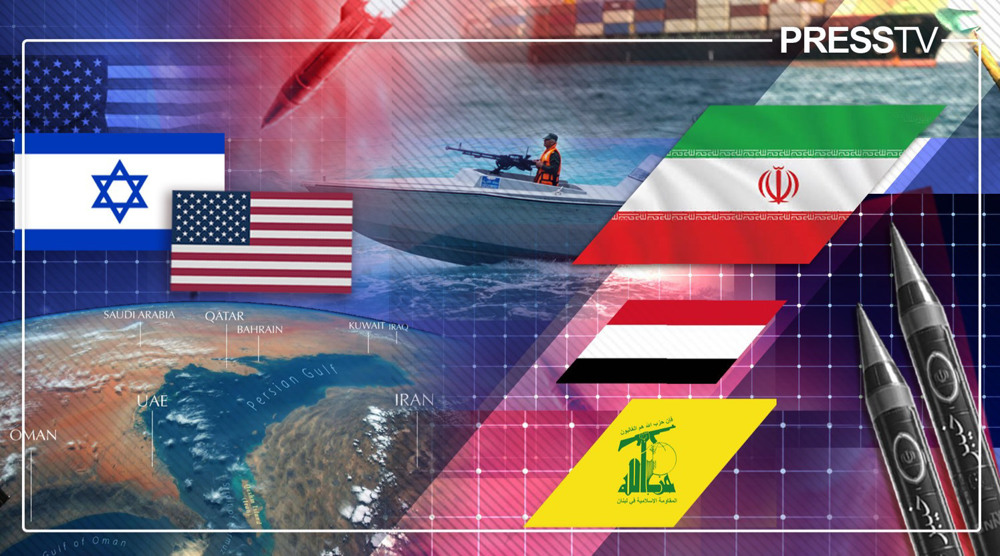
For far too long, a grim and predictable choreography governed the US shadow war in the Persian Gulf: an act of American provocation, a measured Iranian response, and an escalation contained by unspoken rules.
That era has now effectively ended, and Wednesday's events in the strategic waterway drove the point home with unmistakable clarity.
After the US Navy targeted an Iranian oil tanker in the Strait of Hormuz and struck a communications tower on Qeshm Island in the early hours of Wednesday, the response from the Iranian armed forces defied all expectations.
It was broader, faster, and strategically asymmetric – firing not just at the vessel involved in the aggression but simultaneously hammering hostile targets across five allied countries. This was no mere retaliation but a fundamental reset of the operational equation.
Iran's message, delivered with unmistakable clarity, is that the old "tit-for-tat" or "run-and-run" paradigm has expired. The assumption that Tehran would sit idle or mirror the scale and location of any American provocation – a ship for a ship, a tower for a tower – has been permanently invalidated, tossed onto the ash heap of failed calculations.
This reflects a broader strategic signal that the Iranian armed forces stand fully prepared for any escalation scenario, while simultaneously reinforcing the cohesion and battle-readiness of the Axis of Resistance in confronting threats – from Iran to Lebanon.
Iran has now unveiled a new doctrine of qualitative asymmetry, under which the volume, type, and target of its response will no longer be chained to the enemy's original action. This shift is not a tactical adjustment but a strategic earthquake. By severing the reflexive link between aggression and response, Iran has thrown the US war machine's escalation calculus into complete disarray, as demonstrated on Wednesday.
Washington can no longer assume that a limited harassment will yield a limited response – or any response at all. The Iranian calculus now means any act of aggression from the enemy, however limited in scope, may trigger a response that knows no limits.
This is the operationalization of a core strategic principle: the removal of the option of military aggression from the enemy's table. By responding with overwhelming and unpredictable force, Iran is rendering the option of war profoundly unappealing.
When the enemy understands that a minor provocation could result in the simultaneous targeting of multiple allied sites, the cost-benefit analysis of aggression collapses into ruin.
Iran has fully demonstrated that it no longer fears crossing thresholds that once defined the brink of war. Having emerged victorious from the most unequal of wars, the Islamic Republic has internalized a grim, unshakable confidence: if war is imposed on it, it will fight with every ounce of its might. But more importantly, it has now proven it can deter decisively and emerge stronger on the other side.
✍️ Analysis: Israeli escalation in Lebanon and US adventurism in Persian Gulf test Iran's ceasefire red lines
— Press TV 🔻 (@PressTV) June 1, 2026
By Press TV Strategic Analysis Deskhttps://t.co/StXHpttO4C pic.twitter.com/KHsbbkfYMl
Profound implications for any military adventurism
The implications for any future American miscalculation are nothing short of seismic. For months, conflicting signals emanated from within Iran – whispers that negotiation and compromise at any cost were the only paths to relief from sanctions. Such narratives fed a dangerous illusion in Washington that maximum pressure would eventually force Tehran to capitulate and accept American terms of the deal.
Wednesday's events effectively torched that illusion, reducing it to cinders. Iran demonstrated that decisive and swift resistance remains not just viable, but a fully valid and legitimate option. The choice is not between compromise or war, but between measured deterrence and catastrophic miscalculation.
By refusing to behave as a pressure-breakable state, Iran has forced the US military-industrial complex to rethink whether its harassment campaigns are worth the price.
Perhaps most critically, Iran has expanded the geographical canvas of its retaliatory actions. In response to an attack on a vessel's engine and a communications tower, Tehran did not limit itself to maritime targets. It struck land-based facilities in five countries allied with the United States – simultaneously, precisely, and without apology. The message is unmistakable: no point on enemy-aligned territory is safe anymore.
This represents a significant expansion of Iran's operational theater, a widening of the battlefield that Washington ignored at its peril. The old "vessel-for-vessel" policy had already evolved into "vessel-for-vessel plus point of origin of aggression." Now, it has transformed again, decisively and irrevocably: potential and actual points of aggression – anywhere in the region, anytime, without warning – are legitimate targets. And the list is extensible.
If unprovoked hostilities against Iran continue, locations deep inside the occupied territories could also be included on the potential target list.
This is not a threat of indiscriminate war but a sacrosanct promise of calibrated, strategic pain directed at every sanctuary from which the enemy operates. Every base, every allied capital, every logistical hub now lives under the shadow of Iranian military arithmetic.
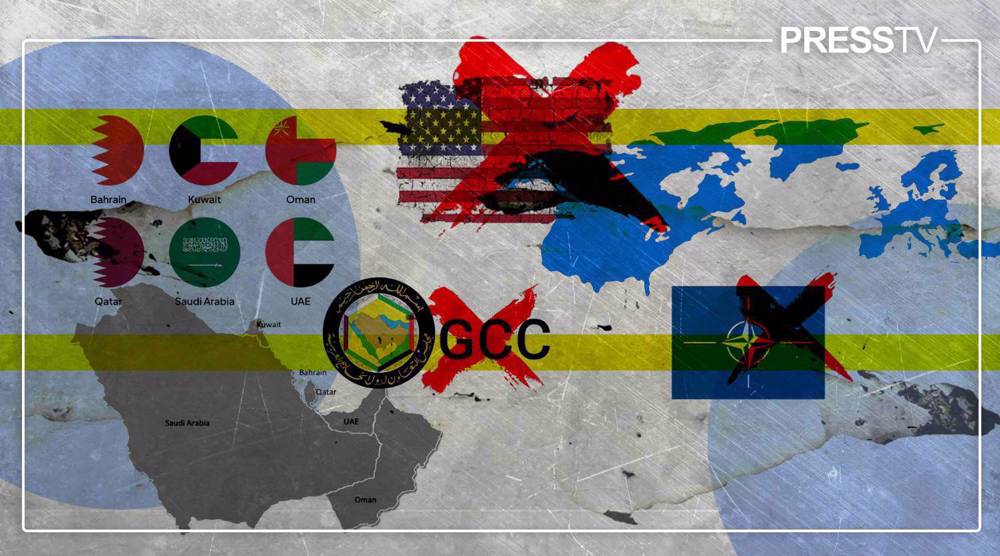
For the Persian Gulf states hosting US military bases, the message is particularly chilling. Iran has long tolerated the presence of American soldiers on the soil of its neighbors, provided those arrangements were not directed against Iranian security.
Iran's decisive operation sent an unambiguous warning: as long as even one American soldier remains on your soil, and as long as American threats against Iran persist, your territory is not secure. Military agreements with third parties are respected only if they remain strictly neutral in Iran's confrontation with the American war machine. The moment they become launch pads for aggression, they become legitimate targets.
But Iran has gone a step further. It has linked economic security to military security in a single, terrifying equation. A new doctrine has been declared: "economy for economy and security for security." If the US continues its economic warfare against Iran, the economies of regional countries that partner with the enemy will also be threatened.
Iran is signaling, with absolute clarity, that it will no longer compartmentalize its responses. A US economic strike can and will be met with a response that directly disrupts the economic stability of America's regional allies. Their ports, their shipping lanes, their energy infrastructure, and their financial corridors are now variables in Iranian retaliation.
The days when Persian Gulf states could enjoy American security guarantees while passively – or actively – profiting from anti-Iran sanctions are over.
Iran is forcing them to internalize a stark, unforgiving choice: true neutrality, or shared vulnerability. There is no third option and no middle ground.
✍️ Analysis - Beirut retreat: Credible Iranian deterrence ends US-Israeli impunity to escalate unchecked
— Press TV 🔻 (@PressTV) June 2, 2026
By Press TV Strategic Analysis Deskhttps://t.co/S154GN9KYJ
Axis of Resistance: From parallel warnings to unified field response
No analysis of Iran's firm posture is complete without understanding the synchronized choreography of the broader Axis of Resistance. To view Tehran in isolation is to miss the entire picture, and the same goes with Hezbollah and Yemen.
Just two days before Iran's response to US maritime aggression, the Khatam al-Anbiya Headquarters, the central command center of the Iranian armed forces, issued a strong warning to both the Zionist regime and the United States following threats of aggression against Beirut and its suburbs. That warning was no routine communiqué. In retrospect, it was the prelude to a coordinated, unified operation already set in motion.
The Axis of Resistance – Iran, Hezbollah in Lebanon, the Ansarullah-led Yemeni armed forces, and other components – does not rush to exhaust all its tools. It deploys them strategically, layer by layer, with patience and precision. But with the continuation of Zionist crimes in Lebanon and the implicit cooperation of the governing authority there, the Axis has determined that the time for layered warnings has passed.
Other components, beyond Iran, are now entering the field to support Lebanon. This is not a symbolic gesture but a functional military alignment
The simultaneous statements by the commander of the Islamic Revolution Guards Corps (IRGC) Quds Force and the Yemeni armed forces laid out the new map of resistance. The warning was explicit, leaving no room for doubt: if Zionist aggression continues in Gaza and Lebanon, new options will be activated immediately, including control over the Bab al-Mandab Strait – one of the world's most critical chokepoints – alongside missile and drone responses from Yemen.
This is an open and unambiguous declaration of expanded geography, a gauntlet thrown at the feet of the enemy. The Axis has informed the enemy, in language it understands, that aggression against any part of this broad territory, from the Levant to the Arabian Peninsula, is considered an attack on the whole. The old divide between arenas has been erased, burned away by shared threat and unified purpose. A strike on Beirut can now trigger a blockade in the Red Sea. An attack on Dahiyeh can silence the Bab al-Mandab.
This coordinated warning also dismantles a dangerous enemy assumption, one that has guided Zionist strategy for years. The Zionist regime had apparently calculated that a threat to attack Beirut could be traded for the consolidation of occupation in southern Lebanon.
The thinking went, in its cold logic: offer a symbolic retreat from attacking Iran proper, and in exchange, maintain a permanent occupation of large southern areas. The Axis response has proven that assumption categorically false, smashing it to pieces. Neither the Lebanese resistance nor its Yemeni ally accepts such an equation.
There will be no deal that trades Beirut's safety for Lebanon's land. The only acceptable outcome is the end of aggression and the full cessation of occupation.
Perhaps the most immediate and telling effect of this unified posture has been on US decision-making, where paralysis has set in at the highest levels. Iran's recent warning alone was sufficient to push the country into paralysis.
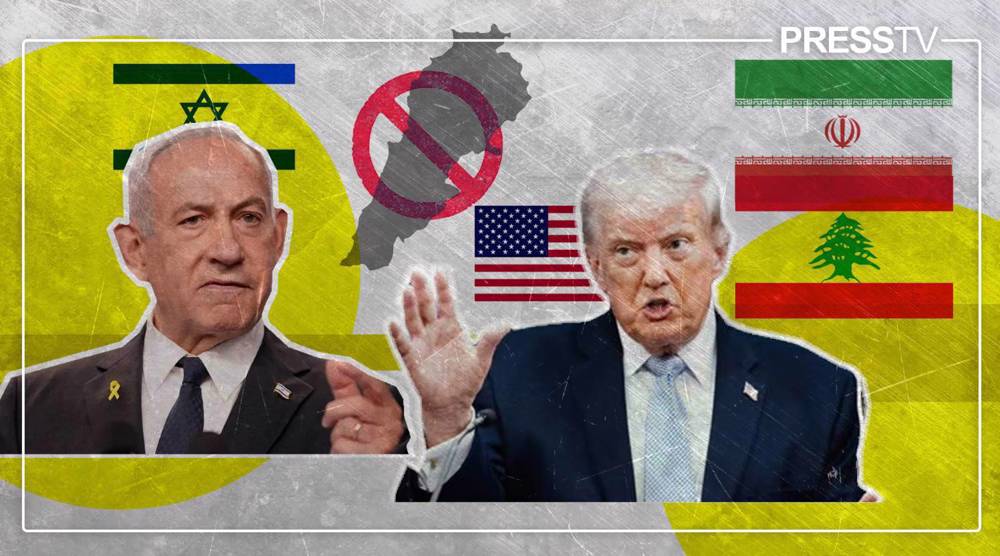
Reports indicate that President Donald Trump rebuked and asked Benjamin Netanyahu not to carry out the planned attack on Beirut, fully aware of the consequences. That is the power of credible, coordinated deterrence – not firepower, but the fear of it, precisely calibrated.
Now, with other Axis components openly threatening field responses, including from Yemen, Trump's negotiating position regarding ending the war with Iran has weakened considerably. The US war machine can no longer pressure Iran in isolation while assuming the rest of the Axis will remain passive, watching from the sidelines.
Those days are gone. The unified front has transformed the regional balance of power, shifting the center of gravity away from Washington and toward the Axis.
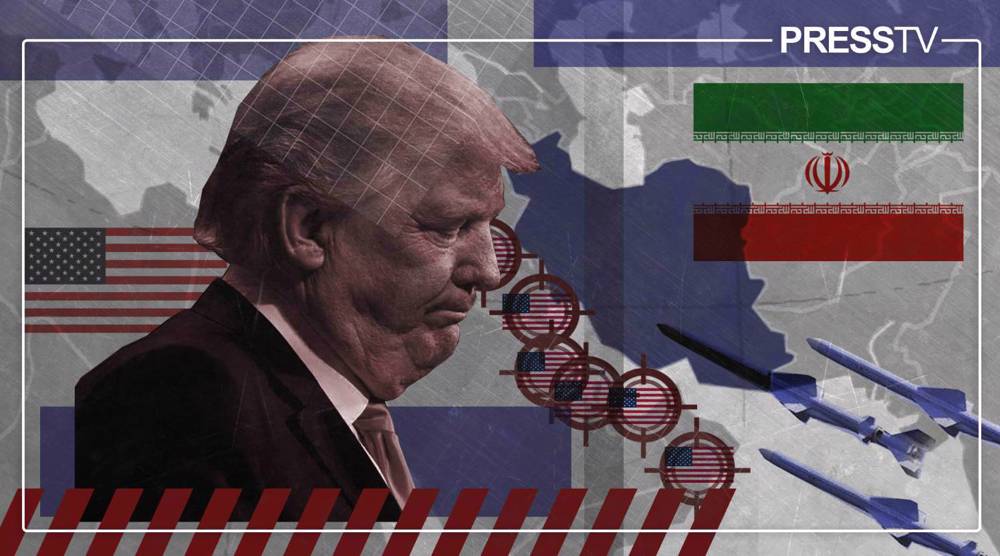
Mission unaccomplished – Part VI: US sought Iran’s surrender but got a new regional superpower
Contrary to enemy propaganda, Iran’s defense sector continues to make progress: Top general

Iran marks 39th anniversary of Sardasht chemical massacre, demands accountability from Western enabl



Lebanese parliament speaker vows to block US-brokered agreement with Israel
Iran, India have great potentials to expand relations: Pezeshkian
VIDEO | Access to cemeteries dwindles in Gaza as Israel expands control over land
Israel arrests US citizen on suspicion of contact with Iranian intelligence
Woman accusing Trump of sexual assault in Epstein case fears for her life, relative says
Iran team thanks Mexico, questions World Cup fairness in farewell message from Tijuana
VIDEO | Press TV's news headlines
Israel kills 8 Palestinians as Gaza death toll tops 73,000


 PressTV NEWSLETTER
now
PressTV NEWSLETTER
now
 This makes it easy to access the Press TV website
