AIPAC concealing support for candidates as its brand becomes 'toxic' in Democratic primaries: Report
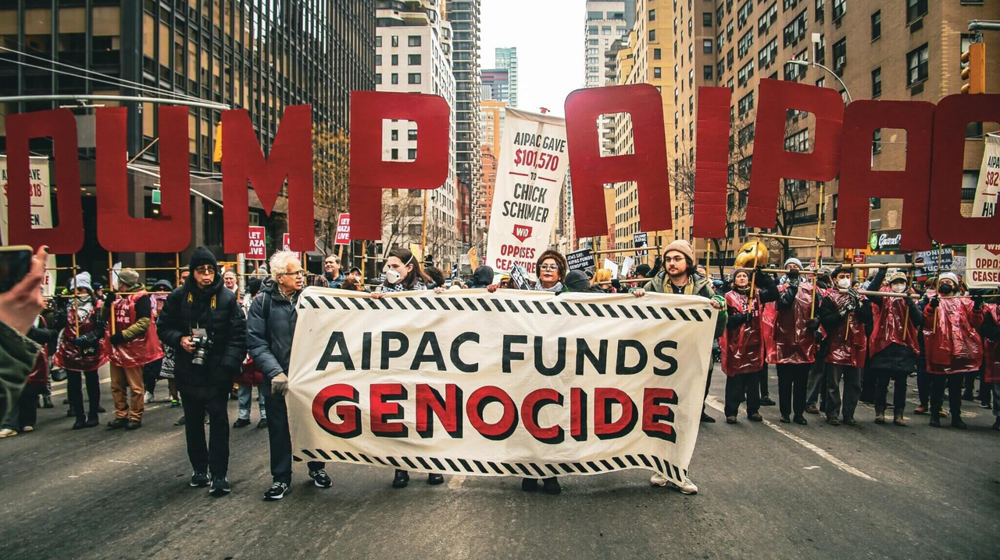
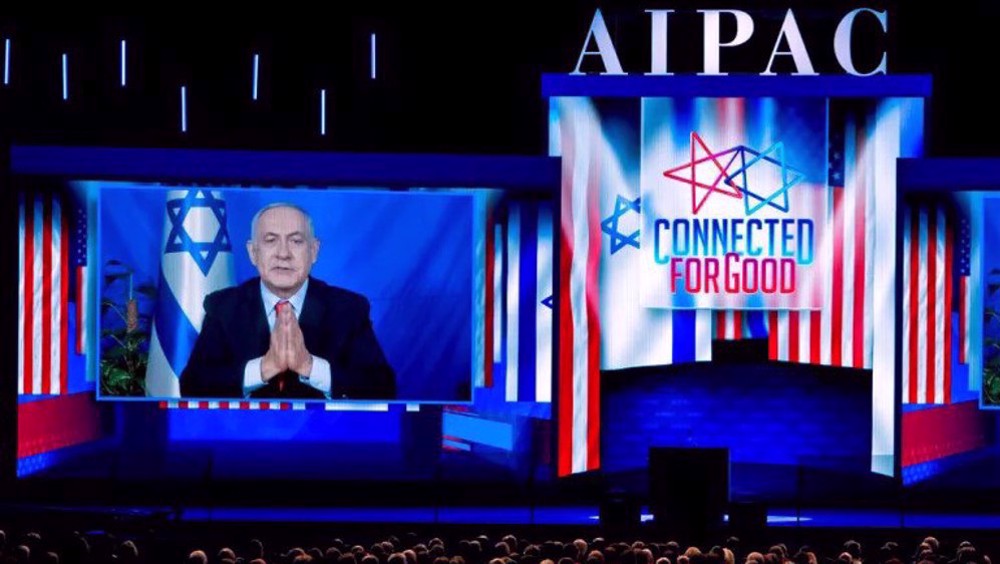
The pro-Israel lobbying group AIPAC has adopted fundraising methods that obscure its role in directing campaign contributions to political candidates, as support for the Israeli regime declines among Democratic voters in the United States, according to a report.
AIPAC has traditionally highlighted its success in helping elect candidates committed to supporting the regime, including backing billions of dollars in annual US military aid.
Reporting on Sunday, however, Israeli paper Ha'aretz said growing criticism of the regime among Democratic voters has made public association with the lobbying group a potential political liability.
Protests held in Washington as AIPAC holds annual meeting for 1st time since 2020@RaminMazaheri2 reports from Washington
— Press TV 🔻 (@PressTV) February 23, 2026
Follow: https://t.co/GKZwI4ePgj pic.twitter.com/vF048hch92
"But as the Israel-boosting organization's brand becomes toxic in many Democratic primaries, [AIPAC] has adopted a new fundraising method that hides its involvement in steering funds to favored contenders," it wrote.
According to the report, AIPAC has encouraged donors to contribute through online portals it controls that direct funds straight to candidates' campaigns, thereby "erasing AIPAC's fingerprints in public data."
The tactic was reportedly used in Michigan, where Congresswoman Haley Stevens is running for an open Senate seat against Abdul el-Sayed. During the campaign, el-Sayed criticized Stevens for accepting AIPAC-linked funding, saying the money had "bought" her support for continued US military aid for Tel Aviv.
The Detroit News reported that AIPAC raised several million dollars for Stevens through a fundraising page hosted on its website. Ha'aretz also said the group previously emailed donors directing them to candidate-specific donation pages on the "Pro-Israel Network" website rather than to AIPAC itself.
The report added that these portals allow AIPAC to gather donor information and share it with candidates, while working on their behalf and "shielding" the process from public view. According to Ha'aretz, the strategy helps candidates avoid criticism for accepting AIPAC support at a time when only 13 percent of Democratic voters reportedly view the regime favorably.
In March, Democratic Senator Ruben Gallego said, "I wouldn't take AIPAC money because you have to basically be endorsing what's happening right now, and it's not good."
Ha'aretz also reported that AIPAC has increasingly operated through political action committees whose names do not reference either the organization or the regime.
The issue has also surfaced among Republicans. Earlier this month, AIPAC spent $16 million in efforts to defeat Representative Thomas Massie, a prominent critic of Tel Aviv, in a Republican primary. Following his defeat, Massie said, "It's turned into a referendum on whether Israel gets to buy seats in Congress."
Young Republicans in US sour on Israel after wars on Gaza, Iran: Report

Trump sons stand to profit from US-Kazakhstan mining deal: US media

Hind Rajab Foundation lodges complaint with US Justice Department against Israeli minister



Venezuela earthquake death toll surpasses 1,700 as search efforts continue
US national pride lowest in two decades: Poll
Pentagon plans US ground troop deployment to force Hezbollah disarmament: Report
Over 90 countries declare readiness to attend funeral of martyred Leader
Mission unaccomplished – Part VII: US sought Iran's collapse but settled for reopening Hormuz Strait
Iran becomes world's 3rd producer of rapid gas detection kits, says knowledge-based firm
Iran monitors US compliance moment-by-moment, won’t implement MoU unilaterally: FM spox
Hezbollah MP blasts ‘sell-out’ government, says Lebanon central to any Iran-US deal



 PressTV NEWSLETTER
now
PressTV NEWSLETTER
now
 This makes it easy to access the Press TV website
