New US aviation sanctions reflect fury over Iran's rapid air recovery, official says
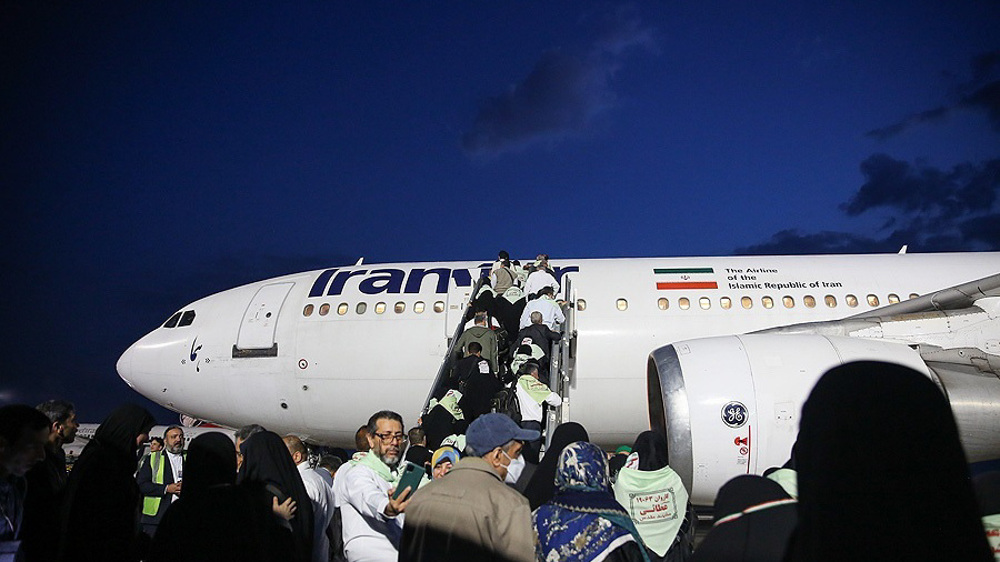
A senior Iranian aviation official has dismissed Washington's latest threats to ground Iranian airlines as a sign of American anger over Iran's swift rebuilding of its civil aviation sector following the US-Israeli aggression.
Seyed Hamidreza Sane'I, deputy head of the Civil Aviation Organization for international affairs, said on Friday that US Treasury Secretary Scott Bessent's announcement of new measures against Iranian carriers — including blocking landing rights, refueling access, and ticket sales — lacked the legal substance of a formal sanctions designation.
"This is the second time the Treasury Secretary has made such a claim, but no legal action, formal sanctions order, or binding decision containing the details of this matter has been seen beyond what he posted on X," Sane'i said.
“These positions appear to be more a sign of fury over the resumption of the country's air transport activity — despite extensive damage — than a legal and regulatory process," he said.
Bessent had posted on X that Washington would be "shutting down both Iranian airlines' access to landing spots, refueling, and ticket sales," without specifying which carriers or providing further details. Iran Air has previously been designated by the US State Department, and Mahan Air has also been sanctioned.
Sane'i said the repeated threats against civilian aviation — a public infrastructure used by ordinary Iranians — underscored the sector's critical role in the economy, the movement of essential cargo such as medicine and auto-industry components, and the travel needs of citizens.
The backdrop to Washington's pressure is a civil aviation sector that has staged a recovery faster than most outside analysts anticipated.
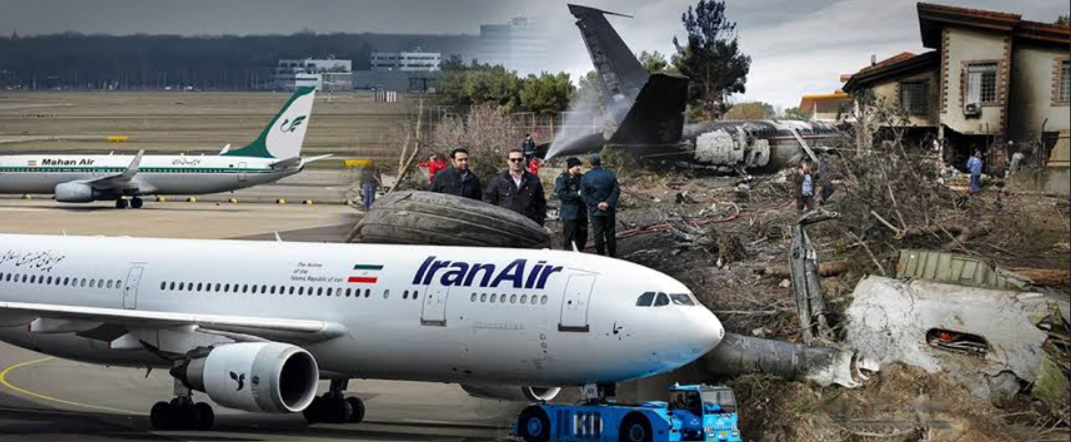
Iran's civilian airports suffered severe damage during the 40-day war. Mohammad Reza Rezaei-Kouchi, chairman of the Iranian parliament's Construction Committee, said in April that 10 passenger aircraft were destroyed and 50 others damaged in the US-Israeli attacks on civilian airports during the war, which began on February 28 and came to a halt on April 8 following a Pakistan-brokered ceasefire.
He added that some of the damaged planes are repairable and capable of returning to service. He said Iran was pursuing compensation directly from the aggressor states, while also corresponding with the International Civil Aviation Organization.
The US-Israeli aggressors’ military targeted civilian airports — control towers, runways, navigation systems, and ground communications — while such infrastructure is explicitly protected under international humanitarian law.
Yet within two months of the ceasefire, 21 airports — roughly 40 percent of Iran's civilian network — had returned to operation.
Tabriz International Airport, the country's third-busiest international gateway and the most heavily damaged, resumed flights Wednesday after direct missile strikes destroyed its control tower and parts of its main runway.
Its reopening was achieved entirely through domestic engineering, without foreign equipment or personnel — a reflection of decades of forced self-sufficiency under sanctions that had already pushed Iran to produce navigation aids, radar components, and communications systems locally.
The reconstruction followed a deliberate sequence: eastern airports farthest from the war theater came first, restoring overflight revenue from corridors linking Iran to neighboring countries. Airports in the center and west followed. Isfahan, Shiraz, and Yazd run 24-hour schedules to handle returning Hajj pilgrims while western repair teams worked in parallel.
Tabriz now resumes domestic routes to Tehran, Mashhad, Kish, Shiraz, Isfahan, and Kerman, and international services to Istanbul, Baghdad, Dubai, Baku, and Hamburg are being reinstated in phases. Talks with foreign carriers on restoring overflights to Iranian airspace have begun.

Iran, Pakistan forge blueprint for Islamic economic integration
US Treasury issues waiver for Iranian oil exports under Islamabad MoU
Super-sized drilling rig installed at Iranian offshore oilfield



Hezbollah MP blasts ‘sell-out’ government, says Lebanon central to any Iran-US deal
Israeli army demolishes buildings across Gaza as ceasefire violations continue
VIDEO | Press TV's news headlines
VIDEO | Thousands displaced by earthquake in Venezuela receive temporary shelters
Iran will respond decisively to any ceasefire violation: Acting defense minister
Trump criticized Spain for not meeting NATO spending targets
Arab League, Arab Parliament condemn repeated Israeli attacks on Syria
Management of Strait of Hormuz solely Iran’s responsibility: Senior MP


 PressTV NEWSLETTER
now
PressTV NEWSLETTER
now
 This makes it easy to access the Press TV website
