Trump revives tensions with China, declares intent to talk to Taiwan leader
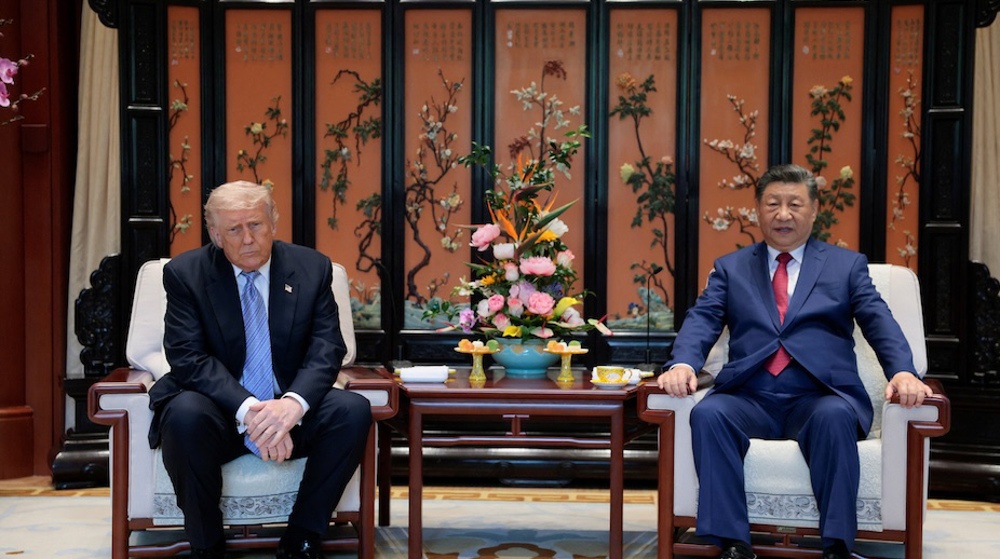
US President Donald Trump has again signaled his intention to speak directly with the leader of Chinese Taipei (Taiwan), reviving a provocative break from decades-old diplomatic norms and risking fresh tensions with China over the Taiwan issue.
Trump said on Wednesday that he plans to speak with Taiwan President Lai Ching-te, openly challenging the diplomatic practice observed since Washington shifted official recognition from Taipei to Beijing in 1979.
Speaking to reporters before boarding Air Force One in Maryland, Trump emphasized that he would “speak to him,” adding, “I speak to everybody … We’ll work on that, the Taiwan problem.”
Taiwan’s foreign ministry later responded that Lai would welcome such a conversation.
China claims sovereignty over Taiwan, and under the “One China” policy, almost all countries, including the United States, acknowledge that position.
No sitting US president has held direct talks with a Taiwanese leader since diplomatic ties were transferred to China nearly half a century ago. Trump, however, disrupted that framework in late 2016 when, as president-elect, he spoke with then - Taiwan leader Tsai Ing-wen, provoking sharp objections from Beijing.
At the time, Trump’s transition team attempted to downplay the significance of the exchange after China formally protested to Washington.
Trump’s latest remarks mark the second time within a week that he has publicly stated his intention to speak with Lai, undermining suggestions that his earlier comment, made after talks with Chinese President Xi Jinping, had been accidental or a verbal slip.
US approves record $11.1 billion arms package for Taiwan https://t.co/OcZggD7Hsi
— Press TV 🔻 (@PressTV) December 18, 2025
Members of the Trump administration have repeatedly noted that he authorized more arms sales to Taiwan than any previous US president, even as Trump himself described future weapons deals as a “very good negotiating chip,” reinforcing criticism that Washington treats the Taiwan issue as leverage in its broader confrontation with China.
Meanwhile, Chinese officials have consistently stressed that Taiwan remains a domestic issue and condemned all military cooperation between Taipei and Washington.
For years, successive US administrations have armed Taipei, emboldening separatist forces. Under Trump, Washington approved a large-scale weapons package for the island.
Beijing has repeatedly warned that foreign interference and separatist moves by Taipei threaten regional stability. It has also emphasized that it will never allow anyone, in any form, to separate Taiwan from China, nor permit any external forces to obstruct China's reunification.
Xi warns Trump: US meddling in Chinese Taipei risks major conflicthttps://t.co/WjmDOcg5c7
— Press TV 🔻 (@PressTV) May 14, 2026
Last week, the Chinese president cautioned the visiting Trump against Washington’s “mishandling” of the issue of Chinese Taipei, warning that improper US actions could trigger serious tensions in bilateral relations and potentially put the two powers on a collision course.
“If it is handled properly, the bilateral relationship will enjoy overall stability. Otherwise, the two countries will have clashes and even conflicts, putting the entire relationship in great danger,” Xi stressed at the time.
The Chinese leader also reaffirmed that the Taiwan question remains “the most important issue in China–US relations,” underscoring that Chinese Taipei has always been an inseparable part of China.
US nuclear propaganda, designed to justify endless aggression against Iran, lies shredded
Iraqi resistance caused collision of US tankers during war on Iran: Report
Italian naval deployment to Hormuz


Armed Forces stand ready to counter any invasion of Iran: IRGC Navy
Israeli ambassadors summoned globally after hawkish minister threatens activists on Gaza flotilla
Trump revives tensions with China, declares intent to talk to Taiwan leader
Iran pursuing talks ‘in good faith’ but views US with ‘deep suspicion’: FM spox
Iran urges UNSC to break silence on US threats, war crimes
Senior US intelligence official steps down from two administration roles: Report
Gaza-bound Global Sumud Flotilla accelerated Israel's demise: Quds Force cmdr.
May 20: Iran warns against any new aggression as Pakistan ramps up diplomacy to end the war


 PressTV NEWSLETTER
now
PressTV NEWSLETTER
now
 This makes it easy to access the Press TV website
