Over 1,000 scientists urge protection for Iranian universities from US-Israeli strikes
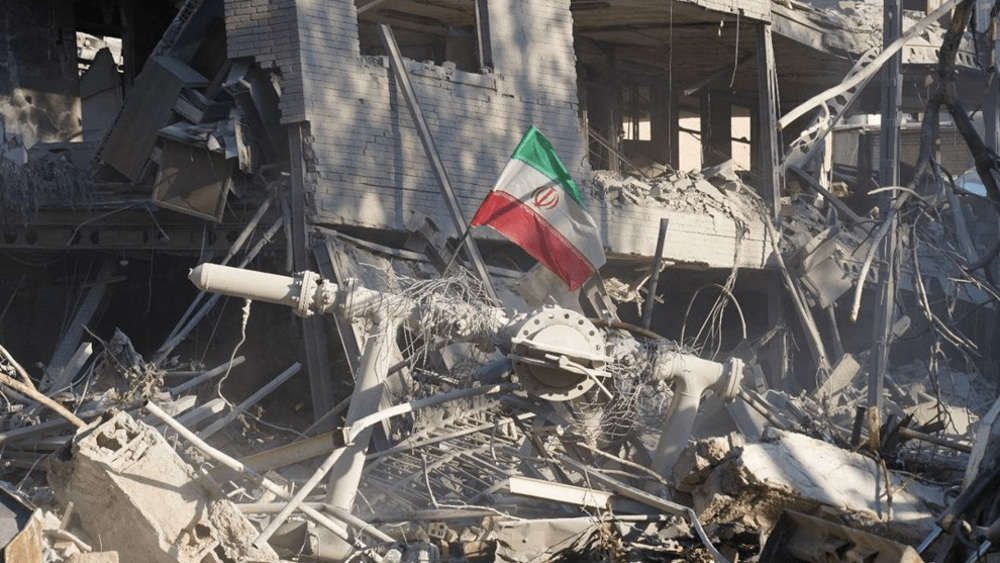
Over 1,000 scientists from around the world have signed an open letter expressing "grave concern" over at least 21 attacks that have damaged Iranian scientific institutions during the "unprovoked USA-Israel's aggression on Iran."
The letter, addressed to the UN Secretary-General, the Director-General of UNESCO, and the UN High Commissioner for Human Rights, condemned strikes on Isfahan University of Technology, Iran University of Science and Technology, and Amirkabir University of Technology in Tehran, carried out between March 28 and March 30.
"In another strike on March 31, one of Iran's largest pharmaceutical R&D centers, Tofiq Daru, a major producer of anesthetics and treatments for MS and cancer, was targeted and severely damaged," the letter said.
Additional attacks were carried out later. On April 3, parts of Shahid Beheshti University in Tehran—including the Laser and Plasma Research Institute—were severely damaged.
On April 6, Sharif University of Technology was attacked, causing severe damage to the Faculty of Civil Engineering, the Department of Philosophy of Science, the Nano and Environmental Research Institutes, the Convergent Research Institute building, and the Faculty of Electrical Engineering, among other facilities.
Throughout the unlawful aggression, the Faculty of Pharmacy at Shiraz University and the Veterinary Specialized Hospital Campus at Urmia University were also hit.
The American-Israeli war of aggression against Iran involved bombing multiple civilian targets, according to the signatories.
"Scientific and educational institutions are civilian spaces essential to public health, knowledge, and human survival," the letter stated.
"Their destruction endangers researchers, students, medical personnel, and the broader public, while causing lasting harm to science and society."
The letter called on all parties to immediately cease attacks on civilian scientific and educational sites, including laboratories, universities, hospitals, research centers, libraries, and archives.
It further urged the UN, UNESCO, and relevant international bodies to document damage to these institutions, protect affected scholars and students, and support independent investigations into violations of international humanitarian law.
"Those responsible for unlawful attacks on protected civilian sites must be identified and held accountable through impartial legal mechanisms," the letter said.
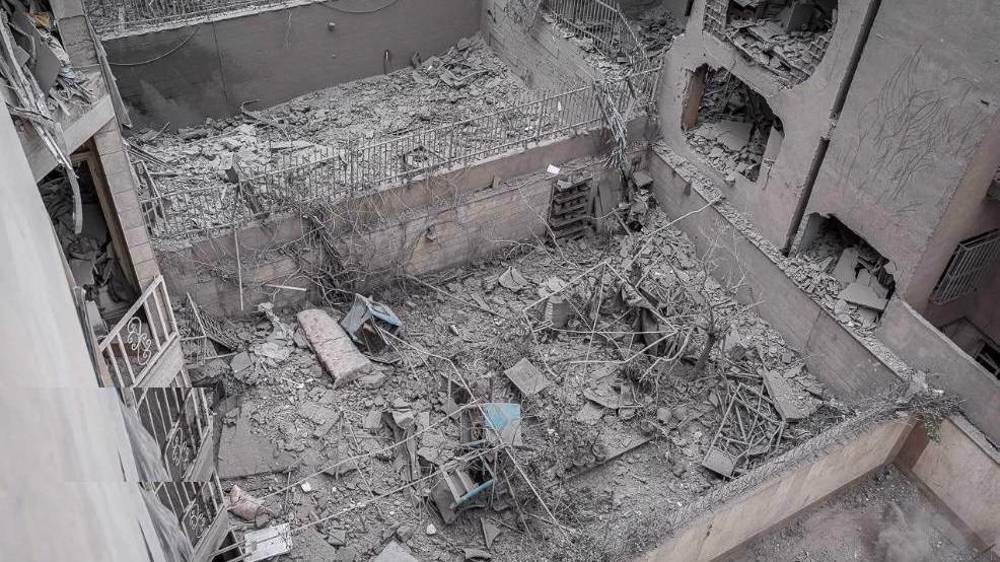
Among the signatories are two Nobel Prize laureates from Norway, a prominent British physicist, and a colleague of Dr. Masoud Ali-Mohammadi, an Iranian nuclear scientist who was assassinated by the Israeli regime in early 2010.
May-Britt Moser, a Norwegian Nobel Laureate, said: "As a professor and Nobel Laureate I am shocked and saddened by what is happening in Iran."
John Ellis, a British physicist who said he knows several universities in the region including Iranian, American, and Israeli institutions, described the attacks on civilian universities as "unconscionable."
Werner Nahm, a colleague of Dr. Ali-Mohammadi, noted that the 2010 killing and similar incidents had been discussed in academic literature without naming Israel.
"In hindsight, we should have reacted much more strongly," Nahm said. "When such killings become routine, non-virtual conferences and other free encounters of scientists will become impossible, to the detriment of all of mankind."
As of April 9, the open letter had been signed by more than 1,000 scientists, including two Nobel Laureates and a Dirac Medalist.
The letter noted that at the time of publication, only the initial institutions were mentioned as affected, but since then many more have been added, including the Pasteur Institute of Iran and Sharif University of Technology.
"We urge the international community to act now to protect scientific infrastructure, defend academic life, and uphold the principle that knowledge-serving institutions must never be treated as expendable in war," the letter said.
Science is not a military target, the signatories emphasized. "Universities and laboratories must not become battlefields."
Iran's envoy calls for justice over West's role in Sardasht chemical bombing
Iran's Christian minorities call for magnificent funeral for Martyr Leader
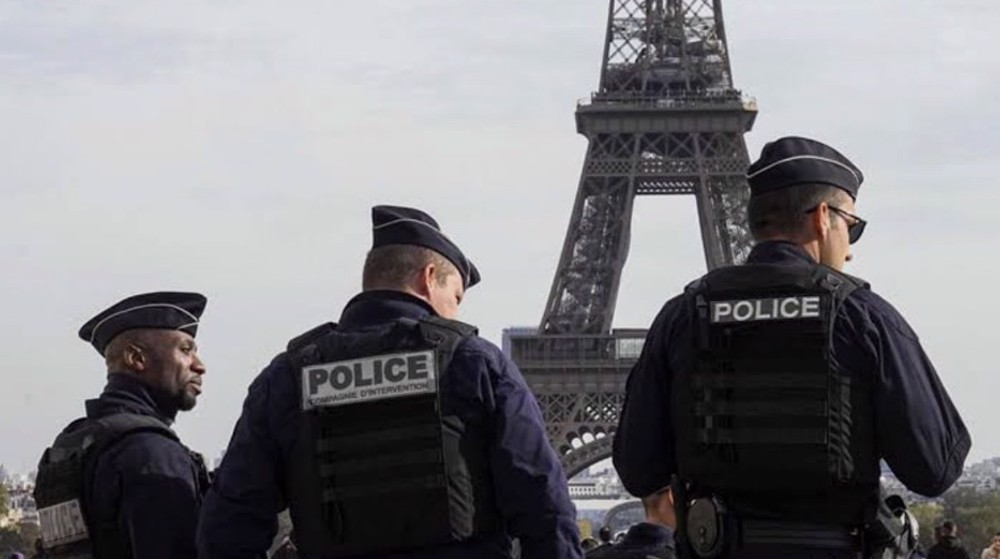
France bans anti-Iran rally after security warnings over monarchist threats


US-Saudi ties strained after Riyadh rejected anti-Iran offensive: Report
US evading responsibility on probe into Iranian school massacre: Report
Doha talks focused on US violations of MoU, frozen assets: Iran’s deputy FM
Iran warns UN of Israel’s ‘deliberate’ and ‘public’ threat against Leader
Israeli Knesset advances bill to ban Muslim call to prayer over loudspeakers
VIDEO | Press TV's news headlines
Pezeshkian praises Iran’s World Cup team after hero’s welcome in Tehran
Continued violations of war-ending MoU with Iran prove US cannot be trusted: Analyst


 PressTV NEWSLETTER
now
PressTV NEWSLETTER
now
 This makes it easy to access the Press TV website
