On Persian Gulf Day, Iranian president says naval blockade poses threat to global peace
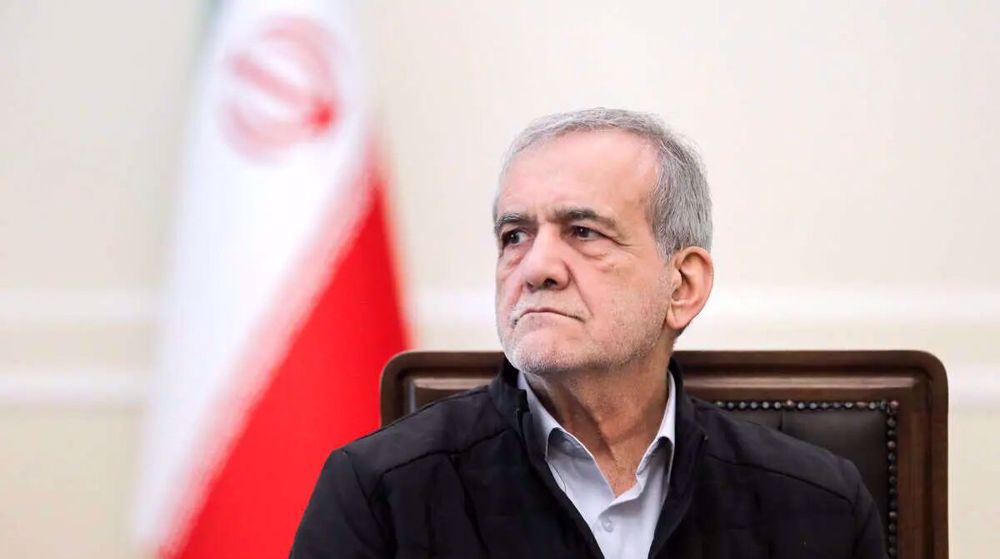
Iranian President Masoud Pezeshkian says any attempt to impose naval restrictions and blockade contravenes international regulations and poses a threat to the interests of regional nations and global peace and stability and is doomed to fail.
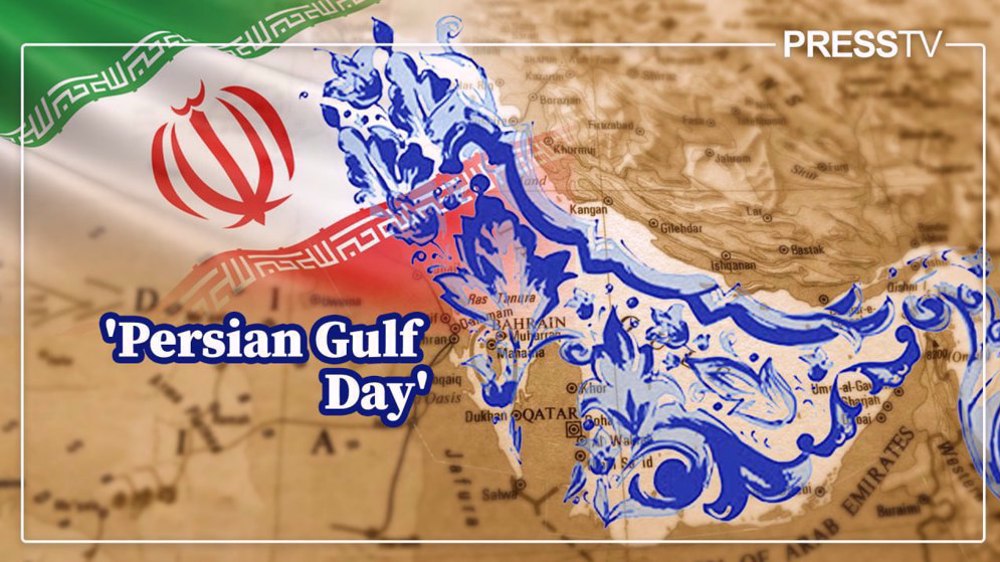
In a message on the occasion of the National Day of the Persian Gulf on Thursday, Pezeshkian said the day is a valuable opportunity to once again remind the historical truth that this waterway is an “inseparable” part of Iranians’ identity and a symbol of the great Iranian nation's resistance to old and new colonialists.
He added that the day is celebrated this year under the circumstances that the US-Israeli imposed war against the Islamic Republic once again reveals the significance of this region, particularly the Strait of Hormuz, to the world.
He emphasized that the bravery of the Iranian naval forces showed that this vital passage plays a key role in transferring energy and is also a symbol of national sovereignty and “reflects Iran's undeniable role in ensuring regional and global security.”
The president noted that the enemies have changed the field of their pressure from economic sector to naval blockade and restrictions in marine trade routes as a new means to exert pressure on the Iranian nation and government.
“But our enemies should know that the Persian Gulf is not an arena for imposing unilateral foreign wills, but rather is a part of the system of international interactions and its security only makes sense in light of collective cooperation and mutual respect for the sovereignty of its coastal countries,” Pezeshkian added.
“As we have repeatedly announced, the presence and interference of foreigners will not help improve security in the region but will create tension and disrupt lasting peace in the Persian Gulf,” he emphasized.
During the 40 days of the US-Israeli aggression, it became clear that the US military bases in regional countries failed to ensure security for the host countries and jeopardized their peace and security, he said.
Pezeshkian stated that these bases from which attacks against Iran were carried out were considered legitimate targets for the country as they facilitated the invasion against the Islamic Republic.
As the guardian of security of the Persian Gulf and the Strait of Hormuz, Iran continues to adhere to the principles of freedom of navigation and maritime safety, except for hostile countries, he emphasized.
He, however, reiterated that Iran believes that the implementation of such principles must be coupled with respect for the Iranian nation and sovereignty.
Pezeshkian held the United States and the Israeli regime responsible for any insecurity in this waterway.
He expressed hope that lasting security and stability would be restored to the Persian Gulf without the presence of foreign powers.
On April 8, forty days into the war, a Pakistan-brokered temporary ceasefire took effect. High-ranking Iranian and American negotiators then held talks in Islamabad but stopped short of an agreement amid Washington’s excessive demands and insistence on unreasonable positions.
Since then, Iran has categorically refused to rejoin the process unless the US lifts the illegal blockade it has imposed on Iranian vessels and ports.
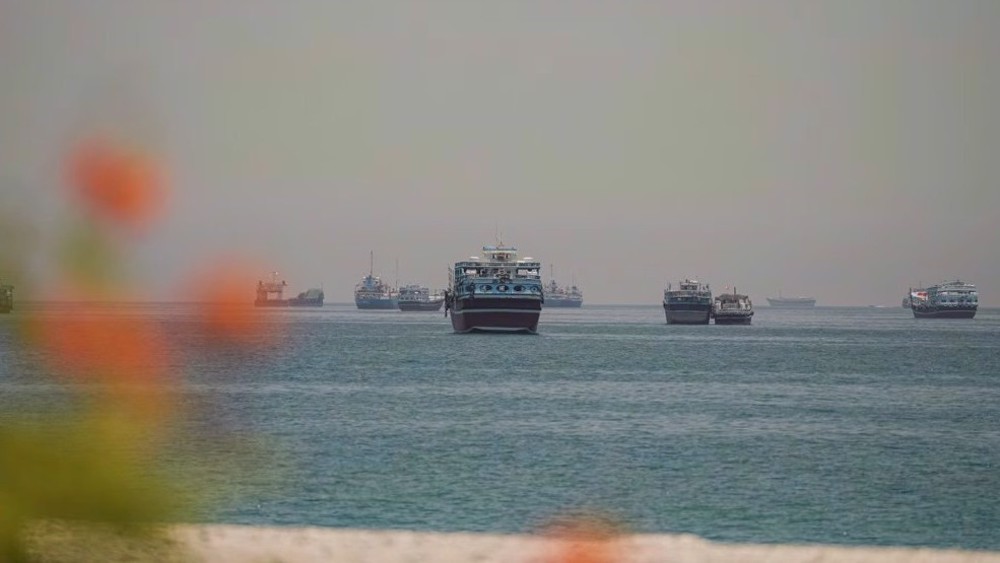
Tehran has also asserted that, as long as the blockade is still in place, it has no intention of reopening the Strait of Hormuz.
The US blockade of Iranian ports has also failed to achieve its stated aim of cutting off Iran’s oil revenues.
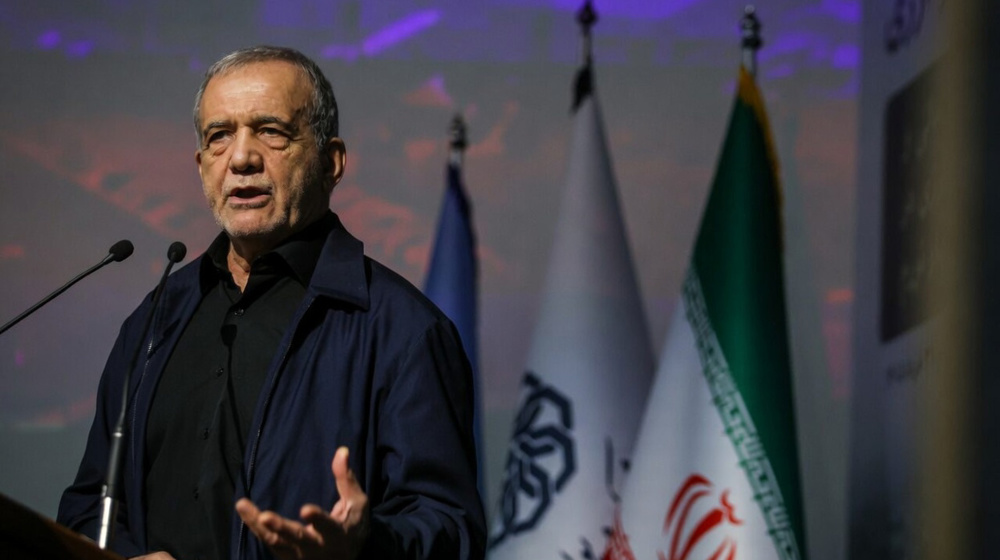
President Pezeshkian says Iran will stand by deal only if US does

Iran says talks with US contingent on implementation of key MoU provisions
Iran says only it can demine Strait of Hormuz under MoU with US



Lebanese parliament speaker vows to block US-brokered agreement with Israel
Iran, India have great potentials to expand relations: Pezeshkian
VIDEO | Access to cemeteries dwindles in Gaza as Israel expands control over land
Israel arrests US citizen on suspicion of contact with Iranian intelligence
Woman accusing Trump of sexual assault in Epstein case fears for her life, relative says
Iran team thanks Mexico, questions World Cup fairness in farewell message from Tijuana
VIDEO | Press TV's news headlines
Israel kills 8 Palestinians as Gaza death toll tops 73,000


 PressTV NEWSLETTER
now
PressTV NEWSLETTER
now
 This makes it easy to access the Press TV website
