Qalibaf: No talks under threat, Iran prepared to reveal new cards on the battlefield
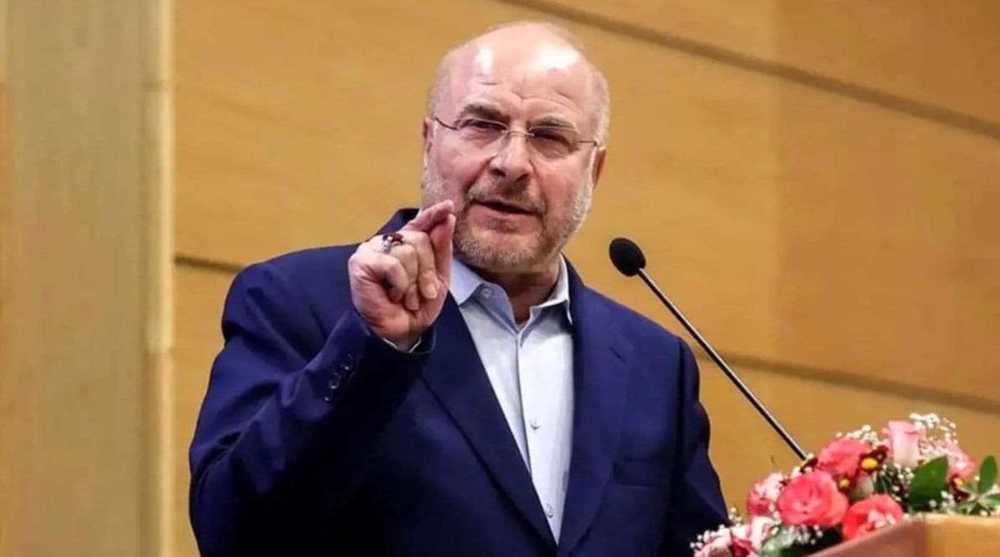
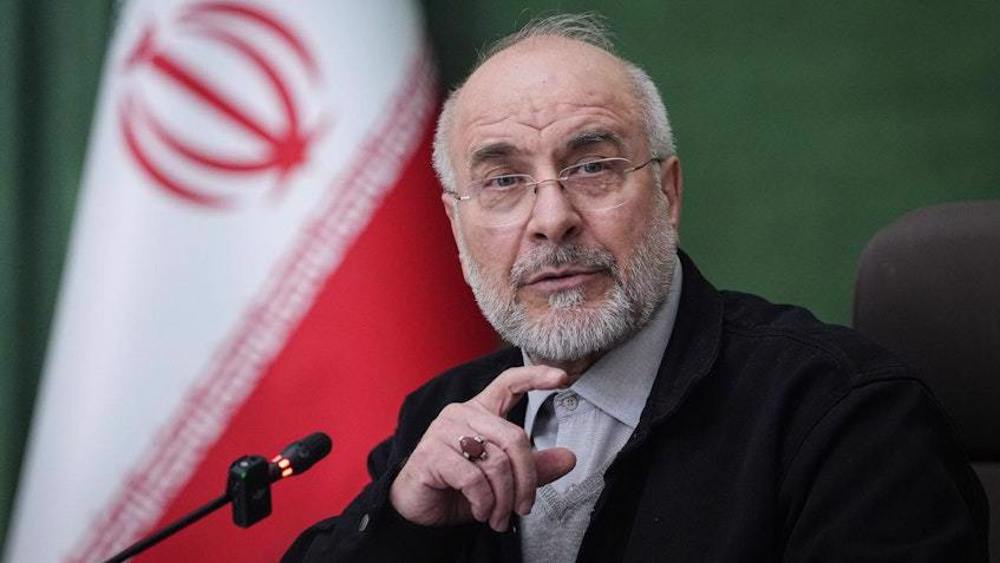
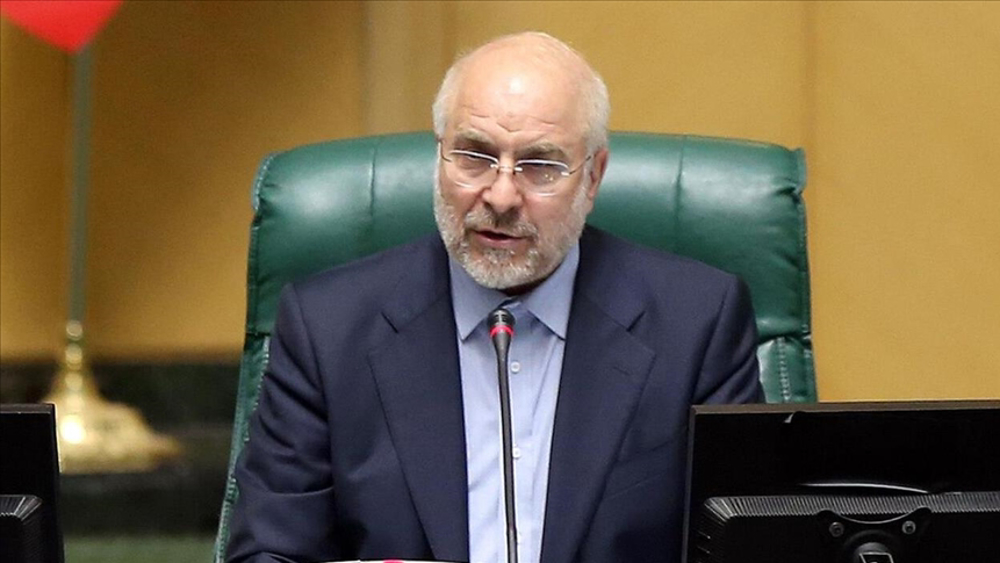
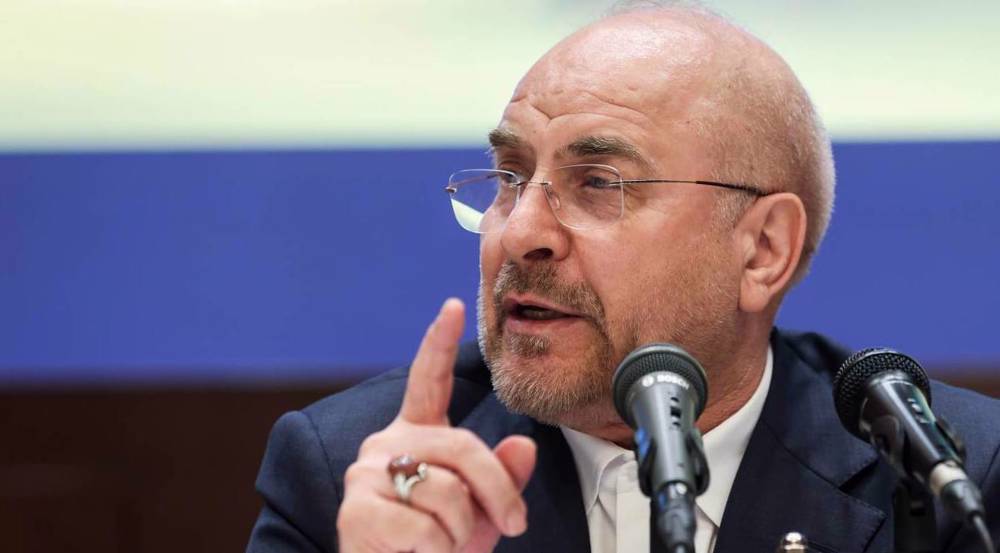
Iranian parliament speaker Mohammad Baqer Qalibaf has said that Tehran will not accept negotiations with Washington under the shadow of threats.
In a post on his X handle early on Tuesday, Qalibaf denounced US President Donald Trump for acting on a delusion.
His remarks came in response to continued US ceasefire violations of the ceasefire deal reached two weeks ago, including a naval blockade and an attack on an Iranian merchant vessel in the Sea of Oman on Sunday.
"Trump, by imposing a blockade and violating the ceasefire, wants – in his own delusion – to turn the negotiating table into a table of surrender or to justify renewed warmongering," the top lawmaker and lead negotiator said.
Qalibaf made it clear that pressure tactics will not yield results at the negotiating table.
"We do not accept negotiations under the shadow of threats," he said. "Over the past two weeks, we have prepared ourselves to reveal new cards on the battlefield."
The remarks came as the next round of talks between Tehran and Washington were shrouded in uncertainty following renewed American aggression at sea, after the US Navy violated the ceasefire by targeting an Iranian merchant vessel in the Sea of Oman.
Iran's Parliament Speaker Ghalibaf:
— Press TV 🔻 (@PressTV) April 20, 2026
🔺 Trump, by imposing a siege and violating the ceasefire, seeks to turn the negotiating table into a table of submission—in his own delusion—or to justify renewed warmongering. pic.twitter.com/5bmHfKI58n
The Iranian military described the incident as a breach of maritime conduct and reiterated that its response posture remains active, while stressing confidence in national capabilities.
Earlier on Monday, President Masoud Pezeshkian rejected US threats as pressure tactics, saying Iran will not submit to coercion, even as Washington continued to float military and diplomatic ultimatums.
According to reports in US media, the American delegation was scheduled to fly to Islamabad on Tuesday for the next round of talks with the Iranian delegation.
“We’re offering a very fair and reasonable deal, and I hope they take it because, if they don’t, the United States is going to knock out every single power plant, and every single bridge, in Iran,” Trump wrote on his social media pages.
His war rhetoric coincided with the US military resorting to more banditry and piracy at sea, targeting Iranian merchant vessels in blatant breach of the ceasefire.
The spokesperson for the Khatam al-Anbiya Central Headquarters on Monday condemned the criminal operation by the US Navy, saying it violated the ceasefire and committed maritime piracy by firing at an Iranian merchant ship in the waters of the Sea of Oman.
✍️ Analysis - Iran holds all the cards: Victorious on the battlefield, united at home, and armed with strategic assets
— Press TV 🔻 (@PressTV) April 20, 2026
By Press TV Strategic Analysis Deskhttps://t.co/AiKDeAt4CO

Esmail Baghaei, spokesperson for the Iranian foreign ministry, said at his weekly presser on Monday that the US was not serious about negotiations with Iran, warning that Washington will face Tehran's decisive retaliation if it repeats its past mistakes against the country.
According to reports, Pakistani army chief Asim Munir told Trump that the continued US naval blockade of Iranian ports was hampering Islamabad's efforts to mediate a second round of negotiations aimed at permanently ending the US-Israeli aggression against Iran.
The war of aggression was launched on February 28 with the assassination of the Leader of the Islamic Revolution, Ayatollah Seyyed Ali Khamenei, top military commanders, and ordinary civilians, including nearly 170 schoolchildren in southern Iran's Minab city.
After 40 days of aggression, the US agreed to Iran's ten-point proposal, which paved the way for trilateral talks between Iran and the US under Pakistani mediation in Islamabad.
On Friday, after the ceasefire came into effect in Lebanon, Iran agreed to open the Strait of Hormuz to commercial vessels while maintaining overall control of the strategic waterway.
However, the US maintained its so-called "naval blockade" in breach of the deal, forcing Iran to again close the chokepoint to all traffic on Sunday.
Araghchi: Iran does not seek war, but will defend against any aggression
June 4: Leader warns of enemy's hybrid warfare as Iran rejects Kuwait Airport strike claims
Hybrid warfare after military defeat: Iran, resistance axis to thwart enemy plots – including psyops


IRGC pounds US bases in Kuwait, Bahrain after drone attacks on Iranian territory
Hamas denounces Israeli infanticide after 7-month-old's murder in occupied West Bank
June 5: Iran slams US-Israeli 'nuclear terrorism' as warships are forced to retreat from Sea of Oman
Leader's advisor: US would enter 'dark and endless corridor' if it resumes aggression against Iran
US-Israeli retreat from bombing Beirut suburb after Iran's warning marks their greatest humiliation
Iran World Cup squad granted US visas ahead of Los Angeles opener: Report
Ireland bars two extremist Israeli ministers from entering country
No point in meeting with Zelensky for now, says Putin after Ukraine president's open letter


 PressTV NEWSLETTER
now
PressTV NEWSLETTER
now
 This makes it easy to access the Press TV website
