From debris to acid rain: The environmental cost of US-Israeli 'ecocidal war' on Iran
By Mina Mosallanejad
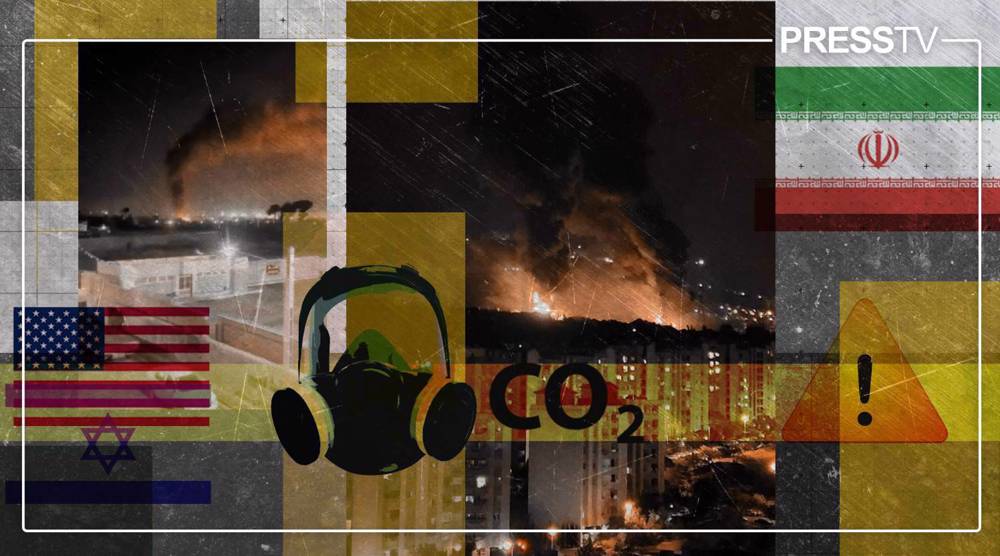
Following the launch of the war imposed by Israel and the United States against Iran on February 28, numerous civilian targets across the country were struck, causing extensive environmental damage, condemned as ecocide in many cases.
Among these attacks, the targeting of oil storage facilities in various parts of Tehran on the ninth day of the war stands out as one of the most blatant examples of this approach.
The aggressive strikes not only caused significant material destruction but also triggered the widespread release of environmental pollutants across urban areas, leaving serious consequences for public health and environmental quality.
According to available reports, on March 8, several fuel-related and oil storage targets in Tehran and Alborz provinces were hit.
Accounts point to multiple storage depots and at least one oil transfer and logistics center being targeted, including sites in the northern, southern, and western parts of Tehran, as well as a facility in Karaj.
A review of local media reports suggests that four primary targets were struck: oil facilities in Kouhak, Fardis, Shahran, and Shahr-e Rey.
The powerful explosions of fuel tanks caused widespread destruction in the surrounding areas. One of the most striking cases was the destruction of a dialysis treatment center in Fardis on the outskirts of Tehran.
Officials also reported damage to two schools and approximately 100 residential units.

In addition to human casualties, including six deaths and 21 injuries reported in Fardis alone, the immediate aftermath of the attacks involved massive fire and plumes of dense, dark smoke that blanketed parts of Tehran’s sky.
Field reports and eyewitness accounts described suffocating air conditions, severe irritation of the eyes and throat, and the accumulation of soot and a black residue covering vehicles and urban surfaces.
Visual evidence also indicated the leakage of petroleum products into streets—an issue of major environmental concern, as it signifies the direct transfer of hydrocarbons into surface drainage systems, urban soils, and potentially groundwater reserves through infiltration and rainfall runoff.
This contamination is not confined to the immediate sites of the attacks; it can spread over wide distances, affecting surrounding regions and even distant cities.
Media reported that the level of air pollution in Tehran following the bombardment was so severe that it extended to areas such as Garmsar and Eyvanki in Semnan Province—regions located nearly 100 kilometers away from the capital.
The explosion of oil depots released vast quantities of toxic compounds, including hydrocarbons, sulfur oxides, and nitrogen oxides, into the atmosphere.
These substances can combine with atmospheric moisture and form highly acidic precipitation.

Acid rain of this nature poses serious risks, including chemical burns to the skin and significant respiratory damage.
The air quality in Tehran deteriorated so drastically after the attacks and subsequent fires that the city council urged residents to wear multilayered masks and to remain cautious about the dangers of acid rain.
The Ministry of Health similarly advised individuals with respiratory and cardiovascular conditions, as well as pregnant women, to use protective masks such as N95, FFP2, or FFP3 when going outdoors.
In addition, the Iranian Red Crescent issued an advisory outlining six critical recommendations: avoid leaving home immediately after acid rainfall due to lingering acidic vapors; refrain from using evaporative coolers; protect unpackaged food items from exposure; regularly cleanse respiratory pathways; replace filters in water purification systems; and avoid using windshield wipers without water to prevent spreading acidic residues.
Such urgent and detailed guidelines from official bodies underscored the severity and potentially lethal nature of the environmental conditions created by these attacks.
Fine particulate matter and irritant gases can exacerbate asthma, bronchitis, and acute respiratory symptoms, with particularly severe effects on vulnerable populations such as children, the elderly, and those with preexisting health conditions.
Microscopic particles, including PM2.5 and even smaller fractions, can penetrate deep into the lungs and, in some cases, enter the bloodstream.

As a result, the health risks associated with these attacks may surpass even the immediate physical dangers posed by explosions, highlighting the profound and often overlooked impact of environmental warfare on civilian populations.
Iranian environmental authorities have strongly condemned these actions.
Shina Ansari, the head of the Department of Environment, described the attacks as a clear violation of international norms, emphasizing that targeting environmentally sensitive infrastructure in densely populated urban areas is unjustifiable.
Such acts, Ansari stated, "constitute a clear example of an environmental crime - ecocide."
A recent report by Iran’s environmental authorities on the “Ramadan War” provides further insight into the scale of the damage.
According to the report, the total volume of petroleum products that burned in just three oil storage complexes in Shahran, Shahr-e Rey, and Kouhak exceeded 360,000 cubic meters.
The resulting emissions were estimated to be nearly one million tons of carbon dioxide equivalent.
Experts also estimate that approximately 4,000 tons of aromatic compounds and volatile organic compounds, substances known to pose serious threats to environmental and human health, were released during these attacks.
Additionally, strikes on fuel depots in Fardis alone resulted in the emission of more than 53,000 tons of carbon dioxide and approximately 220 tons of aromatic compounds.
The environmental consequences of such incidents are not limited to the immediate aftermath, according to several environmental studies.
One of the most pressing challenges associated with explosions in fuel storage facilities is their long-term impact on surrounding ecosystems.
Massive quantities of toxic gases, particulate matter, and chemical residues are released into the air, rapidly degrading air quality to hazardous levels.
The combustion of petroleum and its derivatives produces a range of harmful substances, including sulfur oxides, nitrogen oxides, polycyclic aromatic hydrocarbons (PAHs), and soot.
These compounds are highly damaging to both human health and ecological systems.
When combined with atmospheric moisture, they can return to the surface as acid rain, contaminating soil, water resources, and agricultural products.
The infiltration of petroleum products and combustion byproducts into soil leads to long-term contamination and reduced soil fertility.
If these pollutants reach groundwater aquifers, they can jeopardize access to safe drinking water for entire communities. Many of the released compounds are also carcinogenic, posing long-term health risks to exposed populations.
In the short term, air pollution contributes to increased rates of respiratory illnesses, cardiovascular conditions, and skin sensitivities. Over the long term, it may lead to chronic diseases and broader public health crises.
Wildlife and vegetation are also severely affected, with some species potentially being driven out of affected areas for extended periods. Deposits of soot and heavy particles can disrupt natural ecological cycles and degrade habitats.
The process of cleaning up such environmental damage is often extremely complex and costly, sometimes taking years or even decades.
When pollutants penetrate deep into soil layers, their effects can persist across generations.

Beyond the environmental devastation, the attacks have also inflicted widespread damage on industries, infrastructure, and protected areas.
Iranian environmental authorities report that key industrial, production, and service units across ten provinces, including East Azerbaijan, Alborz, Bushehr, Tehran, Khorasan Razavi, Khuzestan, Markazi, Yazd, Gilan, and Fars, suffered environmental impacts ranging from minor to severe.
Infrastructure belonging to environmental protection agencies in ten provinces has also been targeted, with damages recorded across 20 counties.
While most of the damage is categorized as low to moderate, some cases are severe.
Notably, the Natural History and Biodiversity Museum in Karaj’s Chamran Park sustained extensive destruction. Protected environmental areas have not been spared.
Seven provinces, including Hormozgan, Markazi, Sistan and Baluchestan, Fars, Kurdistan, Alborz, and Tehran, saw their conservation zones attacked.
A total of 13 protected areas have suffered varying degrees of damage, from minor to very severe. The destruction extends further into the natural environment.
Coastal regions, islands, wetlands, and wildlife reserves have all been affected.
These include parts of the Persian Gulf coastline, the islands of Qeshm, Larak, and Hengam, protected regions in Markazi Province, sensitive coastal ecosystems in Sistan and Baluchestan, and wildlife refuges in Kurdistan and Tehran.
Such damage not only threatens biodiversity but also disrupts fragile ecological balances that may take decades to restore.
Finally, the environmental toll of war is compounded by the vast quantities of debris and remnants left behind.

According to Iran’s Housing Foundation, more than 95,000 residential units across 24 provinces have been damaged, including around 1,200 that have been destroyed.
The remains of collapsed buildings, combined with unexploded ordnance and residues from munitions, represent a serious and often underestimated environmental hazard.
Construction debris frequently contains hazardous materials such as asbestos, heavy metals like lead and mercury, and chemical residues from paints, insulation, and industrial materials.
When dispersed into the environment, these substances can contaminate soil and water systems.
Unexploded ammunition and military debris introduce additional toxic compounds, including explosive residues such as TNT and RDX, which can persist in the environment for years.
These chemicals can leach into groundwater, posing long-term risks to drinking water supplies and agricultural systems.
Studies in post-war regions have shown that such contamination can significantly increase rates of cancer, birth defects, and other chronic health conditions.
Dust generated from debris can carry fine particles laden with toxic substances, contributing to air pollution and respiratory illnesses.

Rainfall can further spread contaminants, washing them into rivers, lakes, and underground aquifers. In urban areas, the accumulation of debris can block drainage systems, increasing the risk of flooding and further environmental degradation.
The combined impact of destroyed infrastructure, toxic debris, and chemical contamination creates a multi-layered environmental crisis, one that extends far beyond the immediate destruction of war.
The US-Israeli aggression not only destroys lives and infrastructure in the present, but it is also planting the seeds of long-term environmental harm that may remain invisible for years, according to environmental experts.
Toxic pollutants in air, soil, and water can persist well beyond the end of the conflict, quietly damaging ecosystems and human health.
Unlike physical destruction, these impacts are harder to detect and even harder to reverse, often affecting future generations.
This makes the environmental cost of war one of the most dangerous and enduring consequences of the war imposed on Iran.
Oil prices hike as Israelis attack deeper into Lebanon
Iranian stock market reports historic trade as shares surge
Iran’s active role in Eurasian bloc reflects its strong commitment to development: President



Cessation of war in Lebanon central to any agreement with US: Senior Iranian MP
Iranian strikes on US bases in Persian Gulf ‘legitimate self-defense’: Araghchi
Israel kills 119 Palestinians in Gaza in deadliest month of 2026
End of 'tit-for-tat' era: Iran’s broad, asymmetric response to US attacks shifts deterrence equation
Iranian MPs call for longer-range missiles to avenge martyred Leader
Iran slams global inaction in dealing with aggression against children
Trump says he berated ‘crazy’ Netanyahu in heated phone call over Lebanon
9 killed in Israeli strikes on southern Lebanon despite Trump's truce claim


 PressTV NEWSLETTER
now
PressTV NEWSLETTER
now
 This makes it easy to access the Press TV website
