US accepted ceasefire after plot to dominate Iran, plunder its oil failed: Ex-MP
By Press TV Website Staff
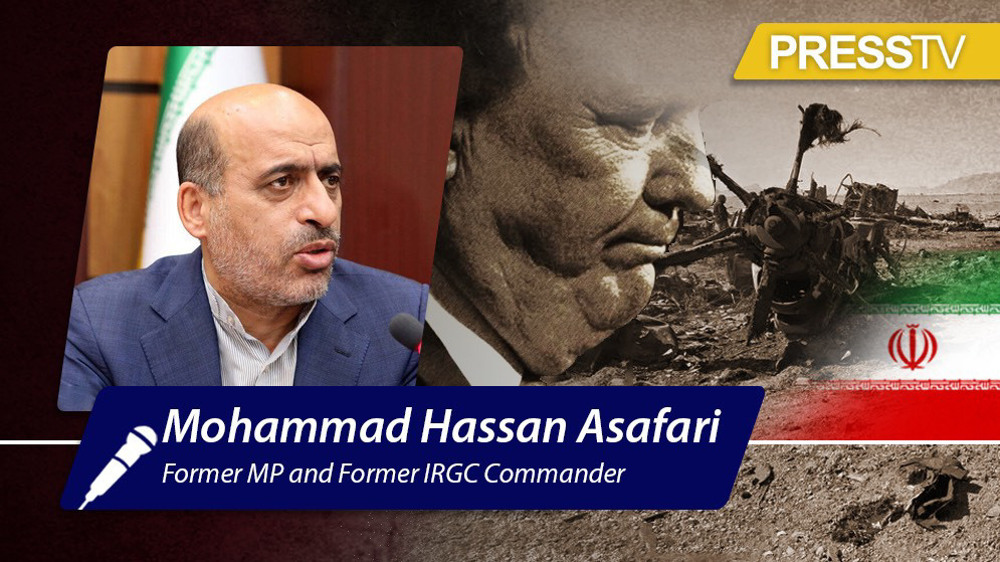
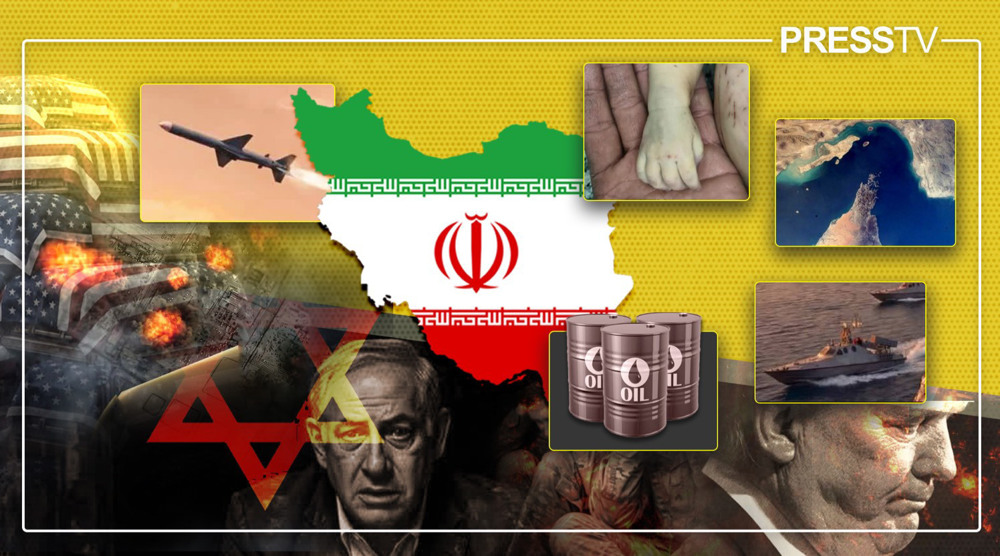
Washington's acceptance of a regional ceasefire came after its 40-day military campaign failed to achieve its ultimate goal of dominating Iran and plundering its vast oil reserves, according to a former Iranian lawmaker.
In an interview with the Press TV website on Thursday, Mohammad Hassan Asafari explained how the ambitious American campaign ultimately collapsed.
A key American objective, according to the former lawmaker, was complete US domination over Iran and the plundering of its wealth, particularly its oil reserves.
He said US President Donald Trump had explicitly declared his interest in Iranian oil. Indeed, Trump recently threatened to invade Kharg Island in order to take control of Iran’s oil exports.
In an interview with the Financial Times on March 29, Trump said his “preference” would be for Washington to control Tehran’s oil industry and exports indefinitely.
He likened this to US actions in Venezuela following a military raid in January, which resulted in the kidnapping of President Nicolas Maduro and his wife Cilia Flores.
“To be honest with you, my favorite thing is to take the oil in Iran, but some stupid people back in the US say: ‘Why are you doing that?’ But they are stupid people,” Trump said.
"I believe the most significant US failure was this: the Americans had several plans for their operations in Iran," Asfari said in a freewheeling conversation with the Press TV website.
The US-Israeli aggression, which began on February 28 with the assassination of the Leader of the Islamic Revolution, Ayatollah Seyyed Ali Khamenei, and some top-ranking commanders, was initially envisioned by Washington as a quick military victory.
"One of their plans was to use these operations to dismantle the political, military, and legal structures of the Islamic Republic of Iran—in a word, to bring about regime change," Asafari told the Press TV website.
✍️ Viewpoint - Forty days that shook the Empire: How Iran turned the tables on US and prevailed
— Press TV 🔻 (@PressTV) April 8, 2026
By Sarwar Abbashttps://t.co/i51LGERkDt
Instead, Asafari noted, the attempt to topple the government "did not happen; instead, it fostered greater unity and cohesion among the Iranian nation."
The expert outlined another major objective of the failed campaign: the balkanization of the country. He explained that the US sought to partition and fragment Iran into seven or eight separate countries with different flags.
"They intended to trap the united and integrated Iranian people, despite their deep historical roots, in prolonged internal conflicts," Asafari stated.
This strategy aimed to ensure these newly created states within Iran's borders would continuously wage war against one another over the nation's resources, he added.
"Out of these three objectives, the US failed in all three and was unable to achieve any of its goals," Asafari noted.
The battlefield realities then forced Trump to announce a two-week suspension of the bombing on Wednesday. The shaky ceasefire came hours before the American president’s self-imposed deadline demanding that Tehran reopen the strategic Strait of Hormuz.
Trump had warned that “a whole civilization will die tonight” if Tehran did not reopen the narrow waterway—a threat that drew global condemnation for targeting Iran’s civilian infrastructure, including power plants and bridges.
The strategic waterway, through which around 20 percent of global oil supplies and other vital goods, including fertilizers, pass, has been effectively blocked by Iran for aggressors and their supporters since the onset of the unprovoked aggression.
Addressing this critical maritime chokepoint, Asafari emphasized that regional security lies firmly in the hands of the countries in the region.
✍️ Feature - 33 days on, US war goals unmet as Iranian retaliation imposes heavy military, economic costshttps://t.co/ThkikTZzVs
— Press TV 🔻 (@PressTV) April 1, 2026
"The security of the Persian Gulf states is the responsibility of the Persian Gulf states, and we will not allow anyone from the other side of the world to come here and create insecurity for our country under the guise of security," he stated.
Iran's Supreme National Security Council has confirmed that continued Iranian control over the Strait is a key component of the 10-point proposal. Reflecting this reality, Asafari pointed out that maritime traffic through the waterway will no longer operate as it did in the past.
Instead, he noted, it will now be subject to the strict control and oversight of the Islamic Republic of Iran. Despite this tightened security, the analyst clarified that Iran will not create obstacles for the legitimate passage of any country's vessels.
The former lawmaker stated that countries should be able to use this major and strategic waterway for their own development, envisioning the Strait as a potential source of amity and friendship among all nations.
"However, if anyone attempts to use this strait to pursue their warmongering ambitions and interests, the Islamic Republic of Iran will not permit it," Asafari remarked.
With Iran's victory on the battlefield forcing the US into a diplomatic corner, delegations are set to begin negotiations in Islamabad to finalize the details of the 10-point proposal.
These talks aim to solidify the permanent cessation of US-Israeli attacks, the withdrawal of US combat forces from the region, and the lifting of sanctions within a maximum of 15 days.
However, Asafari expressed deep skepticism regarding Washington's diplomatic integrity based on historical precedent. He noted that Tehran has negotiated with the Americans several times over the past decades, both directly and indirectly.
"Every time we negotiated—whether with a Republican or Democratic administration—they reneged on their promises and proved untrustworthy," the analyst explained.
"Despite our distrust of the Americans, we are going to negotiate so that the world can realize once again that the US cannot be trusted, and no one should be deceived by America's velvet glove," he added.
Pakistan PM's China visit could advance efforts to end US-Israeli war on Iran: Ex-Minister
US wartime demands collapse, leaving Trump empty-handed as regional power shifts: Ex-diplomat
Trump ensnared by his own contradictions as Iran dictates new strategic terms: Ex-Pentagon analyst



Iran's armed forces: Enemy forced to accept new Iranian rules
VIDEO | Iranians rally in solidarity with Hezbollah
VIDEO | How Iran won the propaganda war
VIDEO | Turkey-Zionist collision course
Norway backs complaint against FIFA’s controversial peace prize for Trump
Lula condemns Rubio as enemy of Latin America as US-Brazil tensions rise
Iran vows to use ‘all capabilities’ to confront any new US aggression
How US-Israeli war on Iran tore apart alliances, fractured NATO, and buried American unilateralism



 PressTV NEWSLETTER
now
PressTV NEWSLETTER
now
 This makes it easy to access the Press TV website
