Houthi: Iran’s strength has dismantled equation of domination
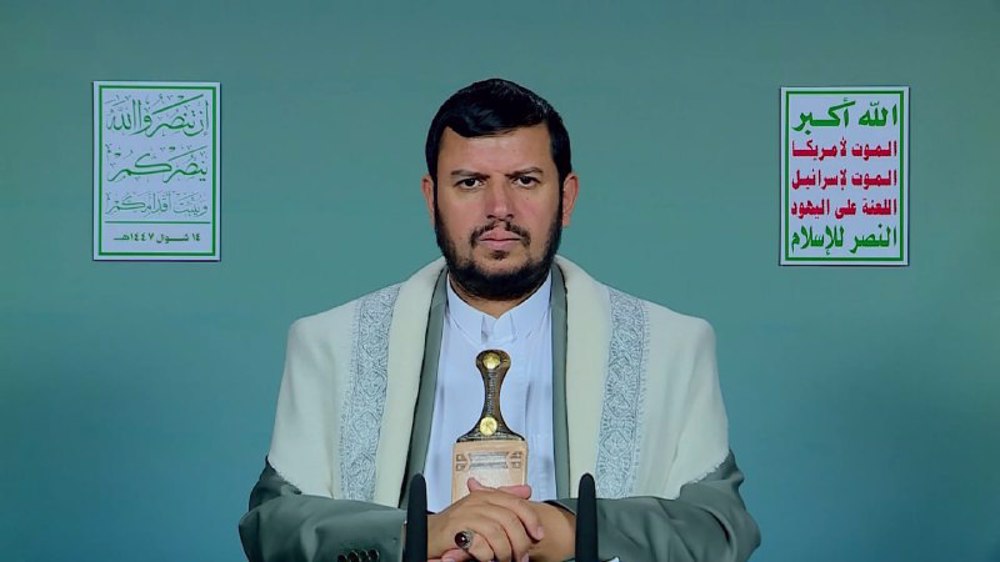
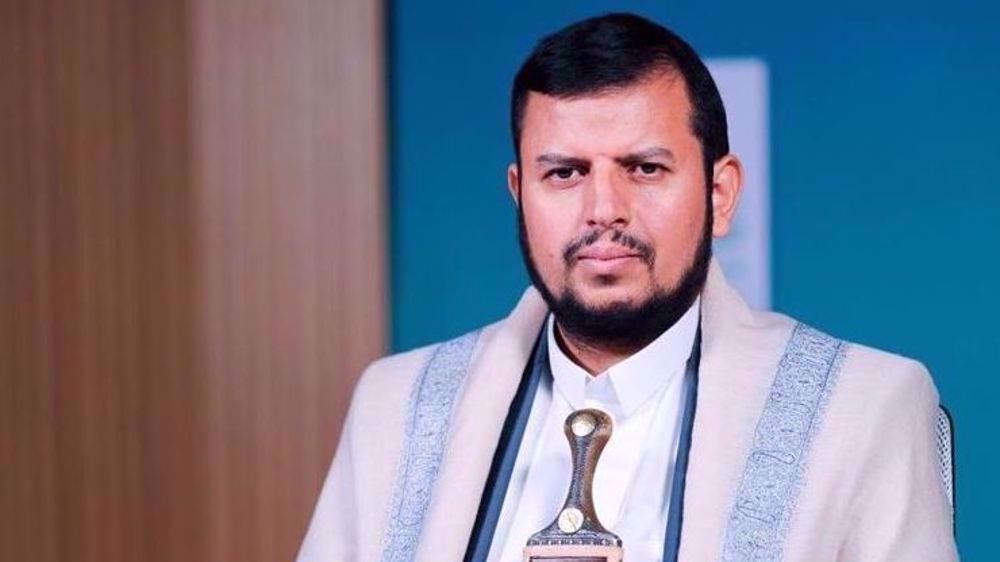
Leader of Yemen's Ansarullah movement Abdul-Malik al-Houthi has hailed Iran’s growing military and political resilience, emphasizing that the Islamic Republic has redefined regional dynamics by breaking the previously prevailing equation of submission and imperial domination.
“One of the results of Iran’s position, strength, and high capabilities is the rebuilding of the deterrence equation and the collapse of the equation of surrender and subjugation,” Houthi said in a televised speech on Thursday night.
He emphasized the unwavering strength of Iran in confronting its adversaries, specifically the US and Israel, stating that popular support in Iran plays a crucial role in creating a robust defense against foreign threats.
"Iran’s ability to stand firm and resist the American and Israeli onslaught has been shown through its powerful and persistent military operations, including waves of missile and drone strikes," Houthi said.
"This formidable strength has resulted in the destruction of American military bases in the region and significant damage to Israeli capabilities, including the annihilation of many of their military assets. The US itself has acknowledged the unprecedented scale of these operations."
He added that Iranian forces have successfully intercepted and downed numerous drones belonging to the US and Israel, a display of Iran's increasing military capabilities.
"The significant human losses among US and Israeli forces, including officers and soldiers, illustrate the high level of Iranian readiness and its ability to counter this aggression effectively."
Houthi also praised the Iranian people's strong support for their leadership, the Islamic Revolution Guards Corps (IRGC), and the national military.
"In the Islamic Republic of Iran, the widespread support for the leadership, the IRGC, and the army is evident," he stated.
"This massive, clear, and unwavering support from the people has created an unbreakable barrier against the objectives of the enemies, who are intent on advancing a dangerous phase of their Zionist agenda."
Houthi described the Iranian resistance as a central force standing against a "Zionist scheme" targeting the entire Arab and Islamic world.
He underscored the importance of Iran in blocking the execution of the plan, emphasizing that without Iran’s resilience, the enemies would likely seek to dominate the region.
"The enemies sought to remove what they considered the biggest obstacle to their objectives in the Arab and Islamic region, a region they refer to as the Middle East," Houthi explained.
"The dangerous actions of Zionism pose a threat to the Arab world more than anything else."
Houthi further explained that the Iranian resistance and the broader axis of resistance in the region have unified their stance against foreign powers.
"The struggle of the Islamic ummah, as manifested through a unified resistance front, is directly aligned with the Qur’anic call to action against tyranny and oppression," he said, adding that the Zionist project is clear and it targets everyone in the region.
"The plan has been explicit and consistent: it has always been about confronting the Zionist plot that aims to subjugate all."
The US and Israel, he said, have been explicit about their goals in the ongoing aggression against Iran.
"The US and its partner Israel have emphasized that this attack is part of a larger Zionist agenda, with all its goals and strategies rooted in Zionism," he noted.
Resilience and popular support
According to Houthi, the real key to the success of the Iranian resistance is the combination of military power and solid political stance supported by the masses.
"The unwavering resilience of the Iranian people in the face of such aggression is a testament to their commitment to preserving their sovereignty and fighting for justice," he said.
"The ongoing popular mobilization in Iran serves as a powerful example of the nation's strength and determination to resist foreign domination."
Houthi said, "The imp ortance of the Iranian people's steadfastness in their support for their government and military institutions has rendered the equation of submission obsolete. The days when foreign powers hoped to subdue the Iranian people have ended."
Houthi also turned his attention to the broader implications of the terrorist war, particularly the role of the Zionist movement in destabilizing the region.
"The Zionist plan, which has been in motion for decades, has aimed at eradicating the unity of the Arab and Muslim peoples," he said.
"The goal of Israel’s expansionist policies has always been the occupation of Arab lands, and they have never shied away from publicly declaring their animosity toward the Arab people."
He emphasized that the confrontation between the resistance forces and Israel is not limited to just one nation but rather involves the entire Islamic ummah, which is bound by the common goal of safeguarding the region from Zionist and imperialist agendas.
"The struggle against Zionism is not just the struggle of Iran, Lebanon, or Palestine," Houthi said. "It is a collective struggle for all of us who care about the future of our lands and our people."
Houthi also discussed the role of Zionist-controlled media in shaping public perceptions of the ongoing conflicts.
He criticized the media for attempting to manipulate public opinion and discredit resistance movements, including Iran’s role in the fight against imperialism.
"Zionist propaganda outlets are actively working to distort the position of Iran and other members of the resistance axis, portraying them as mere pawns in a game they do not control," Houthi said.
He particularly condemned the media’s attempts to portray Palestinian resistance fighters as lacking in purpose or acting solely for Iranian interests.
"They have tried to undermine the Palestinian resistance by suggesting that it is merely fighting in Iran’s interest, without any noble cause of its own," he explained.
"Such claims are nothing but an attempt to obfuscate the true nature of the struggle for justice and the liberation of Palestine."
Houthi also pointed out the hypocrisy of the Western and Israeli-backed narrative, noting how they consistently downplay Israel’s crimes while inflating the perceived threats posed by Iran and other resistance groups.
"Zionist media outlets are using their influence to create doubt about the resistance and to promote a narrative that blames Iran for everything that happens in the region," he said.
Unity of the resistance
Houthi reiterated the need for unity within the resistance axis, stressing that the fight against the Zionist project requires collective action and solidarity among all forces committed to the cause.
"The lessons from Gaza, Lebanon, Iraq, and Yemen are clear: only through unity, perseverance, and strength can we defeat the forces of oppression and ensure the safety and dignity of our people," he said.
"The real strength of the resistance comes from the unity of purpose and shared commitment to the principles of justice and righteousness," Houthi added.
"This is the key to overcoming the enemy’s divide-and-conquer tactics, and it will ultimately lead to the downfall of their imperialist schemes."
Ansarullah: Lebanon-Israel framework agreement meant to destroy resistance
Al-Houthi: Iran's 'great victory' over US is triumph for resistance axis
Yemeni govt. plans operations to break 11-year-long blockade



Iran becomes world's 3rd producer of rapid gas detection kits, says knowledge-based firm
Iran monitors US compliance moment-by-moment, won’t implement MoU unilaterally: FM spox
Hezbollah MP blasts ‘sell-out’ government, says Lebanon central to any Iran-US deal
Israeli army demolishes buildings across Gaza as ceasefire violations continue
VIDEO | Press TV's news headlines
VIDEO | Thousands displaced by earthquake in Venezuela receive temporary shelters
Iran will respond decisively to any ceasefire violation: Acting defense minister
Trump criticized Spain for not meeting NATO spending targets


 PressTV NEWSLETTER
now
PressTV NEWSLETTER
now
 This makes it easy to access the Press TV website
