India's muted response to US attack on Iranian ship betrays 'civilizational bond': Journalist
By Mehdi Moosvi
Indian government’s muted response to the massacre of Iranian sailors aboard a warship that had just departed Indian shores as a guest of the Indian Navy represents a fundamental betrayal of a civilizational bond stretching back more than a thousand years, according to an analyst.
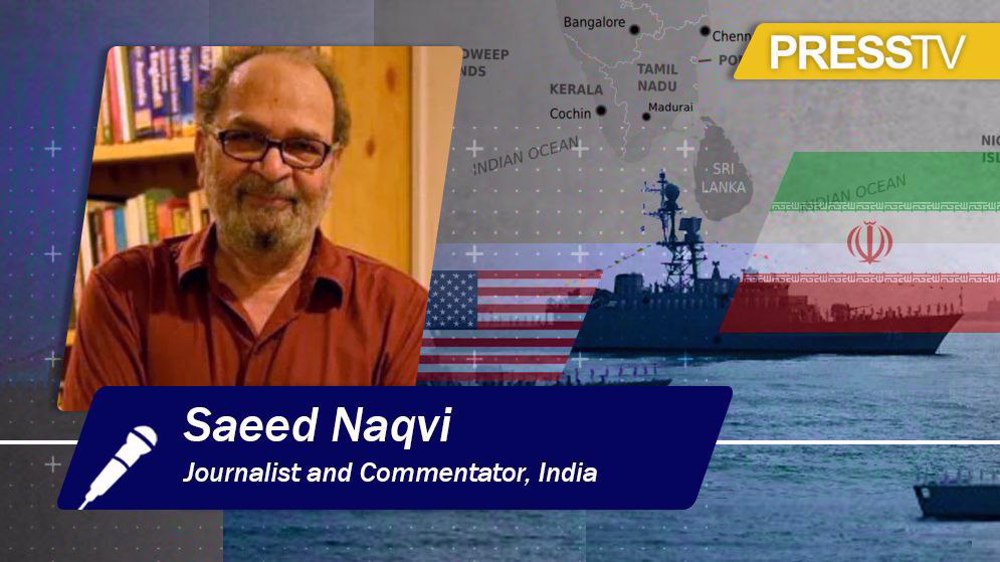
Speaking in an interview with the Press TV website, Saeed Naqvi, a veteran journalist and political commentator based in New Delhi, condemned the US attack on the ship as well as New Delhi’s indifference toward it.
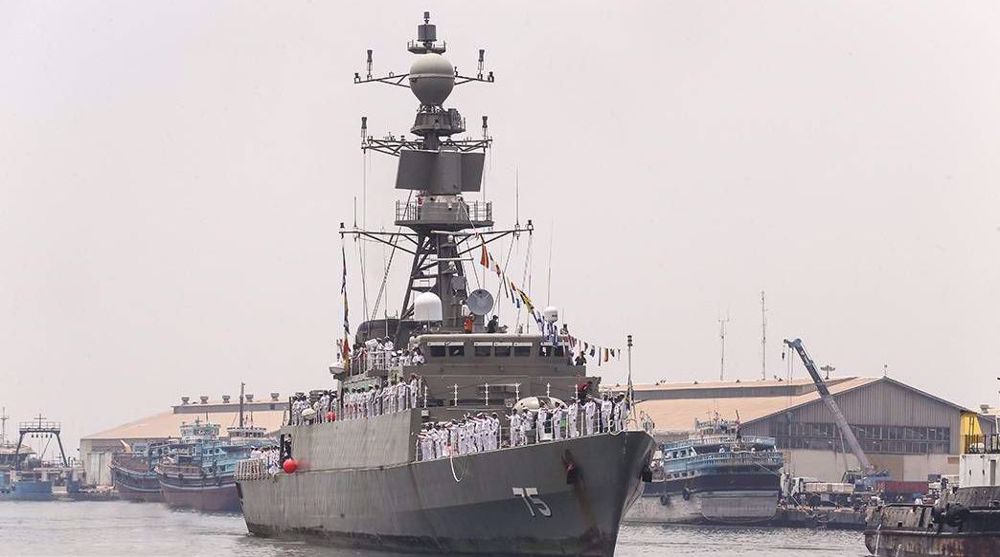
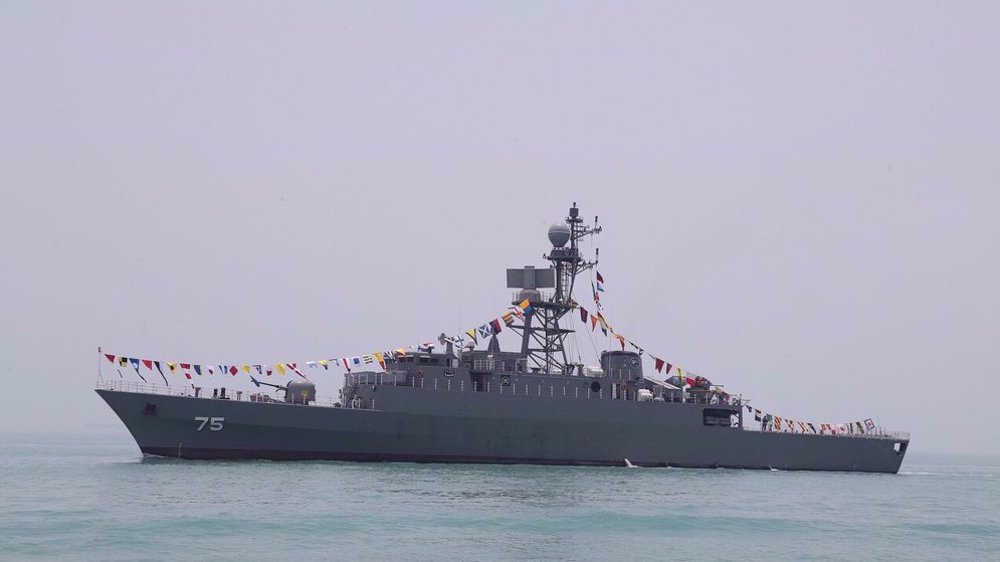
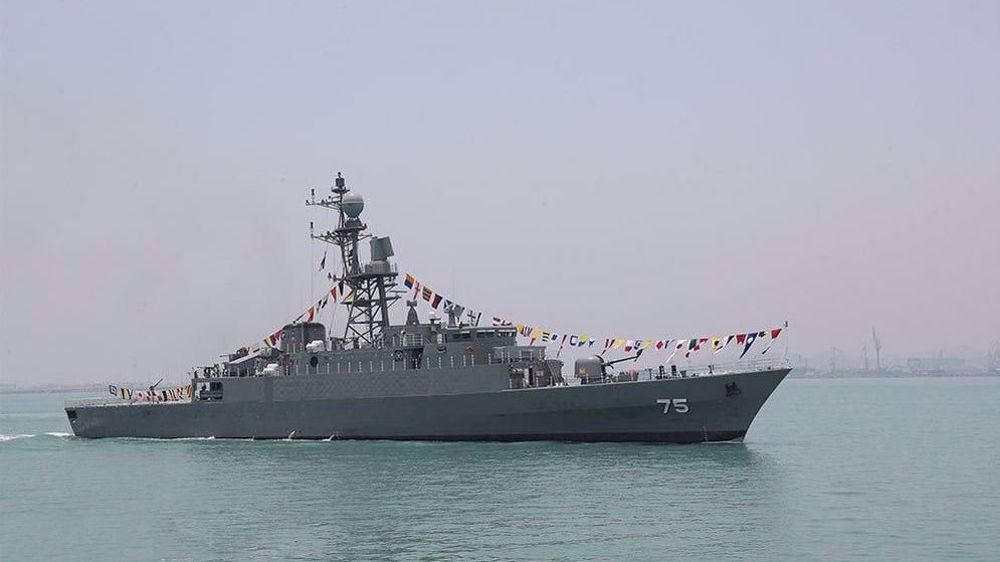
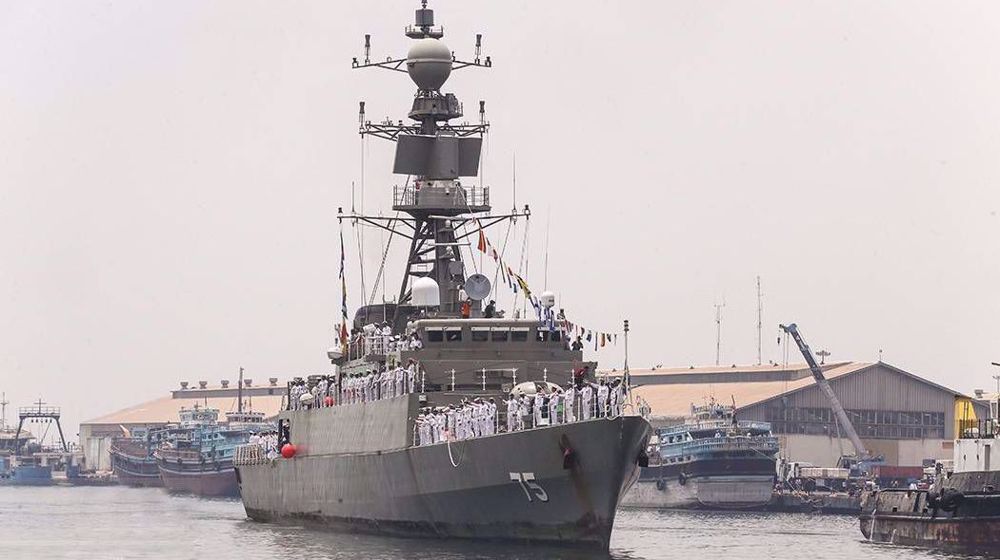
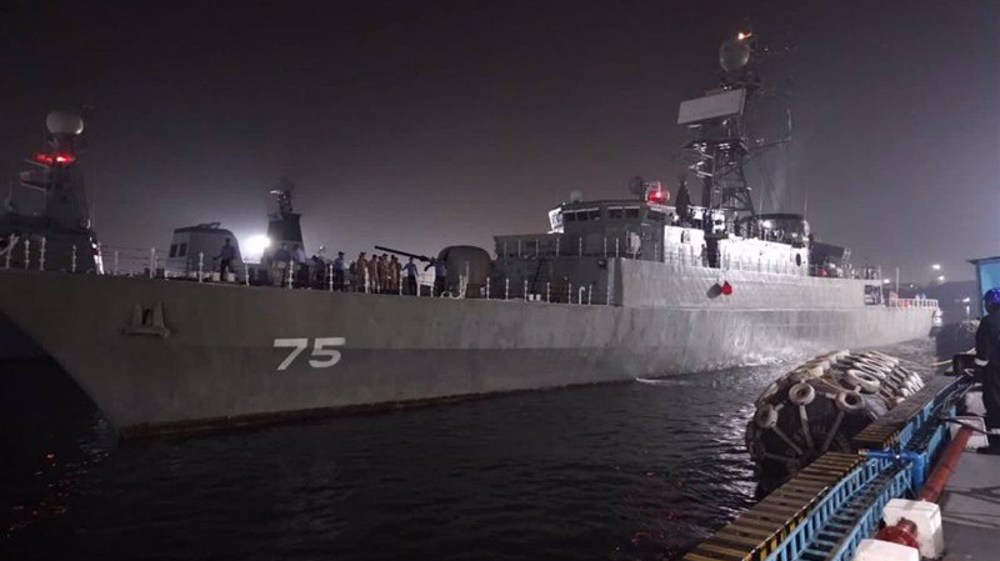
A United States Navy nuclear-powered fast attack submarine torpedoed and sank the Iranian Navy frigate IRIS Dena on Wednesday in international waters off the southern coast of Sri Lanka, killing at least 87 sailors, with approximately 60 more unaccounted.
The IRIS Dena, carrying an estimated 180 personnel, was returning home to Iran after serving as a guest of the Indian Navy at the MILAN 2026 multilateral naval exercise in Visakhapatnam, when it was hunted down and destroyed hundreds of miles from the nearest active conflict zone, using a single Mk-48 torpedo.
India, whose Navy had hosted the IRIS Dena just weeks prior, issued no immediate condemnation, no formal protest, and no expression of remorse, a silence that the veteran Indian journalist who has accompanied Indian prime ministers on state visits to Iran said has caused lasting damage to one of Asia's most enduring bilateral relationships.
According to hospital authorities in the Sri Lankan port city of Galle, 87 bodies were brought in by military rescuers who responded to an early morning distress call. Another 32 sailors were rescued and hospitalised.
In a statement on Sunday, Iran’s Army said 104 personnel on board the Frigate Dena had lost their lives during a “savage” attack by the United States in international waters.
The Army said the ship was returning home after participating in the “Milan 2026” naval exercise, a multinational maritime drill in India, when the US Navy attacked it without any prior warning and in violation of all humanitarian laws and international maritime regulations.
The US Defense Secretary Pete Hegseth himself acknowledged the first time a submarine had sunk a surface warship since the Second World War.
Hegseth boasted of the kill at the Pentagon podium, saying, "An American submarine sank an Iranian warship that thought it was safe in international waters. Instead, it was sunk by a torpedo. Quiet death."
Iranian Army vows revenge after 'cowardly attack' by US Navy on Frigate Denahttps://t.co/bdByxACCcK
— Press TV 🔻 (@PressTV) March 6, 2026
The attack came amid an unprovoked US-Israeli war of aggression against the Islamic Republic of Iran, now in its tenth day, during which the Islamic Revolution Guards Corps (IRGC) has responded with massive missile strikes against US military assets across the region, prompting Washington to close its embassies and urge American citizens to flee.
For Naqvi, the tragedy cannot be separated from the long arc of India-Iran ties, a relationship he has personally witnessed and chronicled across decades.
"There was a time when Indo-Iranian relations were treated as very premium relations, relations which had a very deep civilizational dimension, in other words, these were old civilizations which were respected. They respected each other as such, if you go to our libraries and archives, all the 1000 years of administration were in the Persian language," he said in a telephonic interview with the Press TV website.
Naqvi recalled accompanying Indian prime ministers P.V. Narasimha Rao and Atal Bihari Vajpayee on visits to Iran, both of whom, he noted, were deeply conscious of the civilizational bonds between the two nations.
He described a visit to the shrine of the great Persian poet Hafiz in the southern Iranian city of Shiraz, where a photograph preserved in a small library shows Rabindranath Tagore, India's Nobel laureate and national poet, visiting Hafiz's grave in 1932.
"Tagore was a great traveler, even though air travel had not come into being. He used to travel by ship, and he traveled to something like 30 plus countries. So he went to Iran in 1932, and he made a point of going to Shiraz, and there is this photograph. So this was the civilizational level at which India used to relate," Naqvi said.
He also recalled his own interview with then-Iranian president Hashemi Rafsanjani, describing the warmth and depth of regard that Iranian leaders once expressed for India. That era, he said, belongs to a different India, one that the current establishment in New Delhi has abandoned.
"Iran has been more or less consistent, but here, there has been a diminution of that emotional content, that civilizational links between the two countries that is not celebrated and not even taken note of by the present regime in Delhi, this is a fact, and when it comes to a choice between America, Israel and Iran, then the whole apparatus is geared towards America," Naqvi said.
He pointed to Prime Minister Narendra Modi's visit to the Israeli-occupied territories on the eve of the war, when the US-Israeli military coalition had already begun its unprovoked aggression against the Islamic Republic, as a signal of where New Delhi's ideological sympathies lie.
Iranian Navy’s destroyer, Dena, has docked at the port of Visakhapatnam in India to take part in the multinational MILAN 2026 naval exercise, hosted by the Indian Navy, with Rear Admiral Shahram Irani attending the opening ceremony.
— Press TV 🔻 (@PressTV) February 20, 2026
Follow: https://t.co/LWoNSpkc2J pic.twitter.com/JHUfN0Jsne
"Just don't forget, just on the eve of this war, Prime Minister Narendra Modi visited Israel. Why? I mean, after all, the state was treated as a pariah state by many, even Western countries after the genocide of Gaza for two years, why did we have to make an appearance there, but we did. So that is an ideological thing, and there is very little that could be done about it," he said.
Against that backdrop, Naqvi said, India's failure to protect the IRIS Dena, a ship it had invited and hosted, was both a moral failure and a strategic one. The warship had participated in the MILAN 2026 exercise in the Bay of Bengal from February 18 to 25, and was making its way back to Iran when it was hunted down and destroyed by a US nuclear-powered fast attack submarine.
As Hegseth celebrated what he called "quiet death" from a Pentagon podium, and as the bodies of Iranian sailors continued to be brought ashore in Galle, India's silence grew louder.
"Now, after the exercises were done, which was a friendly exercise, obviously, India was the host, and the Iranians were the guests. It was the responsibility of India to take care of the ship and its crew; they could have warned them that, look, there is this danger. They were just off a few hundred kilometers off the coast in the open seas, closer to Sri Lanka," Naqvi said.
"The American defense secretary accepted; he made a point of it. Now, this, at that particular point, there should have been a hue and cry, there should have been a press statement, there should have been a note of regret, and it was extremely embarrassing for many people. I mean, people in India noted it also, but it was embarrassing," he added.
The Modi government has long claimed that India pursues an independent foreign policy rooted in strategic autonomy, a doctrine inherited from Jawaharlal Nehru's non-alignment.
Critics, however, have increasingly questioned whether that autonomy is real or merely rhetorical, particularly as New Delhi has drawn closer to Washington while distancing itself from longstanding partners in West Asia.
Naqvi said the true test of India's strategic independence would come in the months ahead, at the forums India chairs.
"It has to be seen how much of strategic autonomy India exercises, and whether India is actually in its heart. The cat will be out of the bag very soon, when India, as Chairman of BRICS, G20, India chairs the meeting, and whether it moves towards BRICS or towards its antithesis, namely, the defunct G7, we don't know; there has been a little weeding away," Naqvi said.
He noted that India's invitation to European Union leaders as chief guest for its Republic Day celebrations on January 26 was a positive signal of diversification, but cautioned that the broader question, where India positions itself between America, Europe, China, Russia, and Iran, remains unanswered.
Iran's Foreign Minister Abbas Araghchi has condemned what he called an atrocity at sea following a deadly US strike on the Iranian naval frigate Dena in international waters.
— Press TV 🔻 (@PressTV) March 5, 2026
Follow https://t.co/B3zXG73Jym pic.twitter.com/pzjZYjFYVe
On being asked whether India's silence over the IRIS Dena was the price of a deal struck with Washington, following a diplomatic tussle over Indian purchases of discounted Russian oil and Trump's subsequent removal of punitive tariffs, Naqvi was measured but pointed.
"There is no direct link between the two, but the fact of the matter is that India is very cautious, as a little embarrassingly so, in keeping up its notions of a warm relationship with America," he told the Press TV website.
The deeper reason for this caution, Naqvi argued, lies not in geopolitics alone but in India's domestic power structures, specifically the outsized influence of India's biggest industrial conglomerates on foreign policy direction.
"There is a general fear that somehow the American link, ranching away from the United States of America, is somehow seen as destabilizing to the Indian market, but this particular establishment in Delhi have the Ambanis and Adanis (Indian industrialists), they all abide by the United States of America, and the American capitalism by large, so they are very influential. They are extremely influential," Naqvi said.
India's strategic investment in Iran's Chabahar Port, its gateway to Afghanistan and Central Asia, bypassing Pakistan, has long been regarded as one of the most consequential infrastructure projects in New Delhi's foreign policy arsenal. That investment now hangs precariously as US-Israeli aggression threatens to destabilise the Islamic Republic.
"Every now and again, the significance of Chabahar has been noticed as India's access to Central Asia, but then either Israeli pressure scuttles any movement towards Chabahar being activated in a big way, or it is the combination of Israeli-American pressure. Now at the moment, the world is so polarized, in that India is not being able to find its own independent location, so it ends up every now and again looking like being in the other camp," Naqvi said.
Yet Naqvi struck a note of cautious optimism about Iran's position in the current war that cuts against the assumptions that may have guided the aggressor's calculus.
"Things will change, hopefully. Let us see how far this war goes. Everyone, I think most people in the Indian establishment may have thought that Iran would be downed in a few days of the war. Today, it is the ninth day of the war, Iran is looking none the worse for it; it is, in fact, the other side," he said.
The silent treatment from New Delhi was not confined to the IRIS Dena massacre. India's response to the assassination of the Leader of the Islamic Revolution, Ayatollah Seyyed Ali Khamenei, was equally muted, prompting questions about whether this constitutes a deliberate and consistent policy of acquiescence to US-Israeli aggression.
Naqvi said the silence on both events reflects the same underlying reality, an ideological alignment between the ruling Bharatiya Janata Party's Hindutva core and the regime of Israel, one that now shapes Indian foreign policy from within.
"There's a brazenness involved here; there is something involved with Modi's Israel visit. Israel is the fulcrum, and there is a huge emotional investment of this particular party, and its Hindutva element with Israel, you know, and that is particularly now, and the Indian Foreign Policy elite has more or less gone silent on that one, although the mainstream newspapers may not write about it, but there is a huge mushrooming of the very influential social media, which is taking the Indian government and its attitude towards this particular war and towards the incident of Vienna," he stated.
While India's mainstream political and media establishment may have fallen silent under pressure from the ruling apparatus, a growing groundswell in Indian civil society and on social media is forcing a reckoning, one that suggests the government's silence does not reflect the conscience of the Indian people.
Trump eager for off-ramp in war on Iran, but Netanyahu has him trapped: Former US official
Persian Gulf states hosting US bases true losers in US-Israeli war against Iran: Ex- diplomat
Trump leaning on false narratives to exit unwinnable war on Iran: Ex-diplomat



Israeli forces intercept Gaza-bound flotilla in Mediterranean, organizers say
New round of war to be catastrophic for US: Leader's advisor
April 29: Iran defies US blockade as national unity surges while crisis deepens in Washington
Iran to soon unveil a weapon the enemy is 'deeply afraid of': Navy commander
Iran rebukes Bahrain’s revocation of citizenship over trumped-up charges
Pentagon chief grilled in Congress over huge cost of war against Iran
Mass rallies across Iran signal national unity, support for leadership on Imam Reza anniversary
Qalibaf: Iranian nation will defeat US plots to sow internal division


 PressTV NEWSLETTER
now
PressTV NEWSLETTER
now

 This makes it easy to access the Press TV website
