Iranian badminton star set to make history: Why Soraya Aghaei’s IOC nomination matters
By Mohammad Ali Haqshenas
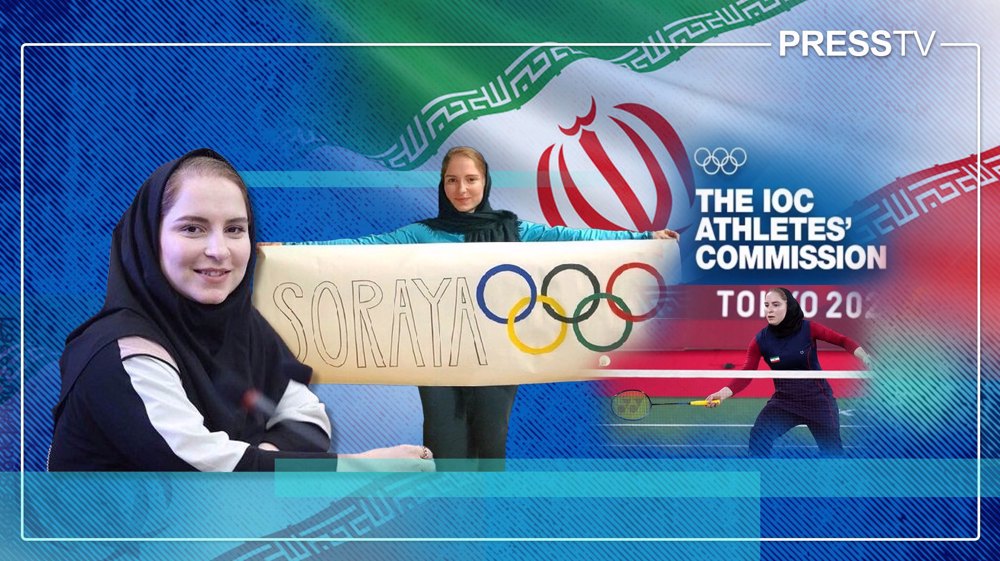
The International Olympic Committee (IOC) Executive Board’s decision to nominate Soraya Aghaei for IOC membership attracted little media attention, yet it carried considerable significance for both Iran and the governance of the Olympic movement.
Aghaei, a distinguished badminton player and current member of the IOC Athletes’ Commission, is slated for a vote at the 145th IOC Session in Milan in February 2026.
If confirmed, she will become one of the very few Iranian representatives ever to serve on the IOC’s central decision-making body – and the first Iranian female athlete to achieve this milestone.
Her nomination matters not because it is symbolic, but because it reflects how the IOC is evolving and also how young Iranian athletes are making their presence felt on the biggest stage.
From Olympic debut to Olympic governance
At 29, Aghaei is best known internationally for her participation in the Tokyo 2020 Olympic Games, where she became the first female badminton player to represent Iran at the Olympics.
Badminton is neither a flagship sport in Iran nor heavily funded, making her qualification a significant milestone.
Since Tokyo, Aghaei has remained active while also acting as a representative for athletes. She has served on Iran’s National Olympic Committee Athletes’ Commission and, more recently, joined the IOC Athletes’ Commission, a body that has increasingly become a key gateway to IOC leadership.
On December 10, the IOC Executive Board formally nominated her for IOC membership, following a broader reshaping of the Athletes’ Commission earlier this month. Her election is scheduled for the 145th IOC Session in Milan, ahead of the Milano Cortina 2026 Winter Games.
🇮🇷 Soraya Aghaei is set to become member of the IOC Athletes’ Commission (AC), only third Iranian ever to hold a seat on the body.
— Press TV Sports (@presstvsports) December 26, 2025
IOC plays a key role in overseeing the governance, organization, and global operation of the Olympic Games.@presstvsports pic.twitter.com/LfjRu4M2mT
Why IOC membership carries real power
The IOC has just over 100 members. They are not ceremonial figures. They approve Olympic hosts, elect the IOC president and executive board, amend the Olympic Charter, and influence policies governing eligibility, gender equity, funding, and international federations.
Billions of dollars flow through decisions taken or ratified by this elite group.
Importantly, IOC members do not act as national delegates. Once elected, they are representatives of the IOC in their countries, not the other way around.
They also hold voting rights within their national Olympic committees, giving them institutional leverage both globally and domestically.
For Iran, this distinction matters. Iran has had only a handful of IOC members in its modern sports history, and none continuously since the early 2000s. For more than two decades, despite repeated attempts by sports administrators, Iran lacked a powerful voice at the IOC table.
Sign of evolving IOC
For most of its history, the IOC was dominated by royalty, political elites, and business magnates. Athletes were largely excluded from its governance processes.
Gender parity was minimal. Geographic diversity was uneven. However, that began to change with the creation of the Athletes’ Commission in 1981 and the gradual inclusion of women.
However, reforms accelerated after Thomas Bach became IOC president in 2013, through Agenda 2020 and subsequent initiatives that strengthened transparency, athlete representation, gender parity, and global diversity.
Since then, the IOC has actively reduced the average age of its members, expanded the role of former Olympians, and increased female representation. The percentage of women among IOC members has risen to more than 40 percent and membership expanded across more than 80 countries.
The election of Kirsty Coventry – an Olympic champion from Zimbabwe – as IOC president further reinforced this shift. For the first time, the IOC is led by a former athlete from the Global South.
Aghaei’s nomination fits within this trajectory. She is an Olympian, a woman, and a representative from a country and a sport traditionally underrepresented in Olympic governance.
🇮🇷 Soraya Aghaei, Iran’s badminton star, appointed one of five new members of the IOC Athletes’ Commission
— Press TV Sports (@presstvsports) December 4, 2025
Her role will amplify athletes’ voices globally and highlight Iran’s presence in international Olympic decision‑making.@presstvsports pic.twitter.com/eHO2wHlKzs
Iran, women athletes, and institutional visibility
Within Iran, the young badminton star’s nomination has drawn attention not only because she is a woman, but because she is an athlete whose career extends beyond the badminton court.
Historically, Iranian IOC members came from political or administrative backgrounds. Her profile is different. She entered the Olympic movement through performance, not patronage.
Aghaei's own remarks reflect this trajectory. “I hope to be the voice of athletes in Iran and around the world,” she said in an interview following the announcement,” she said recently.
“I do not see this title as belonging only to me, but to the entire sporting community — especially to all the girls of Iran who have shone in every field, and particularly in sport.”
What representation actually means
Representation alone does not change institutions. But it does affect what questions are asked, and which perspectives are present when decisions are made.
The IOC Athletes’ Commission has become a critical channel for surfacing athlete welfare concerns, including competition schedules, safeguarding, mental health, and fair play. Members who transition from the commission into full IOC membership bring those priorities with them.
Aghaei has framed her role in those terms.
“My main goal is to support athletes, especially Iranian athletes, so that we can help them compete in a healthy and fair environment,” she said.
Her nomination did not emerge from an aggressive lobbying campaign by Iranian sports authorities. According to Iranian Olympic officials, the proposal was communicated directly by the IOC leadership. Iran’s National Olympic Committee did not initiate the nomination, but did not oppose it.
If confirmed, she would join a small but growing cohort of Muslim women athletes inside the IOC.
Alongside figures such as Afghanistan’s Samira Asghari, her presence would reflect a broader diversification of voices, not as tokens, but as governance participants.
🇮🇷 Iran's badminton star and OIC member Soraya Aghaei as a global voice for athletes
— Press TV Sports (@presstvsports) January 2, 2026
Ranked among Asia’s top five, she earned her Olympic quota through hard work and support. Now, as a member of the IOC Athletes’ Committee, she represents players worldwide.@presstvsports pic.twitter.com/XbSXkuh0rN
What this does and does not change
Iranian Olympian’s nomination will not transform the IOC overnight, experts say. She will be one of more than 100 members. She will not unilaterally reshape policy or redirect Olympic politics.
However, what it does change is who is present when decisions are debated – and which lived experiences inform those discussions.
For Iran, it restores a formal channel into Olympic governance that has been absent for more than two decades.
For emerging sporting countries, it reinforces the message that pathways into leadership no longer run exclusively through political or financial power.
For women athletes, particularly from Muslim-majority countries, it signals that elite competition can be a beginning, not an endpoint.
As Aghaei herself put it, reflecting on her journey: “Everyone thought the end of an athlete’s career meant the end of their sporting journey, but I wanted to go further.”
If elected in Milan, that journey will continue – not as a symbol, but as a participant in the institution that governs global sport.
Trump in no position to determine Iran presence in World Cup: Football chief
Despite war at home, Iranian athletes win nine golds for best-ever Asian Beach Games finish
2026 Asian Beach Games: Soccer, handball add more gold medals to Iran’s tally



Gaza aid flotilla activists tortured in Israeli custody after abduction, testimony shows
Somaliland ready to expand ties with Israel to counter Yemen: Report
Organized Israeli settler violence against Christians hits new high: Report
Iran calls Trump's piracy boast 'direct admission' of criminal blockade
IRGC: No power capable of weakening Iranian nation's resolve
May 2: Iran reaffirms Strait of Hormuz control as US pressure backfires and desperation grows
FM: Repeating clichés about Iran's nuclear activities 'irresponsible'
In a rare feat, 92-year-old woman in Iran had gallbladder removed without anesthesia


 PressTV NEWSLETTER
now
PressTV NEWSLETTER
now

 This makes it easy to access the Press TV website
