World Council of Churches calls for sanctions, arms embargo against Israel over Gaza war
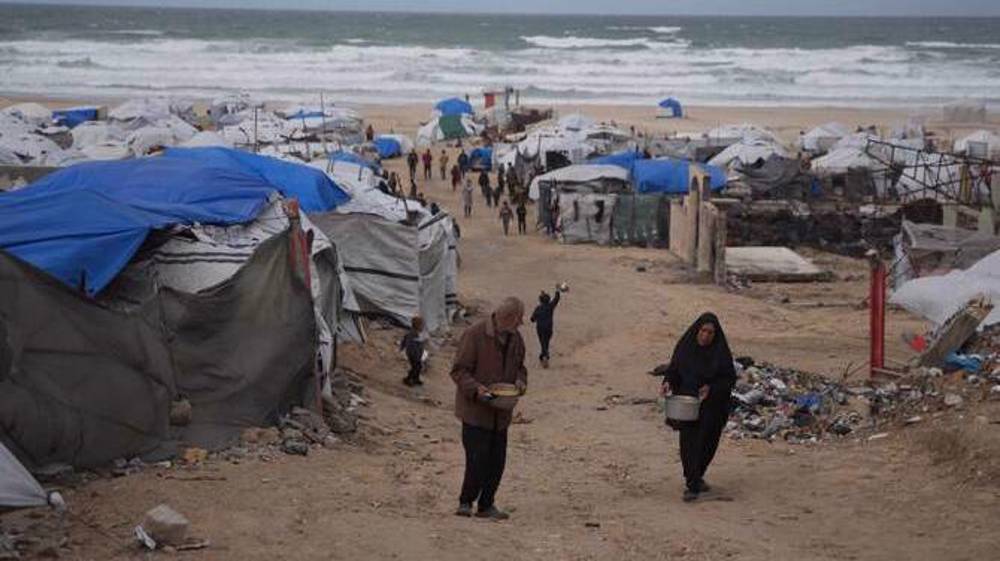
The World Council of Churches (WCC) has called on the European Union (EU) to impose sanctions and an arms embargo on Israel over its genocide in Gaza and violations against Palestinians in the occupied West Bank.
In a statement on Wednesday, Iskandar Majlton, local coordinator of the Ecumenical Accompaniment Program in Palestine and Israeli-occupied territories, affiliated with the WCC, said the council’s position is grounded in international law and human rights.
The council was “deeply shocked by the cycle of violence and the immense suffering” in the region, he added.
Majlton described Gaza as facing an “unprecedented humanitarian disaster.” The “tragic cycle of violence” did not begin in October 2023, but is the result of decades of occupation, the blockade imposed on Gaza, and systematic inequality, he stated.
The warning came as EU humanitarian chief Hadja Lahbib cautioned that Israel’s threat to suspend several aid groups in Gaza from January could block “life-saving” assistance from reaching the population.
"The EU has been clear: the NGO registration law cannot be implemented in its current form," Lahbib posted on X.
Israel announced that several humanitarian organizations would be barred from delivering aid for failing to provide personal details of their Palestinian employees. NGOs had until December 31 to comply with the new registration framework.
“International humanitarian law leaves no room for doubt: aid must reach those in need,” Lahbib emphasized.
To date, Israel has suspended more than three dozen aid groups, including Doctors Without Borders (MSF), citing noncompliance with its new stringent regulations for humanitarian operations in Gaza.
Apart from MSF, some of the 37 NGOs to be hit with the ban are the Norwegian Refugee Council, World Vision International, CARE, and Oxfam.

Several NGOs have said that the new rules will have a major impact on aid distribution in the besieged strip, with humanitarian organizations saying the amount of aid entering Gaza already remains inadequate.
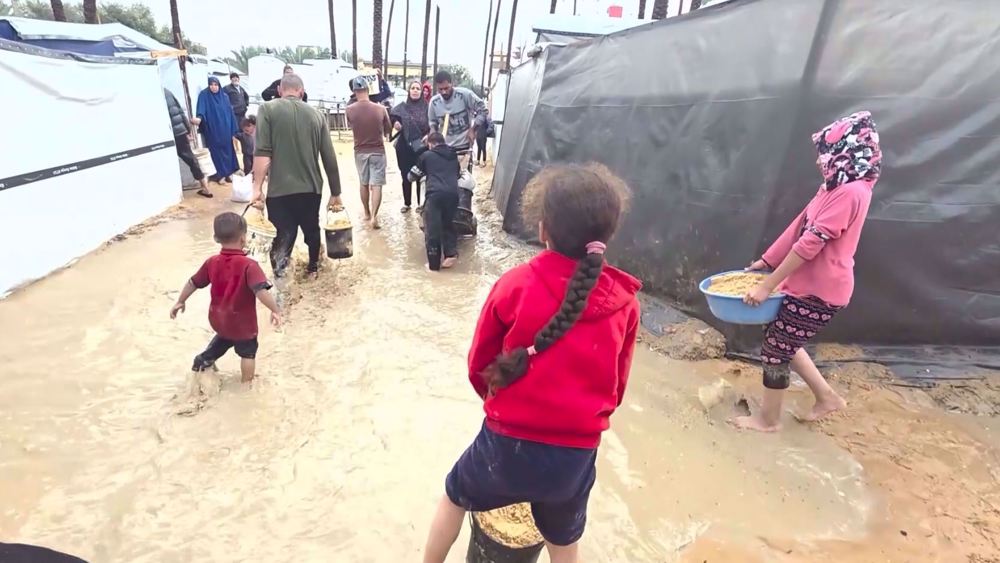
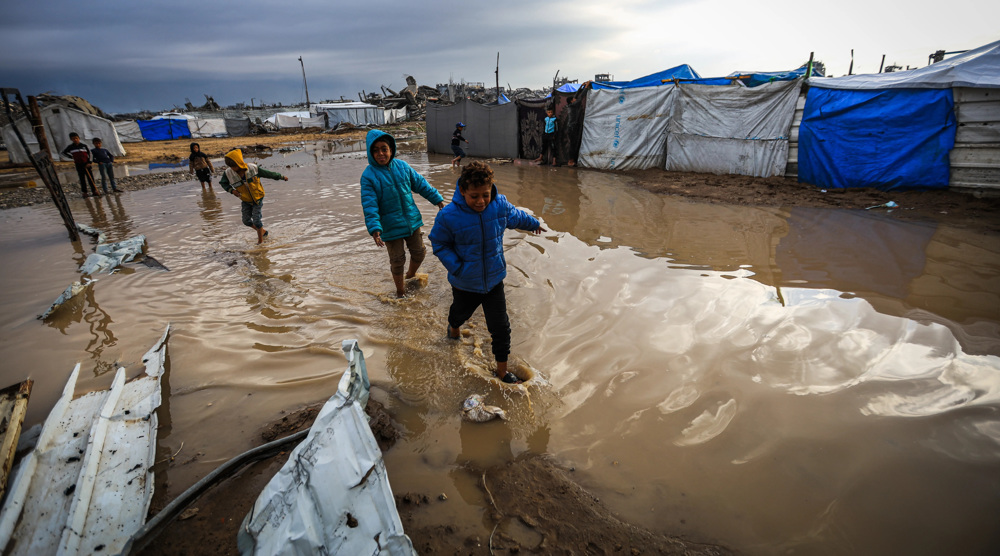
Meanwhile, the Swiss Federal Department of Foreign Affairs said on Wednesday that the humanitarian situation in Gaza has reached “catastrophic levels,” warning that harsh winter conditions are compounding the crisis.
Swiss Foreign Minister Ignazio Cassis called on Israeli authorities to ensure access to humanitarian aid in Gaza and also open crossings to enable large-scale delivery of assistance.
The comments come a day after a similar statement was issued jointly by the foreign ministers of the United Kingdom, Canada, Denmark, Finland, France, Iceland, Japan, Norway, and Sweden.
Under the 20-point agreement that allowed a fragile ceasefire to come into effect in October, Israel is obliged to allow "full aid" to be “immediately sent into Gaza.”
The deal stipulated the entry of 600 trucks per day; however, only 100 to 300 are allowed to enter Gaza.
Most Palestinians in the besieged strip say that they fail to feel the relief they expected after the ceasefire.
Israel has also banned the UNRWA from operating in the territory after accusing some of its staff of involvement in the al-Aqsa Storm operation in October 2023.
As part of its findings, the International Court of Justice ( ICJ) said that Israel failed to present any evidence that would link UNRWA with the Palestinian resistance group Hamas, as the regime had claimed.
In a ruling on October 22, the ICJ ordered Israel to allow the delivery of humanitarian aid into the besieged Gaza Strip, underscoring its legal obligation as an occupying power to ensure Palestinians have access to essential goods for survival.
White House rejects Israeli request to 'review' Iran-US MoU: Reports

Palestinian groups warn against Israeli move to strip al-Khalil of municipal powers

France shuts down 12 Israeli stands at major arms expo



Netanyahu-Trump relations reach breaking point: Israeli paper
UK Palestine Action proscription upheld
Top Yemeni official: Iranian armed forces inspiring model for Muslim world
Israeli media urges continued Lebanon strikes to disrupt Iran-US MoU
Bahraini regime forces attack mourning Shia Muslims near Manama
On Iran’s sanction-proof economy powered by scientists
VIDEO | US public welcomes end to their most unpopular war ever
VIDEO | Iran vs. New Zealand: A meeting beyond football






 PressTV NEWSLETTER
now
PressTV NEWSLETTER
now
 This makes it easy to access the Press TV website
