Pezeshkian: Kazakhstan 'strategic partner'; Tokayev hails Iran's advancements

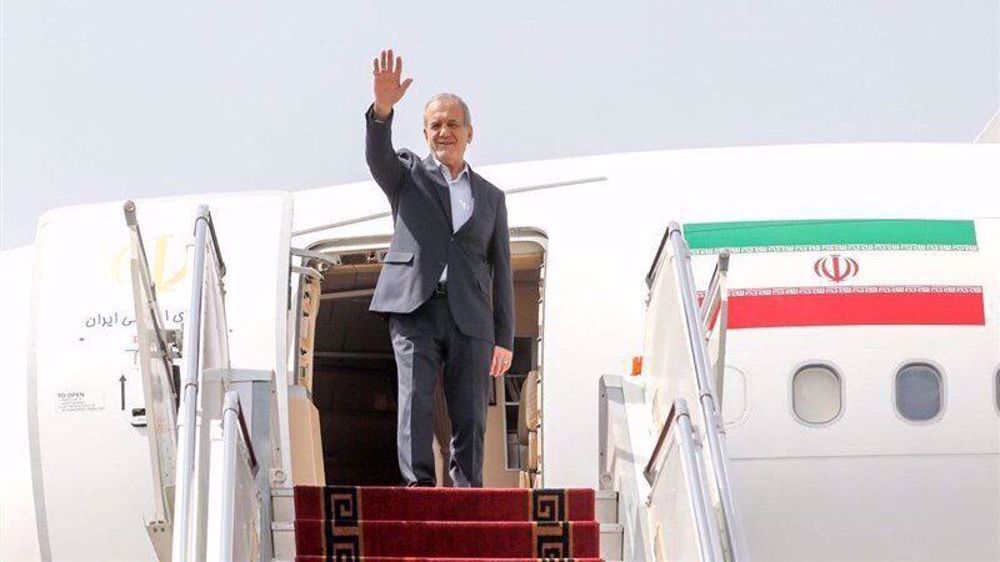
Iran’s President Masoud Pezeshkian has emphasized the strategic position of Iran and Kazakhstan in the regional transport network, noting that the two countries can establish an active transport corridor that would serve as a bridge connecting East and West Eurasia.
During a joint Iran-Kazakhstan business forum on Thursday in Astana, Pezeshkian emphasized the strategic position of Iran and Kazakhstan in the regional transport network, describing transportation as “the engine of economic development” for both countries.
“Iran, as the southern gateway to the Persian Gulf and the Indian Ocean, and Kazakhstan, as the northern and eastern gateway to Central Asia, can establish an active transport corridor that would not only expand bilateral trade but also serve as a bridge connecting East and West Eurasia,” he said.
Pezeshkian, who is in Astana at the head of a high-ranking delegation, called Kazakhstan a "strategic partner" for Iran, saying Tehran has no limitations in developing bilateral relations.
“Relations between the Islamic Republic of Iran and Kazakhstan are rooted in shared history, long-standing culture, and mutual respect between our peoples,” he said adding that this visit “symbolizes not only the enduring friendship between our nations but also represents a significant step toward expanding economic and trade cooperation.”
Pezeshkian reviewed recent steps to strengthen bilateral ties, noting that in recent years, both governments have taken significant measures to enhance cooperation.
Agreements on transportation, visa facilitation for businesspeople, and the development of trade and customs cooperation are among the achievements that pave the way for a leap in economic relations.
Referring to the joint economic cooperation commission, Pezeshkian stressed that multiple agreements were reached and that government bodies must work to ensure their full implementation.
He noted that current trade levels between the two countries are not commensurate with their vast capacities, adding that bilateral trade in 2024 reached only $340 million.
Highlighting a roadmap to increase trade volume to $3 billion, the president said “it is essential that both the private and public sectors exert all their efforts to remove obstacles and achieve this goal.”
Pezeshkian outlined extensive areas for potential cooperation, including energy, agriculture, industry, advanced technologies, tourism, and engineering services. Iranian companies with experience in overcoming complex challenges are ready to engage in joint projects with Kazakh partners.
“The global economy today is built on trust, transparency, and regional integration. We want to establish a sustainable network of cooperation and mutual investment between the private sectors of our two countries,” he said.
He added that Iranian government supports any joint initiative that enhances the welfare of the people of both nations.”

During his visit, Pezeshkian also received an honorary doctorate from Nazarbayev International University, addressing faculty, researchers, and students.
He praised the university’s role as a leading regional center for medical science, noting its significant contribution to public health in Kazakhstan and the advancement of medical knowledge.
Addressing contemporary global health challenges, Pezeshkian highlighted the importance of international cooperation in tackling non-communicable diseases, climate change, biological threats, emerging diseases, and building resilient health systems.
He expressed Iran’s readiness to expand scientific and technological cooperation with Kazakh universities and research centers, including joint vaccine production, regional laboratory networks, and academic exchanges.
In a joint press conference on Thursday Kazakh President Kassym-Jomart Tokayev praised Iran’s increasing scientific and technological advancements, attributing them to Iran’s effective policies and efforts.
He noted that over the past ten months, trade between Kazakhstan and Iran has grown by 40% compared to the previous year, with expectations for further growth given the countries’ capacity.
Tokayev emphasized investment as the cornerstone of long-term bilateral partnership.
He added that approximately 700 Iranian companies operate in Kazakhstan, mainly in industry, infrastructure, and agriculture, while Kazakh firms invest in Iran across mining, transportation, logistics, and food production projects.
He noted that the North-South transport corridor and the Kazakhstan-Turkmenistan-Iran railway projects “hold special significance, and these projects are “in line with the interests of both countries.”
Tokayev emphasized that both countries consider each other a trusted and reliable partner in Central Asia, committed to expanding trade, scientific collaboration, and cultural exchange, underscoring the strategic importance of their partnership for the future of the region.
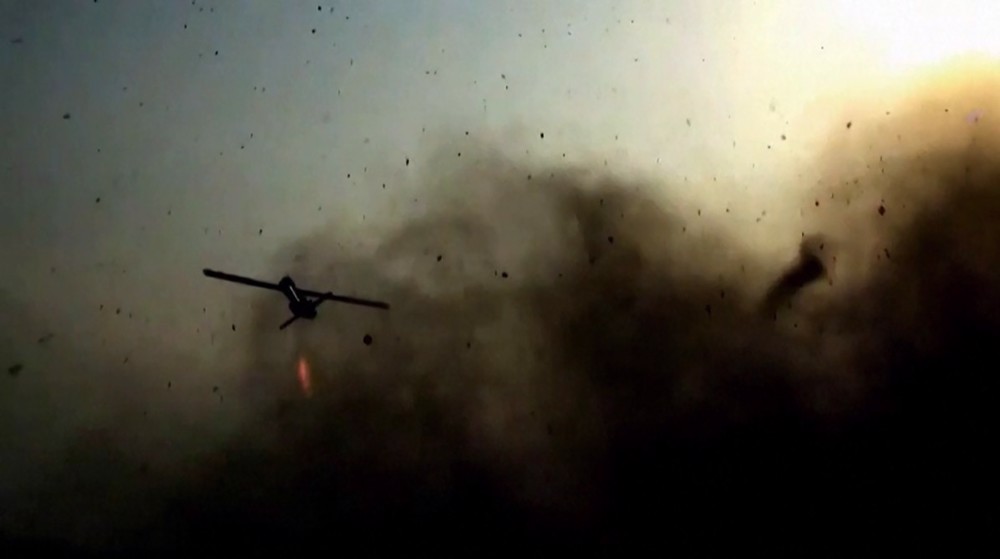
Iran Army hits US helicopter, reconnaissance aircraft base in Bahrain
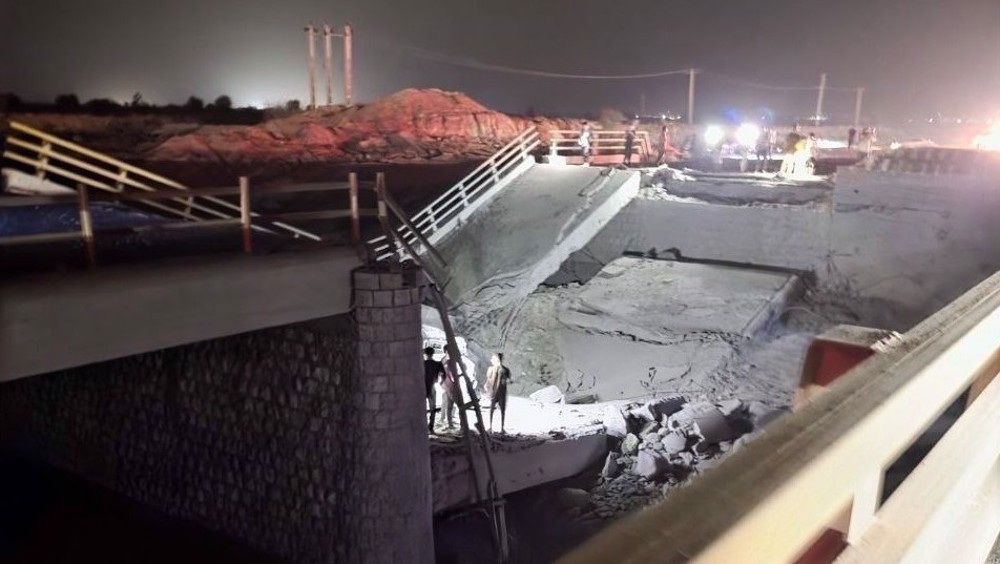
US launches fresh wave of deadly strikes on Iran, targets bridges, railway, airports
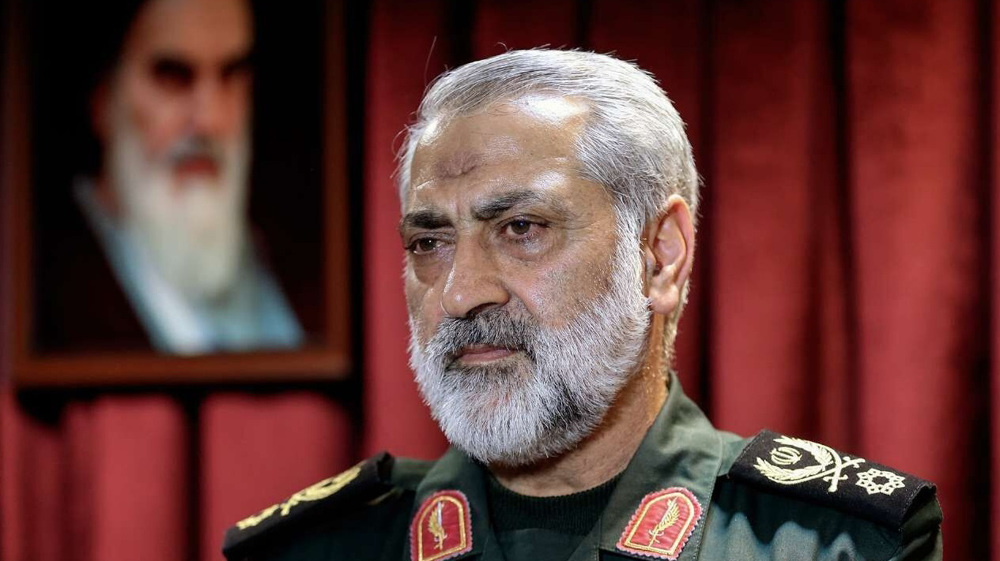
Iran urges Persian Gulf states to join hands for Hormuz security, blames US for instability



Iran Army hits US helicopter, reconnaissance aircraft base in Bahrain
US launches fresh wave of deadly strikes on Iran, targets bridges, railway, airports
Iran urges Persian Gulf states to join hands for Hormuz security, blames US for instability
'Go to Hell': JD Vance lashes out at Israeli campaign to derail US-Iran talks
Iran slams US, Israel, Argentina for voting against key UN counterterrorism resolutions
'Third betrayal of diplomacy": Iran blasts US violation of every element of MoU
VIDEO | Why Washington's military strategy against Iran is failing to deliver results?
VIDEO | 'The conflict is highlighting strategic importance of the Strait of Hormuz'


 PressTV NEWSLETTER
now
PressTV NEWSLETTER
now
 This makes it easy to access the Press TV website
