Explainer: As countdown begins for FIFA World Cup 2026, what is in store for Iran
By Mohammad Ali Haqshenas
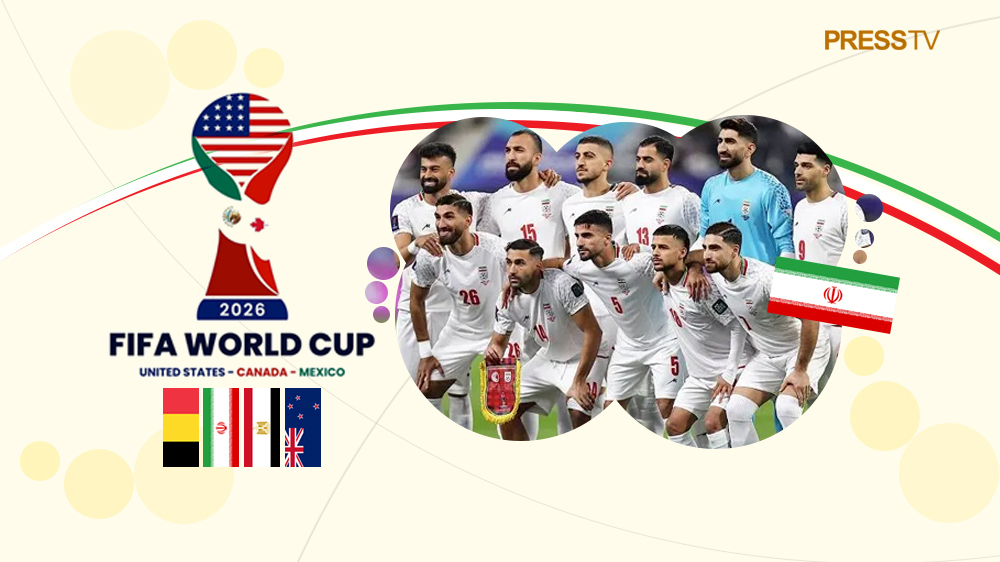
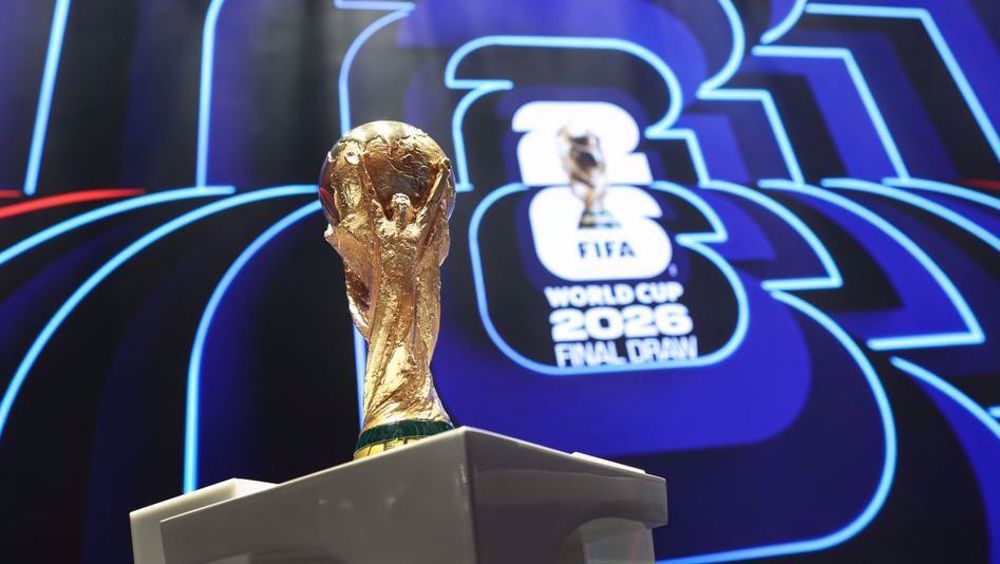
The draw for the 2026 FIFA World Cup was held on Friday at the John F. Kennedy Center in Washington, with 48 teams divided into 12 groups, all vying for glory in the world’s greatest football spectacle.
The marquee tournament will be co-hosted by the United States, Canada, and Mexico next year.
Drawn into Group G alongside European powerhouse Belgium, African heavyweights Egypt, and Oceania champions New Zealand, Iran faces a challenging yet navigable path to the knockout stage.
The draw on Friday pulled in hundreds of millions of viewers worldwide as fans found out how the road to the finals of the World Cup, starting 11 June 2026, would take shape.
Iran was represented at the draw by head coach Amir Ghalenoei after the federation head, Mehdi Taj, and others were refused visas by the US government for unknown reasons.
With the match schedule fixed and group dynamics clear, anticipation is building for how Iran will navigate its three rivals that bring contrasting strengths and histories to the table.
What does the FIFA World Cup draw mean for Iran?
For the first time in its World Cup history, Iran has been drawn against a blend of opponents that offers a distinct "group of life" dynamic rather than a "group of death."
While Belgium serves as the undisputed heavyweight and group favorite, the presence of Egypt and New Zealand presents a scenario where second place is a realistic, albeit difficult, target.
Inside the country, the reaction has been cautiously optimistic, with fans expecting the team to script history in this World Cup. The consensus among Iranian sports outlets is that while Belgium may be out of reach, the "swing match" against Egypt will determine Iran’s fate.
How has Iran’s road to the 2026 World Cup been?
This marks Iran’s seventh FIFA World Cup appearance and its fourth consecutive one (1978, 1998, 2006, 2014, 2018, 2022), which shows a consistent rise of the team.
Despite consistently being Asia’s top-ranked side, Team Melli has never progressed beyond the group stage – a glass ceiling they are expecting to shatter in North America.
The Persian Leopards secured their ticket to the 2026 tournament with characteristic efficiency, topping their AFC Third Round qualification group.
Under head coach Ghalenoei, the team has maintained a stronghold in the top 20 of the FIFA rankings (currently placed 20th), relying on a pragmatic, results-first approach.
Team Melli’s strong defensive play – a style some experts say remains as a legacy of former coach Carlos Queiroz – had already posed challenges to giants such as Argentina, Spain, and Portugal in the past World Cup matches.
🇮🇷⚽ The road to 2026 FIFA World Cup is now clear for Iran after Friday night’s draw in Washington, D.C. placed Team Melli in a potentially compelling and dramatic Group G alongside Belgium, Egypt, and New Zealand.@presstvsportshttps://t.co/7IMXNhkXkn
— Press TV Sports (@presstvsports) December 6, 2025
Who are Team Melli’s main rivals in 2026?
With the match venues yet to be determined by FIFA, the global football governing body, the focus remains strictly on the tactical and historical challenges posed by the opponents.
1. New Zealand (The All Whites)
Match Date: June 15, 2026 | FIFA Ranking: 86
Securing the automatic OFC slot with a dominant run in Oceania, New Zealand presents what is, on paper, the "must-win" opener for Iran.
The All Whites are a physically imposing side, known for their aerial threat and set-piece organization. Their reliance on veteran striker Chris Wood remains a focal point, demanding high concentration from Iran's central defenders.
Historically, Iran holds the upper hand. The most notable meeting was the 2003 AFC-OFC Challenge Cup, where Iran dismantled New Zealand 3-0 at Azadi Stadium. A repeat of that performance is the baseline expectation for Iranian fans.
2. Belgium (The Red Devils)
Match Date: June 21, 2026 | FIFA Ranking: 8
Belgium topped their UEFA qualifying group comfortably, maintaining their status as a football powerhouse in Europe.
It is worth noting their incredible consistency in recent years. Belgium was the top-ranked FIFA side between September 2018 and February 2022.
Currently, they are in a transitional phase between their "golden generation" and new talents like JérémyDoku and LoïsOpenda.
Despite this transition, they remain a top-tier European side with superior technical quality in midfield. However, their recent weakness has been a vulnerability to quick counterattacks, one of Iran’s primary offensive weapons.
Surprisingly, this will be the first-ever official meeting between the two sides at the senior level, adding an element of unpredictability to the clash.
3. Egypt (The Pharaohs)
Match Date: June 26, 2026 | FIFA Ranking: 34
Qualifying after finishing top of CAF Group A qualifiers, Egypt presents arguably the most critical match of the group.
The Pharaohs are tactically disciplined and rely heavily on the brilliance of Liverpool star Mohamed Salah to unlock defenses.
The battle between Iran’s disciplined backline and Egypt’s transition play will likely decide who joins Belgium in the Round of 32.
The two teams have rarely crossed paths. Their only significant encounter was a friendly in June 2000, which ended in a 1-1 draw (with Egypt eventually winning on penalties), suggesting a tightly contested affair is on the cards.
🏆⚽ The 2026 FIFA World Cup draw is complete. 48 teams split into 12 groups, with Iran in Group G alongside Belgium, Egypt, and New Zealand.#WorldCup2026@presstvsports pic.twitter.com/nSgJCBoaSg
— Press TV Sports (@presstvsports) December 5, 2025
How tough is this group?
Tactically, Iran’s group in the FIFA World Cup 2026 is a minefield of contrasting styles.
Based purely on FIFA coefficients, the group should finish in this manner: Belgium (1st), Iran (2nd), Egypt (3rd), New Zealand (4th). However, the gap between Iran (#20) and Egypt (#34) can be considered negligible in the field.
The final group game against Egypt is the undisputed "final" for Iran. If Iran secures 3 points against New Zealand and avoids a heavy defeat to Belgium, a draw against Egypt might be enough to advance, depending on goal difference.
Both Egypt and Belgium have shown defensive fragility in wide areas over the last year. Iran’s wingers, along with the aerial prowess of Mehdi Taremi, will be key to exploiting these gaps.
What are Iran’s chances of reaching the knockout stage?
For the first time in decades, the path to the Round of 32 (under the new 48-team format) seems clear. The top two teams advance, along with the eight best third-placed teams.
In the best-case scenario, Iran beats New Zealand and draws with Egypt/Belgium, finishing on 4-5 points. This guarantees qualification for Team Melli.
The key challenge, though, is the mental burden of the opening match. Failing to beat New Zealand would immediately plunge Iran into a crisis before facing the group's strongest teams.
Team Melli has famously secured wins in World Cup finals (vs. USA 1998, vs. Morocco 2018, vs. Wales 2022) but has never sustained that form across three games.
Consistency has been the missing ingredient for Iran in World Cups. That is one key area they need to work on as they prepare for the tournament.
🇮🇷⚽ Iran’s World Cup 2026 journey begins in Los Angeles and Seattle on June 14. Next matches are set for Vancouver or LA, then Seattle or Vancouver. If Iran advances as Group G runner‑up, they’ll face Group D’s second team in Dallas.@presstvsports pic.twitter.com/8qaEz7tzsb
— Press TV Sports (@presstvsports) December 5, 2025
How did Iran’s head coach react to the draw?
Following the conclusion of the draw, head coach Ghalenoei sought to temper expectations while expressing confidence in his squad’s maturity.
Addressing the media, he emphasized that rankings do not win matches.
"It is a fact that football has advanced worldwide and there are no easy teams anymore. If I want to give my own assessment, I must say thank God our group is better compared to the conditions of other groups, but we have no right to consider any opponent easy and must enter the matches with the highest quality,” he was quoted as saying.
“Do not forget that after the AFC Asian Cup, due to injuries, we did not have half of our players available. However, I am very hopeful that with the return of the injured players and the addition of several players who joined us after the generational change, we will reach the level of quality we are aiming for."
Egypt’s head coach, Hossam Hassan, also reacted to being grouped with Iran at the World Cup.
“This group includes a world-class team like Belgium, a major Asian team like Iran, and a hardworking side like New Zealand. We have the ambition to achieve the best possible position,” he noted.
New Zealand football coach Darren Bazeley acknowledged that the World Cup 2026 group, alongside Iran, Belgium and Egypt, is tough but noted it could have been harder.
What was the visa controversy related to Iran?
While the draw outcome was favorable, the event itself was overshadowed by diplomatic friction due to the denial of visas to many members of the Iranian federation.
In the days leading up to the ceremony, the US authorities denied entry visas to key members of the Iranian delegation, including President Mehdi Taj and several executive administrators.
The Iranian Football Federation slammed the visa denial as a politically motivated move and a violation of FIFA’s host nation agreements.
The federation said it would boycott the ceremony. However, a three-member Iranian delegation was later dispatched to Washington, D.C. to represent their country and discuss preparations for the team before the event, including the camp and possible friendly matches.
While FIFA has stated it is investigating the logistical hurdles, the incident has reignited concerns regarding the smooth participation of Iranian fans and officials during the tournament.
With fresh bans on the entry of Iranians to the US under the Trump administration, many Iranians who do not have another passport will most likely be barred from cheering for their team at US stadiums in the summer.
🇮🇷⚽ Iran football coach, Ghalenoei, reacts to the FIFA World Cup draw:
— Press TV Sports (@presstvsports) December 6, 2025
“There is no such thing as an easy opponent. Our team has the technical ability to achieve great things, but we need four strong preparatory matches to be fully ready.”@presstvsports pic.twitter.com/VaMcpCctg9
What happens next?
With the roadmap now clear, the Iranian football federation is expected to announce a series of training camps and friendlies in the coming weeks and months.
Iran will likely seek friendly matches against African or European opposition to simulate the styles of Egypt and Belgium.
“We need two matches against teams from Pot 1 and two matches against teams from Pots 3 and 4,” Ghalenoei said on Friday. “From today, we must not let any opportunity slip away.”
The focus will be on finalizing the squad list, particularly integrating the younger generation mentioned by Ghalenoei, who will join experienced players such as Taremi.
Team Melli, as Ghalenoei mentioned, has suffered from injuries of some of its key players in the past months, with strikers Sardar Azmoun and Mehdi Ghayedi on top of the list. The team hopes the injured players will reach their best form by the start of the tournament.
FIFA World Cup 2026 in US facing boycott over wars abroad, rights violations at home

US denies visa to Palestine football chief for World Cup attendance

Host obliged to follow FIFA guidelines, says Team Melli manager amid US visa denials

How Iran outranks Germany, Canada, Japan in drinking water quality
Iranian officials united on resistance against threats: Judiciary chief
Iran ready to counter mischievous acts with ‘eyes open, fingers on trigger’: IRGC general
Albanian villagers say Jared Kushner's projects developed on disputed land
Hunger strike for Sumud detainees held in Libya
Britain seizes Russian oil tanker amid rising tensions with Moscow
How Iran turned battlefield gains and regional power into strategic postwar leverage against US
Israeli forces storm West Bank towns, abduct ordinary Palestinians




 PressTV NEWSLETTER now
  This makes it easy to access the Press TV website