Discover Iran: Seh Qaleh Desert in South Khorasan is a celestial stargazing haven

By Maryam Qarehgozlou
- Seh Qaleh Desert in South Khorasan province offers one of Iran’s darkest skies, perfect for astronomy and stargazing.
- The region features historic landmarks like the Safavid-era Fazel-Khan reservoir and Kamrud Fortress with ancient defensive walls.
- Visitors enjoy vast dunes, quiet nights, traditional architecture, and eco-lodges under a spectacular, star-filled desert sky.
In the heart of South Khorasan province in eastern Iran, amid silence and starlight, the Seh Qaleh desert stands as a celestial haven where the vastness of the land merges seamlessly with the beauty of the heavens.
Among Iran’s sweeping desert landscapes, the Seh Qaleh desert is one of the country’s most captivating natural wonders — a destination blending astronomy and adventure.
Located near the small town of Seh Qaleh in Sarayan County, the region’s unique geography and pristine environment have made it a prime attraction for both nature enthusiasts and stargazers.
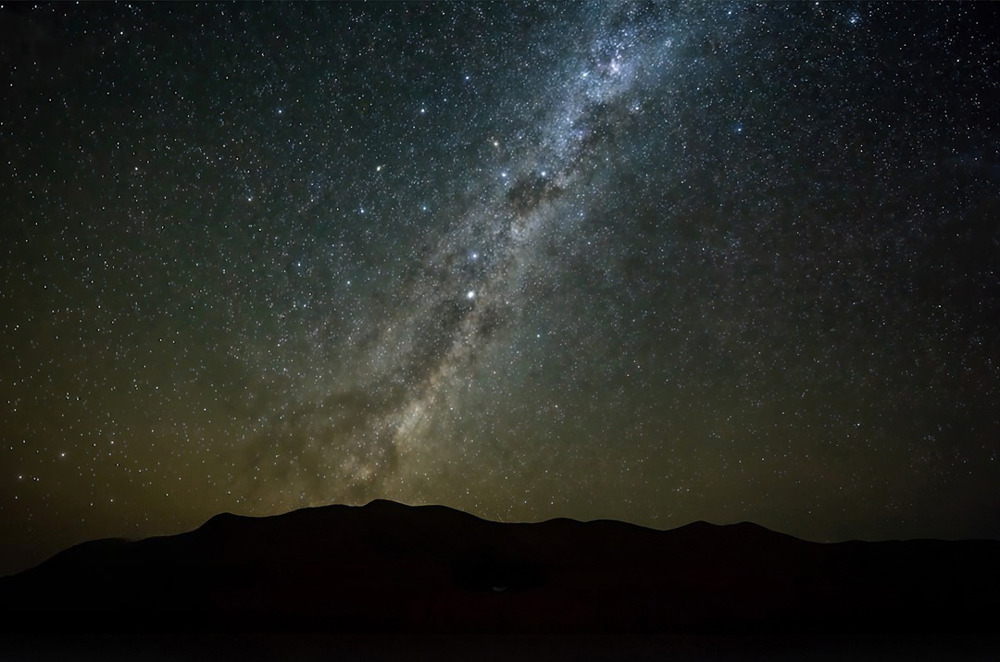
The sky above Seh Qaleh is known as the darkest in Iran and one of the darkest in West Asia. This extraordinary clarity makes it a premier destination for professional and amateur astronomers alike.
With a limiting magnitude of 7.2, the desert offers one of the brightest, most star-filled night skies visible to the human eye.
Thanks to its distance from dust storms, lack of light pollution, and open horizon, Seh Qaleh is considered one of the best locations in Iran for astronomical observations and star-watching events.
It is also home to Iran’s first official astronomy tourism site, reflecting a growing interest in dark-sky tourism in the country among both amateur and professional astronomers
Cultural heritage officials have even initiated the process of registering Seh Qaleh as Iran’s first Dark Sky Park on the global list of astronomical heritage sites.
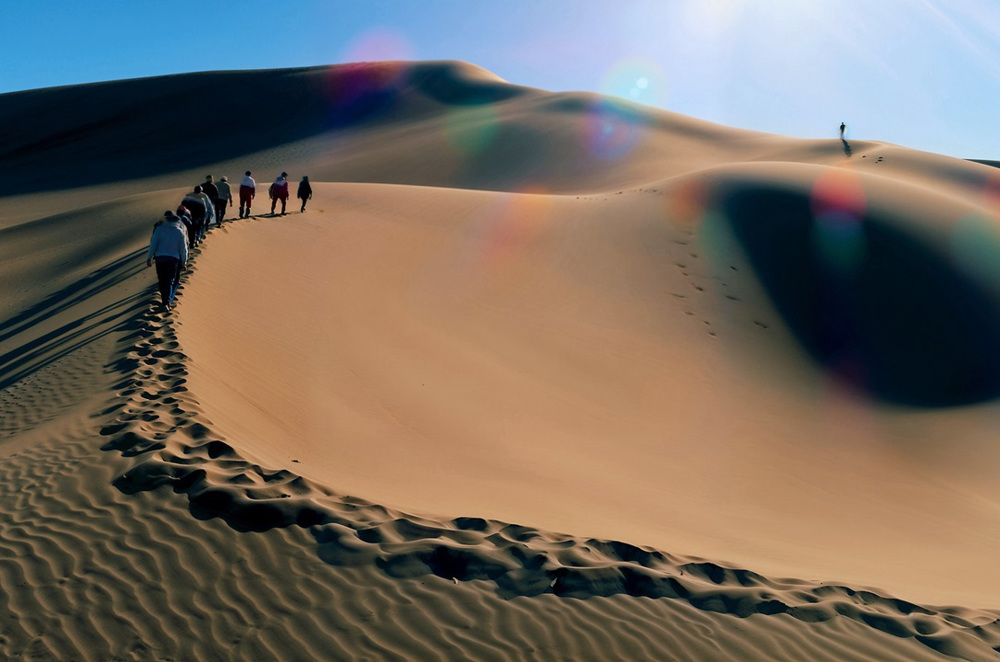
Climatically, Seh Qaleh is semi-arid, with hot summers, cold and dry winters, and very low annual rainfall — roughly 100 millimeters.
Vegetation is sparse, yet its vast dunes, salt flats, and sculpted hills create breathtaking scenery.
Geologists note that the area contains several significant fault lines, and within a relatively compact space, visitors can see all four types of Iranian desert environments: hot and dry, semi-dry, coastal, and cold.
Despite its barren appearance, the Seh Qaleh desert’s endless sand ridges invite visitors to walk barefoot over shifting dunes, experience the deep quiet, and witness sunsets that transform the horizon into a canvas of orange and violet.
It is this pure, untouched beauty that has made the desert a sanctuary for photographers, astronomers, and solitude-seekers alike.
Beyond its natural allure, the area also boasts several historic landmarks.
These include the Fazel-Khan water reservoir from the Safavid era, the Kamrud Fortress with its ancient walls, and several traditional wind towers (badgirs) such as those in the Mir-Ali-Aqa and Khosravi houses from the Qajar period.
Fazel-Khan reservoir exemplifies Persian ingenuity in water management. Constructed with brick and plaster, it stored water for public use in arid regions while its domed roof and underground design maintained cool temperatures, reflecting advanced engineering techniques of the Safavid period.
Kamrud Fortress, with its ancient walls, stands as a testament to Iran’s historical resilience and strategic architecture. Dating back to early Islamic times, its stone and mudbrick structures once guarded vital trade routes and its weathered walls reveal layers of history.
The Hesam-o-Din historical house, with its tall arches and classic Iranian architecture, stands as a reminder of the region’s cultural richness.
It is a fine example of traditional Persian residential architecture, featuring intricate stucco work, wooden lattice windows, and a central courtyard, which reflects the cultural values of its era.
Seh Qaleh lies about 50 kilometers from the city of Sarayan, and in recent years, several eco-lodges and traditional guesthouses have been established nearby, allowing travelers to spend the night under a sky ablaze with stars.
Spending a night here means more than a stay, but an encounter with silence, darkness, and the infinite wonders of nature, as travellers say.
The best time to visit is between mid-autumn and winter, when the sky darkens earlier and the crisp air creates perfect conditions for stargazing and night photography.
For those seeking an experience beyond the ordinary — one that unites the serenity of the desert with the wonder of the cosmos — the Seh Qaleh desert offers a glimpse of nature at its most profound.
Here, where the horizon never ends and the stars feel close enough to touch, you’ll rediscover the rare beauty of stillness itself.
Iran receives first $3 billion asset tranche as part of understanding with UAE: Report
Britain 'faces deindustrialisation' without relief from high energy costs: Survey

US must cut military assistance to Israel to protect Iran deal: Ex-Trump official



UK courts whitewash Israeli genocide in Gaza: Palestine Action terror ban upheld
Israel plans to fund extremist settlers in occupied West Bank with $1.89mn: Report
Iran took ‘great step towards final victory’ against aggressors: Parliament speaker
‘Greatest strategic failure’: Israeli politicians slam Netanyahu over US-Iran MoU
Israel to stay ‘indefinitely’ in newly-occupied lands in Lebanon, Syria and Gaza: Minister
Pezeshkian: Israeli anger over MoU with US ‘clear sign’ of Iran’s victory
Senior cleric: Lebanon govt. should review its stances, improve ties with Iran
Press TV reporter wounded in Israeli drone strike on southern Lebanon


 PressTV NEWSLETTER
now
PressTV NEWSLETTER
now
 This makes it easy to access the Press TV website
