Discover Iran: Shah Abbas Dam, masterpiece of hydraulic engineering in South Khorasan
By Ivan Kesic
- Shah Abbas Dam is a 14th-century Ilkhanid structure featuring a sophisticated pointed arch at its base, designed to allow regular floods to pass through while storing excess water, all without trapping sediment.
- It is part of an Ilkhanid irrigation renaissance that produced the world's first true arch dams, including the monumental 56-meter-high Kurit Dam, which were far more advanced than earlier Roman structures.
- Iranian dams of the 14th century represent a global engineering milestone, as they were the first to fully utilize the arch principle for stability, predating comparable European arch dams by at least two centuries.
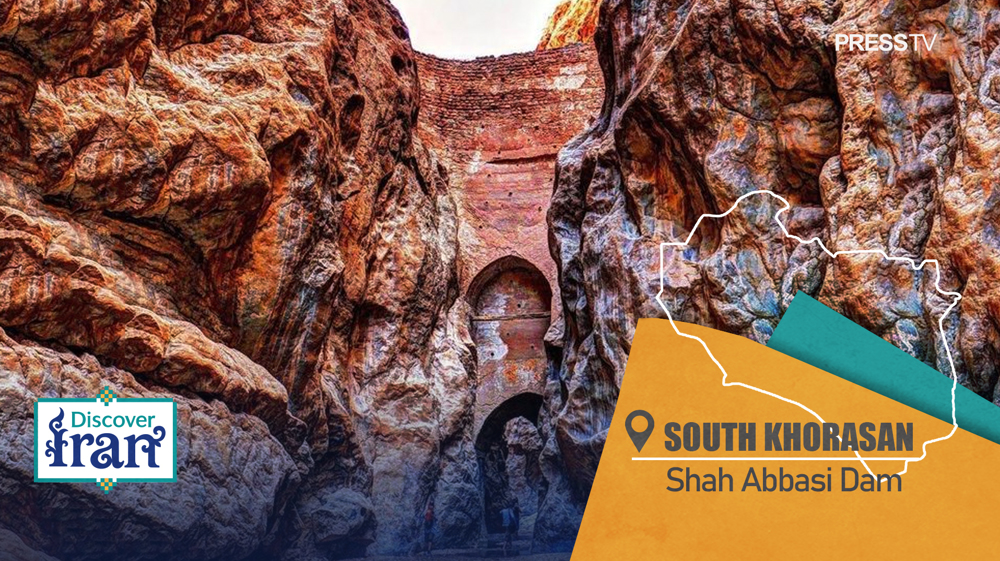
Nestled within the picturesque confines of the Morteza Ali Canyon near Tabas in eastern Iran’s South Khorasan province, Shah Abbas Dam stands as a silent but enduring testament to the hydrological genius of medieval Iran.
This masonry arch dam, constructed in the 14th century during the Ilkhanid period, spans the Sardar River, a tributary of the Namaki River, and rises to a height of twenty meters.
Its nomenclature is intertwined with the Safavid era, as it was significantly renovated during the reign of either Shah Abbas I or Shah Abbas II, leading to its enduring association with the eminent Safavid-era ruler.
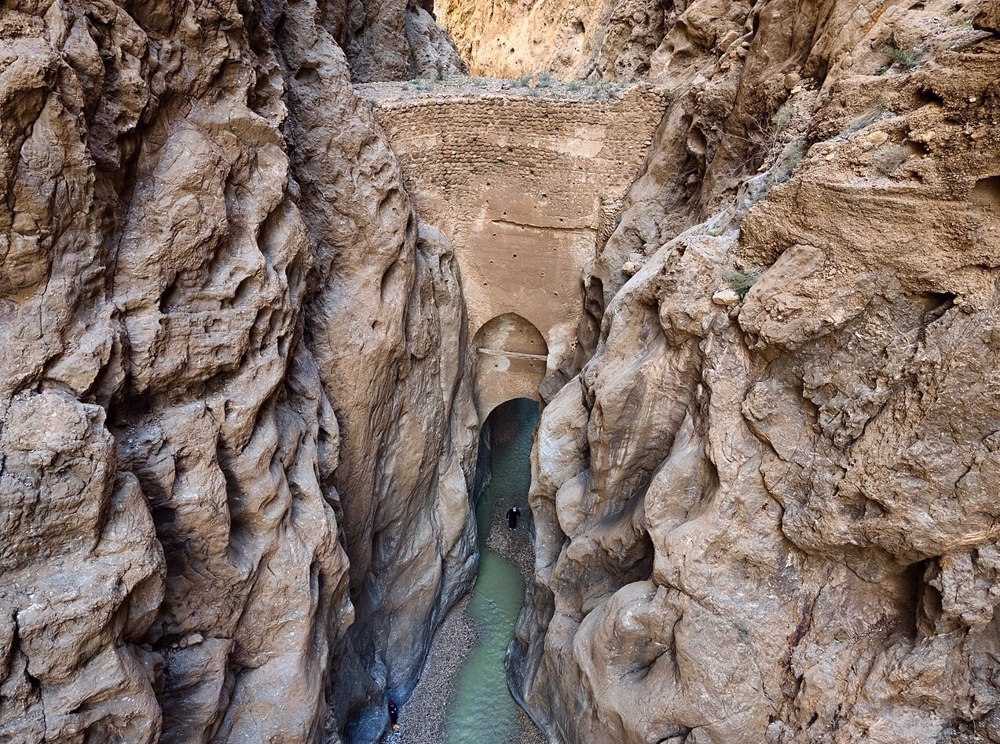
The dam is a composite structure, skillfully built from brick, stone, and mortar, and its most defining architectural feature is a pointed arch at its base, a design of profound sophistication.
The fundamental principle of the Shah Abbasi Arch was its intelligent management of water flow; regular, decennial floods would pass freely beneath the arch, while larger, more formidable flood events would see a portion of their water stored behind the dam's body, thus protecting the city of Tabas from catastrophic flooding for centuries.
The strategic brilliance of its construction is further evidenced by its carefully chosen location, which was selected to ensure that no sediment would accumulate behind the dam, preventing siltation and preserving its functionality indefinitely.
The architectural execution is remarkable, with the lower arch section, the oldest part of the structure, being carved directly into the rocky canyon walls on either side of the river.
The bricks used in this arch were laid radially, extending deep into the mountain's body to create an immensely strong, integrated structure, while the upper portion of the dam was finished with rubble.
This creative and resilient design, combined with its effective flood reduction capabilities, means the Shah Abbas Dam was built to function for endless years without the need for repair or maintenance, a claim borne out by its continued existence.
Adding a touch of enigmatic history to the site, several goats are carved into a stone adjacent to the dam, hinting at the daily lives of its builders or those who later inhabited the area.
Ilkhanid irrigation renaissance and legacy of dam building
The hydrological ambition of the Ilkhanid dynasty catalyzed what can be described as an irrigation renaissance across the Iranian plateau, with the Shah Abbas Dam being one prominent example among several pioneering structures.
This period of reconstruction and innovation emerged after the devastating Mongol invasion of the early 13th century, which had depopulated vast areas and left ancient irrigation systems in disrepair.
The Ilkhanids, having assimilated into Persian culture, undertook extensive efforts to repair vital qanats and canals and embarked on building new dams that represented the engineering miracles of their time.
Beyond the Shah Abbas Dam in South Khorasan, another monumental achievement from this era is the Kurit arch dam, also located near Tabas, which reached a staggering height of 56 meters.
Farther west, near the city of Qom, the Ilkhanids constructed the Kobar arch dam, a structure 26 meters high with a crest length of 55 meters, including wing walls, and a thickness varying between six and nine meters.
This dam is notably recognized as the oldest surviving example of its type yet located, predating similar Western models by several centuries.
The Ilkhanid building program was not limited to arch dams alone; they also erected large gravity dams, such as the Saveh Dam and the Shesh Taraz Dam near Kashmar in the Khorasan region, demonstrating a comprehensive and sophisticated approach to water management and agricultural development across their realm.
Pioneers of the arch: Iran's global engineering significance
The global significance of these Ilkhanid dams, including the Shah Abbas Dam, lies in their revolutionary engineering, which marks them as the world's first true arch dams, predating comparable European structures by centuries.
While arch dams had been built in ancient times, notably by the Romans who were great builders of arch structures, their designs were relatively primitive in comparison.
Roman arch dams, such as the Vallon de Baume, Esparragalejo, and Derb dams, were primarily arch-gravity or buttress-type structures; they were circular or polygonal in plan and relied on a combination of arch action and their own massive weight for stability, resulting in much thicker, lower (up to 12 m), and less efficient designs.
The Iranian Ilkhanid dams of the 14th century, however, represented a qualitative leap forward.
They were remarkable masonry arch-gravity dams built explicitly for irrigation and water supply, achieving unprecedented heights and a more refined, slender arch form that more effectively utilized the inherent strength of the arch principle to resist the water's thrust.
In Europe, experimentation with arch dams did not resume until two centuries later, beginning with structures like the Almansa and Tibi dams in Spain, which, while impressive for their time, remained the lower (33 and 46 m respectively), thicker arch-gravity type and still did not surpass the engineering elegance of the Iranian models.
It was not until the 20th century, with the advent of new materials like concrete and advanced structural calculations, that dams in the Western world finally began to surpass the old Iranian ones in sheer scale and height, securing the legacy of the Ilkhanid engineers as the true pioneers of the modern arch dam.

Discover Iran: Sistan and Baluchestan Science and Tech Park powering innovation and growth

Discover Iran: How once-isolated Makran coast is rising as Indian Ocean’s next strategic powerhouse

Discover Iran: The network of rivers, lakes, and wetlands of Sistan and Baluchestan



Ireland pushes for EU trade ban on Israeli settlements amid widespread violations
Pakistan army chief expected in Tehran amid Iran-US mediation push: Reports
The logic of victory: Iran’s principled terms for end to imposed war define a new strategic reality
Baghaei appointed as spokesman for Iran’s negotiating team with US
US postpones arms sales to Taiwan as war on Iran depletes arsenal
Israeli strikes kill six paramedics in south Lebanon
Iran censures Germany’s downplaying of US-Israel attack as merely ‘unnecessary war’
VIDEO | International journalists, activists call for justice over US attack on Minab school






 PressTV NEWSLETTER
now
PressTV NEWSLETTER
now
 This makes it easy to access the Press TV website
