Venezuela holds massive rally, military drills amid US threats
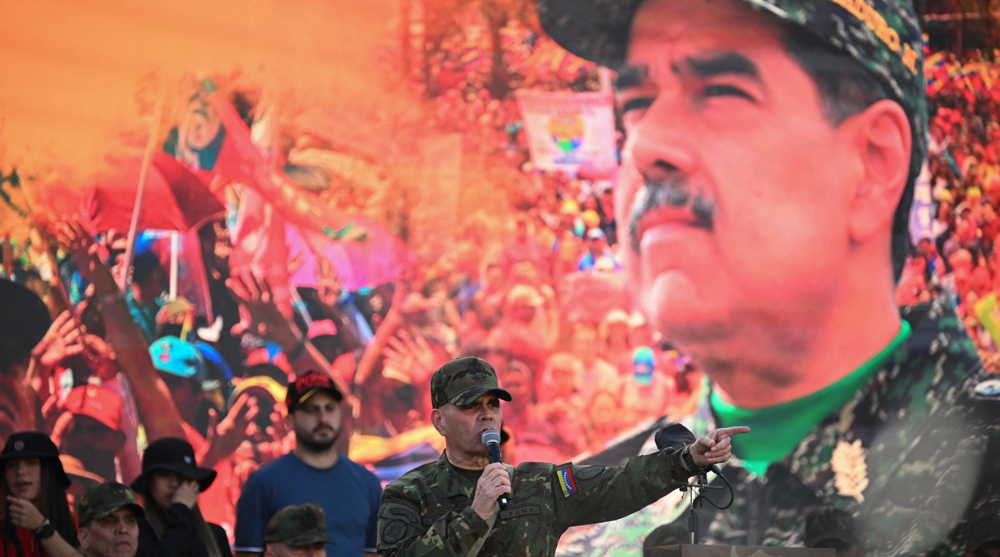
Thousands of citizens have rallied in Caracas to show support for President Nicolas Maduro and their readiness to defend the homeland, as the military showcased its capabilities in drills amid the US military buildup in the Caribbean.
A mass rally, joined by citizens and officials, reaffirmed their determination to resist the destabilizing policies of the US under President Donald Trump.
Pedro Infante, First Vice President of Venezuela’s National Assembly, said the march represented unity between the people, army, and police.
Millions of men and women volunteered to take to Bolívar Avenue with weapons in hand, showing their preparedness to defend the homeland at all costs.
Naum Fernández, head of the Caracas government, underlined the importance of public readiness, responding to Maduro’s call to protect the nation.
“We reject the domination of any empire; we do not want to be under the control of any empire,” Fernández said.
The event featured a motorcade, a large march, and military demonstrations, organized in response to the significant US military presence in the Caribbean Sea.
President Maduro announced Tuesday night that a decree is being evaluated declaring a state of external unrest, hours after Tump threatened to “blow out of existence” the Venezuelan president.
The decision was announced during an extraordinary meeting of Venezuela’s Council of State at the Miraflores Palace in Caracas.
According to Maduro, the aim is to ensure that “the entire nation” and every citizen “receive support, protection, and activation of all community forces to respond to threats or, if necessary, any attack” against Venezuela.
The constitution allows a state of internal or external unrest “in the event of internal or external conflict that seriously endangers the security of the nation, its citizens, or institutions.”
It also permits such a state of emergency to last 90 days, with the option of extension for another 90.
The president of Venezuela’s Supreme Tribunal of Justice stated the country is “preparing to face any scenario,” with the judiciary “fully complying with the requirements for issuing these decrees, including proposals that will help guarantee national stability.”
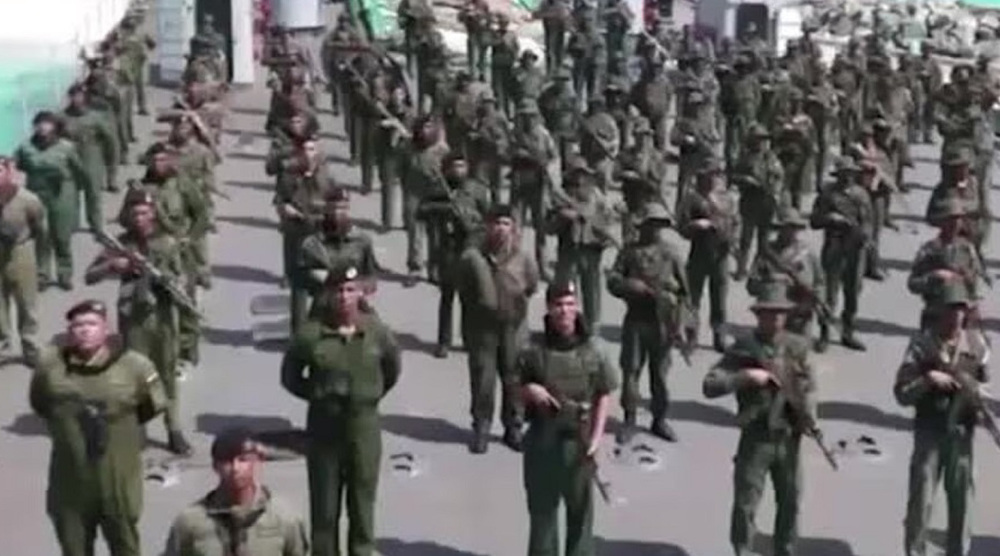
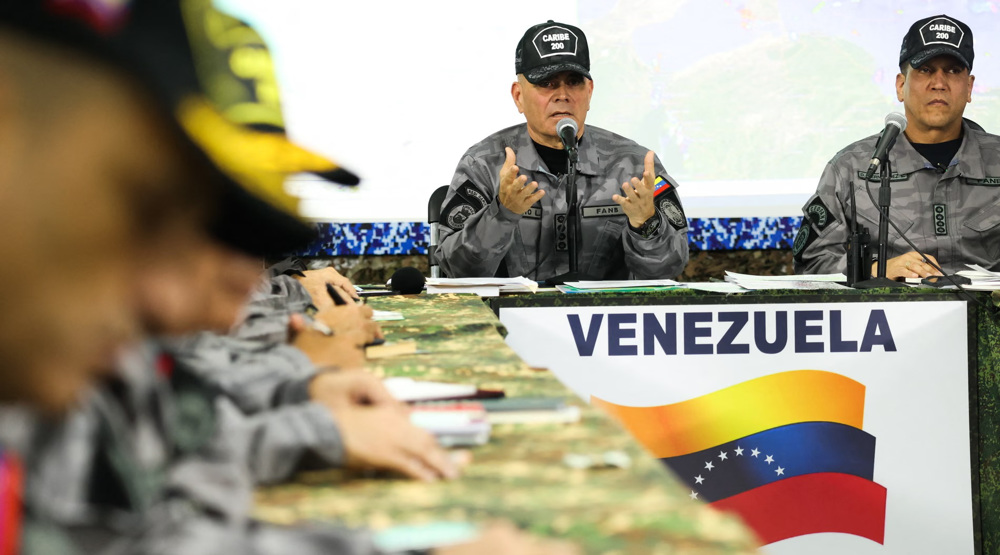
The Bolivarian National Armed Forces (FANB) are also intensifying military-civilian drills and civilian training in weapons use to defend the nation’s sovereignty.
Domingo Hernández Lárez, commander of Venezuela’s Strategic Operations, told El Universal that the initiative seeks to instill patriotism and prepare citizens to respond to any threat against the country.
Hernández said public interest in participating is high, and the program is building cohesion through Rapid Reaction Units (URRAS).
During the latest exercises, more than 2,500 troops were deployed to the Caribbean island of La Orchila, where Russian-made fighter jets armed with anti-ship missiles carried out operations.
Defense Minister Vladimir Padrino said the “Caribe Soberano 200” maneuvers involved 12 ships, 22 aircraft, and about 20 vessels conducting amphibious landings and air operations.
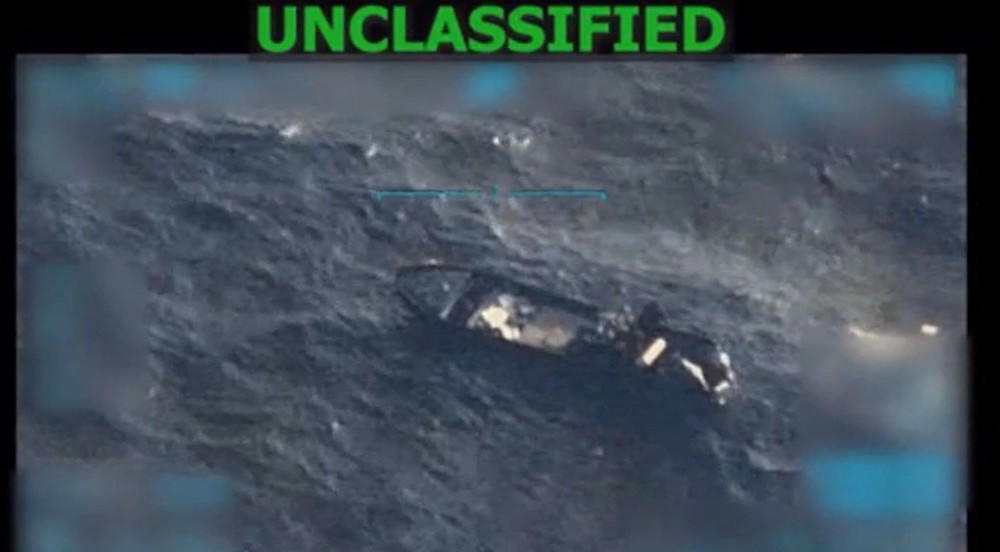
In recent weeks, the US carried out three attacks on ships it claimed were transporting drugs from Venezuela.
Trump asserted, without evidence, that each destroyed vessel carried narcotics sufficient to “kill more than 25,000 Americans.”
Maduro insists the US deployment seeks regime change and has mobilized millions of militia members nationwide.
Last month, he warned that “no empire will touch Venezuela’s sacred soil” as rhetoric between the two governments escalated.
Venezuelan officials have described the exercises as defensive measures against US aggression in Caribbean waters, which they say fall within Venezuela’s sphere of influence.
Iran to retaliate against anyone complicit in aggression against it, including Europeans: Senior MP
Pezeshkian: US bullying at World Cup mirrors Washington's foreign policy
Trump calls NATO ‘paper tiger’, accuses allies of not supporting war on Iran


VIDEO | Press TV's news headlines
DPRK vows to bolster nuclear force in quality and quantity to counter US threats
VIDEO | Yemen puts US base hosts on notice after Iran airstrikes
UK PM-in-waiting Burnham admits Britain 'too slow' on Gaza, vows tougher line on Israel
Pezeshkian: Historic outpouring renews Iran’s sacred covenant with martyred Leader
Iran rejects NATO summit allegations on nuclear program, Hormuz as 'unfounded'
Full circle: Martyred Leader’s journey ends in Imam Reza’s (AS) city where it began 86 years ago
Martyred Leader laid to rest in Mashhad after historic week-long funeral ceremonies



 PressTV NEWSLETTER
now
PressTV NEWSLETTER
now
 This makes it easy to access the Press TV website
