Strategic synergy: Iran-China partnership strengthens through SCO collaboration
By Mohammad Molaei
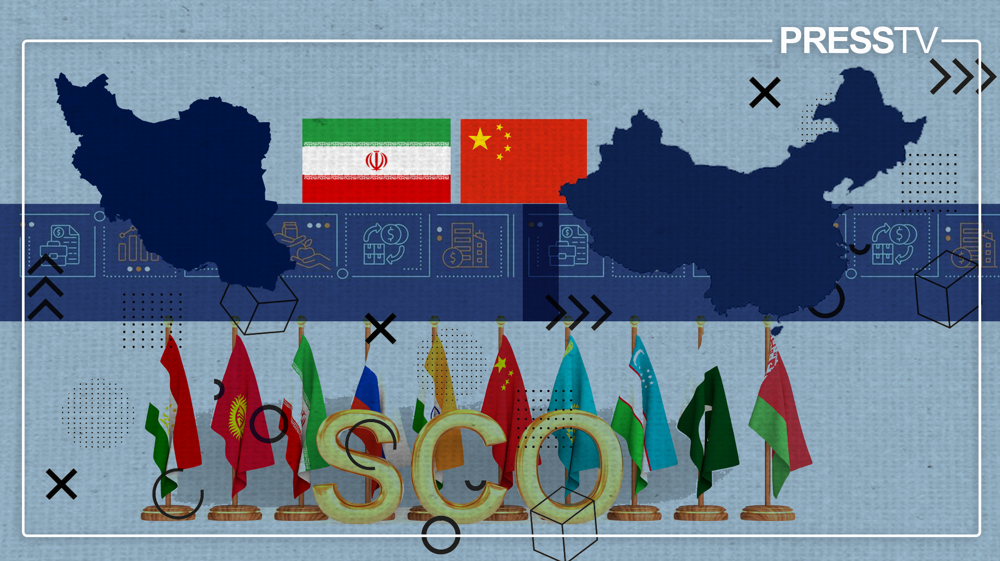
The Shanghai Cooperation Organization (SCO) has emerged as a key multilateral platform in Eurasia, bringing together countries to address important security, economic, and political challenges.
With China, Russia, India, Pakistan, Kazakhstan, Kyrgyzstan, Tajikistan, Uzbekistan, Iran, and Belarus as member states, the organization seeks to combat terrorism, separatism, and extremism while fostering trade, infrastructure development, and cultural exchanges.
Over the years, the SCO has grown from a regional security forum into a broader and bigger entity that influences global multipolarity, aligning with initiatives like the Belt and Road to enhance connectivity across continents.
The roots of the SCO trace back to the mid-1990s, when border disputes among post-Soviet states prompted the formation of the Shanghai Five group, involving China, Russia, and three Central Asian republics. This initial mechanism focused on demilitarizing borders and building mutual confidence, laying the groundwork for deeper collaboration.
By the early 2000s, the addition of Uzbekistan transformed it into the SCO, with a formal charter emphasizing collective responses to emerging threats in a volatile region. Early activities centered on joint border patrols and information sharing, gradually expanding to include economic dialogues as members recognized the interplay between security and prosperity.
As the grouping matured, it incorporated large-scale military exercises under the Peace Mission banner, which simulate complex scenarios ranging from counterinsurgency to humanitarian aid. These drills, often held in remote terrains, involve coordinated deployments of ground forces, aviation, and special units, demonstrating the ability to respond swiftly to crises.
Economic components gained traction through agreements on trade liberalization, energy pipelines, and transportation networks, integrating the vast resources of member states.
The SCO's evolution over the years reflects a deliberate effort to create an alternative to Western-led alliances, prioritizing sovereignty and non-interference while addressing shared vulnerabilities like drug trafficking and cyber threats.
Iran, China presidents pledge to deepen strategic partnershiphttps://t.co/lMotMn9VyR
— Press TV 🔻 (@PressTV) September 3, 2025
Iran's journey toward SCO membership began with observer status in the mid-2000s, allowing participation in summits and thematic discussions without full decision-making rights.
This phase enabled Tehran to engage with Eurasian powers amid growing isolation from Western institutions. The formal accession process accelerated in the early 2020s, culminating in full membership that positioned Iran as a bridge between the Middle East and Central Asia.
This integration provides access to collective security mechanisms, facilitating contributions to anti-terrorism efforts and economic projects that leverage Iran's strategic location.
Membership enhances Iran's role in regional stability initiatives, including dialogues on Afghanistan and border security. It also opens avenues for joint infrastructure ventures, such as rail links and port developments, which align with broader connectivity goals.
Through the SCO, Iran participates in expert groups on energy and transportation, sharing expertise in resource management while benefiting from diversified trade partnerships. This affiliation underscores a shift toward Eastern-oriented diplomacy, reinforcing ties with key players in a multipolar framework.
Relations between Iran and China have deepened over the decades, evolving from initial arms dealings to comprehensive strategic partnerships. Early interactions focused on military supplies, transitioning to technology exchanges that supported indigenous defense production.
The signing of long-term cooperation agreements formalized commitments in defense, energy, and infrastructure, paving the way for joint ventures that extend beyond bilateral scopes.
Within the SCO, this partnership gains a multilateral dimension, with shared participation in summits and exercises strengthening coordination. Collaborative projects include enhancements to transportation corridors and energy supply chains, integrating Iran's assets with China's expansive initiatives.
High-level visits and dialogues at SCO events further solidify alignments, addressing common challenges like regional instability and economic pressures. This framework amplifies mutual benefits, from resource exports to technological collaborations, fostering resilience against external disruptions.
FM Abbas Araghchi praises China for its principled stance at the UN, where Beijing condemned Israeli and US attacks on Iran’s nuclear sites.
— Press TV 🔻 (@PressTV) July 16, 2025
Follow: https://t.co/mLGcUTS2ei pic.twitter.com/8WiBcfaiuQ
A notable symbol of the high regard China places on this relationship emerged during the parade marking the 80th anniversary of China's victory over Japan in World War II.
Military collaboration forms a core element of Iran-China relations, encompassing arms procurement, joint training, and operational synergies. Transfers of missile systems, drones, and electronic warfare equipment have bolstered capabilities, enabling the development of advanced platforms tailored to specific threats. These exchanges emphasize self-reliance, with adaptations that incorporate local innovations to meet unique operational needs.
Naval cooperation stands out, with shared exercises simulating maritime defense scenarios in strategic waters. These drills practice fleet maneuvers, anti-submarine tactics, and coordinated strikes, improving interoperability between surface vessels and aerial assets.
On land, joint programs focus on air defense networks, integrating radar systems and interception technologies to create layered protection against aerial incursions. This partnership extends to research in emerging fields, such as unmanned systems and precision guidance, where combined expertise yields resilient solutions for asymmetric environments.
Joint exercises represent a practical manifestation of military alignment, ranging from bilateral drills to SCO-hosted operations. Maritime maneuvers in the Indian Ocean and Gulf of Oman involve live-fire demonstrations and search-and-rescue simulations, testing command structures and communication protocols under realistic conditions.
These activities not only refine tactical skills but also build doctrinal compatibility, allowing forces to operate seamlessly in coalition settings.
Technology transfers play a pivotal role, involving the sharing of designs for cruise missiles, surveillance drones, and cyber defense tools. Adaptations of anti-ship systems enable extended ranges and stealth features, while drone integrations support intelligence gathering and strike missions.
Pezeshkian calls for Iran-China resistance against 'bullying', unilateralism https://t.co/rUA7E7TH6x
— Press TV 🔻 (@PressTV) September 3, 2025
Electronic warfare advancements include jamming techniques and signal intelligence methods, disrupting adversary operations while protecting own assets. These exchanges occur through dedicated working groups, ensuring continuous upgrades and alignment with evolving threats.
The SCO-facilitated alignment between Iran and China reshapes regional dynamics, providing a counterweight to traditional power structures. Enhanced military capabilities contribute to deterrence strategies, securing vital sea lanes and energy routes against potential disruptions. This partnership influences regional alliances, encouraging dialogues that reduce tensions and promote stability in contested areas.
Broader implications extend to economic spheres, where integrated projects foster trade diversification and infrastructure resilience.
In the Persian Gulf, collaborative efforts address maritime security, countering piracy and smuggling through joint patrols. Globally, this alliance supports multipolar trends, challenging unilateral approaches and advocating for inclusive governance models. The alignment also impacts energy markets, ensuring stable supplies amid fluctuations, while cultural exchanges strengthen people-to-people ties.
Looking ahead, the SCO and Iran-China military alignment is set to expand, incorporating advanced technologies like artificial intelligence for automated systems and hypersonic weapons for rapid response.
Joint production facilities could emerge, focusing on drones and missiles to meet collective needs. Emerging challenges, such as cyber threats and climate-induced instabilities, will drive new cooperation areas, including hybrid warfare training and disaster response frameworks.
Global shifts, including changes in regional influence, position China as an indispensable partner for Iran, facilitating access to cutting-edge resources. Potential scenarios include formalized defense pacts within the SCO, establishing rapid-deployment forces for crisis intervention.
Economic synergies will underpin these developments, with investments in ports and railways enhancing logistical support. Overall, this trajectory promises sustained growth, adapting to geopolitical realities while advancing shared objectives for security and prosperity.
Mohammad Molaei is a Tehran-based military affairs analyst.
(The views expressed in this article do not necessarily reflect those of Press TV)
Russia, China reject Trump's claim of their interference in US elections
China bans helium exports amid escalated tensions in West Asia
Russia, China reject Western push to use UNSC against Iran after Resolution 2231 expiry



VIDEO | CPEC 2.0: China-Pakistan partnership moves beyond infrastructure to industry
VIDEO | Pakistan hosts 12th SCO border security officials meeting
VIDEO | Millions of Yemenis renew mandate to break siege, send warnings to KSA
VIDEO | Baghdad seminar highlights funeral processions for Iran’s martyred Leader
VIDEO | Press freedom under threat in Germany
VIDEO | EU lawmakers demand Israel pay to rebuild Gaza
IRGC blocks US-backed illegal transit through Strait of Hormuz
IRGC warns of wider strikes on US-linked assets as Army targets hostile US vessel in Indian Ocean



 PressTV NEWSLETTER
now
PressTV NEWSLETTER
now
 This makes it easy to access the Press TV website
