How Persian embraced me—a Kashmiri—on my journey of self-discovery
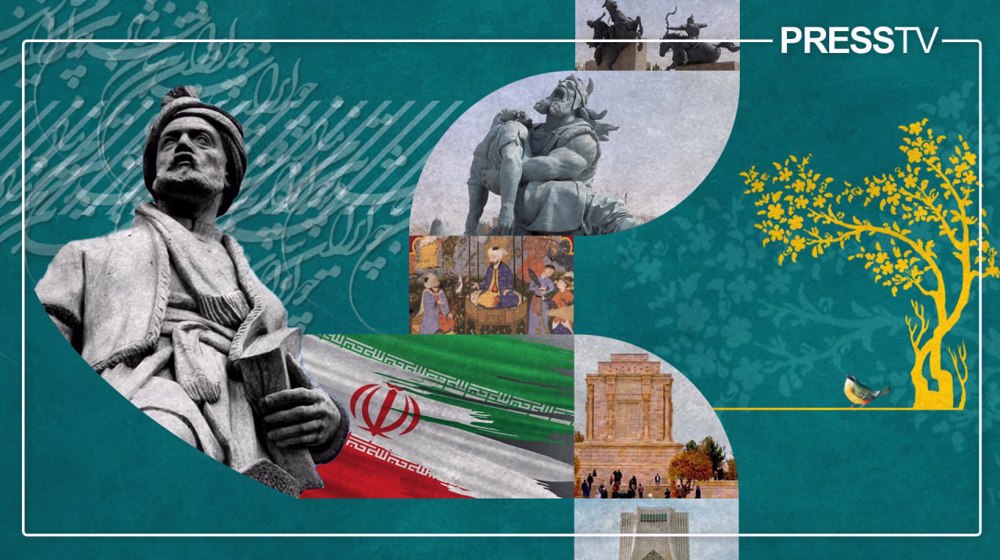
By Humaira Ahad
Many of you may have read these words from Paulo Coelho's bestseller The Alchemist: "When you want something, the whole universe conspires in helping you to achieve it."
Sometime in 2019, I was sitting in my room in my hometown in the Himalayan valley of Kashmir, immersed in Reza Arasteh’s book Rumi: The Persian, the Sufi, when I came across some of Molana Rumi’s verses that stirred something deep within me.
I looked across the window towards the picturesque Zabarwan mountains, and at that moment, I longed—not just to read them but to truly understand them in the language Molana himself had chosen to write in. Perhaps the doors of heaven were open that day, and my prayers were heard.
That moment marked the beginning of an intellectual pursuit that compelled me to embark on a journey towards Iran.
Growing up in Indian-administered Kashmir, I often heard anecdotes about Persian being the language of the Sufis, scholars, and administrators. However, by the time I was born, that connection with the language had faded—but never truly broken.
The Persian language had been a cornerstone of cultural and intellectual exchange for centuries. I would hear verses and fragments of Persian, the remnants of the language embedded in Kashmiri.
Ferdowsi is called a sage. What was Ferdowsi’s wisdom? He had divine Islamic wisdom. He had a strong, solid language, and was truly the father of today’s Persian language. He was in love with and absorbed by the concepts of Islamic wisdom. #FerdowsiDay
— Khamenei.ir (@khamenei_ir) May 14, 2020
It became clear that this was the language of faith, prayers, and love. It stirred something spiritual but forgotten, and I longed to learn the language.
As I arrived in Iran and began taking Persian classes, I discovered it was a language defined not only by its poetic reputation but also by its extraordinary fluidity, gentleness, and rhythm.
I understood why so many of our metaphors are poetic, why the religion we practice in Kashmir is laced with Sufi imagery, and why our mystics paint a beautiful picture of love’s pangs. Kashmir was intimately inspired by Iran and its language—and so was I.
As a polyglot, I fluently speak at least five languages, but none has captivated me the way Persian has. The language’s cadence creates a lyrical quality that can be compared to poetry.
This rhythmic nature, ingrained in the language, is responsible for producing some of the world’s most famous poets.
However, the beauty of the Persian language does not lie only in its inherent musicality, but also in its refinement, tenderness, and expressiveness.
With Persian’s unmatched softness, even its hardest consonants are buffered by vowels to improve the flow.
The language, as many learners come to discover, is also an instrument to unveil human tenderness.
Why Molana Rumi and his works cannot be divorced from Islamic heritage
— Press TV 🔻 (@PressTV) October 1, 2024
By Humaira Ahadhttps://t.co/ucpRiJEc6h
In addition to all these qualities, Persian also embodies the rich cultural and historical tapestry of Iran. The language offers a unique insight into the Iranian spirit, reflecting its vibrant traditions, deep spirituality, and intricate social customs.
As a living archive, Persian has fostered a strong literary heritage, promoting values like wisdom, tolerance, and love among Iranians.
Unlike many literary traditions that remain confined to books or academia, Persian poetry is widely read, quoted, and consulted in everyday life by Iranians.
The immortal works of poets like Hafez are used for spiritual reflection or even decision-making—a tradition known as faal-e-Hafez.
As a foreigner, for me, Persian mirrored the soul of Iran—a soul that values spirituality, subtlety, and sophistication.
One of the remarkable features of the Persian language is its ability to communicate deeper meanings in fewer words. What the English language might express in a sentence, Persian conveys in a single word.
This efficiency is the prime reason why Muhammad Iqbal, better known as Iqbal Lahori, chose Persian as the medium for much of his spiritual poetry. He believed it better captured the complexity of his ideas than his mother language Urdu could.
The emotional range of Persian is another defining trait. People in Iran routinely use expressions that might seem exaggerated to outsiders but are commonplace in context.
How Iran’s ‘national poet’ Hafez Shirazi captivated hearts worldwide with his verse
— Press TV 🔻 (@PressTV) October 12, 2023
Surrounded by mighty trees and beautiful orchards lies the mausoleum of Hafez Shirazi in the cultural capital of the Islamic Republic of Iran, Shiraz.
By @shireen_38 https://t.co/teXUCumONa
Phrases like “Delam barat tang shodeh” (“My heart has grown narrow for you”) or “Barat mimiram” (“I would die for you”) are not reserved for dramatic occasions—they’re part of everyday conversation and reflect a culture where emotions are highly valued and openly expressed by both men and women.
One of the interesting facts about Persian is that it is the only classical language that has survived continuously into the modern era, preserved through centuries of upheaval by the works of legendary poets like Ferdowsi.
The 10th-century poet’s dedication to composing the Shahnameh not only saved the language from erasure but also safeguarded a profound cultural and spiritual heritage.
Ferdowsi’s magnum opus ensured that Persian would remain a living language. He composed the 50,000 verses and intentionally avoided Arabic loanwords at a time when Arabic dominated literary and intellectual life.
"Basi ranj bordam dar in sal-si
Ajami zendeh kardam be in Parsi"
[I endured much pain during these thirty years;
I breathed life into Ajam with Persian.]
Today, his birth anniversary on May 15 is marked in Iran as the National Persian Language Day, an occasion to celebrate the greatness of Persian.
I can say that by embracing Persian, I didn’t just learn the language of poetry and beauty, but also adopted an emotional landscape shaped by centuries of mystic richness and philosophy.
As the Persian language opened a window into a worldview where beauty and introspection became central, it also unveiled the emotional depths of my soul.
The language has served as a medium of self-discovery—a return to something ancient inside me. It seems as if I have reunited with a part of my soul which speaks Persian, waiting to be heard—and the conversation continues.
Humaira Ahad is a journalist and researcher from Indian-administered Kashmir, currently based in Tehran, Iran.
Full circle: Martyred Leader’s journey ends in Imam Reza’s (AS) city where it began 86 years ago
End of tit-for-tat era: Iran's new Strait of Hormuz doctrine traps US in unwinnable dilemma
How Iran’s martyred Leader became an enduring symbol of sovereignty, justice, and resistance



US ignored intel warnings before triple-tap strike on Minab school: Report
VIDEO | Press TV's news headlines
DPRK vows to bolster nuclear force in quality and quantity to counter US threats
VIDEO | Yemen puts US base hosts on notice after Iran airstrikes
UK PM-in-waiting Burnham admits Britain 'too slow' on Gaza, vows tougher line on Israel
Pezeshkian: Historic outpouring renews Iran’s sacred covenant with martyred Leader
Iran rejects NATO summit allegations on nuclear program, Hormuz as 'unfounded'
Full circle: Martyred Leader’s journey ends in Imam Reza’s (AS) city where it began 86 years ago


 PressTV NEWSLETTER
now
PressTV NEWSLETTER
now
 This makes it easy to access the Press TV website
