Iranian Air Force personnel recount high-risk precision operation against US base in Kuwait
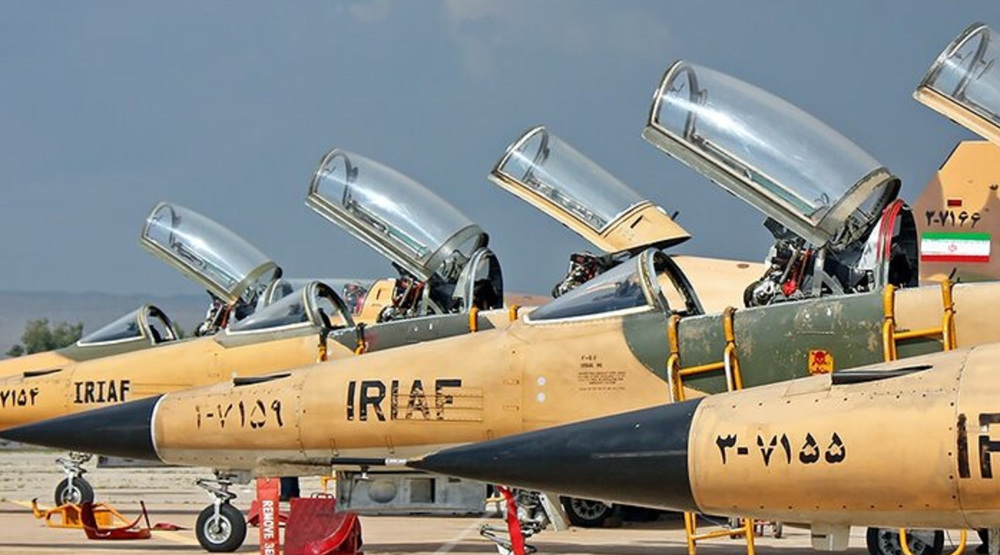
Iranian Air Force personnel have recounted a detailed description of a precision operation against an American military base in Kuwait in early March at the height of the United States' and the Israeli regime's latest bout of unprovoked aggression targeting the Islamic Republic.
The interviewees, featuring the commander of the operation and two crewmembers, who conducted the mission against the outpost, known as Camp Buehring, on board Iranian F-5 fighter jets, made the remarks during a televised broadcast on Wednesday.
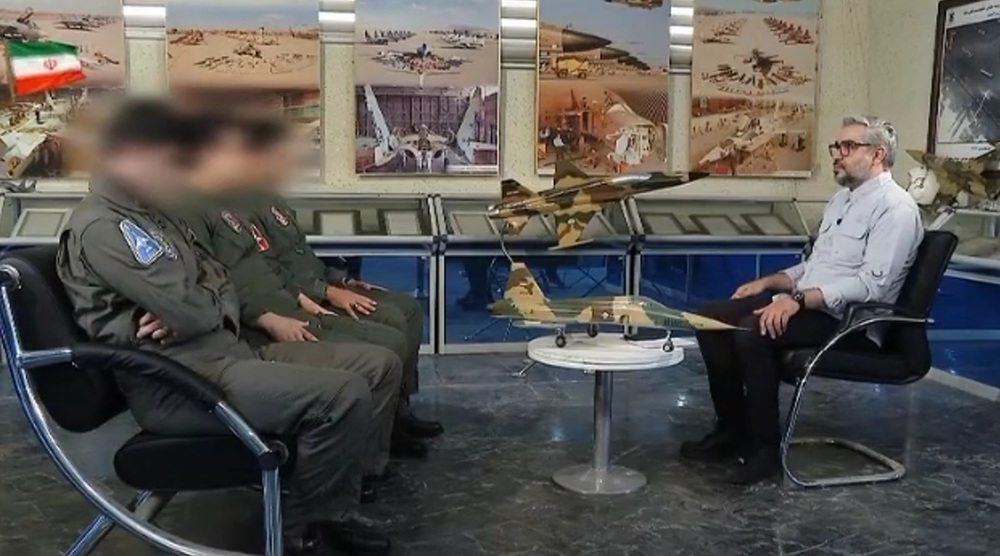
They presented the mission as a tightly coordinated, high-risk penetration strike executed at extremely low altitude and completed within roughly 50 minutes.
The operation commander said the mission originated in direct response to renewed aggression targeting the nation. "We immediately wanted to carry out a retaliatory operation," he stated, identifying Camp Buehring as "a highly strategic base with one of the highest troop concentrations and capacities."
Iran's Air Force conducted sorties to strike US bases in Iraq, Kuwait, Qatar early in war: Armyhttps://t.co/cV42Jhleap
— Press TV 🔻 (@PressTV) April 28, 2026
According to his account, the strike package consisted of three pilots flying in formation on board two F-15 fighters at exceptionally low altitude from the outset to evade radars.
He emphasized the extreme nature of the flight profile. "We were practically skimming the ground… We would even pass beneath power lines."
He contrasted this with standard training parameters, noting, "The training standard is about 500 feet, but we were flying below 50 feet."
The commander described the mission as being conducted in complete radio silence, despite the presence of layered air defenses, including Patriot missile systems, AWACS surveillance, and scrambled fighter jets.
He further illustrated the intensity of the ingress by recounting a maritime passage.
"We passed between two vessels so low that their decks were higher than us… The sailors had to come down and look over the railings just to see us pass beneath them."
Once inside the Kuwaiti airspace, the formation accelerated towards the target. The commander said the strike required direct overflight over the targets due to the use of free-fall bombs.
"We had to fly directly over the target… As soon as we reached the base, we carried out a heavy bombing."
He described widespread destruction at the site and said airborne assets were also extensively affected during the engagement phase, with enemy helicopters rising up into the air from the explosion.
He further stated that scrambling enemy aircraft and air defense systems became entangled in the unfolding operation, noting that "three [enemy] F-15 aircraft… were mistakenly engaged and destroyed simultaneously."
The report verified events that unfolded on March 1, when Kuwait mistakenly downed three such warplanes, using the US-provided Patriot missile system.
Following the strike, the commander described a deliberate deception maneuver designed to avoid interception.
"After the bombing, we carried out a deception maneuver… They were unable to track or intercept us." The aircraft then returned safely to the Iranian airspace and proceeded to a designated follow-on base.
Other crewmembers reinforced the operational tone of determination and endurance.
The rear-seat pilot flying alongside the commander described continuous explosions during the egress and reminded that the target area contained a large concentration of military equipment.
Another pilot emphasized mission resolve. "Even if one aircraft were to be lost, the other was expected to continue the mission. Under any circumstances, the mission had to be completed."
The commander concluded by reiterating his description of the mission as a high-tempo strike carried out under extreme risk. "In missions like this, our lives are the last priority. The two words ‘Iran’ and ‘Iranian’ are our first and last priority,” he said.
The United States and the Israeli regime began their latest bout of unprovoked aggression against Iran on February 28.
US defenses overwhelmed by Iran’s drone and missile barrages: WSJhttps://t.co/QgMlCHDEoQ
— Press TV 🔻 (@PressTV) March 3, 2026
US President Donald Trump announced a ceasefire on April 7 after the aggression was faced with at least 100 waves of decisive and retaliatory Iranian strikes against sensitive and strategic American and Israeli targets throughout the region.
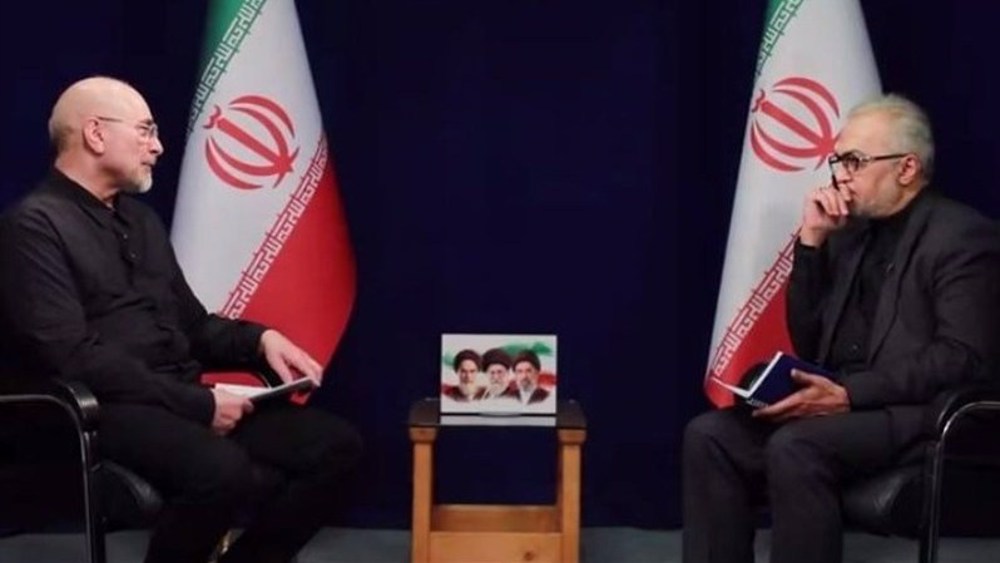
The banner of battlefield victory today underpins Iran’s diplomacy of strength: Qalibaf
Factbox: 14-point US-Iran MoU lays out terms to end imposed war, reshape regional security framework
US sabre-rattling and Israeli occupation, aggression in Lebanon hollow out war-ending deal



Pezeshkian, Sharif vow to deepen ties in first post-deal call
Iran urges global action against US-Israeli attacks on universities
'A new beginning for Iran's great leap': VP Aref congratulates Leader on MoU
Iran rolls out new agricultural trade phase after US-Israeli war
Pezeshkian hails MoU with US as testament to ‘a powerful Iran’
Iran-US MoU codifies Tehran's strategic leverage, cementing its status as regional superpower
'US imperialist hubris damaged': Netizens weigh in on Iran-US war-ending MoU
US announces review of forces in Europe amid rift with NATO over military spending


 PressTV NEWSLETTER
now
PressTV NEWSLETTER
now
 This makes it easy to access the Press TV website
